Artwork
Wife of Man with Vial
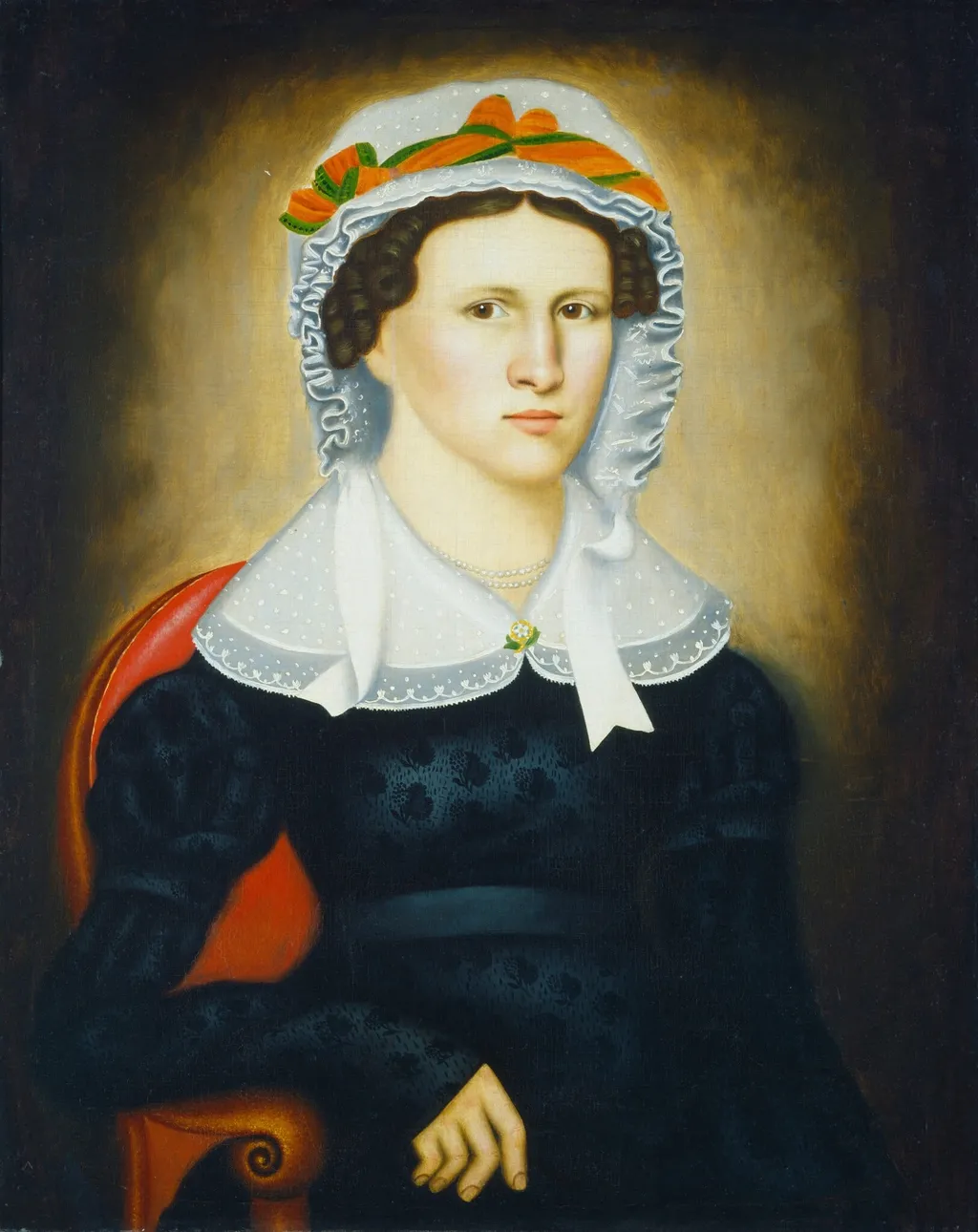
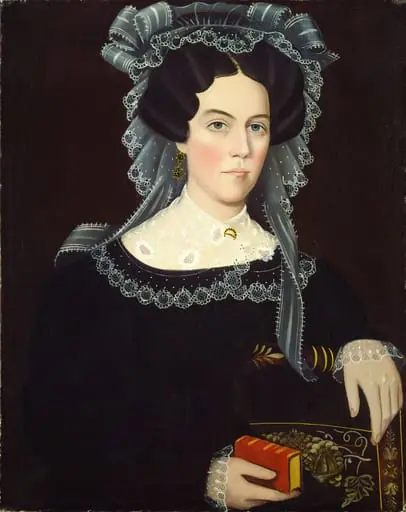
Wife of Man with Vial is an oil painting by the American Folk Art artist Erastus Salisbury Field. It dates from 1827 and is held in the collection of the National Gallery of Art.
About this work
The painting's style, with its attention to detail and use of rich colors, is characteristic of the Romanticism movement.
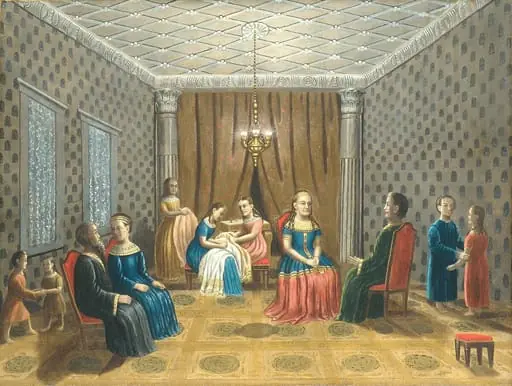
This painting shows a woman in a dark dress with a white collar and a hat adorned with an orange ribbon. She sits in a red chair, her hands folded in her lap.
The woman's attire and the chair suggest a formal setting, possibly from the early 19th century. The painting's style, with its attention to detail and use of rich colors, is characteristic of the Romanticism movement.
If you're interested in exploring more art from this period, you might want to look into the Romanticism movement.
Overview
Erastus Salisbury Field’s oil on canvas, titled *Wife of Man with Vial*, dates to around 1827. The work presents a solitary female figure seated in a red upholstered chair, her hands resting together on her lap. The composition is rendered in a muted palette punctuated by vivid accents, characteristic of early‑nineteenth‑century portraiture.
Subject & Meaning
The sitter is depicted in a dark gown trimmed with a crisp white collar, topped by a hat bearing an orange ribbon. Her poised posture and modest attire suggest a domestic or genteel setting, reflecting the social expectations of women in the period. The title links her identity to a male counterpart, hinting at familial or marital association.
Technique & Style
Field employs a detailed brushwork that captures the texture of fabric, the sheen of the hat, and the plushness of the chair. The rich reds and deep shadows contrast with the luminous white collar, creating a balanced tonal scheme. These qualities align the painting with Romantic‑era aesthetics, emphasizing emotional presence and visual richness.
History & Provenance
Created circa 1827, the portrait has remained within the corpus of American early‑Republic art. While specific ownership records are limited, the work is documented as part of Field’s oeuvre, illustrating his focus on portraiture during a period when regional artists catered to local patrons.
Own this work as a print
Artist & collection