Artwork
Ducks
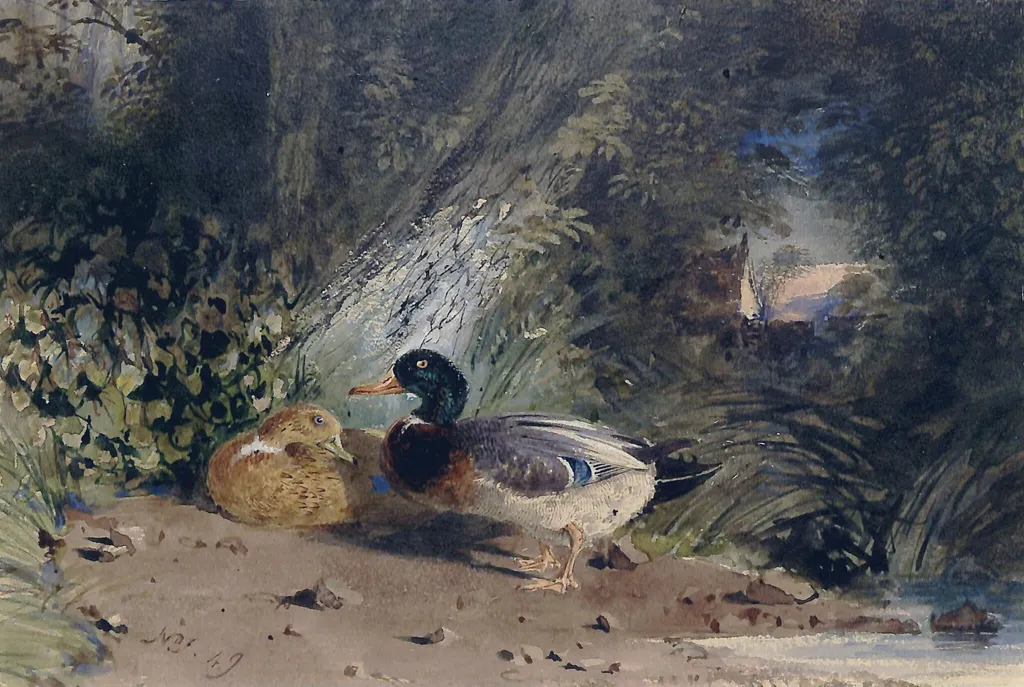
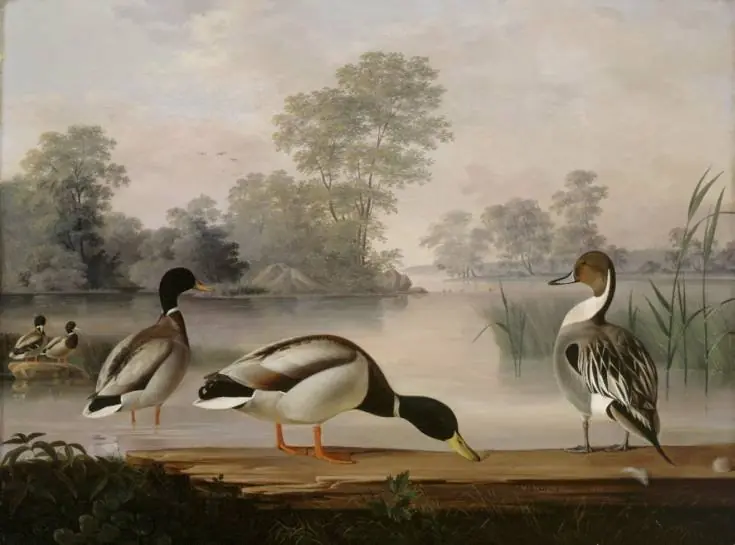
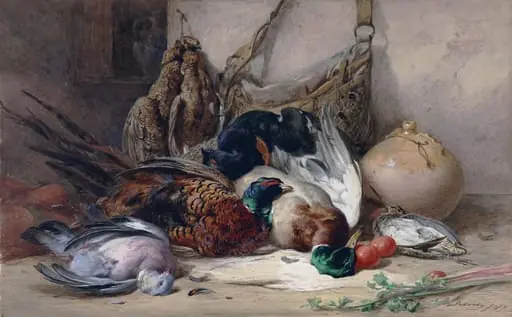
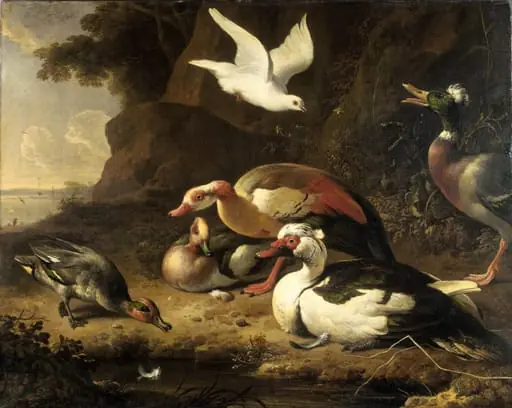
Ducks is a watercolor work on paper by the British Romanticist artist fielding. It dates from 1849 and is held in the collection of the Victoria and Albert Museum.
About this work
Overview
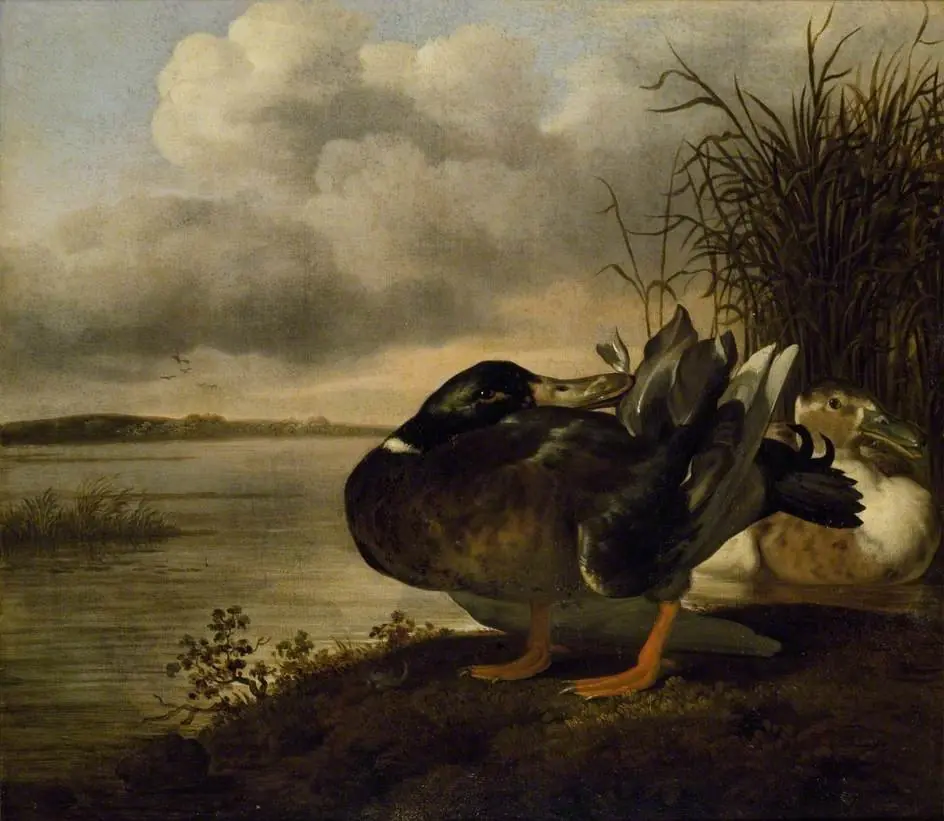
Painted in 1849, Ducks is a watercolor work by Fielding, executed with delicate washes and minimal detail. It depicts two waterfowl near a quiet shoreline, rendered in soft, muted tones. The piece resides in the Victoria and Albert Museum’s collection, where it exemplifies 19th-century British naturalist watercolor traditions.
Subject & Meaning
The painting presents two ducks in a tranquil aquatic setting—one resting on land, the other poised near the water’s edge. Their quiet postures suggest a moment of stillness in nature, free from human intervention. The composition emphasizes observation over narrative, inviting contemplation of the birds’ natural behavior within their environment.
Technique & Style
Fielding employed loose, fluid brushwork and translucent watercolor layers to suggest texture and movement. The water’s subtle ripples and the blending of greens and blues in the background convey atmosphere without sharp definition. The ducks’ forms are suggested rather than meticulously outlined, reinforcing a sense of spontaneity and naturalism.
History & Provenance
Created in 1849, the painting entered the Victoria and Albert Museum’s collection through its established acquisition of British watercolors from the mid-19th century. Its provenance reflects the museum’s interest in documenting the development of watercolor as a medium for scientific and aesthetic observation during the Victorian era.
Context
During the 1840s, British artists increasingly turned to nature study as both scientific pursuit and artistic practice. Fielding’s work aligns with this trend, sharing affinities with naturalists who sought to capture wildlife with accuracy and sensitivity, often for private collections or illustrated publications.
Legacy
Ducks remains a quiet example of how watercolor was used to record everyday natural scenes with restraint and precision. While not widely exhibited, it contributes to the broader understanding of how 19th-century artists engaged with the natural world through intimate, observational works.
Artist & collection
Artist
This watercolour artist worked in the 19th century, painting quiet scenes at the water’s edge.