Artwork
The Britannia Entering Boston Harbor
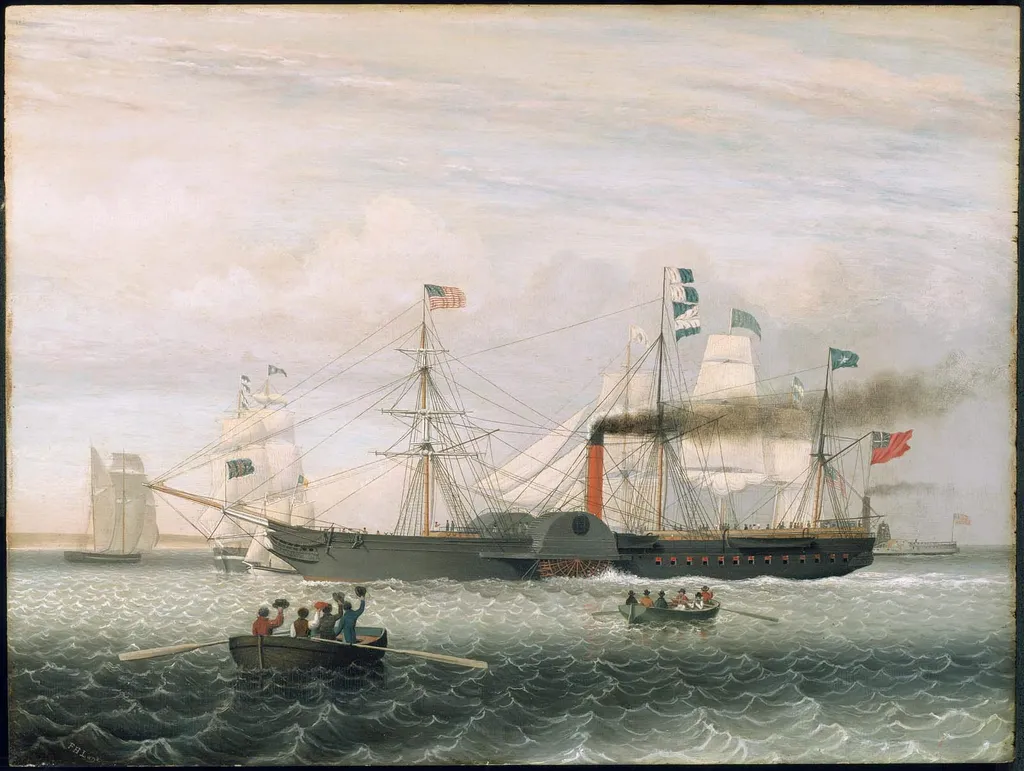
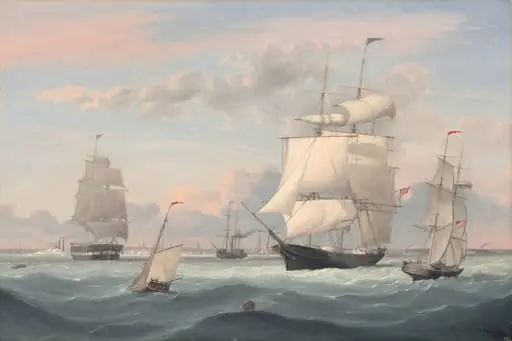
The Britannia Entering Boston Harbor is an oil painting by the American Impressionist artist Fitz Henry Lane. It dates from 1848 and is held in the collection of the Museum of Fine Arts Boston.
About this work
Overview
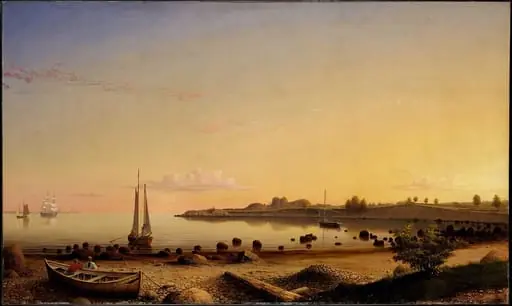
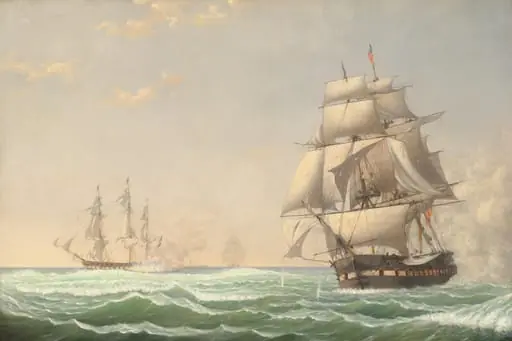
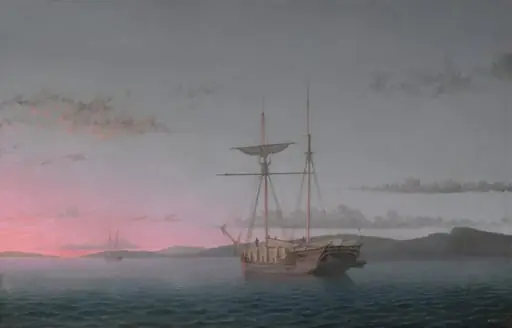
Fitz Henry Lane’s 1848 oil painting captures a quiet moment as the paddle‑steamer RMS Britannia glides into Boston Harbor. The vessel dominates the composition, its paddle wheel and full set of sails rendered with precise detail, while smaller craft drift nearby and the shoreline recedes into a muted horizon.
Subject & Meaning
The work records a specific episode of maritime traffic, illustrating the integration of steam power with traditional sailing. By placing the Britannia at the center, Lane emphasizes the transition of 19th‑century commerce and travel, while the tranquil atmosphere suggests a harmonious relationship between technology and the natural harbor environment.
Technique & Style
Executed in Lane’s characteristic Luminist manner, the painting employs a restrained palette and careful modulation of light to convey depth. Soft, diffused illumination highlights the ship’s rigging against a calmer sky, while subtle contrasts of shadow delineate water surface and distant land, creating a sense of atmospheric clarity without overt drama.
History & Provenance
Created in 1848, the canvas entered the collection of the Museum of Fine Arts, Boston, where it remains on view. The piece exemplifies Lane’s broader oeuvre of marine subjects, reflecting his reputation for meticulous rendering of nautical scenes and his contribution to American Luminism during the mid‑19th century.
Artist & collection

Artist
Fitz Henry Lane (born Nathaniel Rogers Lane; also formerly, mistakenly, known as Fitz Hugh Lane; December 19, 1804 – August 14, 1865) was an American painter and printmaker of a style that would later be called Luminism, for its use of…