Artwork
L'audience (3e planche) (The Hearing) (third plate)
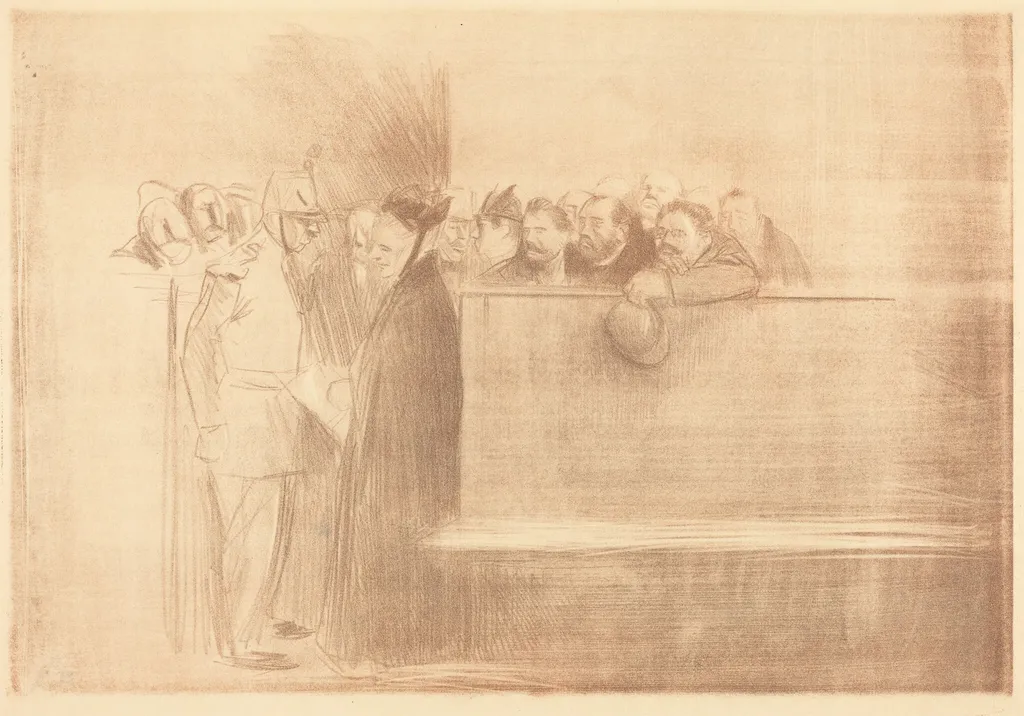
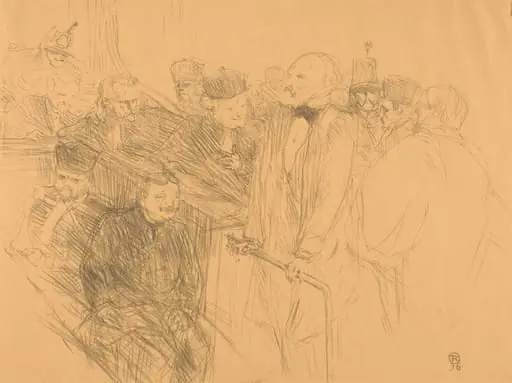
L'audience (3e planche) (The Hearing) (third plate) is an ink print by the Impressionist artist Jean-Louis Forain. It dates from 1895 and is held in the collection of the National Gallery of Art.
About this work
Overview
As a printmaker active in multiple mediums, he favored immediacy over polish, capturing public life with a sketchlike vigor.
L'audience (3e planche), created around 1895 by Jean-Louis Forain, is a lithograph in brown ink on Arches vellum paper. Part of a series exploring legal proceedings, it reflects Forain’s engagement with contemporary social institutions. As a printmaker active in multiple mediums, he favored immediacy over polish, capturing public life with a sketchlike vigor. The work belongs to a broader French tradition of observational printmaking in the late nineteenth century.
Subject & Meaning
The scene depicts a courtroom in session, centered on a judge leaning forward as if attuned to quiet testimony. Behind him, a row of men in formal attire peer over the rail, their postures suggesting quiet scrutiny. No dramatic action occurs; instead, the image conveys the quiet tension of institutional ritual. Forain’s focus on mundane observation rather than spectacle underscores his interest in the unvarnished rhythms of civic life.
Technique & Style
Executed in lithography, the image employs loose, fluid lines that mimic rapid sketching. The brown ink washes create subtle tonal variations without fine detail, emphasizing atmosphere over precision. The composition feels spontaneous, with figures loosely grouped and backgrounds minimally defined. This approach aligns with the aesthetic of French Impressionist printmaking, where the artist’s hand and the moment’s energy take precedence over finished refinement.
History & Provenance
The print was produced during a period when Forain was actively engaged in series documenting legal and public spaces. While he achieved recognition in his lifetime for both painting and printmaking, his reputation waned in the decades following his death. The work remains part of institutional collections, preserved as an example of late 19th-century French graphic art, though rarely exhibited as a standalone piece.
Context
In 1890s France, lithography became a favored medium for artists seeking to document everyday life with speed and accessibility. Forain joined contemporaries like Degas and Toulouse-Lautrec in using the technique to capture public rituals—from theaters to courtrooms. His courtroom series responded to growing public interest in legal transparency and the performative nature of justice, reflecting broader societal shifts in how authority was observed and questioned.
Legacy
Though Forain’s name is less prominent today than that of his Impressionist peers, his courtroom lithographs remain valuable records of late 19th-century French social observation. They illustrate how printmaking served as a tool for quiet critique, avoiding overt commentary in favor of nuanced depiction. The series continues to inform studies of legal culture and the role of art in documenting institutional spaces.
Artist & collection

Artist
Jean-Louis Forain (French pronunciation: ; 23 October 1852 – 11 July 1931) was a French Impressionist painter and printmaker, working in media including oils, watercolour, pastel, etching and lithograph.



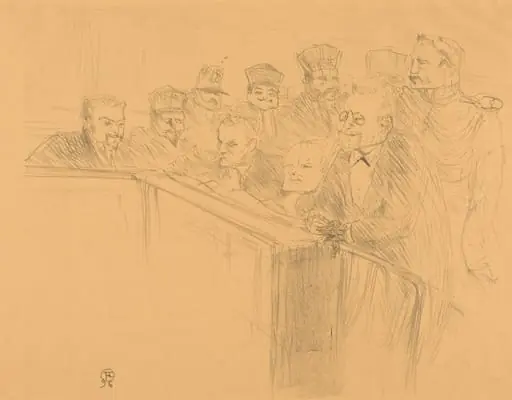
 Ribot Deposition (Déposition Ribot)
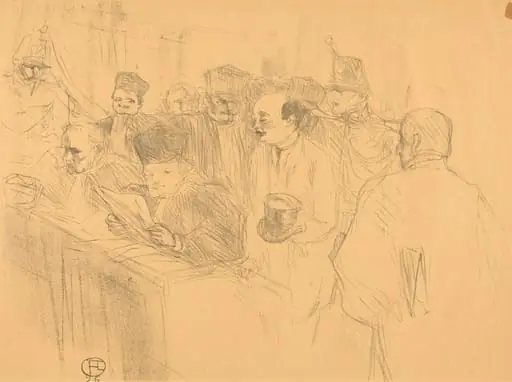
 Dupas Deposition (Déposition Dupas)
 Soudais Deposition (Déposition Soudais)
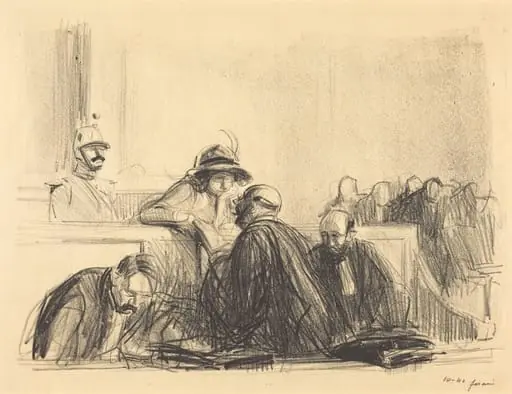 Avocat parlant à sa cliente (Lawyer Talking to His Client)
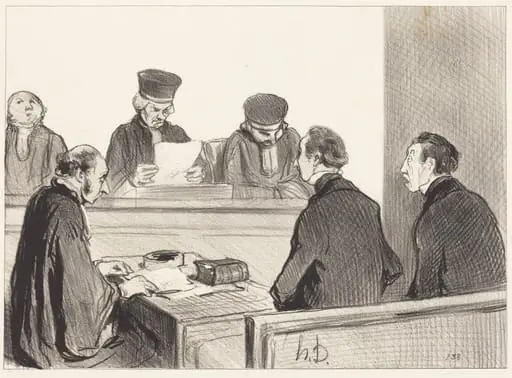 La Cour, vidant le délibéré...
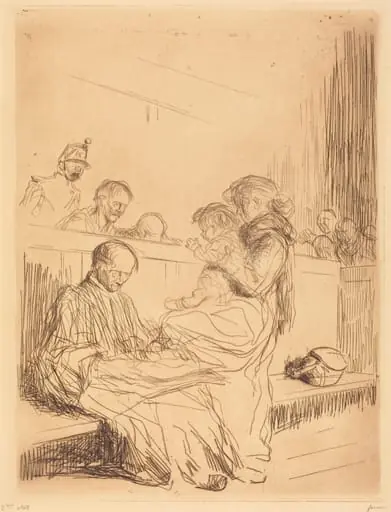 Le prévenu et l'enfant (The Prisoner and the Child)
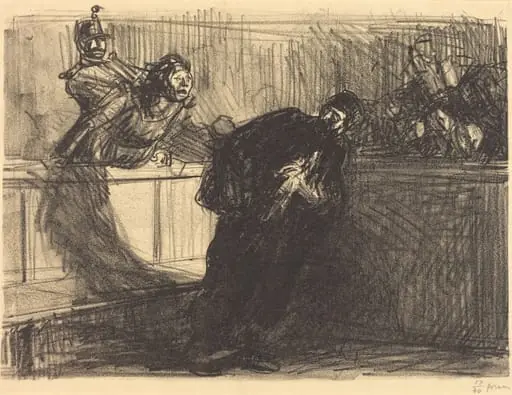 L'avocat invectivé (The Lawyer Abused)
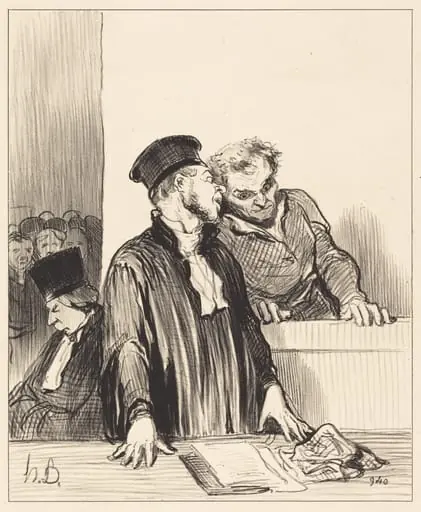 Voila le ministère public qui vous dit des choses... désagréables...