Artwork
Poilu Acknowledging German Soldier
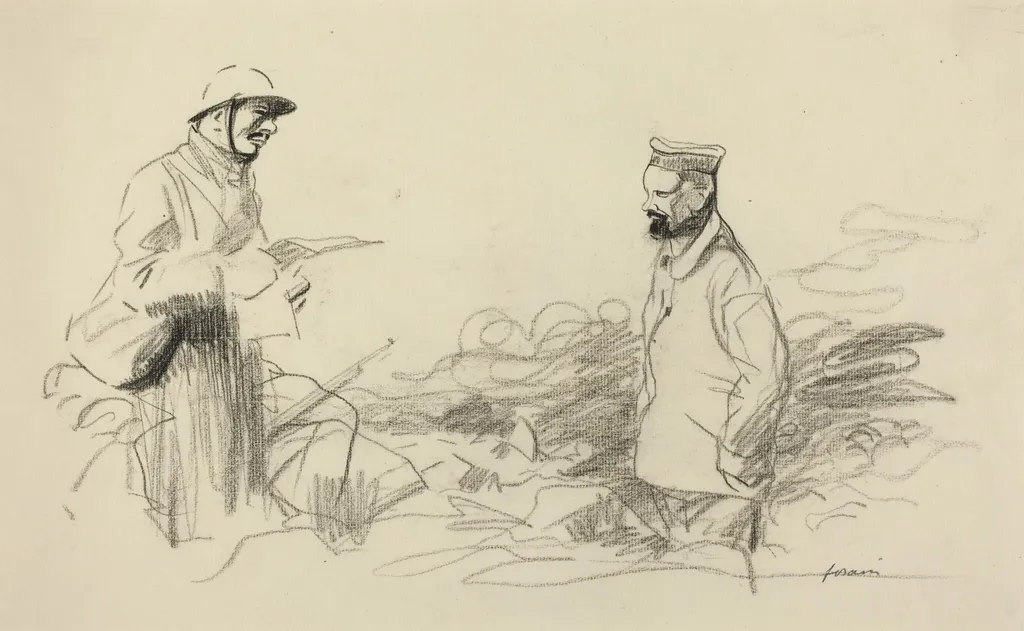
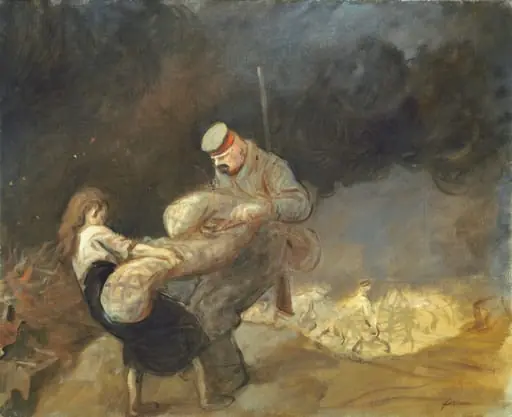
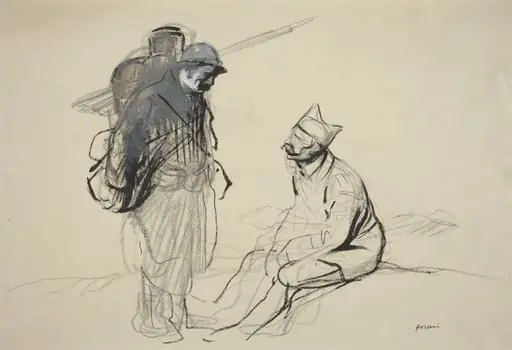
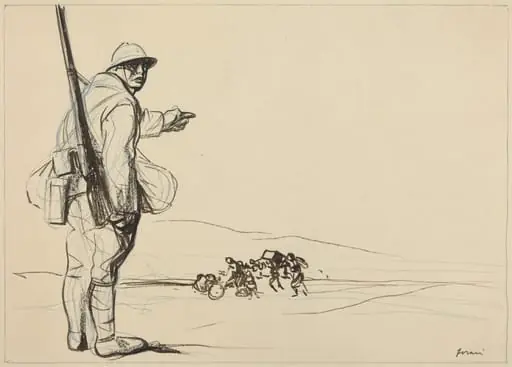
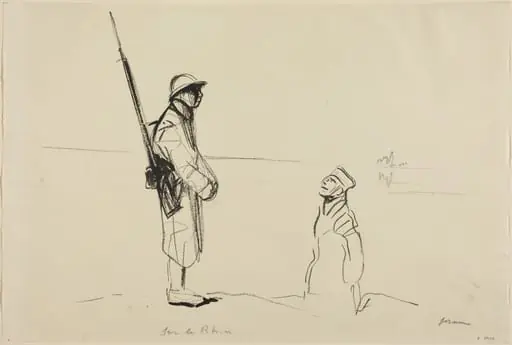
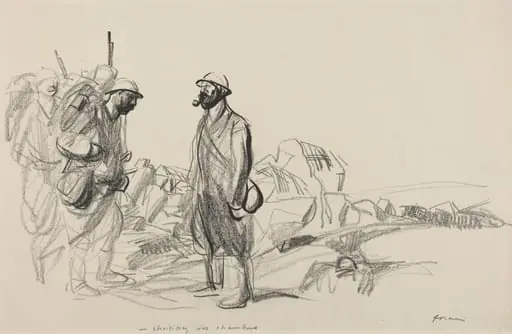
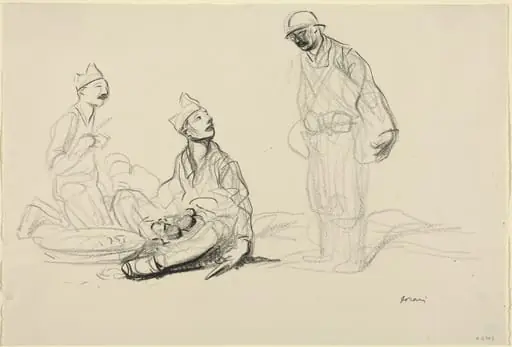
Poilu Acknowledging German Soldier is a crayon drawing by Jean-Louis Forain. It dates from 1918 and is held in the collection of the National Gallery of Art.
About this work
The National Gallery of Art, Washington, holds this work, which is made with black crayon on laid paper.
The painting is titled Poilu Acknowledging German Soldier.
It was created by Jean-Louis Forain, probably in 1918.
The National Gallery of Art, Washington, holds this work, which is made with black crayon on laid paper.
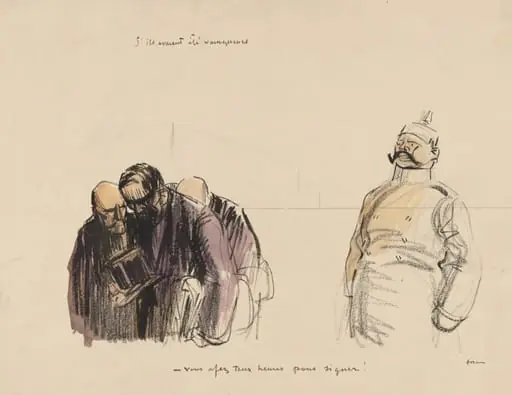
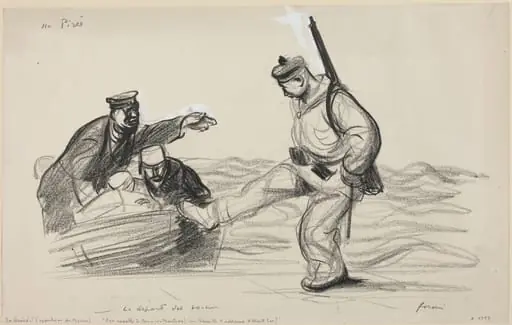
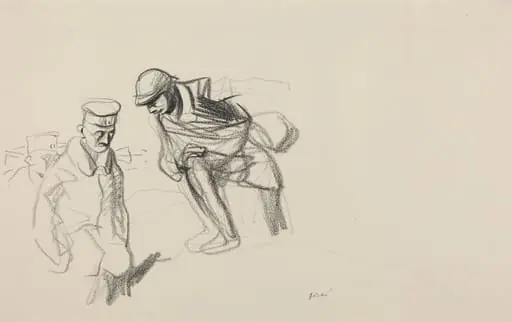
Forain's work during this time is notable for its depiction of war scenes.
This piece might be one of them, given its title and date.
You can learn more about the artist's style by looking up Forain, Jean-Louis.
Overview
Created around 1918, this drawing by Jean-Louis Forain captures a quiet moment between opposing soldiers during the final year of World War I. Executed in black crayon on laid paper, it belongs to a series of wartime works the artist produced after shifting from his earlier satirical and social subjects. The medium’s immediacy and tonal range suit the somber, intimate nature of the scene.
Subject & Meaning
The drawing portrays a French infantryman, or 'poilu,' offering a gesture of recognition to a German soldier. No violence is shown; instead, the focus is on mutual acknowledgment, suggesting a fleeting humanity amid conflict. The title implies respect rather than hostility, reflecting a momentary truce in spirit, though not in official policy, during a war defined by prolonged suffering.
Technique & Style
Forain employed black crayon with deliberate, controlled strokes to model form and texture, emphasizing the weight of uniforms and the stillness of posture. The paper’s laid texture subtly enhances the tactile quality of the scene. His approach is restrained, avoiding dramatic lighting or exaggerated expression, aligning with a documentary sensibility rather than romanticized heroism.
History & Provenance
The work entered the collection of the National Gallery of Art in Washington, D.C., where it remains part of its holdings of early 20th-century drawings. While its exact provenance before acquisition is not fully documented, it is known to have been produced during Forain’s active engagement with wartime themes, likely as part of his broader journalistic response to the conflict.
Context
In 1918, as the war neared its end, many artists turned from propaganda to quieter reflections on human cost. Forain, long known for urban scenes and caricature, redirected his focus to soldiers’ experiences. This drawing reflects a broader cultural shift in wartime art—from mobilization imagery to moments of shared vulnerability between enemies.
Legacy
Though less widely exhibited than his pre-war satires, this drawing contributes to understanding Forain’s adaptability as an artist and his capacity for empathy in crisis. It stands as a modest but significant example of how illustrators and printmakers documented the war’s emotional undercurrents, offering a counterpoint to official narratives of enmity.
Artist & collection

Artist
Jean-Louis Forain (French pronunciation: ; 23 October 1852 – 11 July 1931) was a French Impressionist painter and printmaker, working in media including oils, watercolour, pastel, etching and lithograph.