Artwork
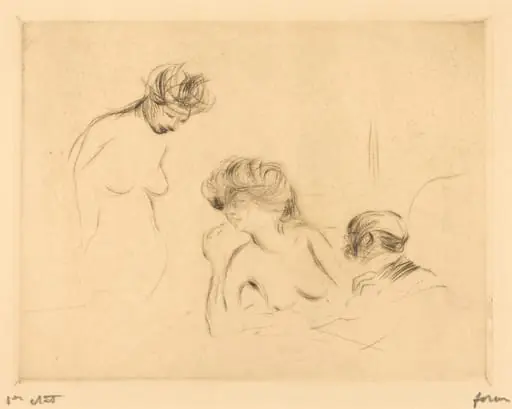
Scène de cabinet particulier (planche en largeur) (Scene in a Private Room) (horizontal plate)
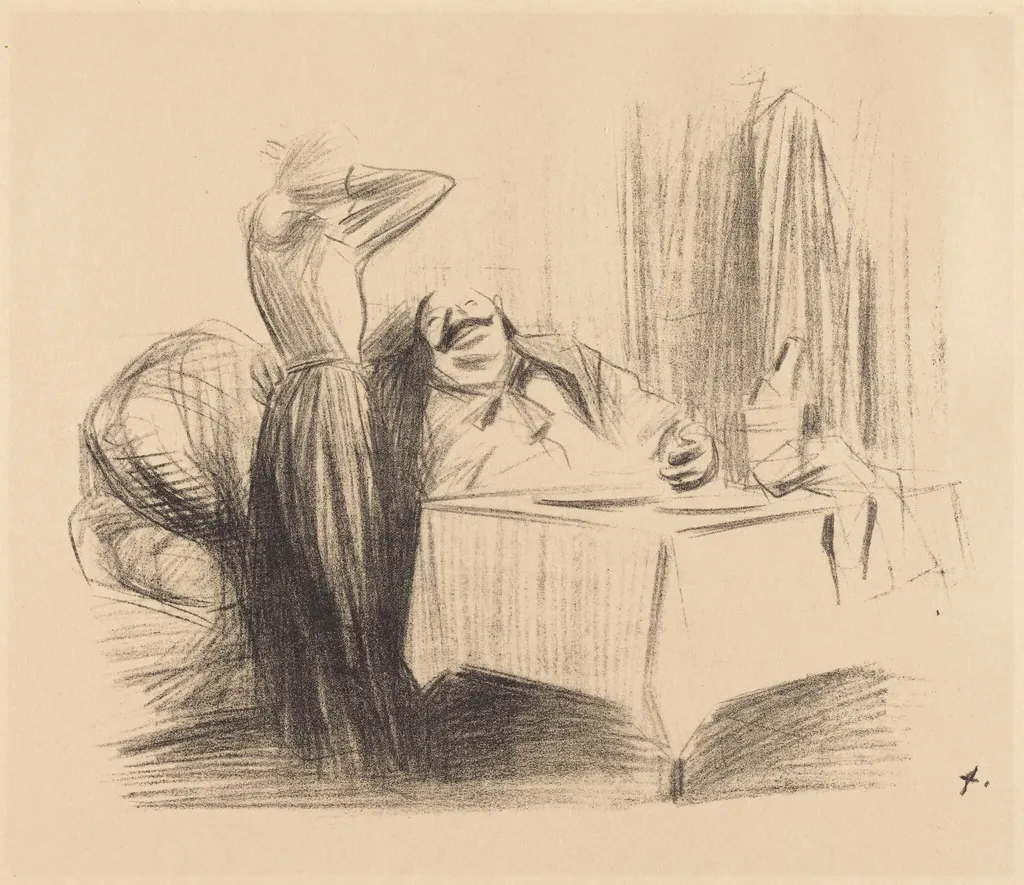
Scène de cabinet particulier (planche en largeur) (Scene in a Private Room) (horizontal plate) is an ink print by Jean-Louis Forain. It dates from 1905 and is held in the collection of the National Gallery of Art.
About this work
Overview
The horizontal format and spontaneous line work align with late 19th-century French drawing practices that valued immediacy over polish.
Created around 1905, this transfer lithograph by Jean-Louis Forain captures a quiet, intimate moment in a private interior. Executed on wove paper, the work reflects Forain’s mastery of printmaking techniques beyond his better-known paintings. Though commercially successful in his time, his graphic work has received less sustained attention since his death. The horizontal format and spontaneous line work align with late 19th-century French drawing practices that valued immediacy over polish.
Subject & Meaning
The scene portrays two figures in a modest interior: one seated, laughing with a glass in hand, the other leaning forward in amused response. A candle and open book suggest a domestic or literary setting, possibly a private gathering after hours. The interaction feels candid, not staged, hinting at informal social rituals among the French middle or upper classes. The absence of narrative clarity invites interpretation rather than telling a specific story.
Technique & Style
Forain employed transfer lithography, a method allowing sketch-like drawings to be transferred to stone for printing. His loose, rapid lines convey motion and mood without detail, emphasizing gesture over precision. The roughness of the strokes and muted tonal range reflect a deliberate aesthetic of spontaneity, common among artists of the period who valued the expressive potential of the sketch. The dim lighting enhances the sense of intimacy and immediacy.
History & Provenance
The print was produced during a period when Forain was actively engaged in printmaking, contributing illustrations to journals and producing limited editions. While specific ownership history is not documented here, such works were often circulated among collectors and artists’ circles in early 20th-century Paris. Unlike his oil paintings, these prints were more accessible and widely distributed, though few have entered major institutional collections.
Context
This work emerged amid a flourishing of graphic arts in France, where artists like Toulouse-Lautrec and Degas explored the expressive possibilities of lithography. Forain’s focus on private, unguarded moments aligns with broader interests in everyday life, distinct from grand historical or mythological subjects. The informal style reflects a shift in artistic values toward authenticity and observation over idealized representation.
Legacy
Though Forain’s reputation has faded relative to his Impressionist peers, his graphic work remains a quiet testament to the vitality of French printmaking around 1900. His ability to convey character and atmosphere with minimal means influenced later illustrators and cartoonists. This print, like many of his lithographs, endures not as a celebrated artifact but as a subtle record of ordinary human interaction rendered with sensitivity and economy.
Artist & collection

Artist
Jean-Louis Forain (French pronunciation: ; 23 October 1852 – 11 July 1931) was a French Impressionist painter and printmaker, working in media including oils, watercolour, pastel, etching and lithograph.

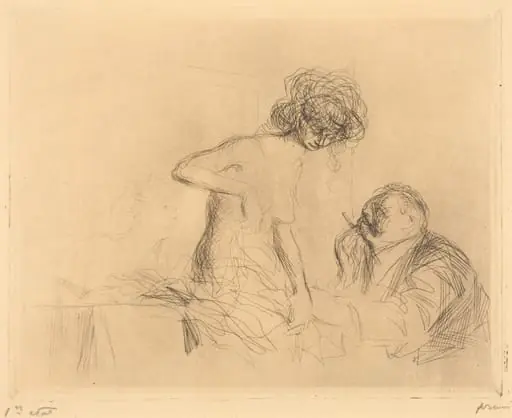 En cabinet particulier (1ère planche) (In a Private Room) (first plate)
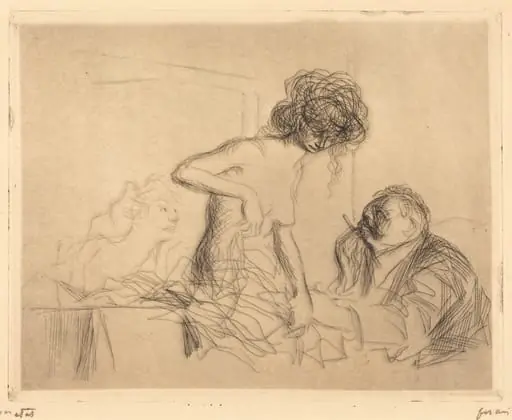 En cabinet particulier (1ère planche) (In a Private Room) (first plate)
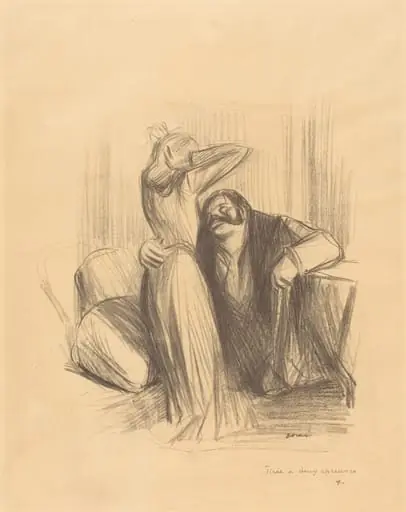 Scène de cabinet particulier (planche en hauteur) (Scene in a Private Room) (vertical plate)
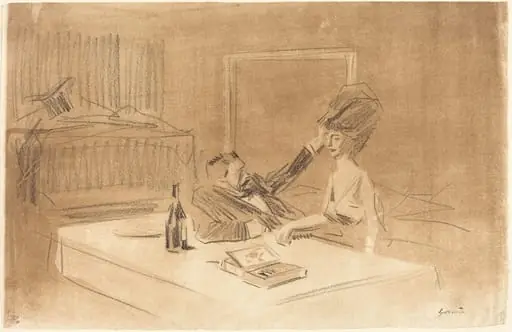 Scène de cabinet particulier (planche en largeur au lavis) (Scene in a Private Room) (horizontal plate with wash)
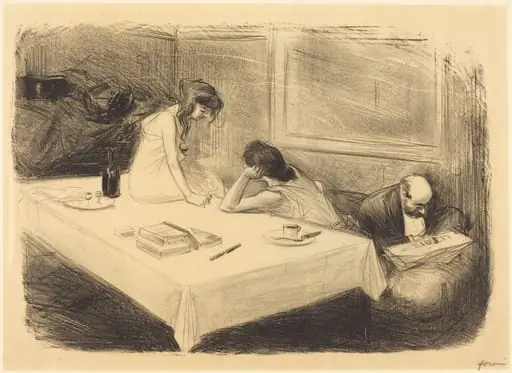 Le cabinet particulier (1ère planche) (The Private Room) (first plate)
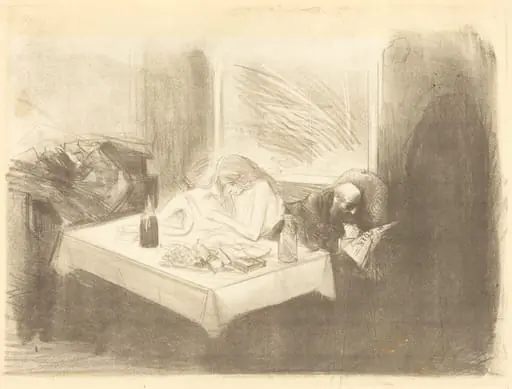 Le cabinet particulier (4e planche) (The Private Room) (fourth plate)
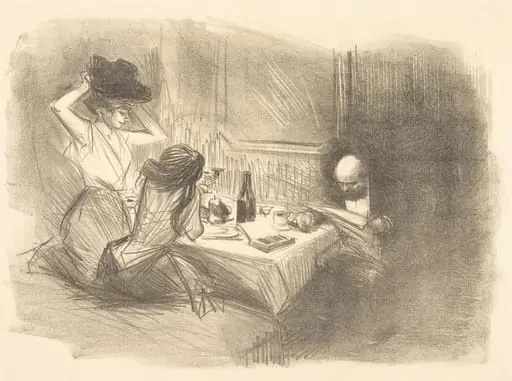 Le cabinet particulier (5e planche) (The Private Room) (fifth plate)
 En cabinet particulier (3e planche) (In a Private Room) (third plate)