Artwork
Landscape with Cattle and Bridge
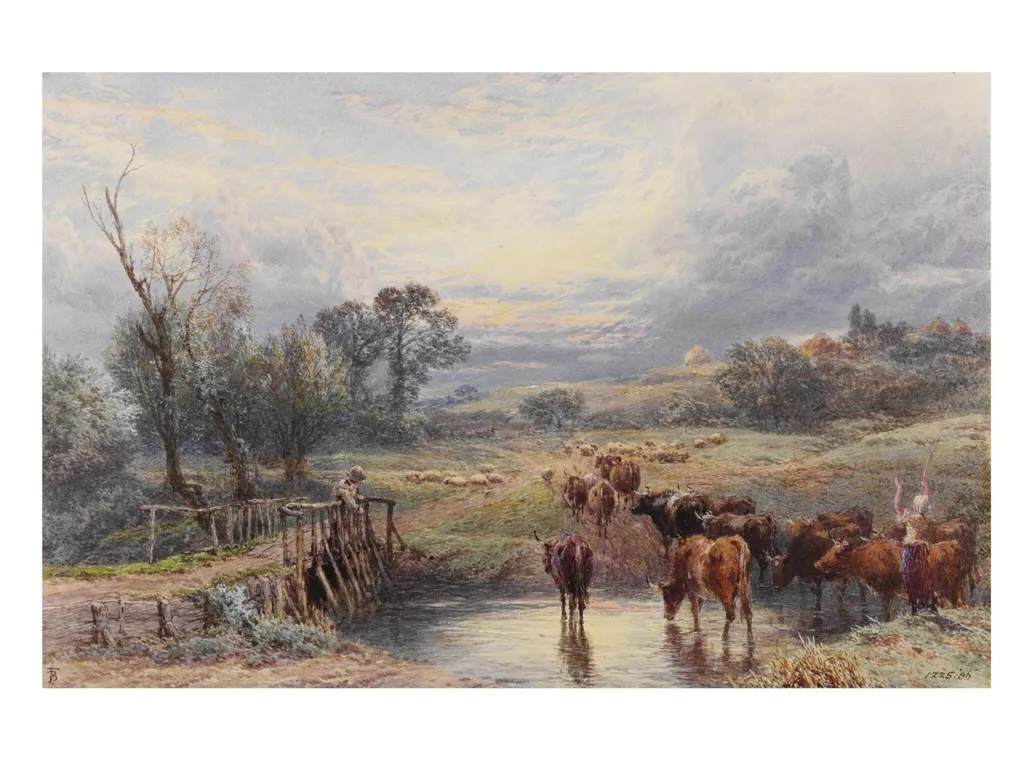
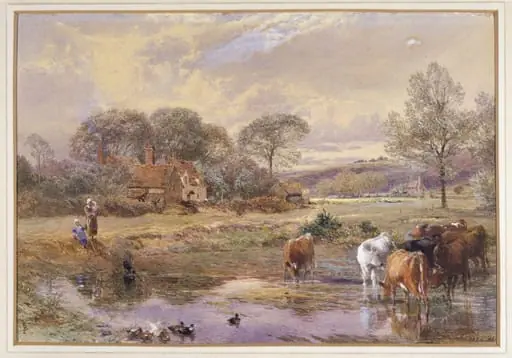
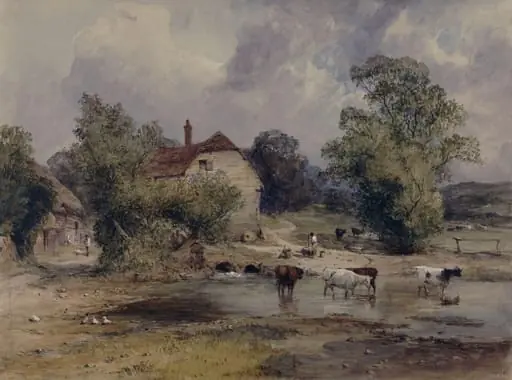
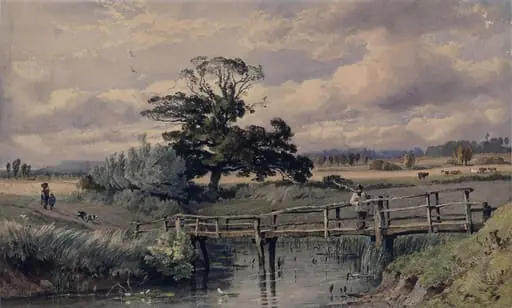
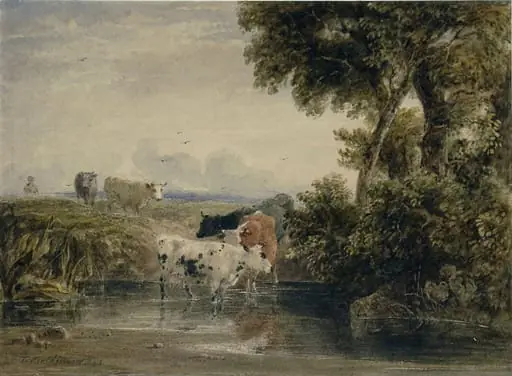
Landscape with Cattle and Bridge is a watercolor work on paper by the Hudson River School artist Myles Birket Foster. It dates from 1845 and is held in the collection of the Victoria and Albert Museum.
About this work
Overview
The composition emphasizes stillness and quiet observation, with no human figures present, focusing instead on the harmony between animals, land, and water.
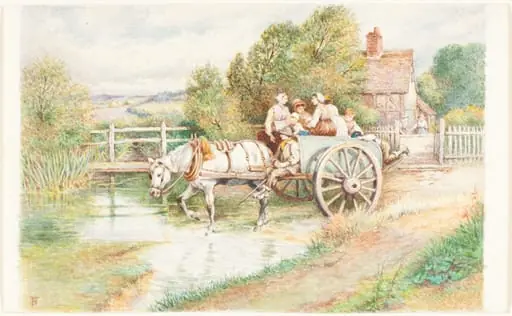
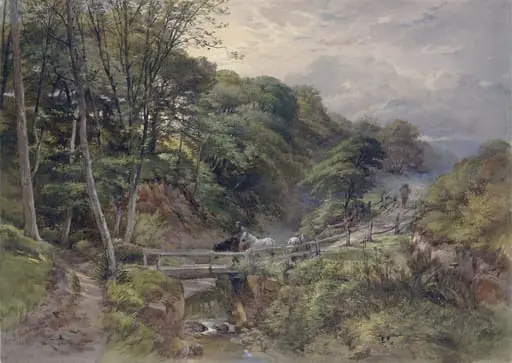
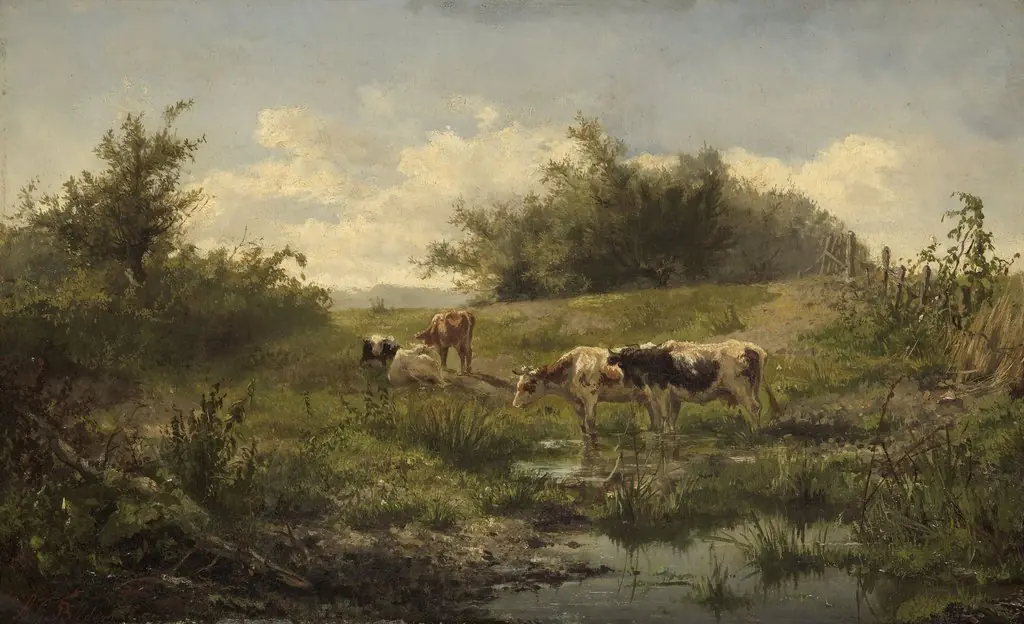
Painted in 1845, this watercolour by Myles Birket Foster captures a tranquil English countryside. A wooden bridge spans a narrow stream, flanked by grazing cattle and open grassland. Soft washes of pale pigment suggest a hazy, overcast sky and gently rolling hills in the distance. The composition emphasizes stillness and quiet observation, with no human figures present, focusing instead on the harmony between animals, land, and water.
Subject & Meaning
The scene portrays an unidealized moment of rural life, where cattle drink from a stream and a simple bridge serves as a functional crossing. There is no dramatic narrative, but the careful arrangement invites contemplation of everyday nature. The absence of people underscores a quiet dignity in the land itself, aligning with 19th-century ideals that valued pastoral serenity over human intervention.
Technique & Style
Foster employed transparent watercolour washes to build subtle tonal gradations, avoiding heavy outlines. Light blues, greens, and ochres create a muted, atmospheric effect. The brushwork is precise yet fluid, particularly in rendering the water’s reflection and the texture of grass. The delicate handling of light and moisture reflects a mastery of the medium, characteristic of British watercolour traditions of the period.
History & Provenance
Created in 1845, the work bears the artist’s signature, confirming its authenticity. While its early ownership is undocumented, it aligns with Foster’s known output during his formative years, when he produced numerous topographical and pastoral watercolours for private collectors and illustrated publications. Its survival suggests it was preserved within a domestic or institutional collection.
Context
This piece emerged during a period when British artists increasingly turned to landscape as a subject worthy of serious attention. Romanticism’s influence is evident in the emphasis on mood and natural beauty, though Foster’s approach is restrained, avoiding theatricality. His work contributed to a growing market for affordable, finely detailed watercolours that appealed to middle-class tastes seeking connection to the rural past.
Legacy
Foster’s watercolours, including this one, helped define a gentle, observational mode of landscape art in Victorian Britain. Though less celebrated than his contemporaries, his consistent focus on quiet rural scenes influenced later illustrators and regional artists. This work remains a representative example of how watercolour was used to document and honor the ordinary beauty of the English countryside.
Own this work as a print
Artist & collection

Artist
Myles Birket Foster (4 February 1825 – 27 March 1899) was a British illustrator, watercolourist and engraver in the Victorian period. His name is also to be found as Myles Birkett Foster.