Artwork
Blindman's Buff
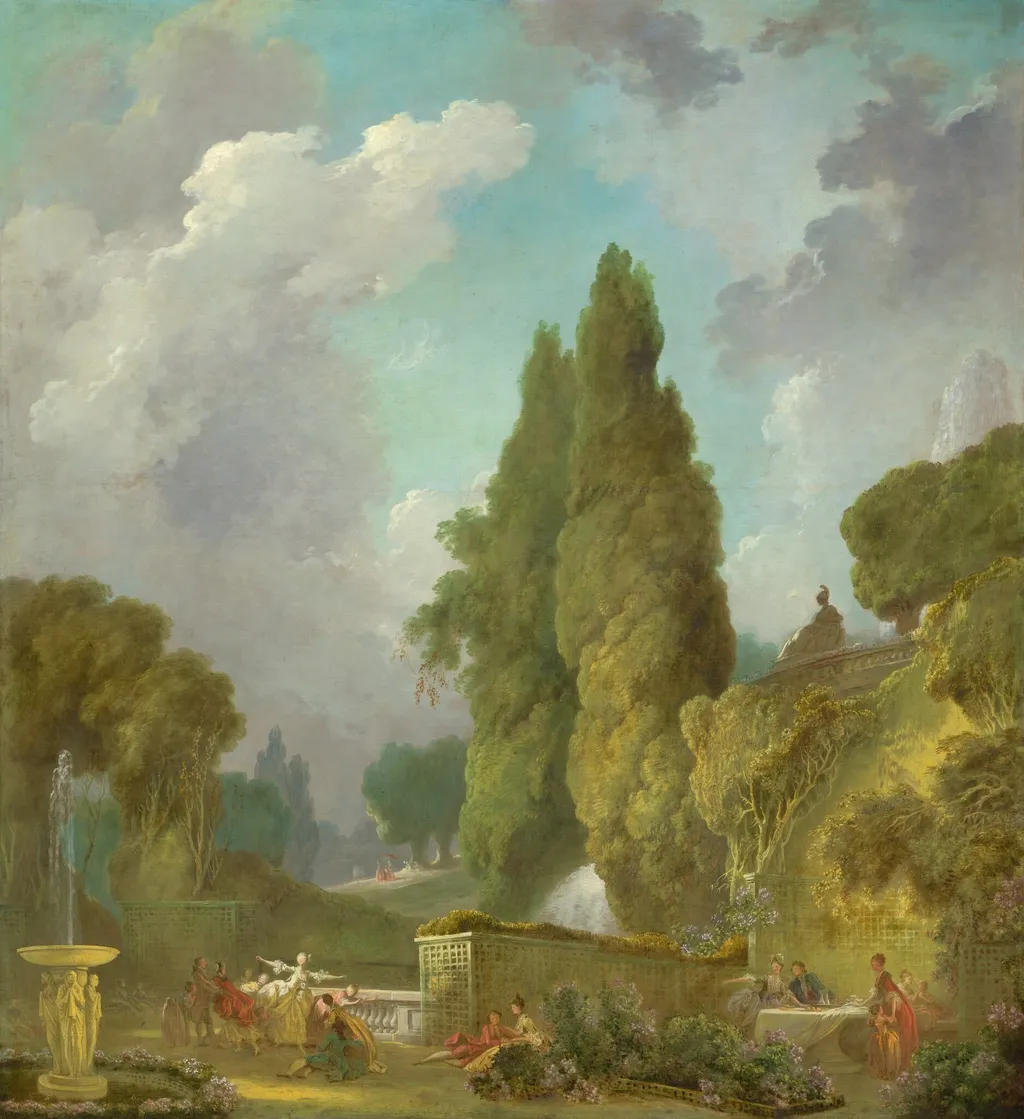
Blindman's Buff is an oil painting by the Rococo painting artist Jean Honoré Fragonard. It dates from 1778 and is held in the collection of the National Gallery of Art.
About this work
Overview
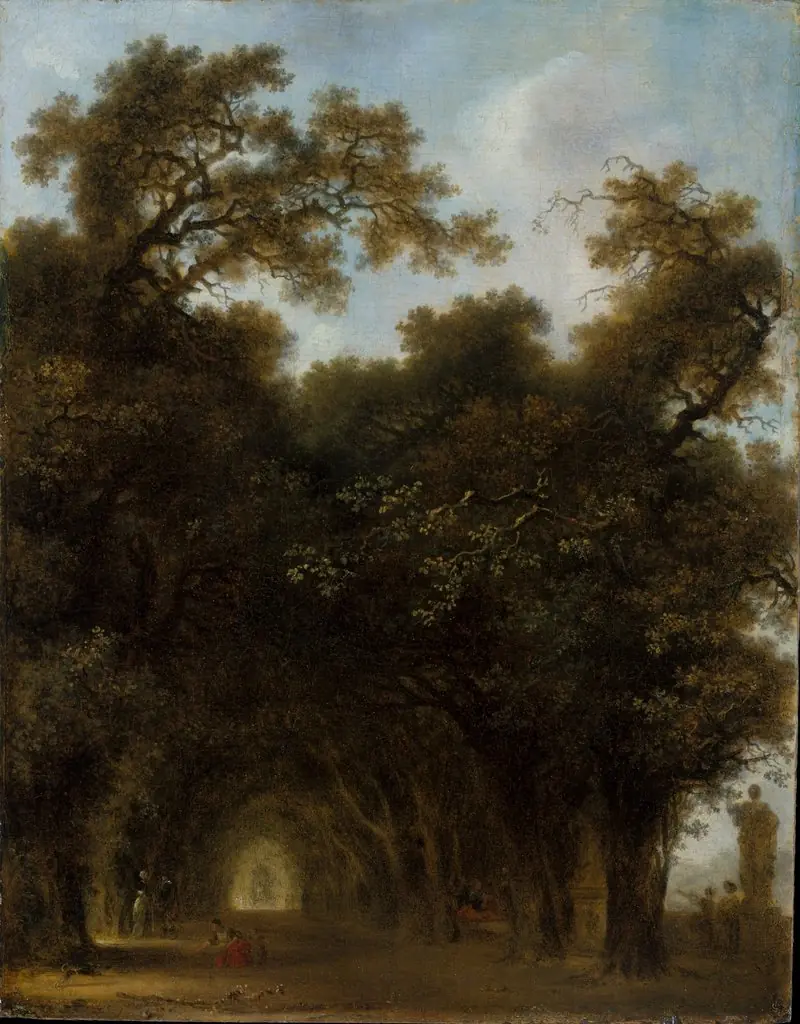
The composition captures a moment of playful chaos within a lush garden setting, where figures in elegant 18th-century attire engage in the blindfolded pursuit.
Jean-Honoré Fragonard's Blindman's Buff, executed in 1778, depicts a spirited outdoor gathering centered on the titular game. The composition captures a moment of playful chaos within a lush garden setting, where figures in elegant 18th-century attire engage in the blindfolded pursuit. A central female figure, likely the blindfolded player, is surrounded by laughing companions who guide or evade her, creating a dynamic interplay of movement and social interaction. The scene is framed by architectural elements and a fountain, grounding the frivolity in a structured, aristocratic environment. Painted in oil on canvas, the work exemplifies Fragonard's mature Rococo style, characterized by loose, energetic brushwork and a vibrant, sun-drenched palette that enhances the sense of immediacy and joy. Created during the late 1770s, this piece reflects the artist's continued mastery of the fête galante genre, focusing on themes of leisure, romance, and the fleeting nature of pleasure. It stands as a significant example of Fragonard's ability to animate social scenes with psychological depth and visual spontaneity, bridging the gap between the decorative elegance of the early Rococo and the more naturalistic tendencies emerging in late 18th-century French art.
Subject & Meaning
The scene captures a moment of leisurely amusement, with several participants appearing to spin or dance while blindfolded, suggesting a game of blind‑man’s buff. This playful activity, set among aristocratic attire, reflects the Rococo fascination with lighthearted social rituals and the fleeting pleasures of garden life.
Technique & Style
Fragonard employs a delicate palette of pastel hues, applying thin glazes that lend the surface a luminous quality. His brushwork is fluid and airy, creating a sense of movement and translucency in both foliage and fabric. The overall effect is one of gentle cheerfulness, characteristic of his late‑Rococo approach.
History & Provenance
Created near the end of Fragonard’s career, the painting was likely intended for a private collector interested in decorative genre scenes. Its subsequent ownership record is sparse, but it has appeared in several European collections before entering its present museum setting, where it is displayed among other 18th‑century French works.
Own this work as a print
Artist & collection

Artist
Jean-Honoré Fragonard was born on 5 April 1732 in Grasse, the son of a glover, and moved with his family to Paris in 1738.