Artwork
Love as Folly
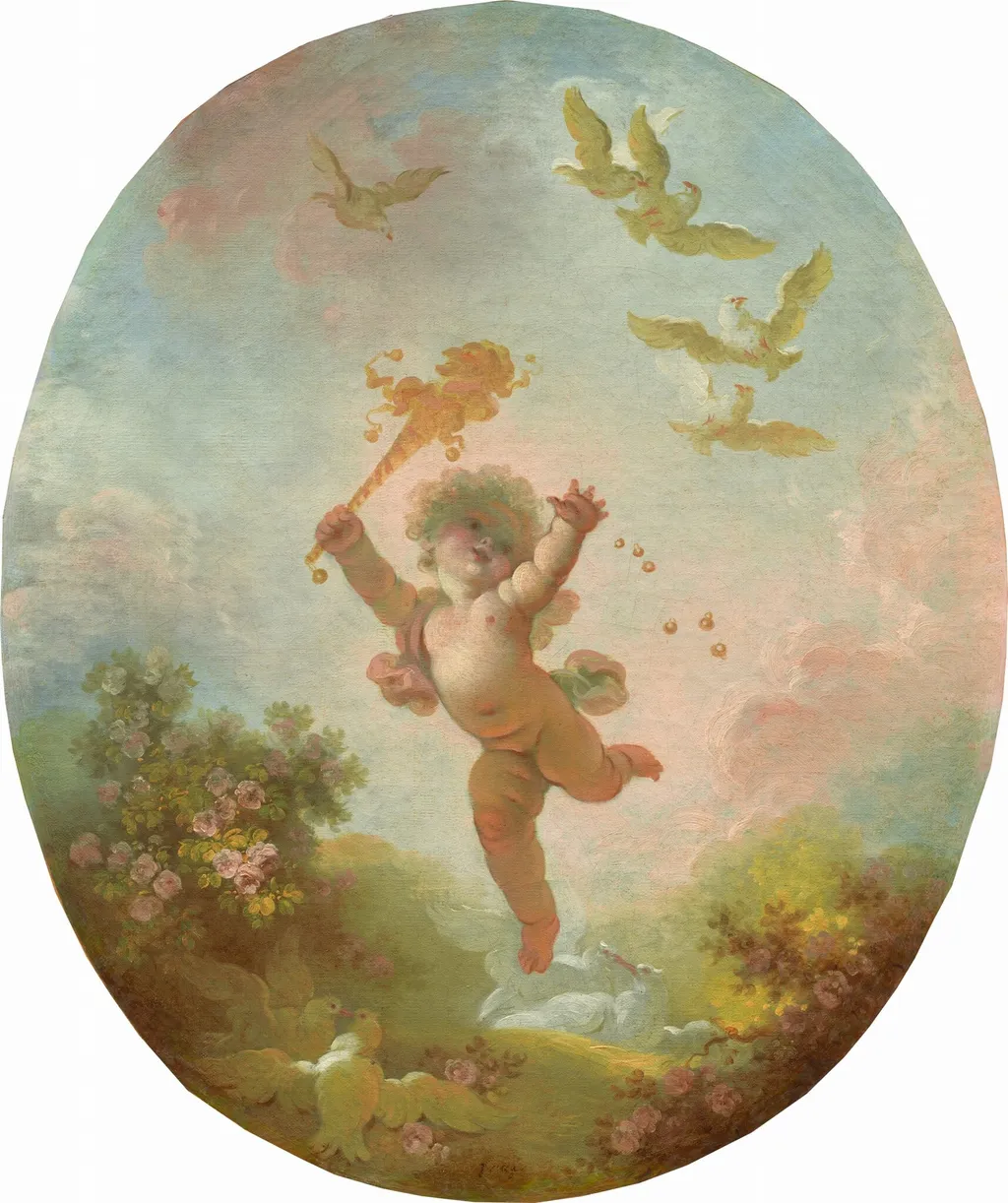
Love as Folly is an oil painting by the Rococo painting artist Jean Honoré Fragonard. It dates from 1774 and is held in the collection of the National Gallery of Art.
About this work
Overview
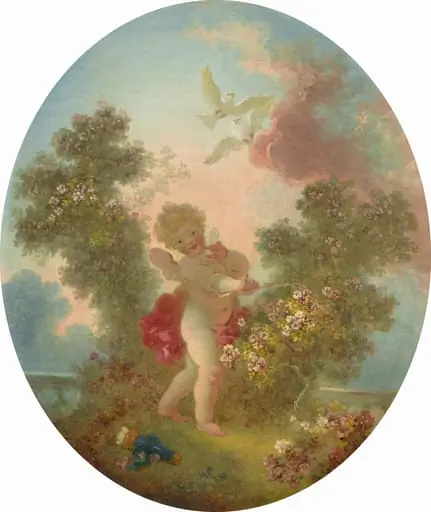
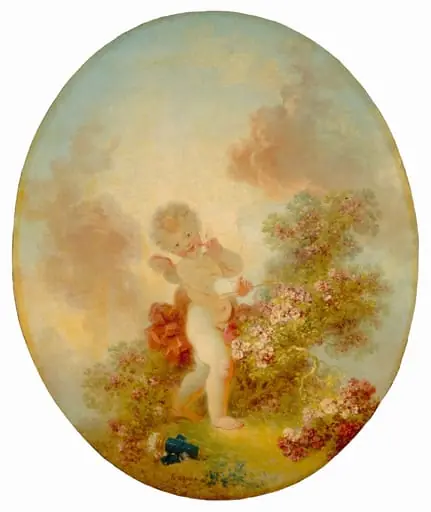
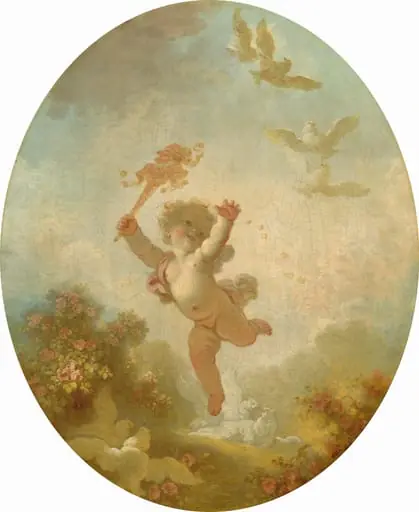
Jean‑Honoré Fragonard’s oil on canvas, Love as Folly, dates to around 1774. The composition presents a rotund, barefoot child with curly hair suspended above a garden landscape. The figure reaches upward with one hand while clutching a tall staff with the other, surrounded by diminutive winged cherubs and a scattering of blossoms on a grassy slope.
Subject & Meaning
The central child’s expression is impish, suggesting a playful teasing that aligns with the title’s suggestion of love’s irrationality. The surrounding cherubs and blooming flora create a light, dreamlike atmosphere, reinforcing the notion of love as a whimsical, fleeting fancy.
Technique & Style
Executed in oil, the work employs a pale, airy palette that evokes the warmth of early spring. Soft modeling and subtle transitions between light and shadow give the scene a gentle chiaroscuro, while the delicate rendering of the cherubs and foliage reflects Fragonard’s characteristic Rococo fluidity.
Context
Created in the latter part of Fragonard’s career, the painting illustrates the artist’s continued interest in allegorical subjects and the pleasures of the imagination. Its whimsical treatment of a mythic theme fits within the broader 18th‑century French taste for decorative, sentiment‑laden compositions.
Artist & collection

Artist
Jean-Honoré Fragonard was born on 5 April 1732 in Grasse, the son of a glover, and moved with his family to Paris in 1738.