Artwork
The Beautiful Country Woman
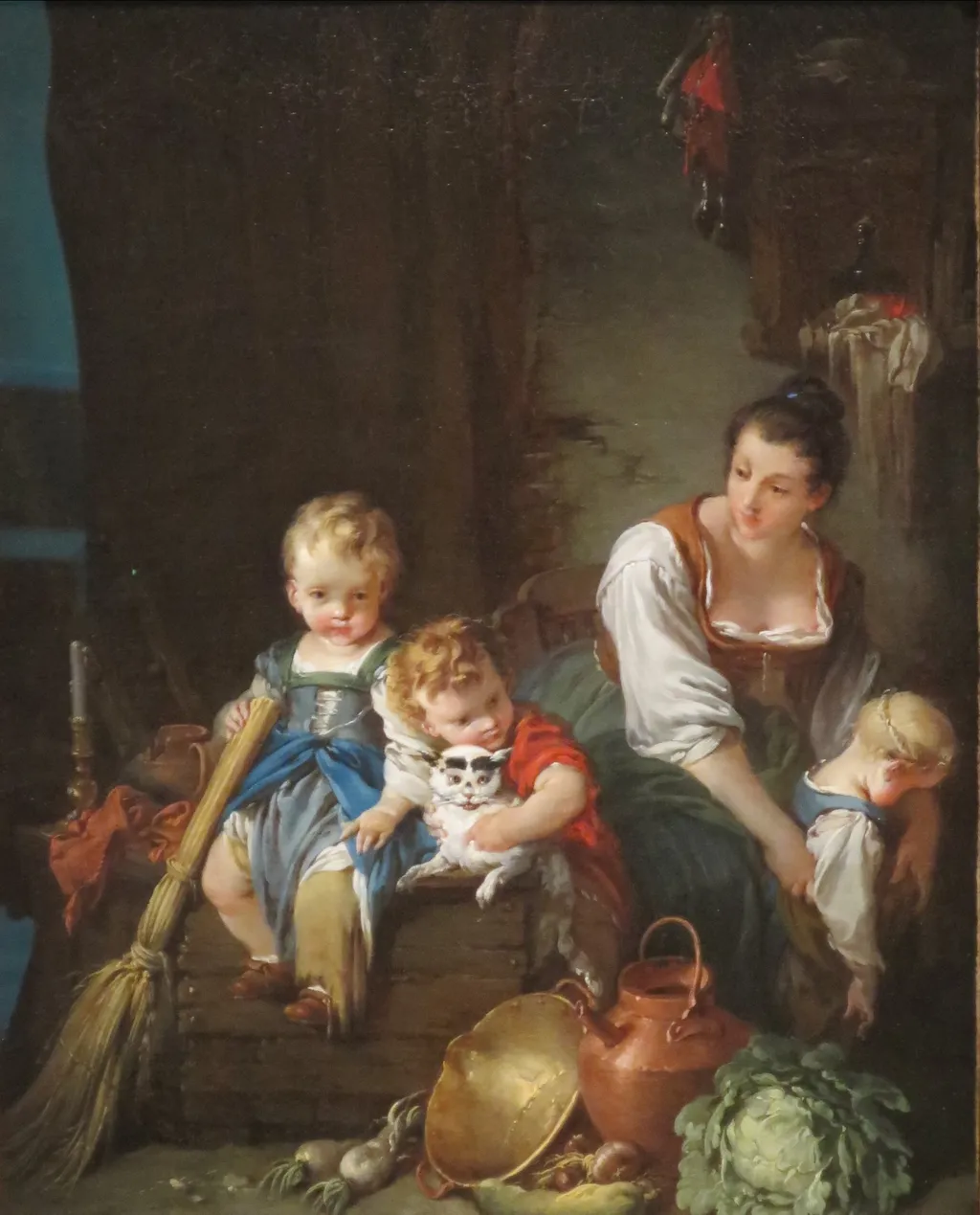
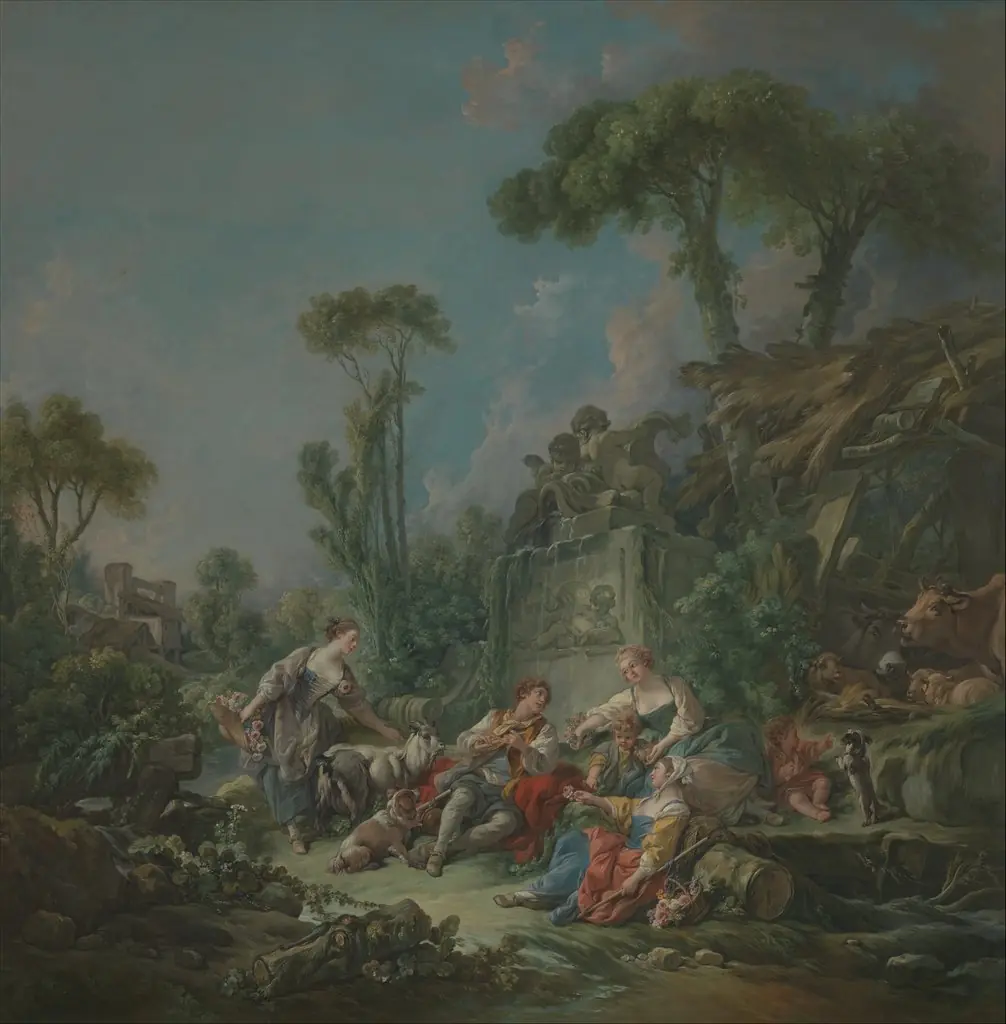
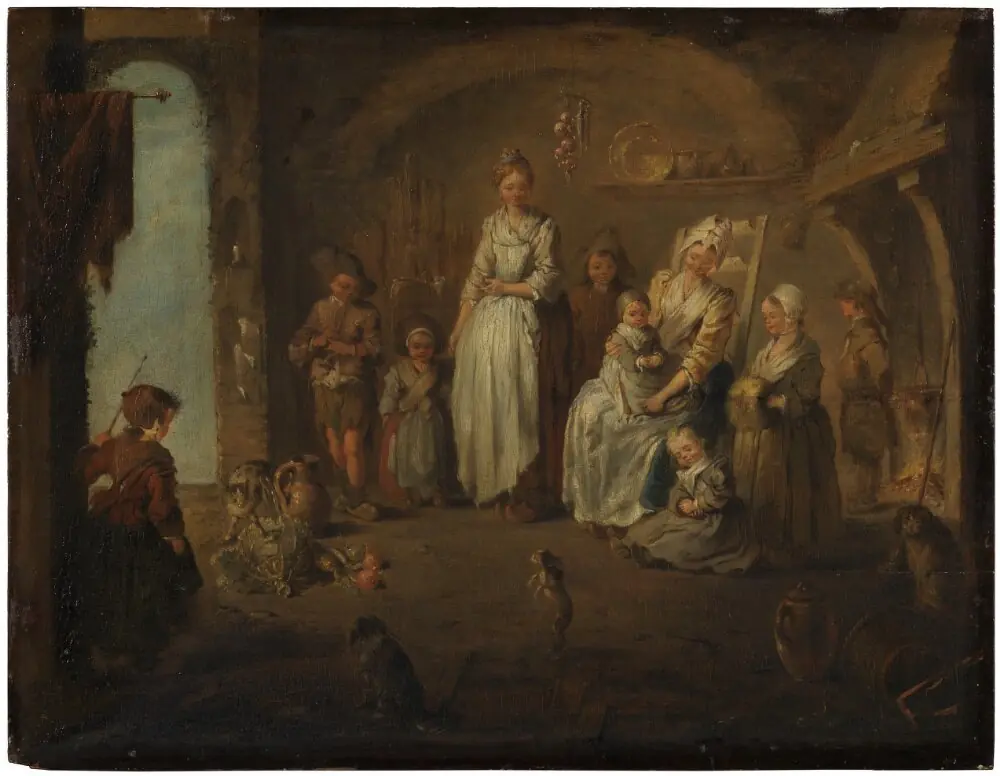
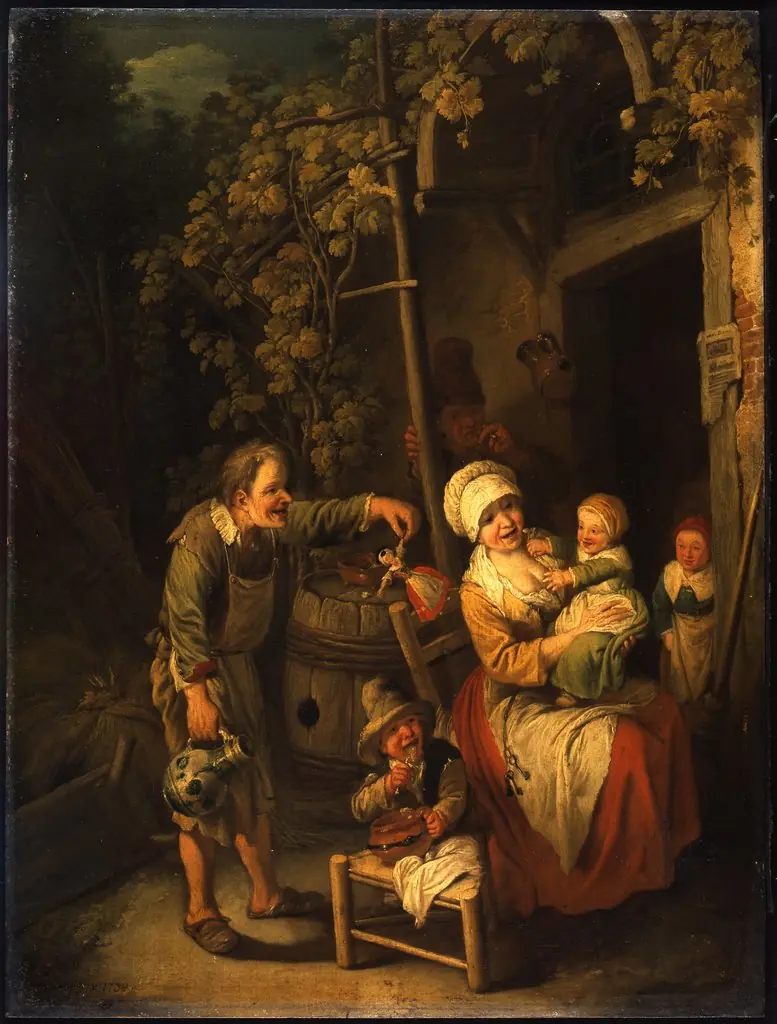
The Beautiful Country Woman is an oil painting by the Rococo painting artist François Boucher. It dates from 1732 and is held in the collection of the Norton Simon Museum.
About this work
Overview
Though often associated with pastoral idealism, the painting avoids overt sentimentality, grounding its narrative in quiet, everyday gestures.
Painted in 1732 by François Boucher, this oil work depicts a rural domestic scene centered on a woman and three children. Though often associated with pastoral idealism, the painting avoids overt sentimentality, grounding its narrative in quiet, everyday gestures. It resides in the Norton Simon Museum, where it stands as an early example of Boucher’s engagement with genre subjects before his later courtly style fully emerged.
Subject & Meaning
The composition centers on a woman seated on a wooden bench, cradling a cat while three children engage in quiet activities nearby. A boy holds a broom, another sits quietly, and a girl stands at the edge, observing. The absence of dramatic action and the soft, unposed interactions suggest an intimate moment of rural life, valued not for its novelty but for its calm authenticity. The cat and vegetables imply domestic care, reinforcing themes of nurture and routine.
Technique & Style
Boucher employs soft brushwork and muted earth tones—ochres, browns, and pale whites—to unify the scene. The dark background isolates the figures, drawing attention to their textures and subtle gestures. Light falls gently across the woman’s shirt and the children’s clothing, modeling form without theatrical contrast. The arrangement is asymmetrical yet balanced, with objects like the basket and pot anchoring the lower register and enhancing spatial depth.
History & Provenance
The painting entered the Norton Simon Museum’s collection through the museum’s founding bequest, having previously been in private European hands. Its attribution to Boucher has been consistently supported by stylistic analysis and documentary records from the 1730s. While not among his most famous works, it reflects his early interest in rural life, a theme he would later abandon in favor of mythological and aristocratic subjects.
Context
In early 18th-century France, genre scenes of peasant life were gaining attention among collectors, though often filtered through a lens of romanticized simplicity. Boucher, then a young artist, was exploring such subjects before his rise as a favorite of the royal court. This painting aligns with a broader European trend of depicting humble interiors with tenderness, yet retains a restraint uncommon in later Rococo excesses.
Legacy
Though overshadowed by Boucher’s later decorative works, this painting remains a quiet testament to his early technical sensitivity and observational skill. It offers insight into an underrepresented phase of his career, bridging the influence of Dutch genre painting and the emerging French Rococo sensibility. Its endurance in museum collections underscores its value as a nuanced portrayal of domestic life in pre-Revolutionary France.
Artist & collection

Artist
François Boucher was a French painter, draughtsman and etcher, who worked in the Rococo style.