Artwork
Venetian Lagoon
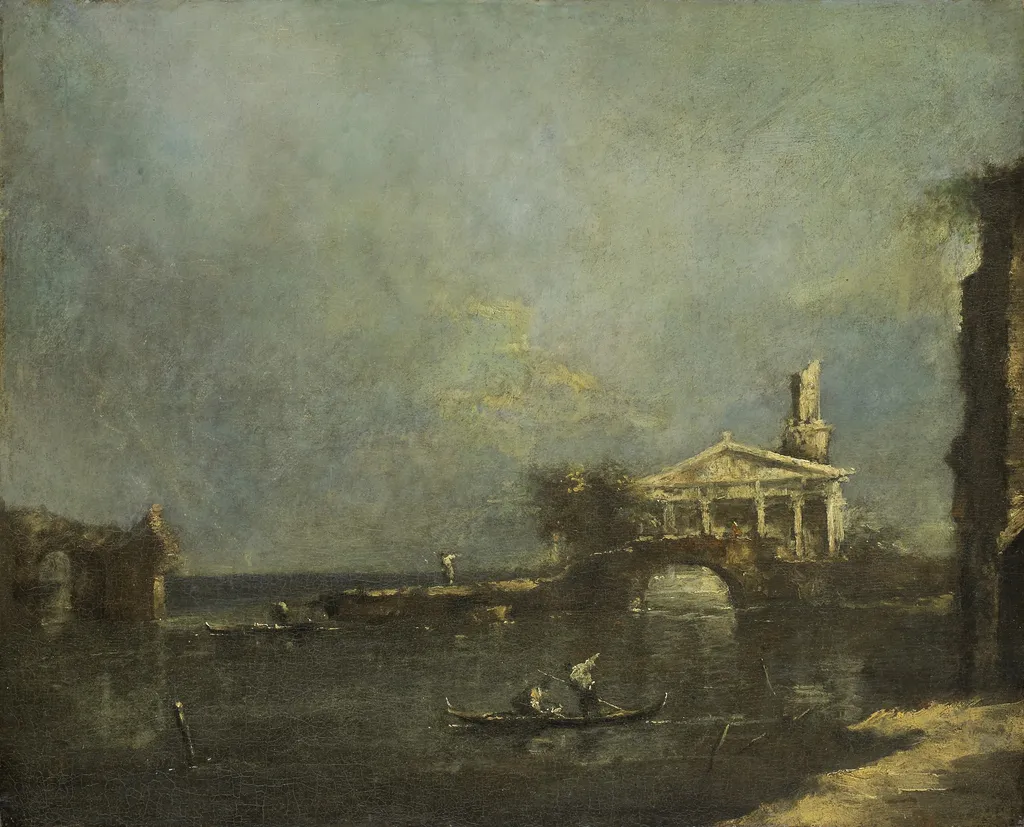
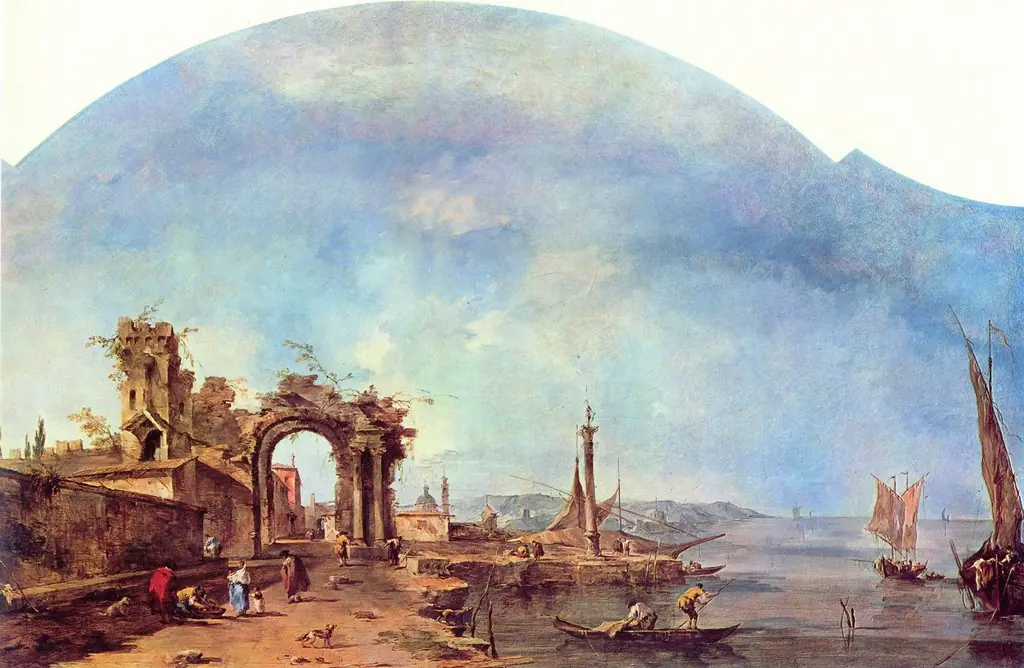
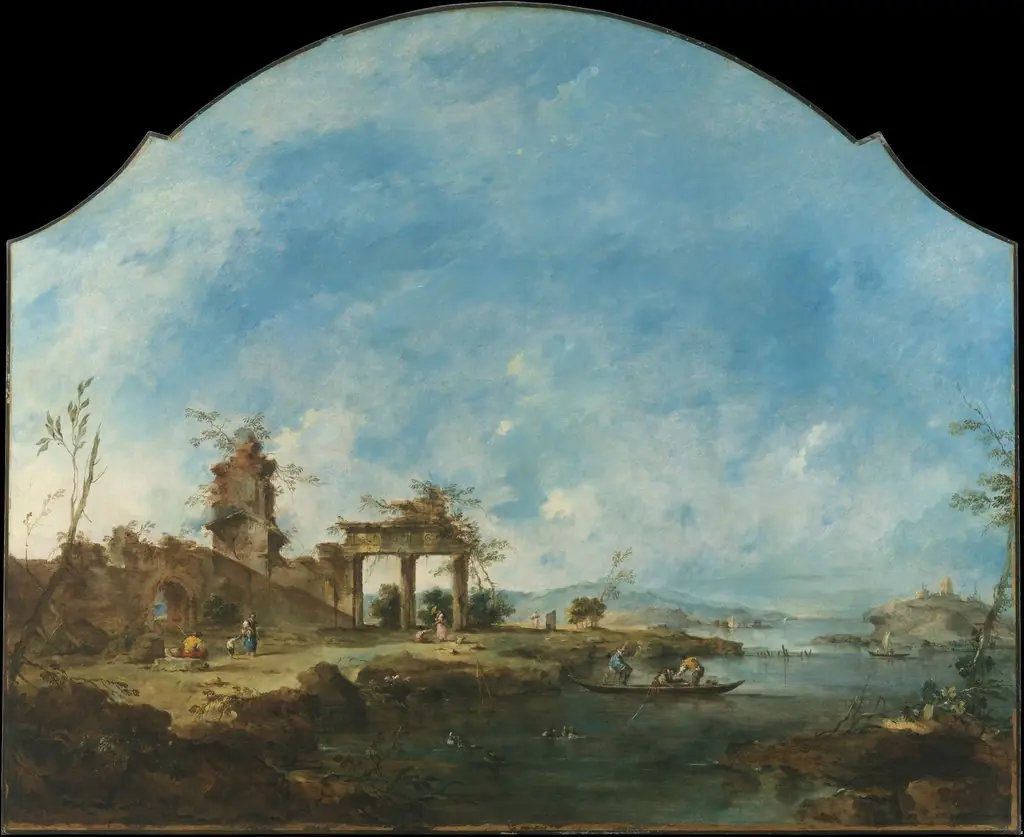
Venetian Lagoon is an oil painting by the Rococo painting artist Francesco Guardi. It dates from 1500 and is held in the collection of the Rijksmuseum.
About this work
Overview
Francesco Guardi’s oil painting *Venetian Lagoon* portrays a tranquil twilight scene on the waters of Venice. A solitary boat drifts near a shoreline where a lone figure stands on a dock, while a pale, temple‑like structure rises on a distant hill, topped by a tall tower. The sky merges softly with the water, creating a muted, atmospheric vista.
Subject & Meaning
The work captures the serene ambience of the lagoon at dusk, emphasizing the interplay of light and water rather than narrative detail. The lone figure and small vessel suggest quiet human presence within a vast, calm environment, inviting contemplation of the landscape’s timeless stillness and the subtle transitions between day and night.
Technique & Style
Guardi employs loose, fluid brushwork that softens edges and imparts a misty quality to the scene. The handling of light and shadow creates a delicate chiaroscuro, with the hazy sky and reflected tones blending into the water’s surface. This approach prioritizes mood and atmospheric effect over precise architectural rendering.
History & Provenance
Created in the Rococo period, the painting is part of the Rijksmuseum’s collection. Guardi, a member of the Venetian School, is known for his cityscape vedute, which evolved from earlier influences into a more lively, expressive manner. The work reflects his later focus on capturing the essence of Venetian environments.
Own this work as a print
Artist & collection

Artist
Francesco Lazzaro Guardi (Italian pronunciation: ; 5 October 1712 – 1 January 1793) was an Italian painter, nobleman, and a member of the Venetian School.