Artwork
Narcissus
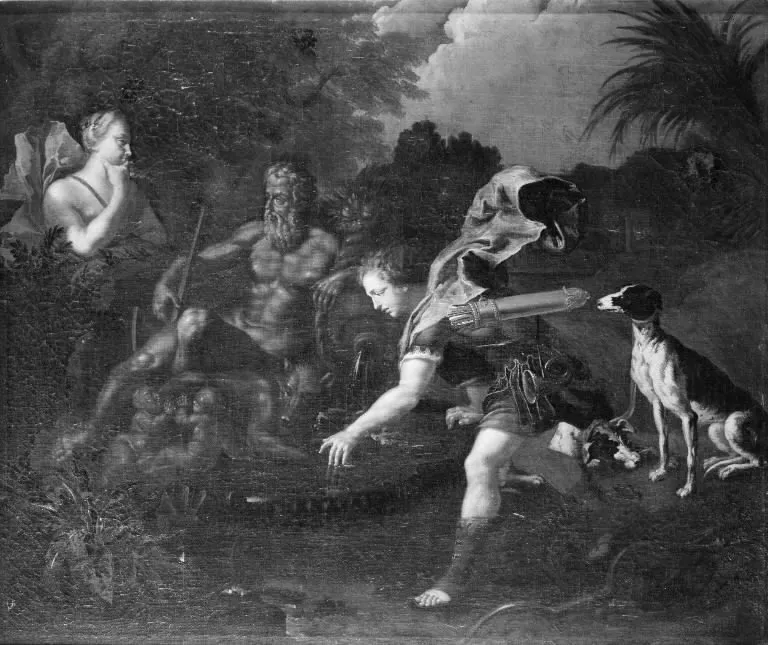
Narcissus is an oil painting by the Early Baroque Italian artist Francesco Liberti. It dates from 1629 and is held in the collection of the Statens Museum for Kunst.
About this work
Overview
Francesco Liberti’s 1629 oil on canvas, titled Narcissus, presents a dramatic forest tableau that juxtaposes mythic narrative with a tense, natural setting. The composition is anchored by a kneeling youth at a stream, accompanied by a dog, while a bearded figure with a spear watches from above. A robed woman stands to the left, her gaze turned away, all set against a dark, storm‑filled backdrop.
Subject & Meaning
The work draws on the Greek myth of Narcissus, though the presence of a dog and a spear‑bearing man suggests a broader allegorical reading, perhaps linking self‑reflection with vigilance and loyalty. The juxtaposition of the contemplative youth and the observing figures invites contemplation of vanity, observation, and the tension between nature and human intervention.
Technique & Style
Liberti employs pronounced chiaroscuro, using stark light and deep shadow to model the figures and heighten emotional intensity. The illumination catches the faces and musculature, while the surrounding forest recedes into darkness, creating a sense of depth and drama. The stillness of the dog contrasts with the surrounding movement, reinforcing the scene’s tension.
History & Provenance
Created in 1629, the painting entered the collection of Denmark’s Statens Museum for Kunst, where it remains on display. Its acquisition reflects the museum’s 19th‑century interest in Baroque Italian works, and it has been catalogued as a notable example of Liberti’s mythological oeuvre.
Artist & collection
Artist
Francesco Liberti painted dramatic scenes from ancient myths. In 1629 he showed Pyramus and Thisbe, a tragic love story split by a bloody misunderstanding, and Narcissus, the proud youth who falls for his own…