Artwork
To Rise and to Fall, Plate 56
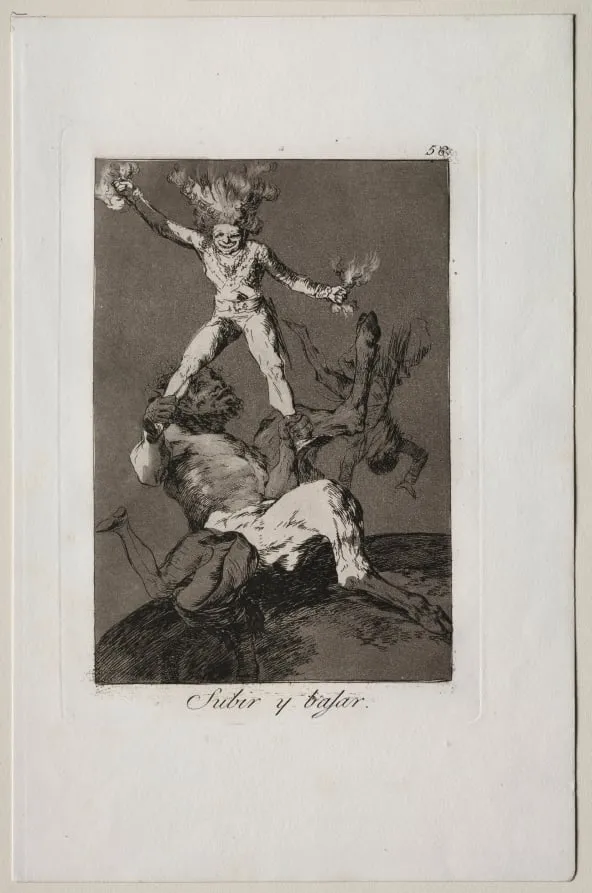
To Rise and to Fall, Plate 56 is a print by the Romanticist artist Francisco Goya. It dates from 1799 and is held in the collection of the Cleveland Museum of Art.
About this work
Overview
To Rise and to Fall, Plate 56 is a print by Francisco de Goya, dated circa 1799, currently in the collection of The Cleveland Museum of Art.
Subject & Meaning
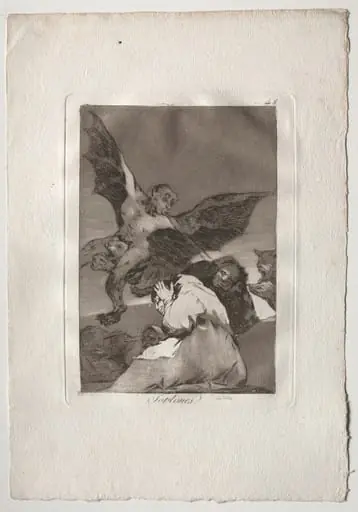
The print depicts a dramatic scene of three figures. A central figure, dressed in white with long hair, stands on the back of another, who is clad in dark attire and appears distressed. A third, partially obscured figure lurks in the background, contributing to an overall atmosphere of turmoil and chaos.
Technique & Style
Rendered predominantly in dark tones against a somber background, the work exemplifies characteristics of the emerging Romanticism movement, emphasizing intense emotion and dramatic contrast.
History & Provenance
Created around 1799, the precise history of the print prior to its acquisition by The Cleveland Museum of Art is not detailed here.
Context
Part of a broader artistic shift, this work reflects Goya's exploration of themes that would become hallmarks of Romanticism, such as emotional intensity and the sublime.
Legacy
As part of Goya's oeuvre, the work contributes to the artist's influence on the development of Romantic art, though its specific impact is not individually highlighted in available information.
Artist & collection
Artist
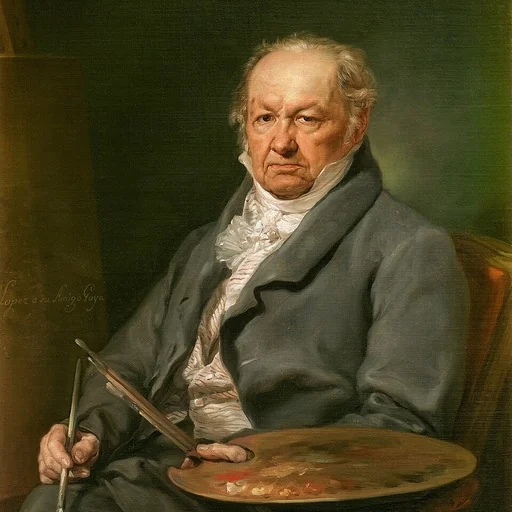
Francisco José de Goya y Lucientes (; Spanish: ; 30 March 1746 – 16 April 1828) was a Spanish romantic painter and printmaker.