Artwork
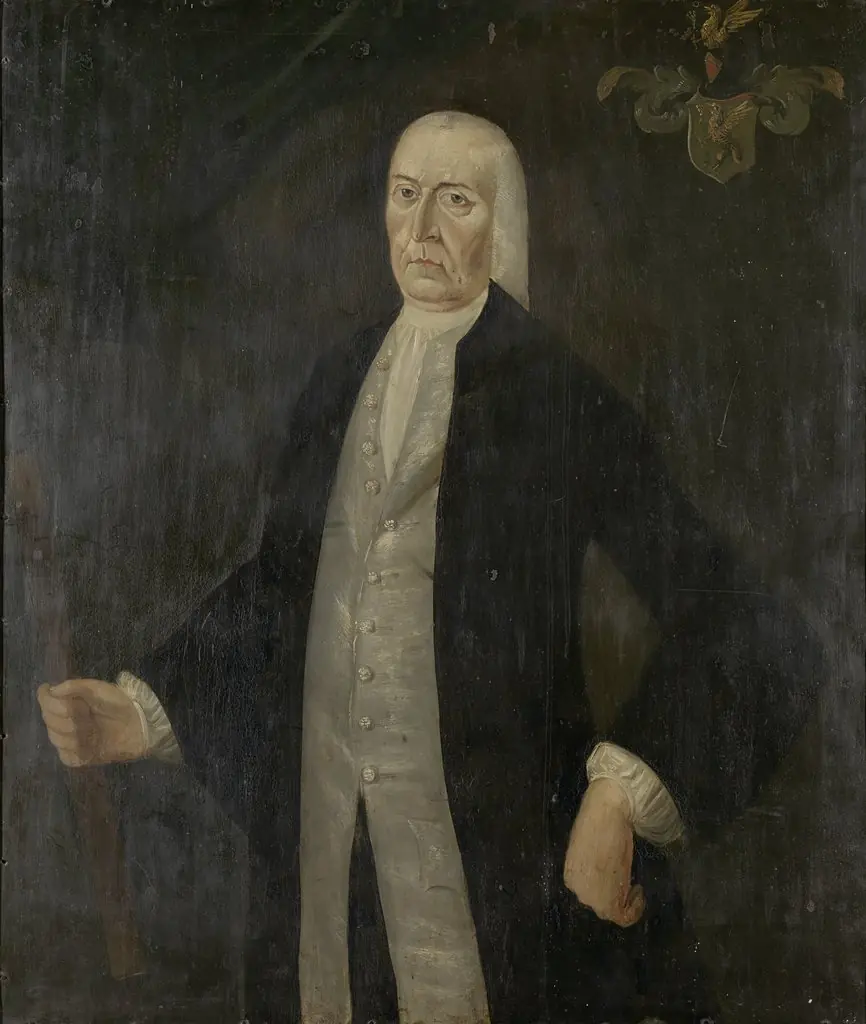
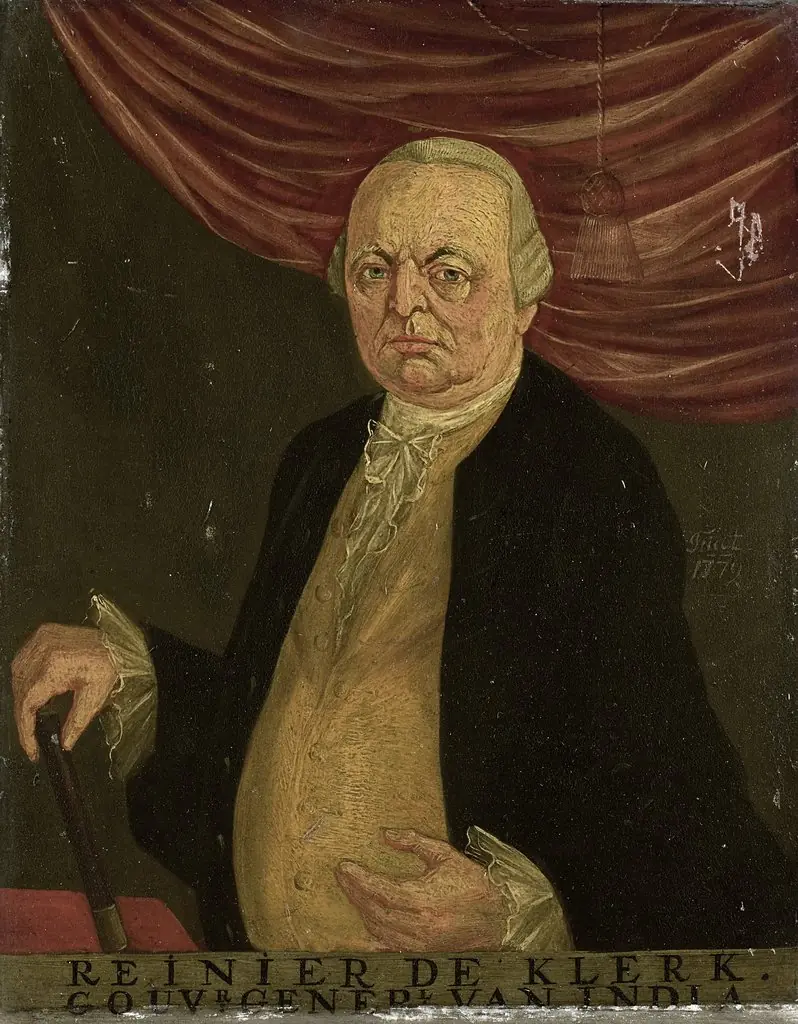
Portrait of Reinier de Klerk (1710-80), Gouverneur-generaal (1777-80)
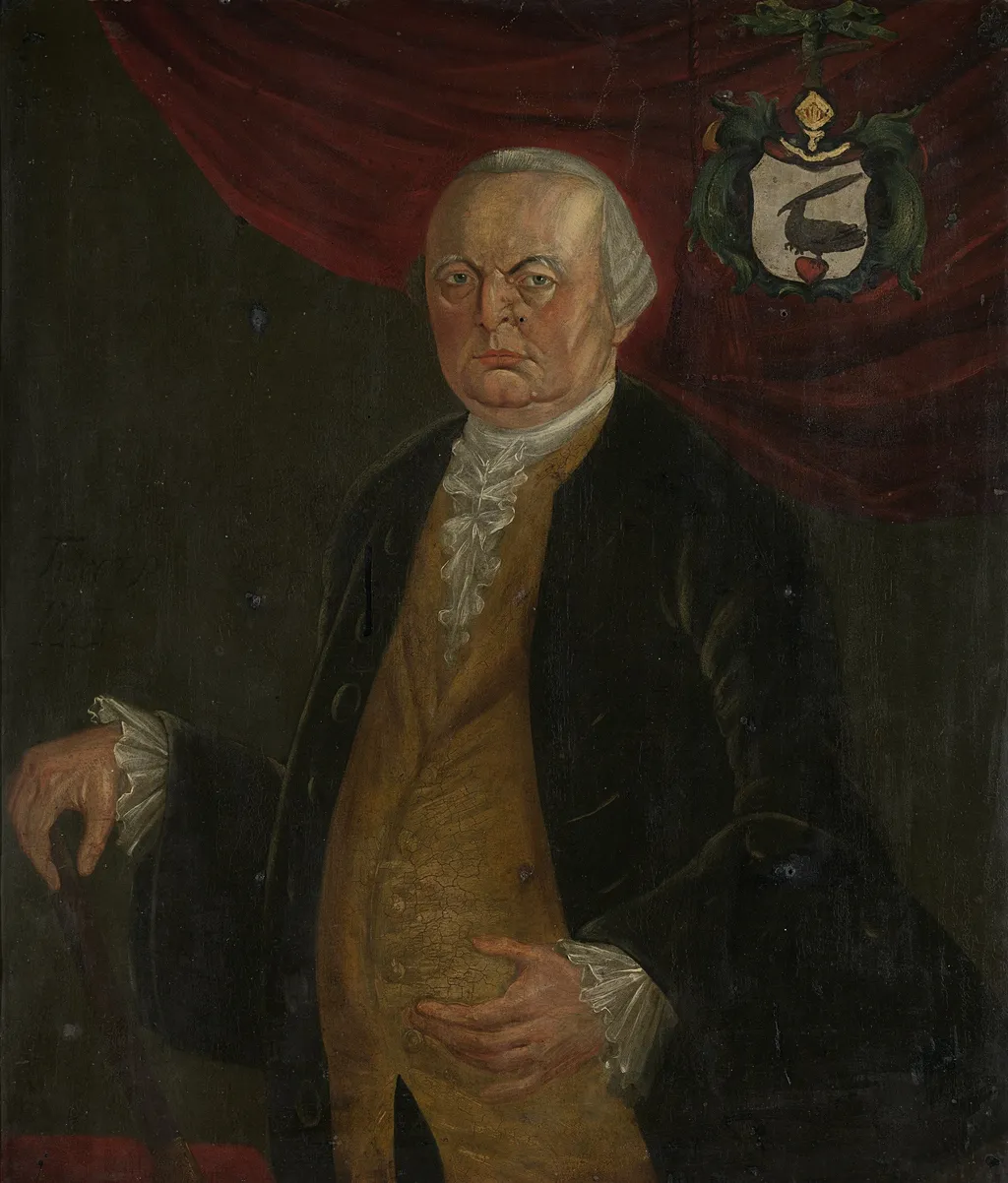
Portrait of Reinier de Klerk (1710-80), Gouverneur-generaal (1777-80) is an oil painting by the Rococo painting artist Franciscus Josephus Fricot. It dates from 1789 and is held in the collection of the Rijksmuseum.
About this work
Overview
The work captures the subject in a formal, three-quarter standing pose, characteristic of late 18th-century official portraiture.
Created in 1789 by Franciscus Josephus Fricot, this bronze portrait depicts Reinier de Klerk, who served as Governor-General of the Dutch East Indies from 1777 to 1780. The work captures the subject in a formal, three-quarter standing pose, characteristic of late 18th-century official portraiture. De Klerk is dressed in period attire, wearing a black coat over a yellow waistcoat and a white ruffled shirt. His left hand rests on his hip while his right arm leans against a chair, conveying a stance of authority and composure. Behind him, a red curtain provides a rich backdrop, from which hangs a crest featuring a black bird, likely symbolizing his colonial office or personal heraldry. Fricot, known for his work in the Dutch Republic, executed this piece shortly after de Klerk's tenure, solidifying the subject's legacy in the visual record of the Dutch colonial administration. The sculpture demonstrates Fricot's skill in rendering fabric textures and human anatomy in metal, serving as a commemorative object for a key figure in the history of the Dutch East India Company.
Subject & Meaning
The figure is shown in formal attire of the period: a black coat over a yellow waistcoat, a white ruffled shirt, and white hair styled in a dignified fashion. His left hand rests on his hip while the right arm leans on a chair, conveying authority and composure appropriate to a high‑ranking colonial administrator.
Technique & Style
Executed in bronze, the portrait displays a high level of modelling that captures the texture of fabric and the subtle expression on the sitter’s face. A red curtain behind the figure provides a contrasting backdrop, and a heraldic crest featuring a black bird and a red heart hangs from it, adding a symbolic layer to the composition.
History & Provenance
Francois Josephus Fricot, a Dutch sculptor active in the late 1700s, produced this work shortly after de Klerk’s death. The piece entered the Rijksmuseum’s holdings as part of its collection of Dutch colonial officials, where it remains on display as a representation of the era’s administrative elite.
Context
Reinier de Klerk governed the Dutch East Indies during a period of expanding trade and colonial administration. Portraits such as this were commissioned to affirm the legitimacy and prestige of colonial officials, reinforcing their status both at home and abroad.
Own this work as a print
Artist & collection
Artist
This 18th-century Dutch painter specialized in portrait medallions cast in brass, copper, and bronze.