Artwork
Still Life with Nautilus Cup
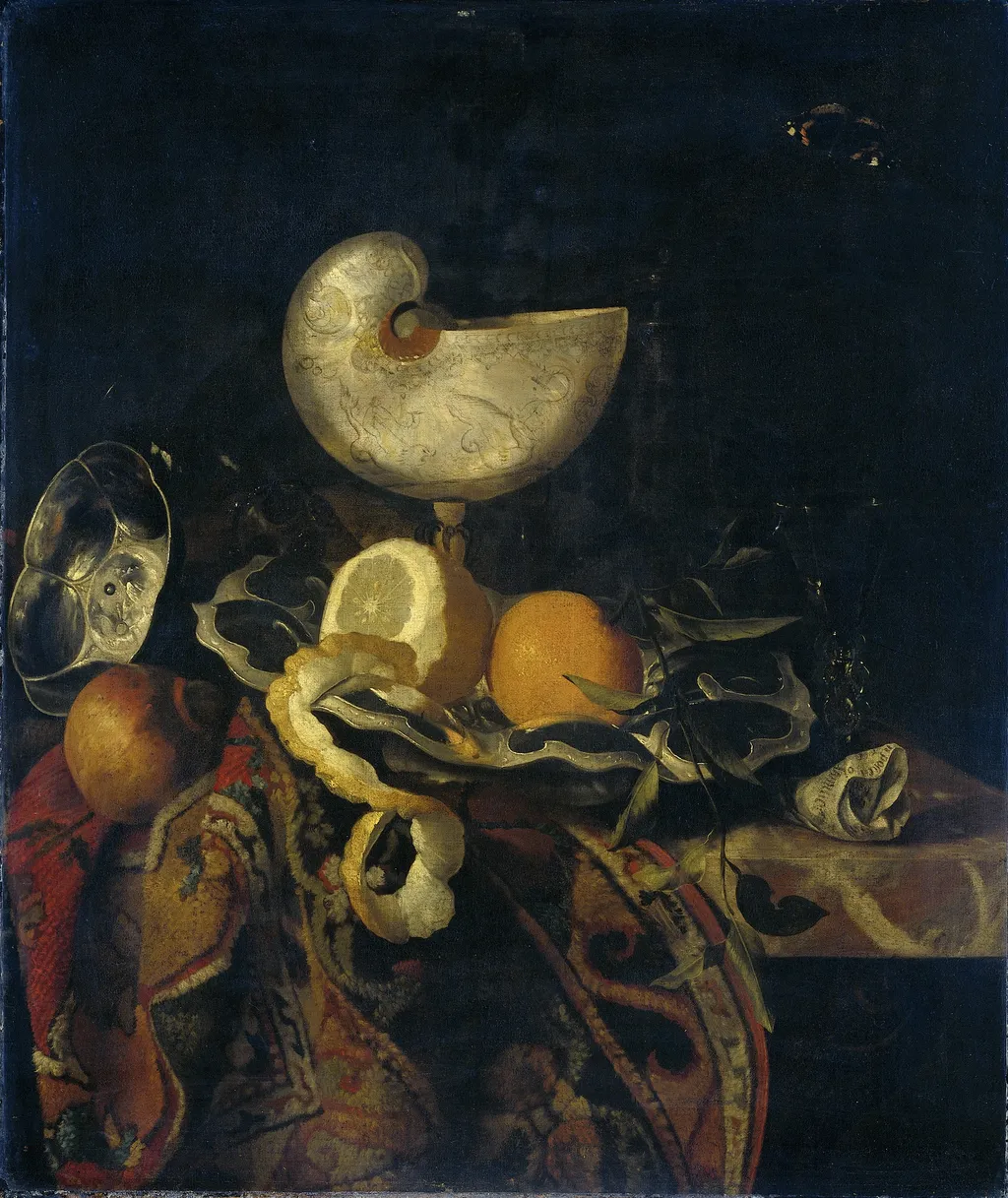
Still Life with Nautilus Cup is an oil painting by the Dutch Golden Age artist Frans Sant-Acker. It dates from 1650 and is held in the collection of the Rijksmuseum.
About this work
Overview
Frans Sant‑Acker’s oil painting, Still Life with Nautilus Cup, dates from around 1650. The composition centers on a carved nautilus cup accompanied by a sliced lemon and an orange, all set upon a richly patterned rug. A deep, shadowed backdrop isolates the objects, drawing the viewer’s eye to their textures and forms. The work is part of the Rijksmuseum’s collection.
Subject & Meaning
The arrangement juxtaposes exotic and everyday items: the spiraled nautilus cup, a symbol of natural wonder, alongside citrus fruits, common motifs in Dutch still lifes that often allude to transience and the senses. The careful placement suggests a study of material wealth and the fleeting pleasures of taste and sight.
Technique & Style
Sant‑Acker employs chiaroscuro, using strong contrasts of light and dark to model the surfaces and create a sense of three‑dimensionality. The luminous glaze on the cup and the glossy peel of the citrus are rendered with meticulous brushwork, while the dark background recedes, enhancing the tactile quality of each object.
History & Provenance
Created in the mid‑seventeenth century, the painting has remained in Dutch collections and currently resides in the Rijksmuseum in Amsterdam. Its attribution to Frans Sant‑Acker, a lesser‑known Dutch painter of the period, is based on stylistic analysis and archival records linking the work to his oeuvre.
Artist & collection