Artwork
View of Cotopaxi
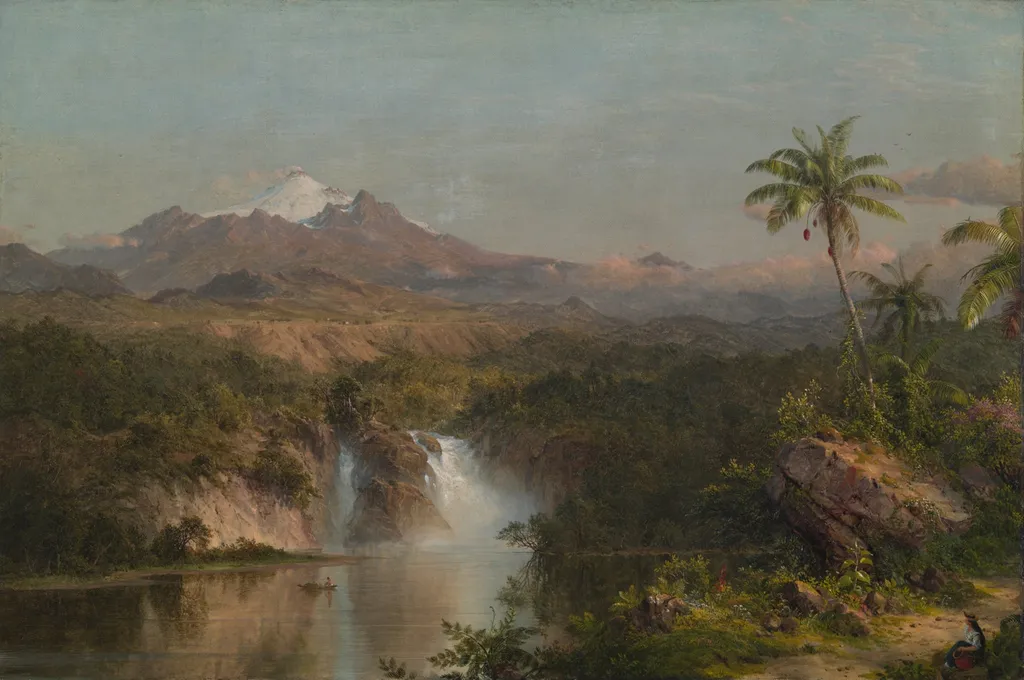
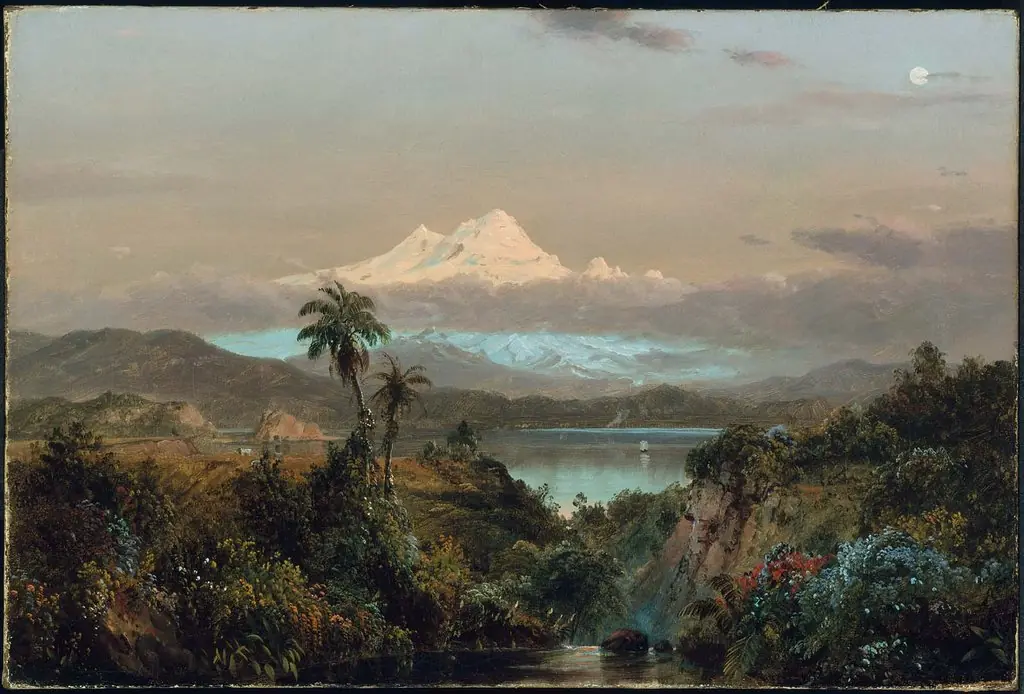
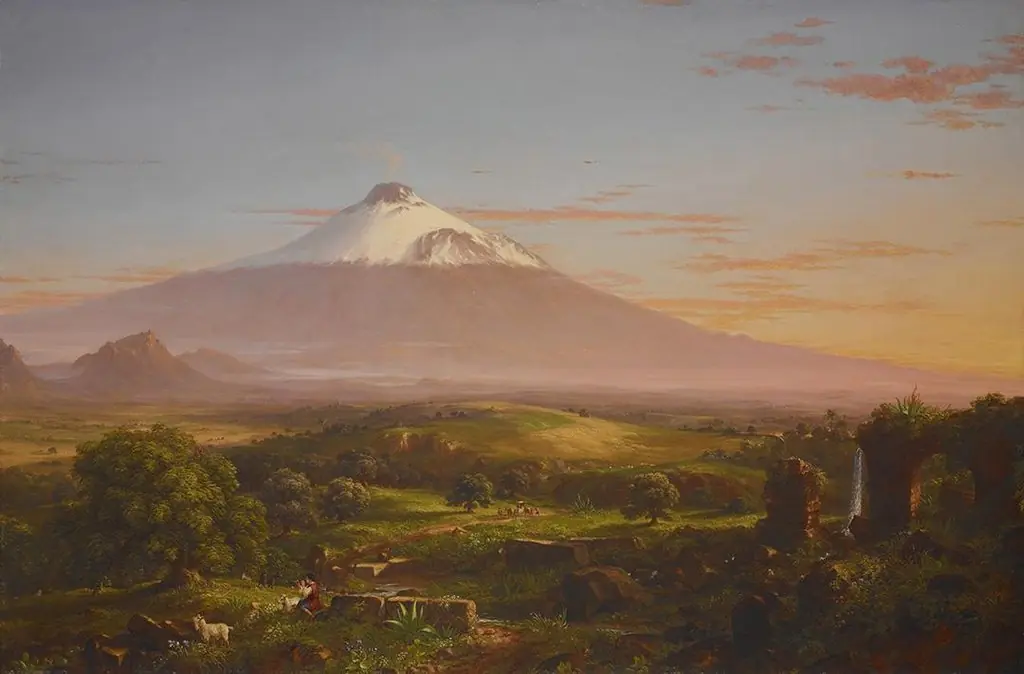
View of Cotopaxi is an oil painting by the Hudson River School artist Frederic Edwin Church. It dates from 1857 and is held in the collection of the Art Institute of Chicago.
About this work
Overview
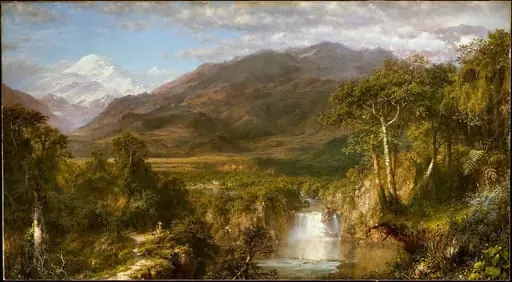
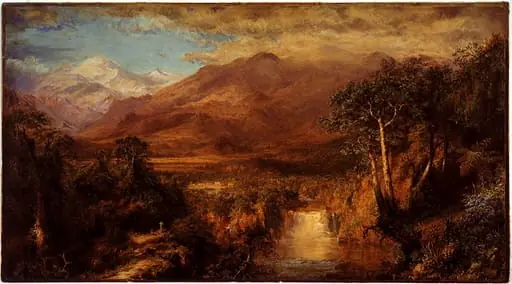
Frederic Edwin Church’s oil painting View of Cotopaxi depicts the active Ecuadorian volcano at dawn, its peak glowing under pale pink light.
Frederic Edwin Church’s oil painting View of Cotopaxi depicts the active Ecuadorian volcano at dawn, its peak glowing under pale pink light. Steam drifts from its crater as a river snakes through lush lowlands, with small human figures near a waterfall. Painted in Church’s New York studio shortly before his second journey to South America, the work synthesizes firsthand field observations with broader 19th-century intellectual currents, blending scientific precision with symbolic resonance.
Subject & Meaning
The painting presents Cotopaxi as both a natural phenomenon and a spiritual emblem. For Church and his audience, the volcano’s sublime power evoked divine presence, aligning with Christian interpretations of nature as revelation. Simultaneously, its towering form reflected contemporary scientific interest in geology and climate, embodying the tension between religious awe and empirical inquiry. The inclusion of human figures underscores nature’s scale and humanity’s fragility within it.
Technique & Style
Church employed meticulous observation and glazing techniques to achieve luminous atmospheric effects. He recorded temperature, light quality, and color shifts during his ascent of Cotopaxi, using these notes to reconstruct the scene with layered pigments. The result is a hyperrealistic yet emotionally charged landscape, where subtle gradations of color convey the chill of high altitude and the warmth of sunrise, enhancing the scene’s immersive realism.
History & Provenance
Completed in 1862, this version of View of Cotopaxi was one of at least ten paintings Church made of the volcano. It was painted after his 1853 journey to Ecuador, during which he carried a sketchbook and thermometer to document environmental conditions. The work preceded his second trip to the region in 1863, suggesting it was a refined synthesis of prior experience rather than a direct plein-air study, intended for exhibition and critical reception in the United States.
Context
In the mid-19th century, Latin America was increasingly viewed through the lens of American expansionism. Church’s grand landscapes, while rooted in scientific curiosity, resonated with political narratives that framed the region as a land of untapped potential. The painting’s scale and detail invited viewers to contemplate nature’s majesty, but also subtly reinforced cultural assumptions about the continent’s role in U.S. geopolitical imagination.
Legacy
View of Cotopaxi contributed to the development of American landscape painting as a vehicle for interdisciplinary thought. Church’s fusion of field science, religious symbolism, and aesthetic ambition influenced later artists and institutions. His method of building paintings from empirical data helped establish a new standard for naturalist art, bridging the gap between scientific documentation and emotional expression in visual culture.
Own this work as a print
Artist & collection

Artist
Frederic Edwin Church was an American landscape painter born in Hartford, Connecticut.