Artwork
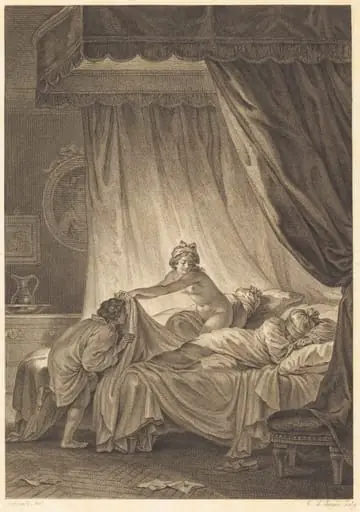
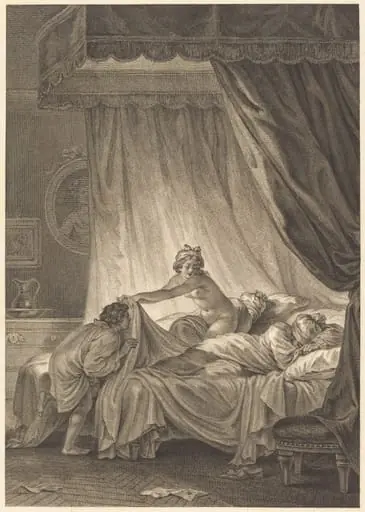
La gageure des trois commeres: Le fil
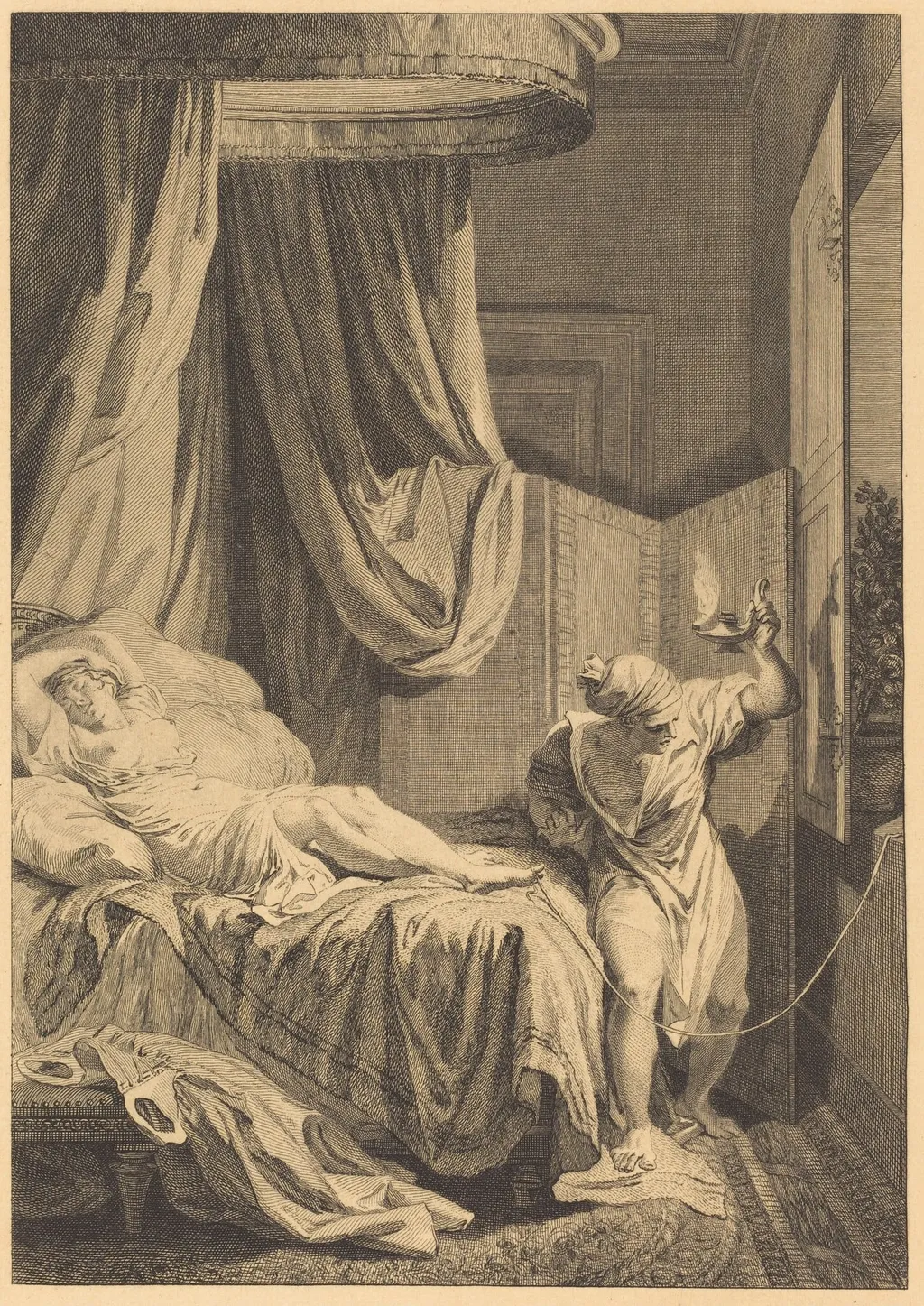
La gageure des trois commeres: Le fil is an ink print by the Baroque artist French 18th Century. It dates from 1750 and is held in the collection of the National Gallery of Art.
About this work
Overview
The work belongs to the Baroque tradition, where chiaroscuro and psychological nuance elevate everyday subjects into narratives of quiet drama.
This etching, titled La gageure des trois commeres: Le fil, captures a quiet moment of suspense among three women beside a sleeping man. Rendered in fine linear detail, the scene unfolds under a single candle’s glow, emphasizing the intimacy and tension of the moment. The work belongs to the Baroque tradition, where chiaroscuro and psychological nuance elevate everyday subjects into narratives of quiet drama.
Subject & Meaning
The three women, gathered around a bed where a man sleeps unaware, suggest a ritual or private exchange—perhaps a wager or a secret act involving the thread one holds. Their expressions convey vigilance or unease, while the man’s stillness underscores his vulnerability. The title hints at a folkloric or proverbial context, possibly referencing a superstition or oral tradition tied to fate or deception.
Technique & Style
The artist employs precise etching lines to model form and depth, using controlled hatching and cross-hatching to build shadow and texture. The candle’s light is rendered not through brightness but through the absence of ink, leaving paper to suggest illumination. This deliberate contrast, characteristic of Baroque printmaking, heightens emotional gravity and spatial ambiguity.
History & Provenance
The work originates from a French or Flemish printmaking milieu of the late 16th or early 17th century, though its exact creator remains unattributed. It likely circulated as a standalone print or within a series of moralizing or genre scenes. No documented ownership chain survives, but similar compositions appear in private collections of the period focused on domestic allegories.
Context
During the Baroque era, etchings often depicted scenes of domestic life infused with symbolic weight, reflecting broader cultural interests in morality, gender roles, and hidden intentions. This image aligns with a tradition of visual storytelling that used candlelit interiors to evoke secrecy, surveillance, or ritual—common motifs in prints meant for educated, middle-class audiences.
Legacy
Though not widely reproduced in modern scholarship, the print contributes to the understanding of how early modern printmakers translated narrative tension into intimate, monochromatic forms. Its emphasis on psychological subtlety and controlled lighting influenced later genre scenes in print and painting, particularly in Northern European traditions that valued quiet, observational realism.
Artist & collection

Artist
This artist worked in late 18th-century France, making portrait paintings and etched prints.