Artwork
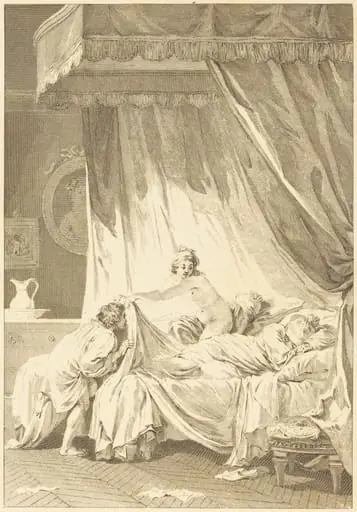
La gageure des trois commeres: Le fil
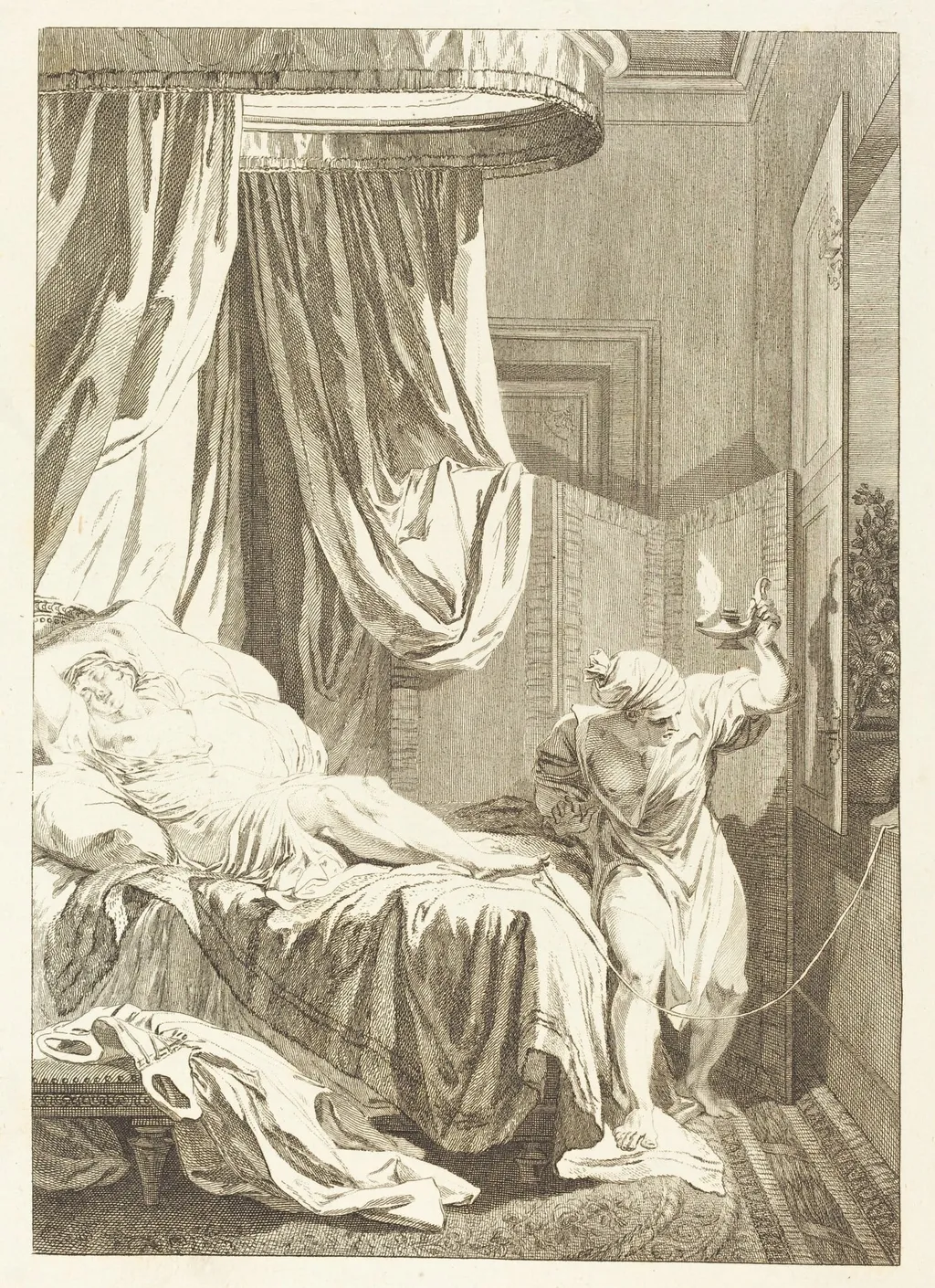
La gageure des trois commeres: Le fil is an ink print by the Baroque artist French 18th Century. It dates from 1750 and is held in the collection of the National Gallery of Art.
About this work
Overview
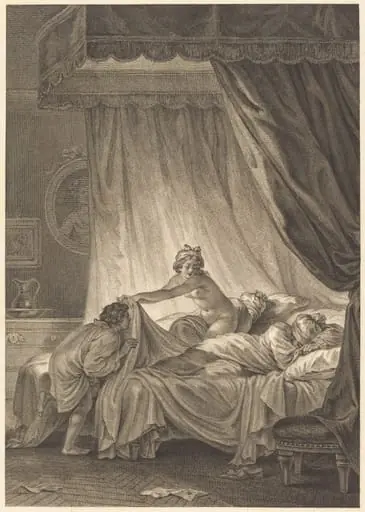
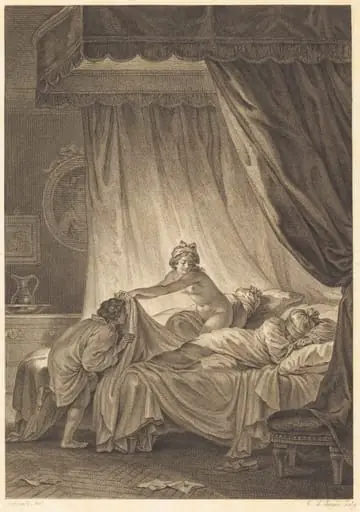
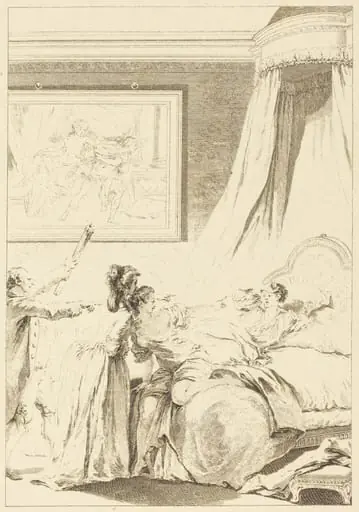
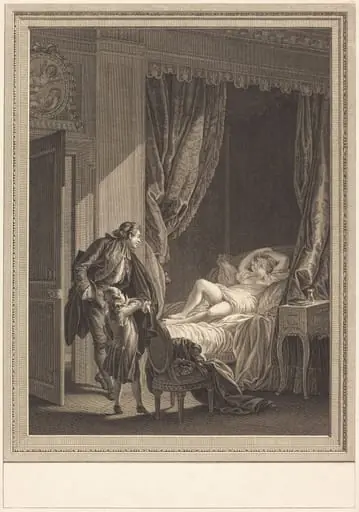
This etching, titled La gageure des trois commeres: Le fil, depicts a quiet domestic scene within a well-furnished bedroom.
This etching, titled La gageure des trois commeres: Le fil, depicts a quiet domestic scene within a well-furnished bedroom. A reclining woman, attended by a kneeling servant holding a bowl, is framed by heavy drapery and a partially drawn window. The composition emphasizes stillness and intimacy, capturing a moment of rest or care without overt narrative. The artist’s use of fine lines and subtle tonal shifts conveys texture and spatial depth within the confined interior.
Subject & Meaning
The scene suggests a moment of postpartum care, with the servant attending to the woman’s needs. The title references a traditional French folk motif involving three midwives, implying a connection to childbirth rituals. Yet the image avoids dramatic expression, focusing instead on quiet duty and domestic routine. The absence of other figures heightens the sense of privacy, inviting contemplation rather than storytelling.
Technique & Style
Executed in etching, the work employs fine, controlled lines to render fabric folds, skin tones, and architectural details. The artist uses varying line density to model light and shadow, particularly in the bed curtains and the servant’s garments. The soft gradations suggest a mastery of the medium’s capacity for nuance, avoiding bold contrasts in favor of muted, atmospheric realism.
History & Provenance
The print originates from a series illustrating scenes of domestic life, likely produced in late 17th- or early 18th-century France. While the artist’s identity remains unconfirmed, the style aligns with regional printmakers who documented private moments among the bourgeoisie. Its survival in institutional collections indicates early recognition of its technical refinement and observational depth.
Context
This work emerged during a period when printmaking increasingly turned to intimate, everyday subjects rather than mythological or religious themes. The depiction of a servant’s role within a wealthy household reflects broader social hierarchies, rendered with dignity rather than caricature. Such images catered to an emerging middle-class audience interested in domestic virtue and refined realism.
Legacy
The etching contributes to a tradition of European printmaking that elevated domestic scenes through technical precision and restrained emotion. Though not widely reproduced, its influence is visible in later genre works that prioritized quiet observation over theatricality. It remains a quiet example of how printmaking could capture the subtleties of daily life with lasting clarity.
Artist & collection

Artist
This artist worked in late 18th-century France, making portrait paintings and etched prints.