Artwork
Sturm
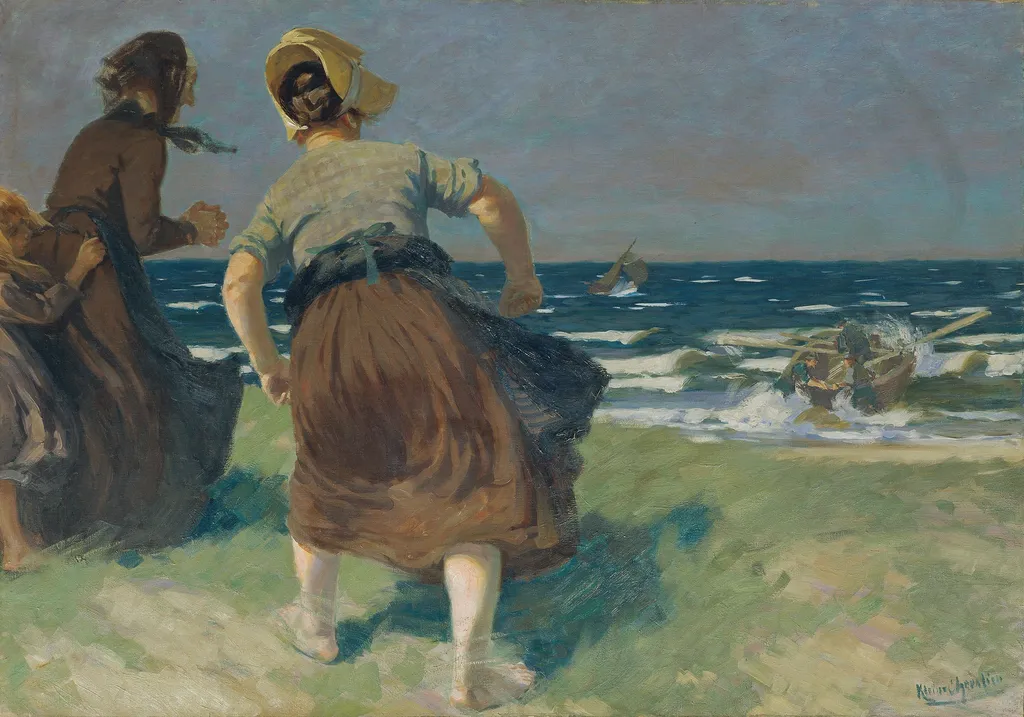
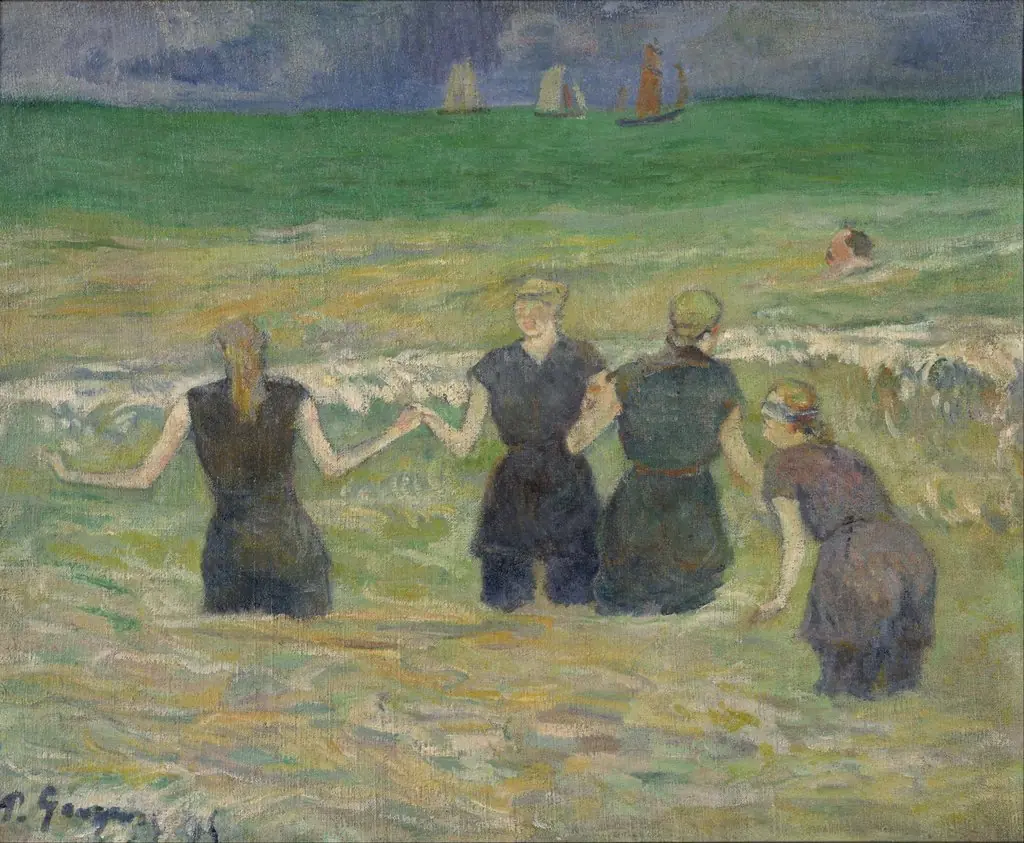
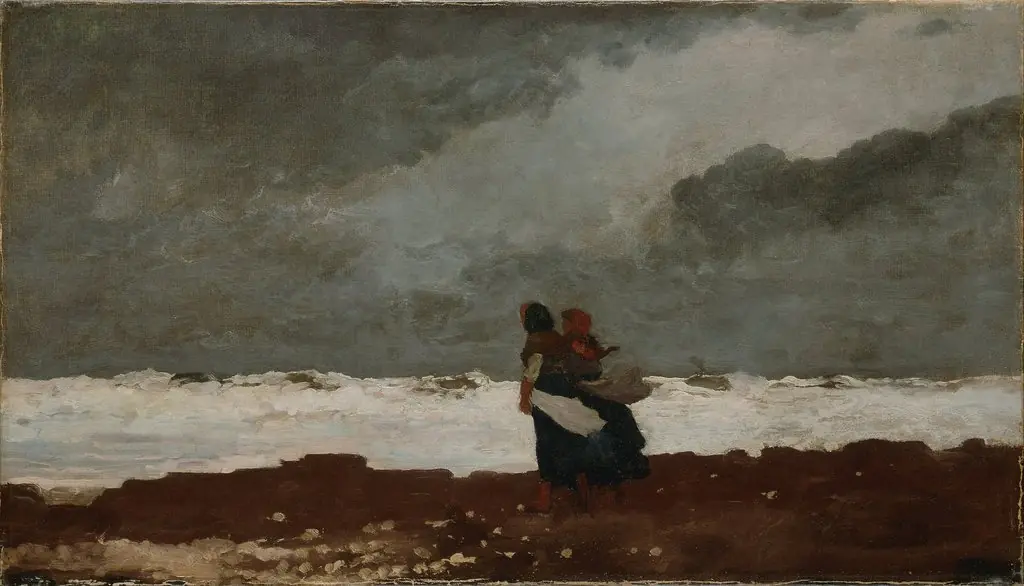
Sturm is an oil painting by the Post-Impressionist artist Friedrich Klein-Chevalier. It dates from 1908 and is held in the collection of the Kunsthistorisches Museum.
About this work
The overall mood of the painting is one of serenity and tranquility, with the women seemingly lost in thought as they gaze out at the boat.
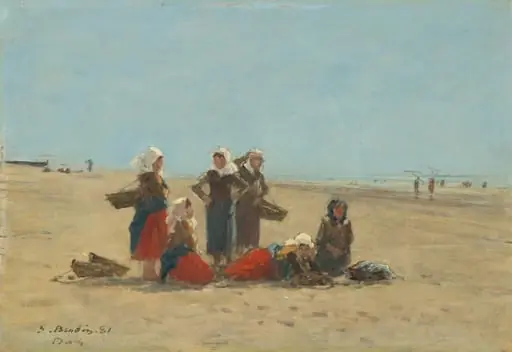
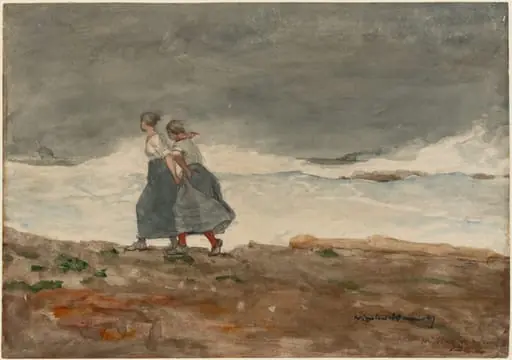
This painting depicts three women in long skirts and aprons, with one wearing a hat, standing on a beach. They are looking out at a small boat in the water, with a person inside it. The women are dressed in clothing typical of the early 20th century.
The scene is set against a backdrop of a blue sky and sea, with the women standing on a grassy area near the shore. The overall mood of the painting is one of serenity and tranquility, with the women seemingly lost in thought as they gaze out at the boat.
The artist's use of color and composition creates a sense of depth and perspective, drawing the viewer's eye to the boat in the distance. For more information on the artist's technique, look up chiaroscuro.
Overview
Painted in 1908 by Friedrich Klein-Chevalier, *Sturm* is an oil-on-canvas work that captures a quiet coastal moment. Though associated with the Düsseldorf school, the piece diverges from his more formal portraits and historical scenes, instead focusing on an everyday observation. It resides in the Kunsthistorisches Museum’s collection, reflecting its recognition within early 20th-century German art circles.
Subject & Meaning
Three women in early 20th-century attire stand on a grassy dune overlooking the sea, their gazes fixed on a distant boat. Their stillness and unspoken focus suggest contemplation rather than narrative action. The absence of dramatic tension or clear event implies a meditation on solitude, waiting, or the quiet passage of time, aligning the scene with introspective themes common in post-impressionist works of the era.
Technique & Style
Klein-Chevalier employs soft, blended brushwork to render sky, sea, and fabric, avoiding sharp definition in favor of atmospheric harmony. The composition guides the eye diagonally from the figures toward the boat, using subtle shifts in tone and color to create depth. Palette choices—muted blues, greens, and earth tones—enhance the calm mood, while the loose handling of light reflects post-impressionist tendencies over academic precision.
History & Provenance
Friedrich Klein-Chevalier, born in Düsseldorf in 1861 and active until his death in Wiesbaden in 1938, produced *Sturm* during a period when he increasingly turned from commissioned portraiture to personal subjects. The painting entered the Kunsthistorisches Museum’s holdings in the early 20th century, likely through acquisition or donation, though specific provenance details prior to its museum acquisition remain undocumented.
Context
Created in 1908, *Sturm* emerges amid broader European shifts in artistic priorities, as painters moved away from grand narratives toward intimate, emotionally resonant scenes. While Klein-Chevalier was trained in academic traditions, this work aligns with the growing interest in ordinary life and natural light, echoing contemporaries like Corot or the later German Impressionists, even as it resists overt stylistic categorization.
Legacy
Though not widely exhibited outside institutional collections, *Sturm* remains a representative example of Klein-Chevalier’s quieter, observational phase. It contributes to the understanding of German painters who bridged academic training and modern sensibilities, offering a restrained yet evocative vision of coastal life that reflects broader cultural shifts toward introspection in pre-war European art.
Own this work as a print
Artist & collection
Artist
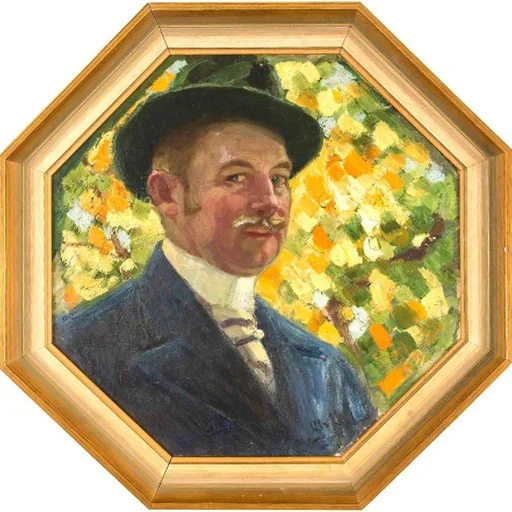
Friedrich Klein-Chevalier (18 June 1861, Düsseldorf - 14 March 1938, Wiesbaden) was a German history and portrait painter, associated with the Düsseldorfer Malerschule.