Artwork
Die Köchin
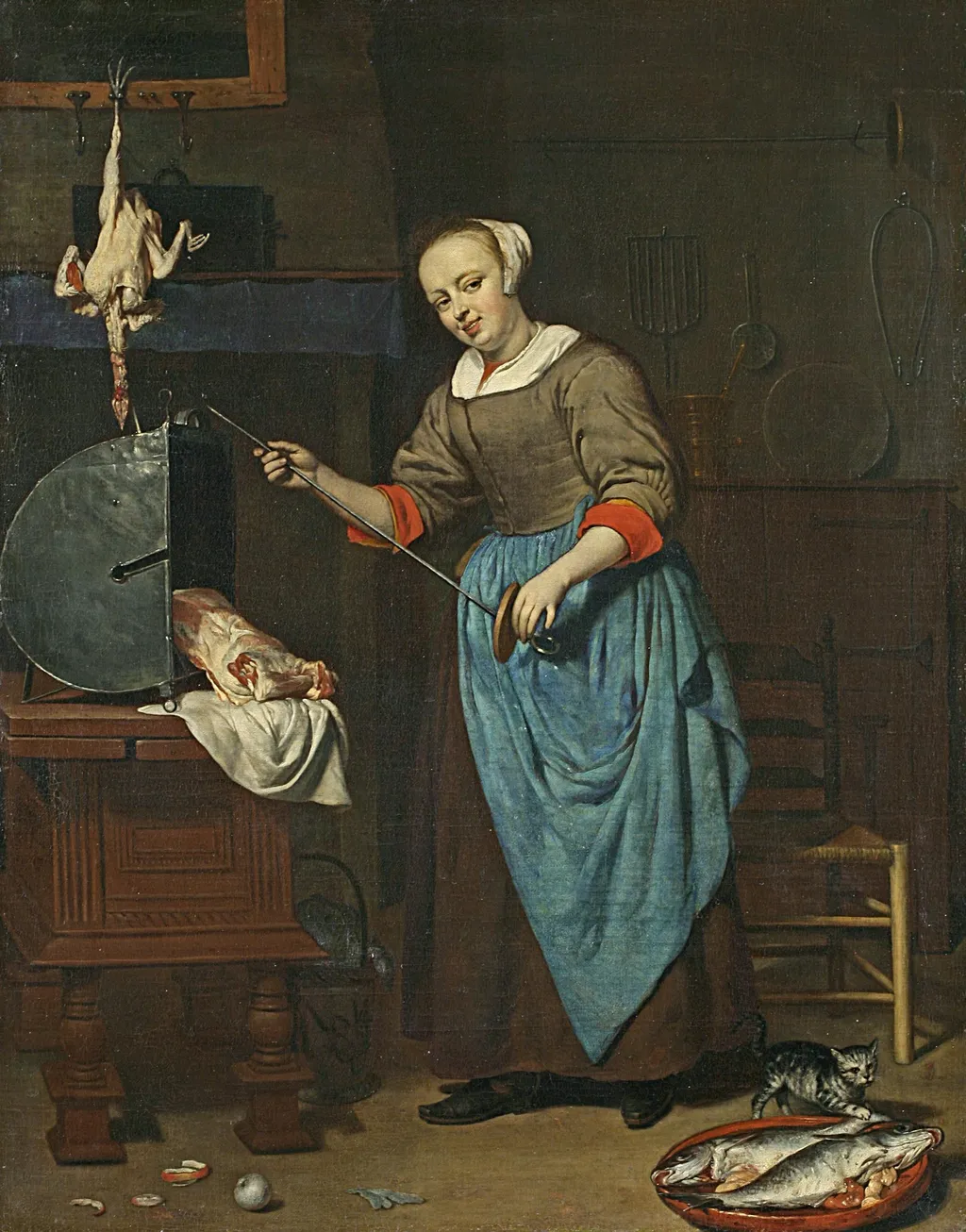
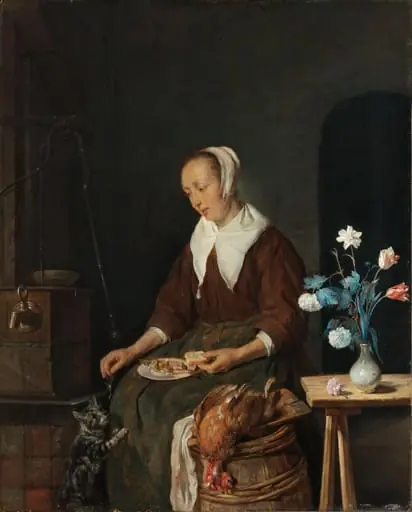
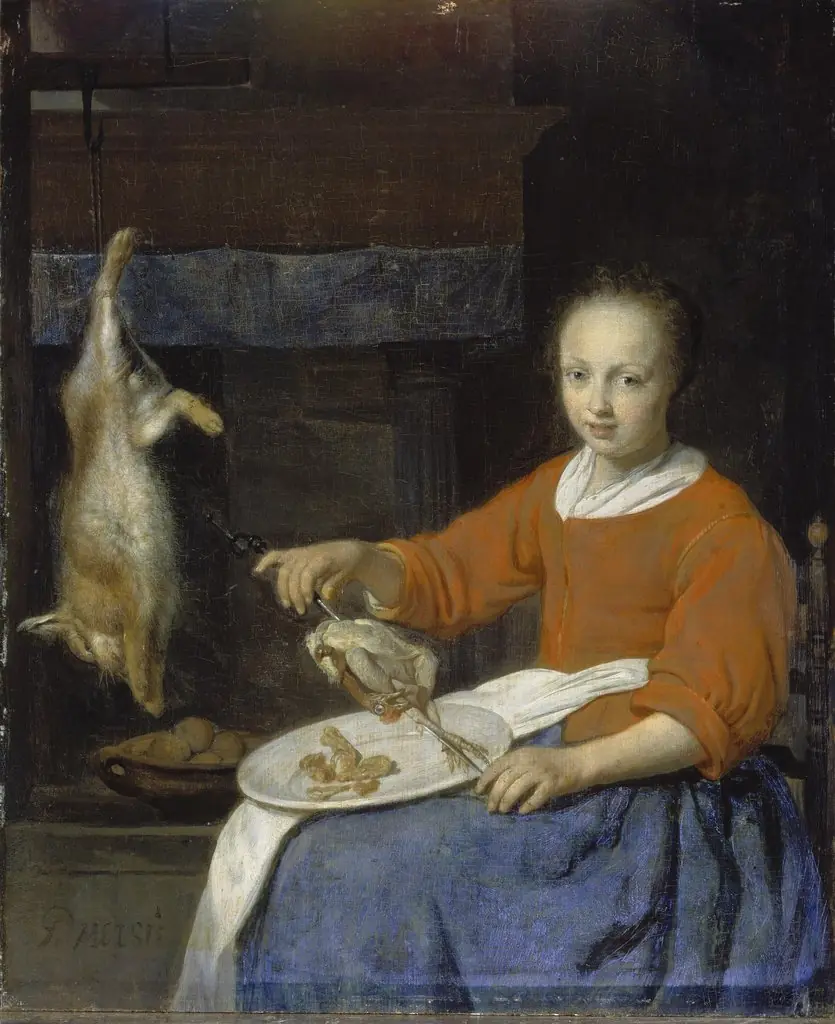
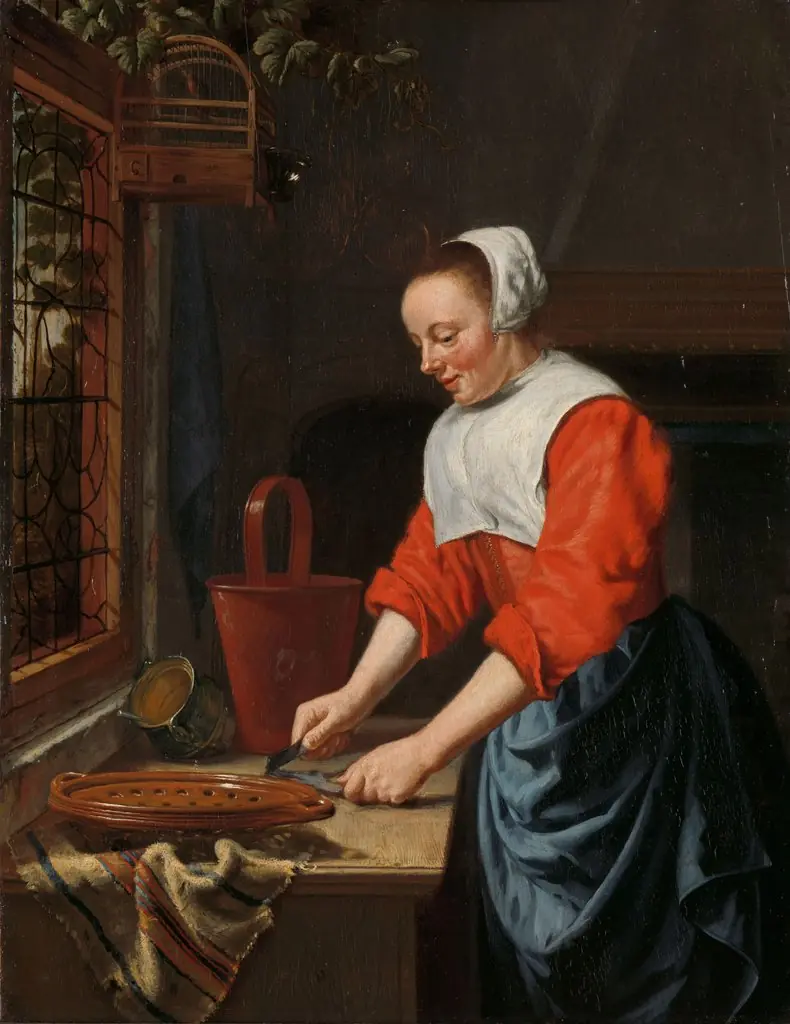
Die Köchin is a paint painting by the Dutch Golden Age artist Gabriel Metsu. It dates from 1661 and is held in the collection of the Gemäldegalerie Berlin.
About this work
The woman's attire and the kitchen setting suggest that the painting is set in a domestic environment, possibly during the 17th century.
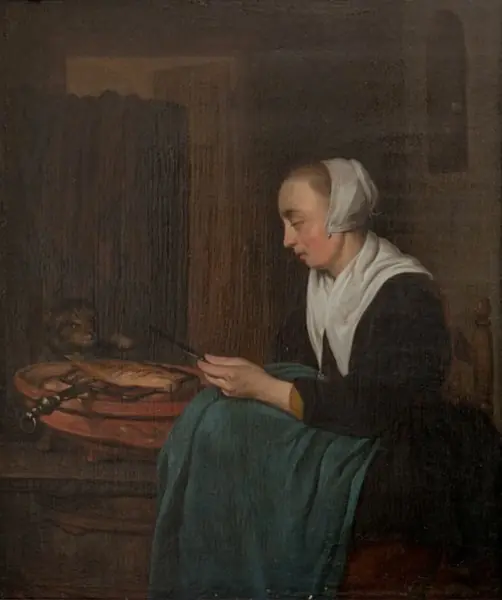
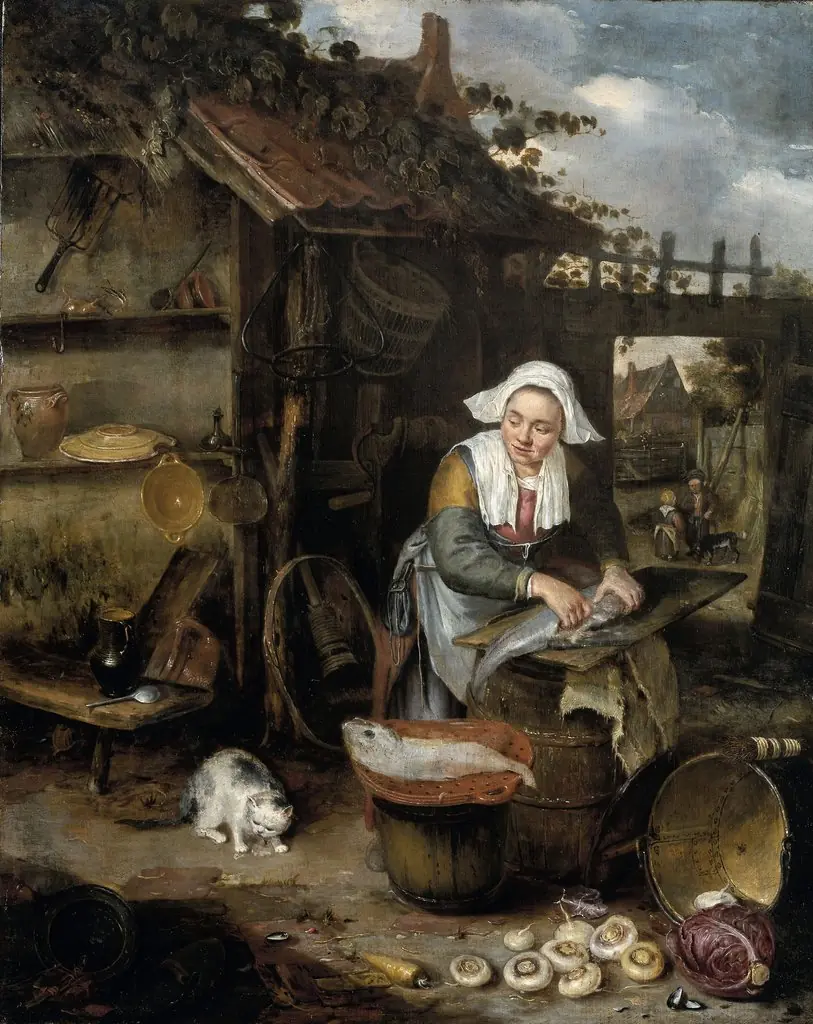
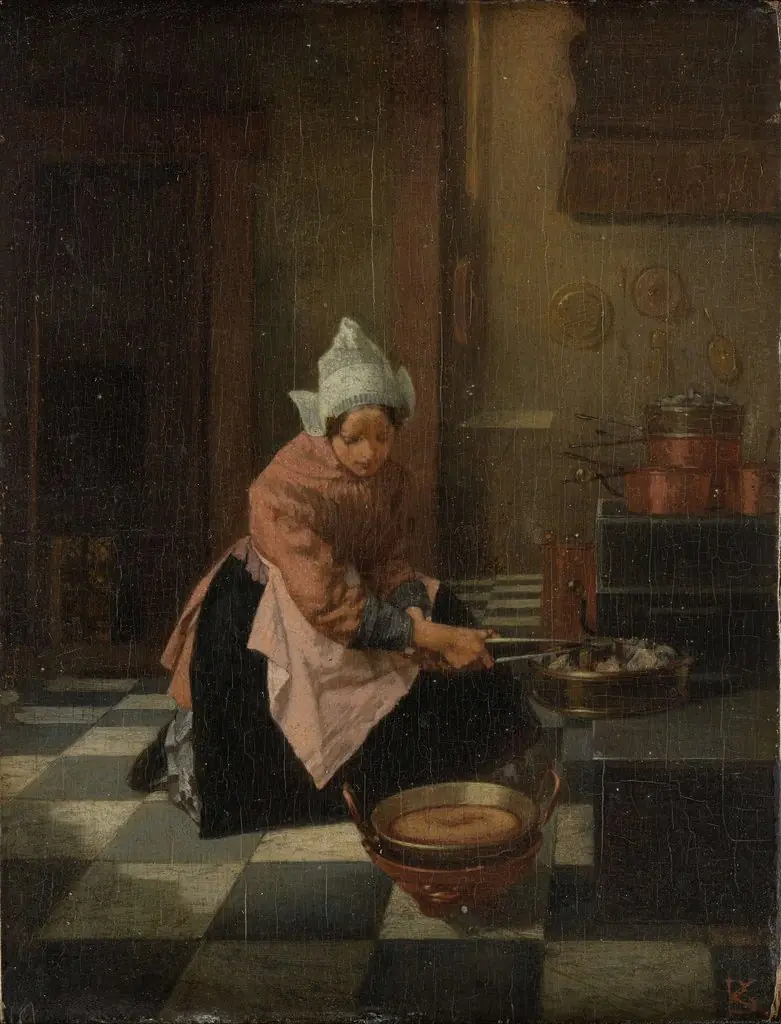
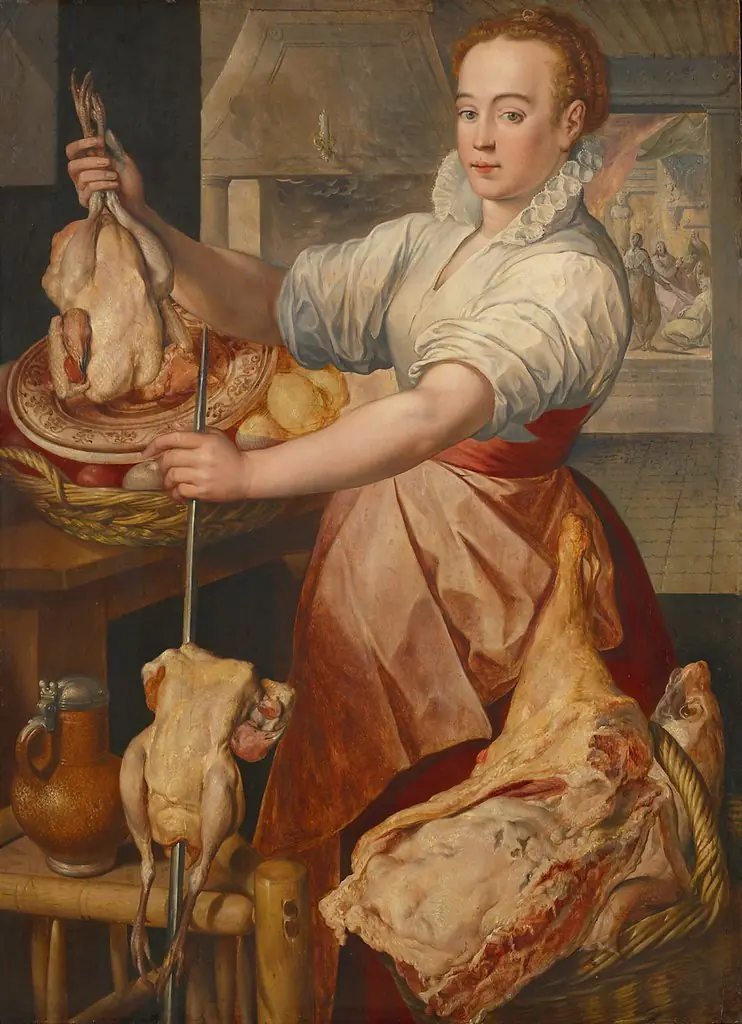
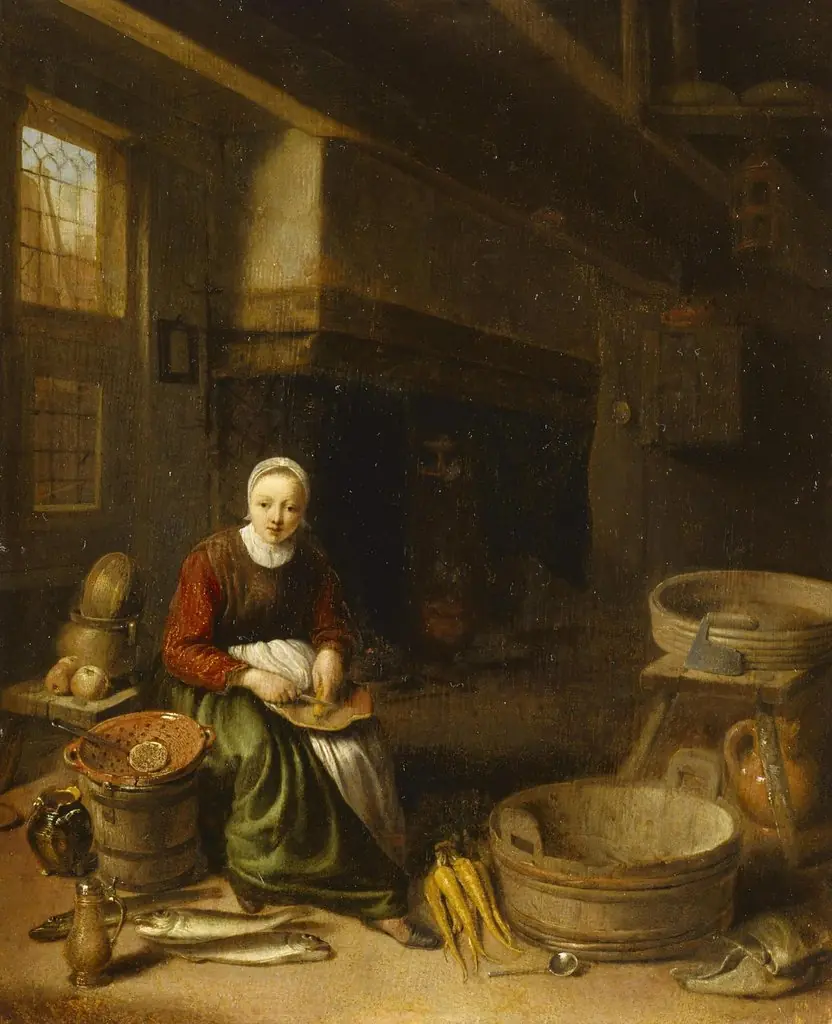
This painting depicts a woman standing in a kitchen, engaged in the act of cutting meat. She is dressed in a long skirt and a loose-fitting top, with a white apron wrapped around her waist. The woman's right hand grasps a large knife, while her left hand holds a piece of meat suspended from a hook. To her left, a table bears a large metal object, possibly a meat grinder or a cooking vessel. On the floor, a cat is seen sitting next to a bowl containing fish. The room's dark walls and floor provide a somber backdrop for the scene.
The woman's attire and the kitchen setting suggest that the painting is set in a domestic environment, possibly during the 17th century. The use of muted colors and the focus on everyday activities create a sense of intimacy and quiet contemplation.
Explore more works by the artist Gabriel Metsu.
Overview
Painted in 1661 by Gabriel Metsu, *Die Köchin* is an oil-on-canvas genre scene from the Dutch Golden Age. It captures a quiet moment in a domestic kitchen, focusing on a woman preparing meat. Metsu, known for his adaptability across subjects, here emphasizes everyday labor with restrained realism. The painting resides in the Gemäldegalerie, Berlin, as part of its collection of 17th-century Dutch interiors.
Subject & Meaning
The figure, a kitchen worker, is shown mid-task: one hand grips a knife, the other holds a cut of meat suspended from a hook. Her posture suggests routine, not drama. A cat beside a bowl of fish implies the household’s sustenance chain. The scene avoids idealization, presenting domestic work as ordinary yet dignified, reflecting the value placed on household economy in Dutch society.
Technique & Style
Metsu employed fine brushwork to render textures: the sheen of metal, the weave of linen, the fur of the cat. The palette is muted—ochres, browns, grays—enhancing the somber atmosphere. Light falls subtly on the woman’s apron and hands, drawing focus to her action without theatricality. The composition is tightly framed, eliminating distraction to heighten the intimacy of the moment.
History & Provenance
Created in 1661, the painting entered the Gemäldegalerie Berlin’s collection in the 19th century. Its provenance before that is undocumented, though Metsu’s works were collected by Dutch and German patrons during his lifetime. The painting has remained in public hands since acquisition, with no major alterations or restorations recorded in modern scholarship.
Context
In mid-17th-century Holland, domestic interiors became popular subjects as urban middle-class life flourished. Kitchen scenes like this one reflected societal interest in order, labor, and moral economy. Unlike grand historical paintings, these works celebrated the quiet competence of ordinary people, aligning with Protestant values of diligence and modesty.
Legacy
*Die Köchin* exemplifies Metsu’s ability to elevate mundane moments through precise observation. While less famous than his portraits or market scenes, it contributes to the broader understanding of how Dutch artists portrayed labor without sentimentality. The painting remains a reference for studies of gender, domesticity, and material culture in early modern Europe.
Own this work as a print
Artist & collection

Artist
Gabriël Metsu (1629–1667) was a Dutch painter of history paintings, still lifes, portraits, and genre works.