Artwork
Axel Galléns arbetsbord i Paris
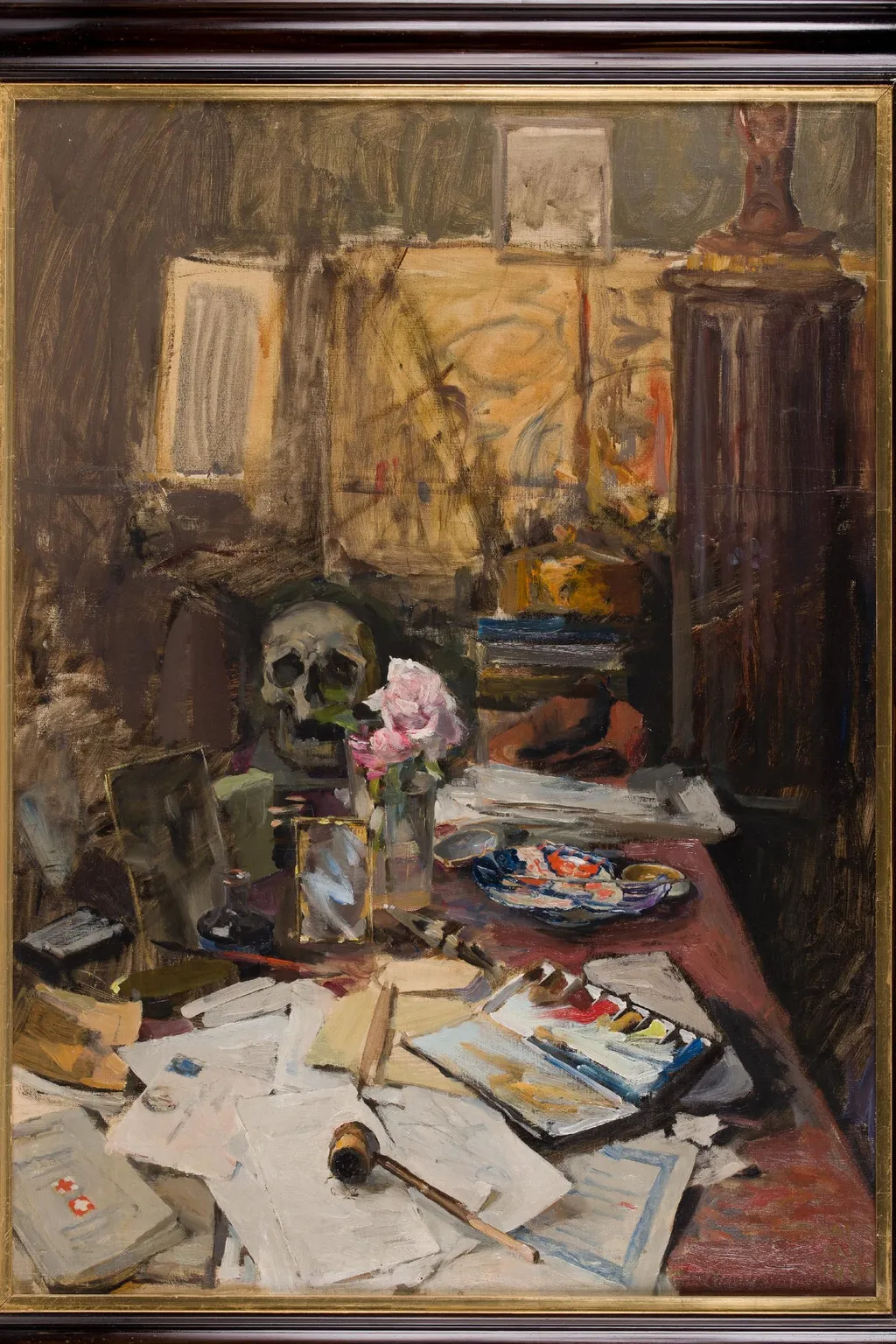
Axel Galléns arbetsbord i Paris is an unspecified painting by Akseli Gallen-Kallela. It is held in the collection of the Gallen-Kallela Museum.
About this work
Overview
Thick, energetic brushwork dominates the surface, suggesting haste and immersion in the act of creation rather than polished finish.
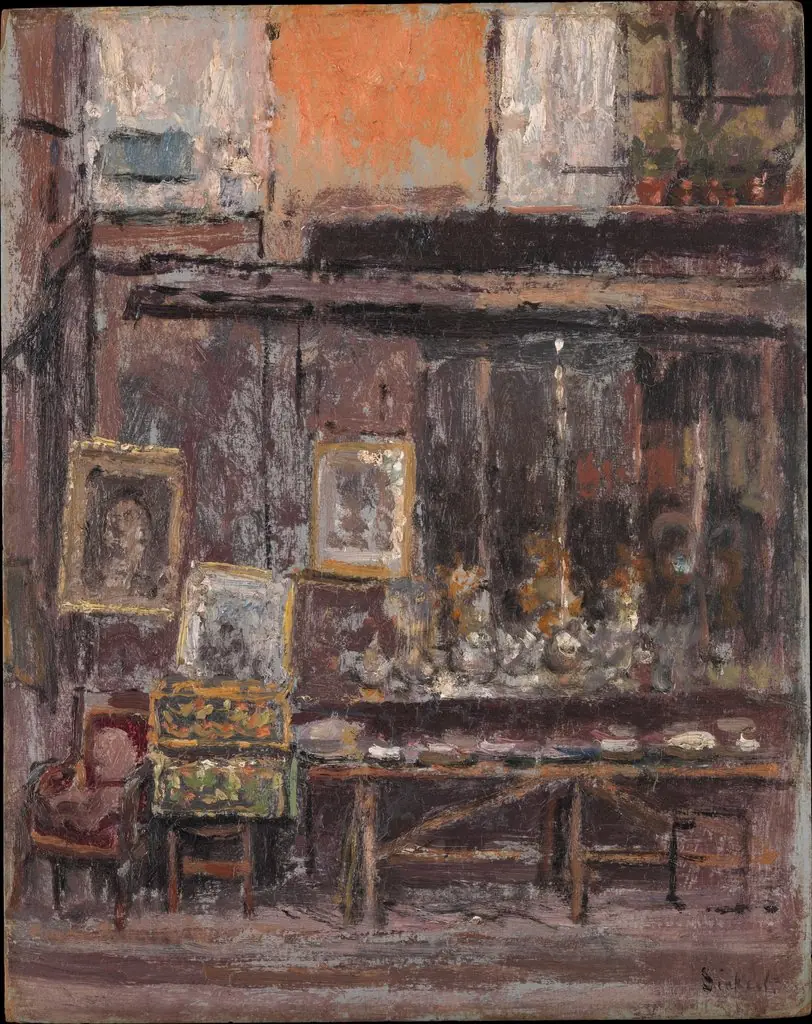
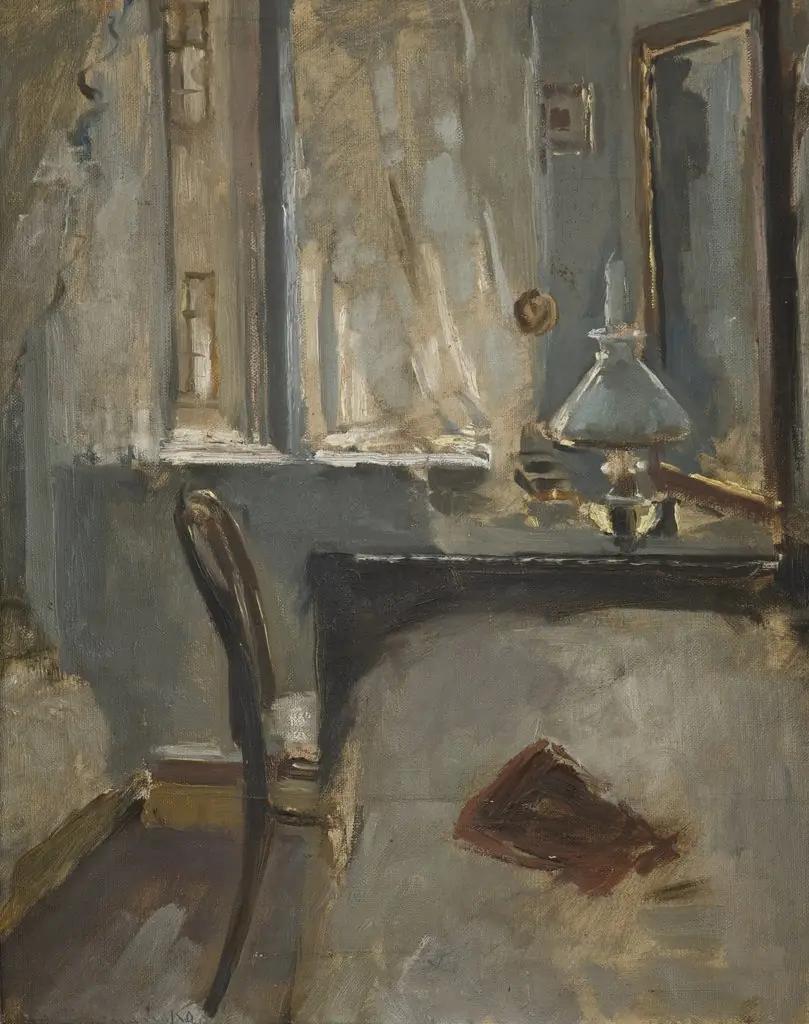
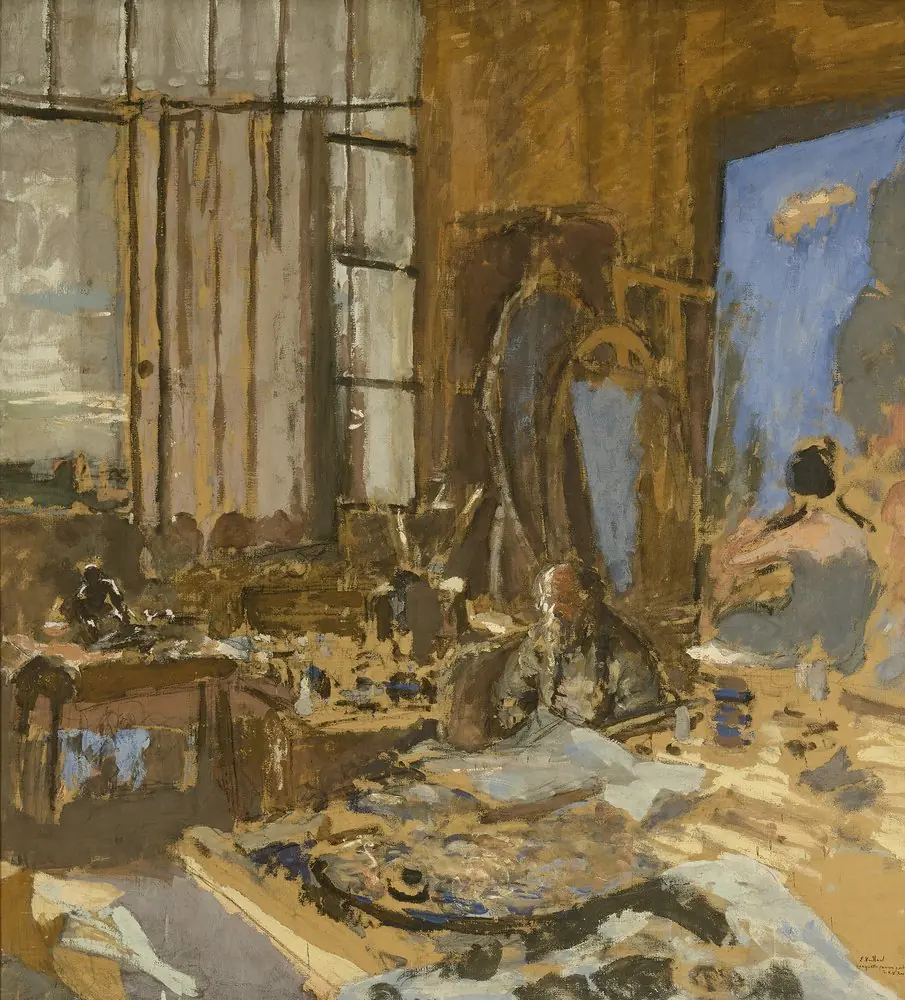
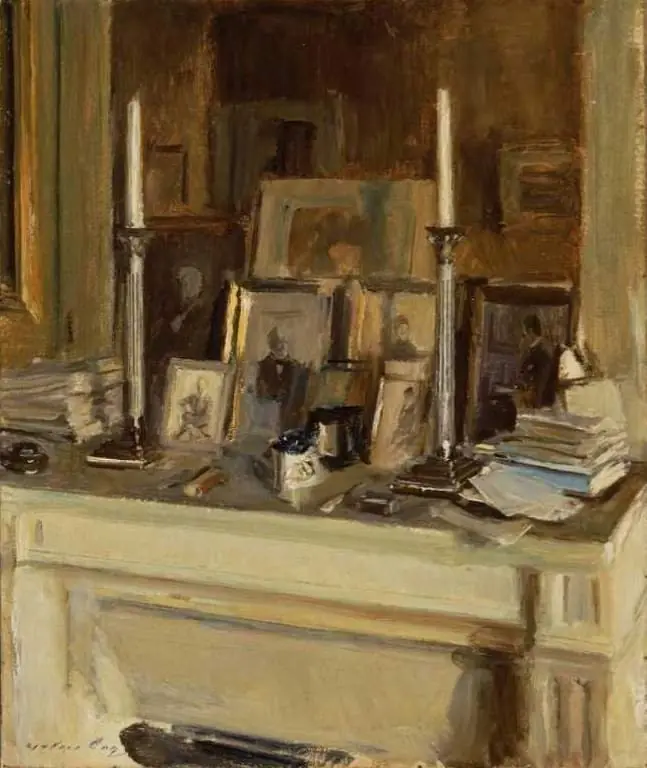
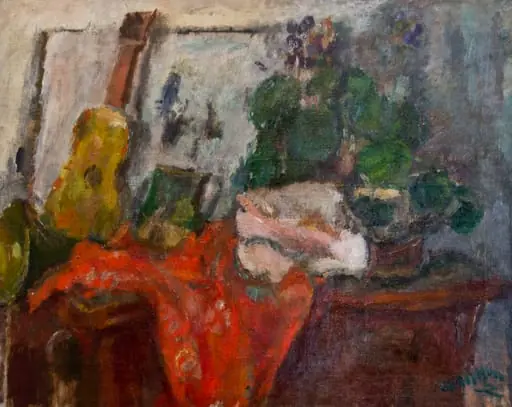
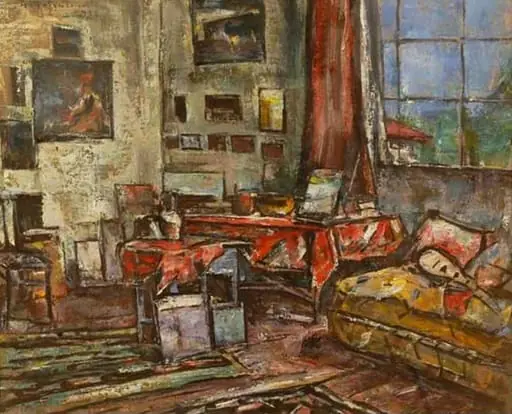
This painting depicts the workspace of Finnish artist Akseli Gallen-Kallela in his Paris studio. The cluttered desk, scattered tools, and incomplete canvas convey a moment of interrupted labor. Thick, energetic brushwork dominates the surface, suggesting haste and immersion in the act of creation rather than polished finish. The composition avoids idealization, focusing instead on the physical reality of an artist’s environment.
Subject & Meaning
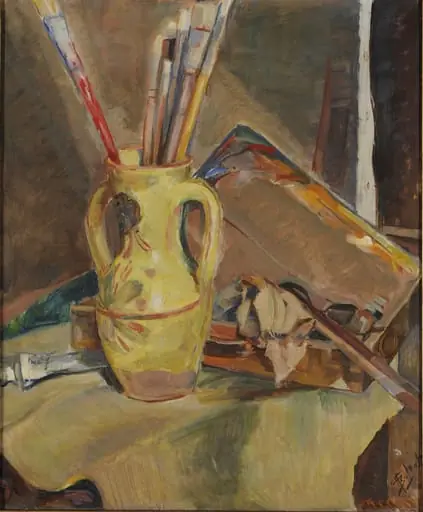
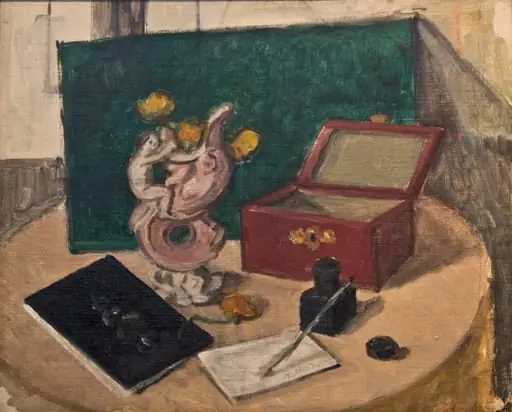
The desk holds the tools of artistic practice—brushes, palette, papers—alongside a skull and a single pink flower. The juxtaposition suggests a meditation on mortality and creativity, common in 19th-century artistic introspection. The skull does not overwhelm but quietly observes, while the flower introduces a fragile counterpoint. The half-finished canvas implies ongoing work, unresolved and open-ended.
Technique & Style
Gallen-Kallela applied paint with vigorous, visible strokes, embracing texture and spontaneity. The rough handling of the surface rejects smooth finish, aligning with a broader Nordic interest in emotional authenticity over academic polish. The mirror’s reflection adds depth without clarity, reinforcing the sense of an unvarnished, intimate space. Light and shadow are rendered with minimal blending, enhancing the rawness of the scene.
History & Provenance
Painted during Gallen-Kallela’s time in Paris in the late 1880s, the work reflects his engagement with European artistic circles while maintaining his distinct Nordic sensibility. It was likely created as a personal study rather than a commissioned piece. The painting remained in private hands until acquired by a Finnish institution in the early 20th century, where it is now preserved as part of his artistic legacy.
Context
In the 1880s, Finnish artists like Gallen-Kallela sought to define a national identity through art, often drawing from folklore and personal introspection. Working abroad, he balanced exposure to French modernism with a commitment to emotional depth and symbolic content. This still life of the studio reflects a broader trend among Nordic painters to treat the artist’s space as a site of psychological and philosophical inquiry.
Legacy
The painting stands as an early example of Gallen-Kallela’s move toward expressive realism, foreshadowing his later mythological and nationalistic works. Its unidealized portrayal of the artist’s environment influenced subsequent Finnish artists who valued authenticity over ornament. Though not widely exhibited during his lifetime, it is now recognized as a key document of his creative process and personal aesthetic.
Artist & collection
Artist
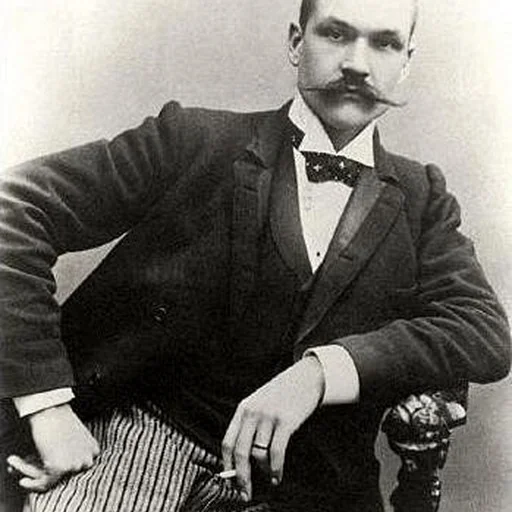
Akseli Gallen-Kallela (born Axel Waldemar Gallén; 26 April 1865 – 7 March 1931) was a Finnish painter and a leading figure of Finnish romantic nationalism around the turn of the 20th century.