Artwork
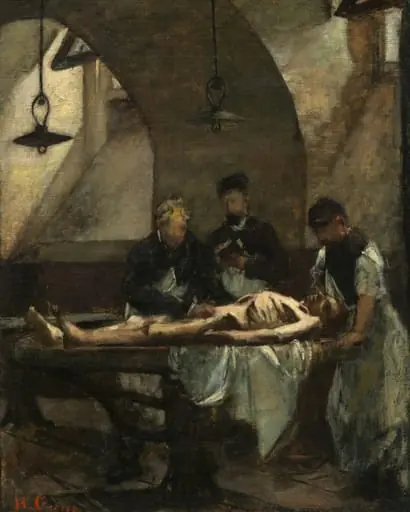
Leikkuusalissa, ruumiin avaus
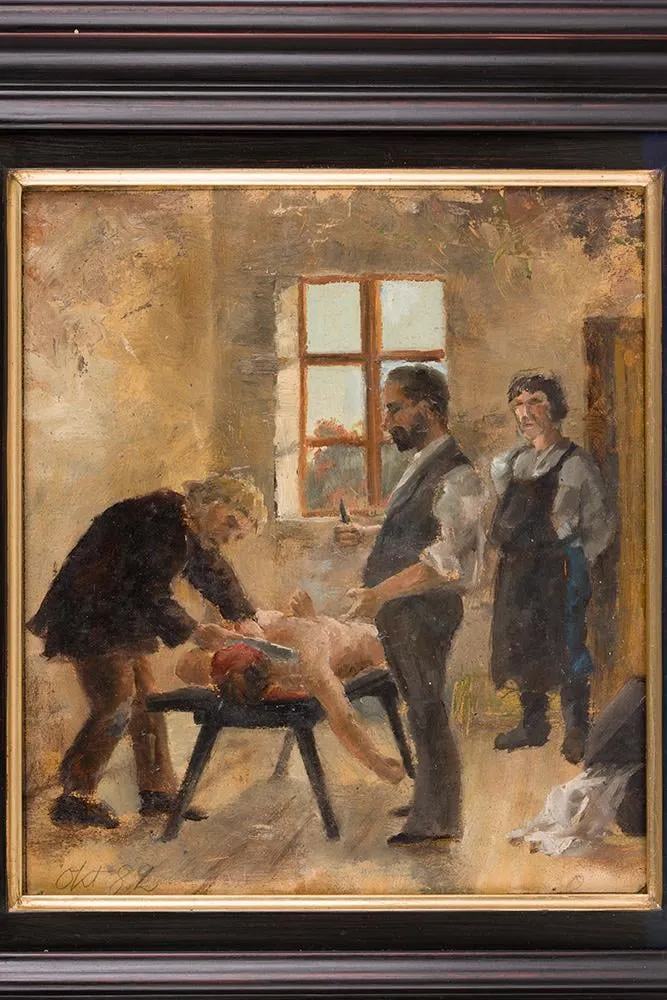
Leikkuusalissa, ruumiin avaus is an unspecified painting by Akseli Gallen-Kallela. It is held in the collection of the Gallen-Kallela Museum.
About this work
Overview
Leikkuusalissa, ruumiin avaus depicts a somber, intimate scene within a small, dimly lit room, focusing on a group of four individuals engaged in a procedure involving a semi-nund person on a table.
Subject & Meaning
The central subject appears to be a medical examination or dissection, possibly for educational purposes, given the presence of observers and the tool-wielding figure bent over the table. The atmosphere suggests a solemn, professional environment.
Technique & Style
Characterized by thick, expressive brushstrokes, the painting conveys a sense of realism and immediacy, with the rough textures of the walls and the soft, limited light through a small window enhancing the scene's intimacy and realism.
Context
This work reflects a period where medical practices and educational methods were subjects of artistic interest. Comparisons with earlier artworks on similar themes (e.g., 'The Anatomy Lesson of Dr. Nicolaes Tulp' by Rembrandt) highlight evolving representations of medicine in art.
History & Provenance
No specific historical or provenance details are provided for 'Leikkuusalissa, ruumiin avaus', limiting the understanding of its creation context, exhibition history, or ownership timeline.
Legacy
The impact or legacy of 'Leikkuusalissa, ruumiin avaus' in the broader art historical context or in influencing subsequent depictions of medical themes in art is not specified due to the lack of detailed information.
Artist & collection
Artist
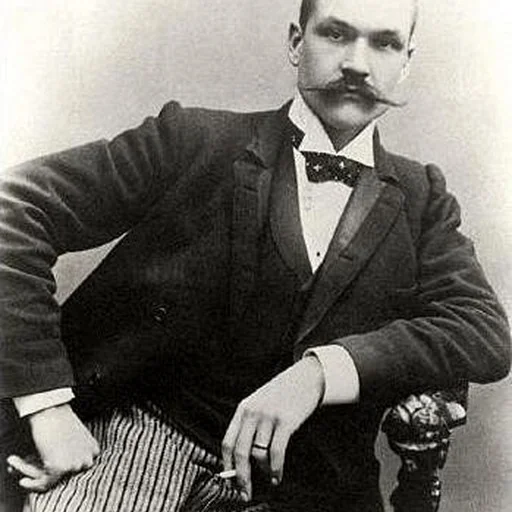
Akseli Gallen-Kallela (born Axel Waldemar Gallén; 26 April 1865 – 7 March 1931) was a Finnish painter and a leading figure of Finnish romantic nationalism around the turn of the 20th century.

 Study for "Autopsy at the Hôtel-Dieu"
 Hypnose bei Schrenck-Notzing
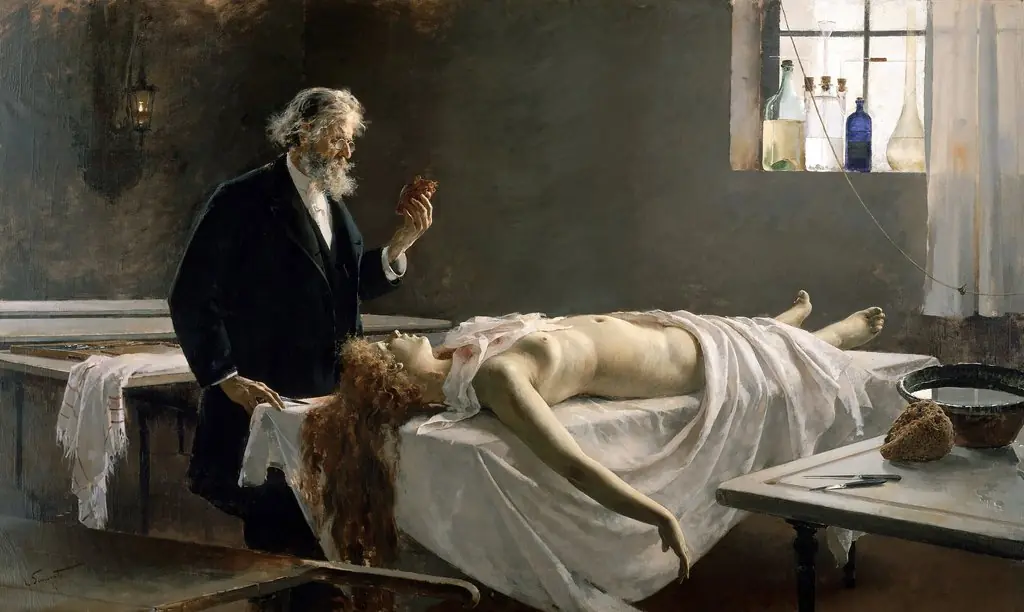 Autopsy
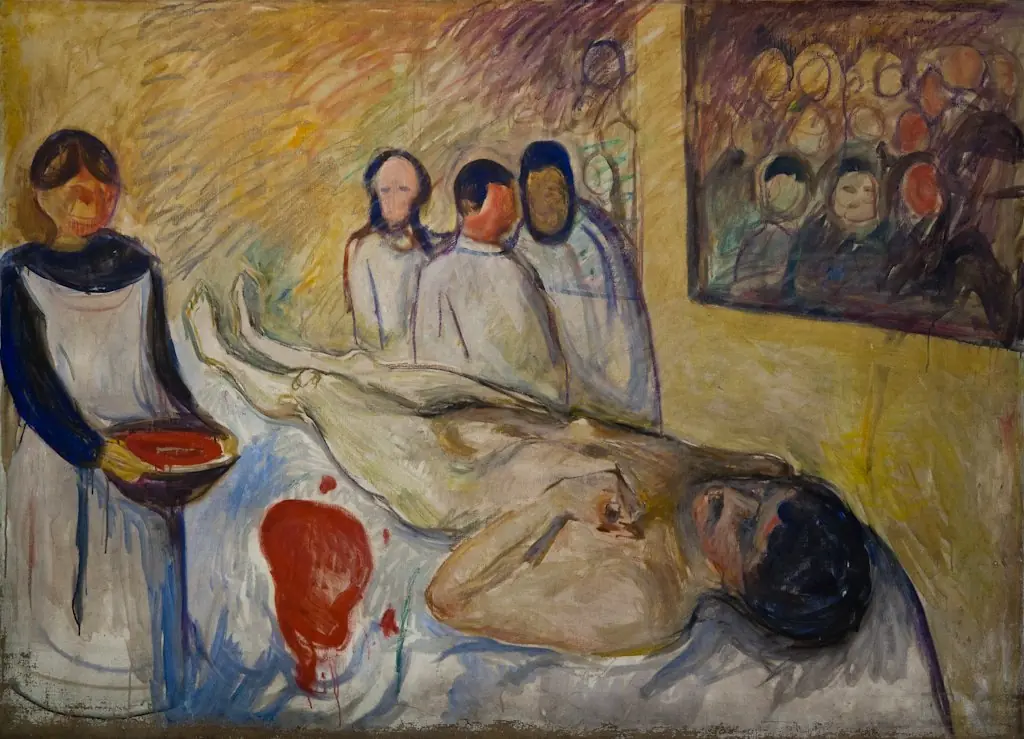 On the Operating Table
 The sculptor (Resurrection)
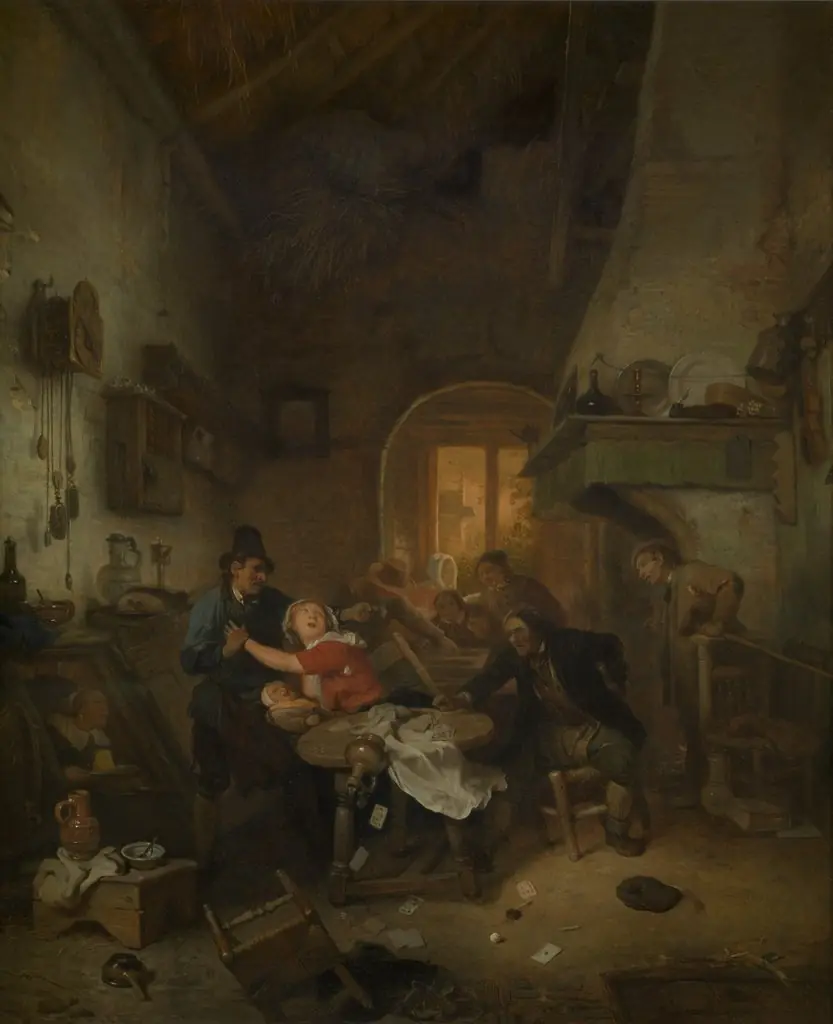 Cardplayers Quarreling
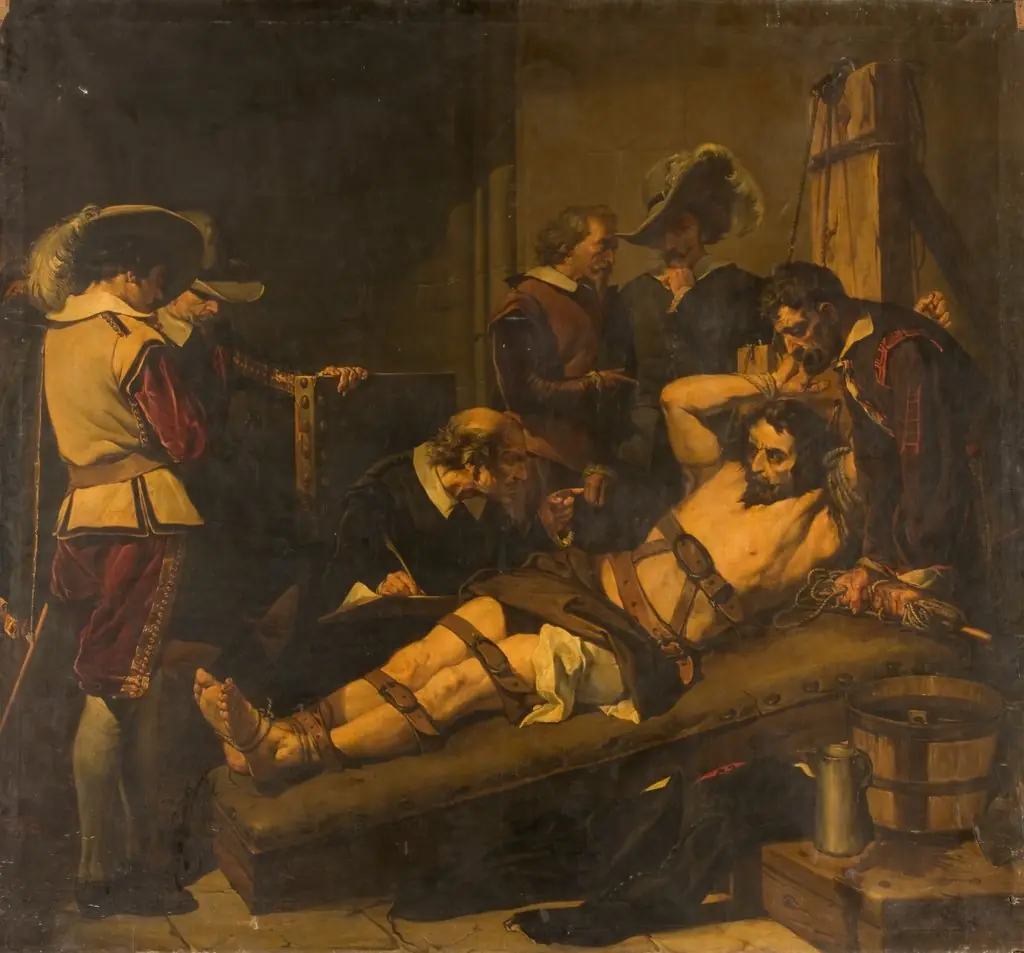 Don Rodrigo Calderón en el tormento
 Vinerea mare
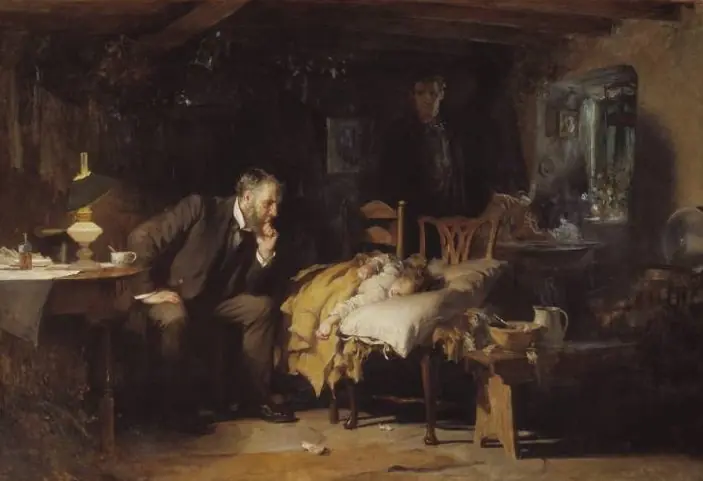 The Doctor
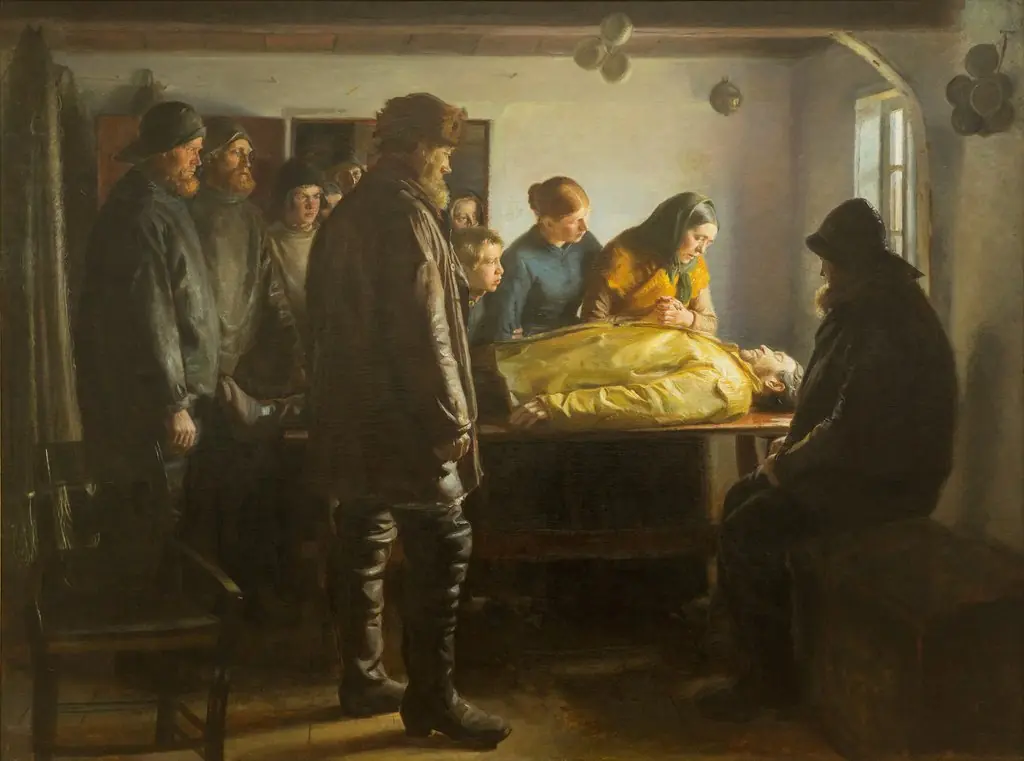 The Drowned Fisherman
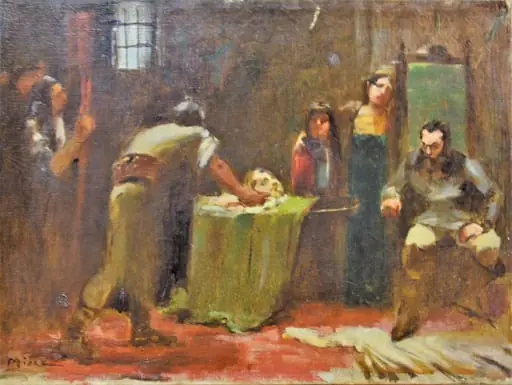 Capul voievodului Andrei Batory prezentat Domnitorului Mihai Viteazu
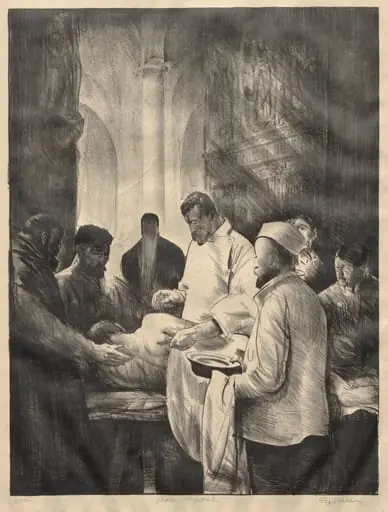 War Series: Base Hospital, Second Stone