Artwork
The Invocation
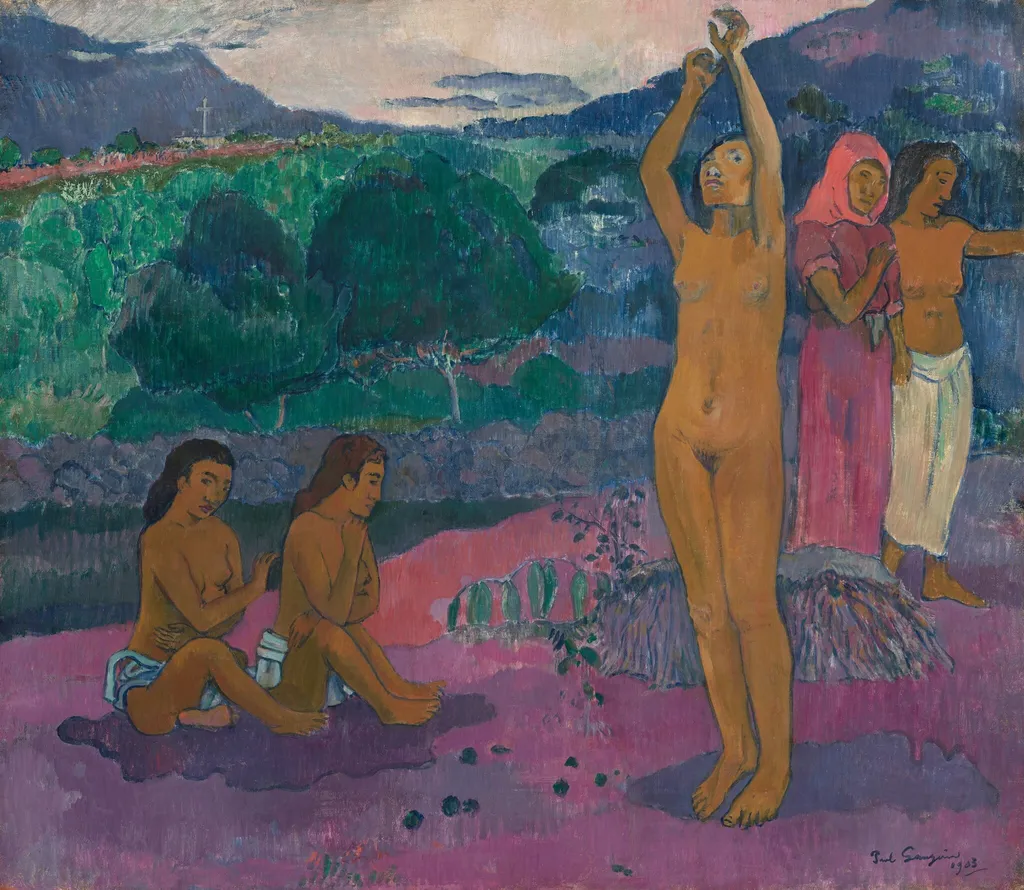
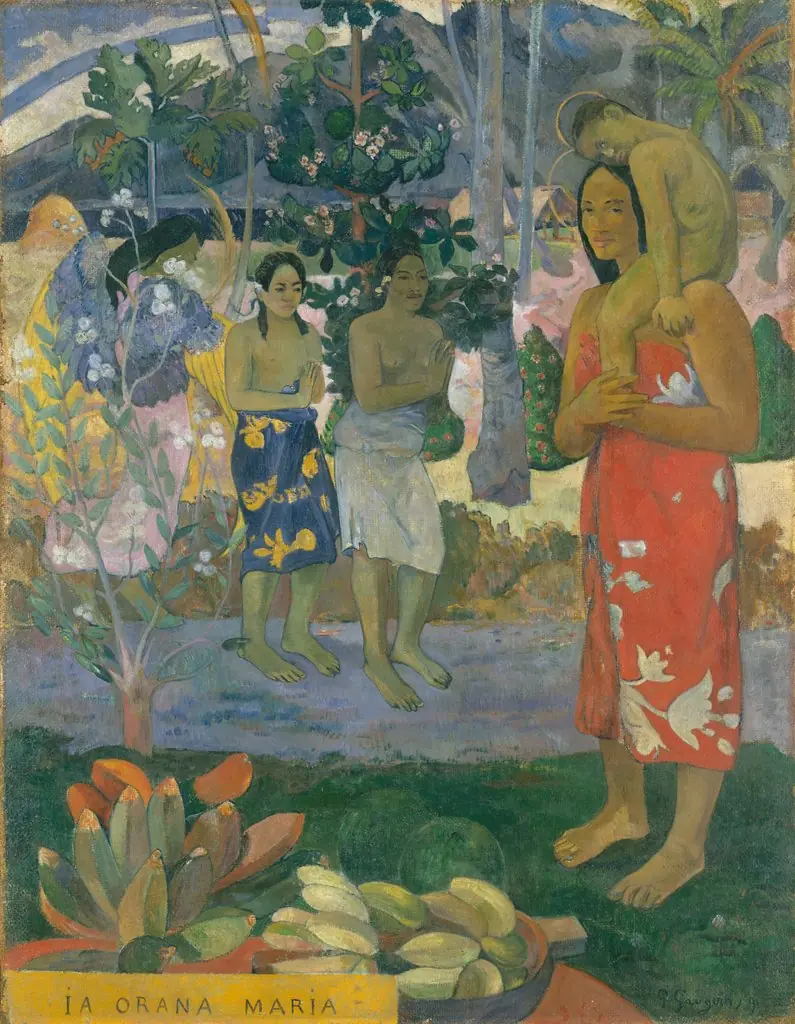
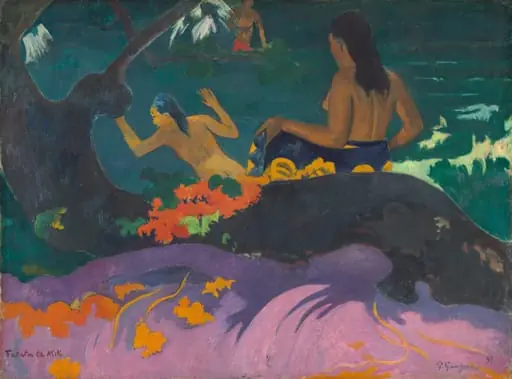
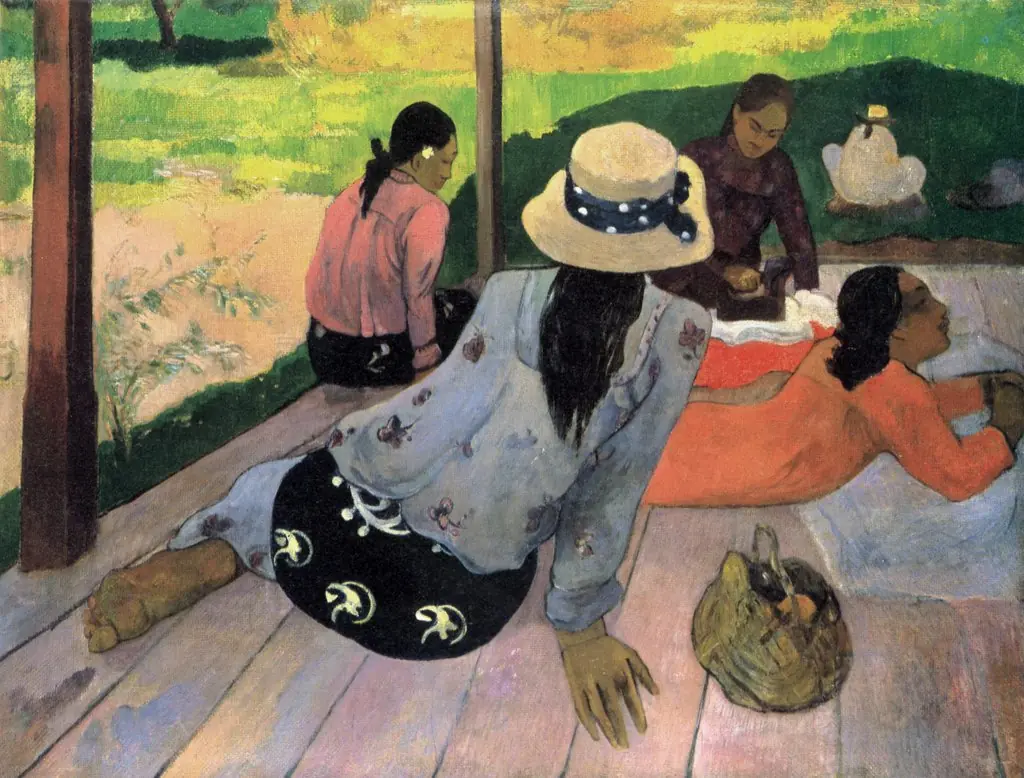
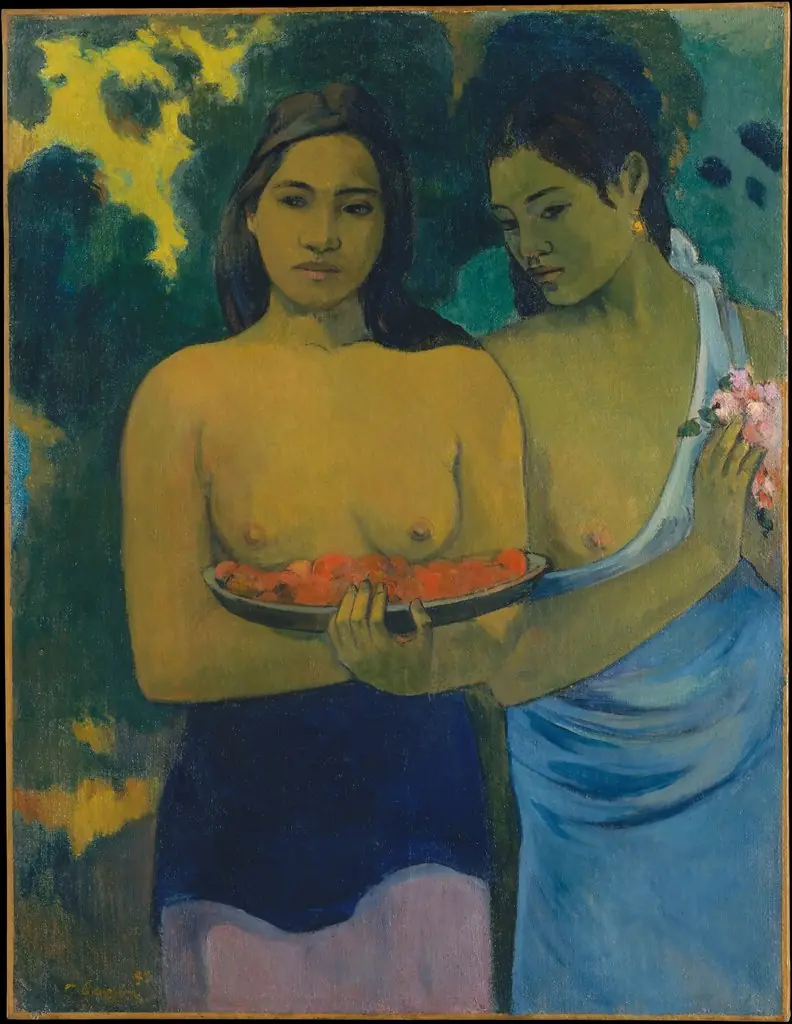
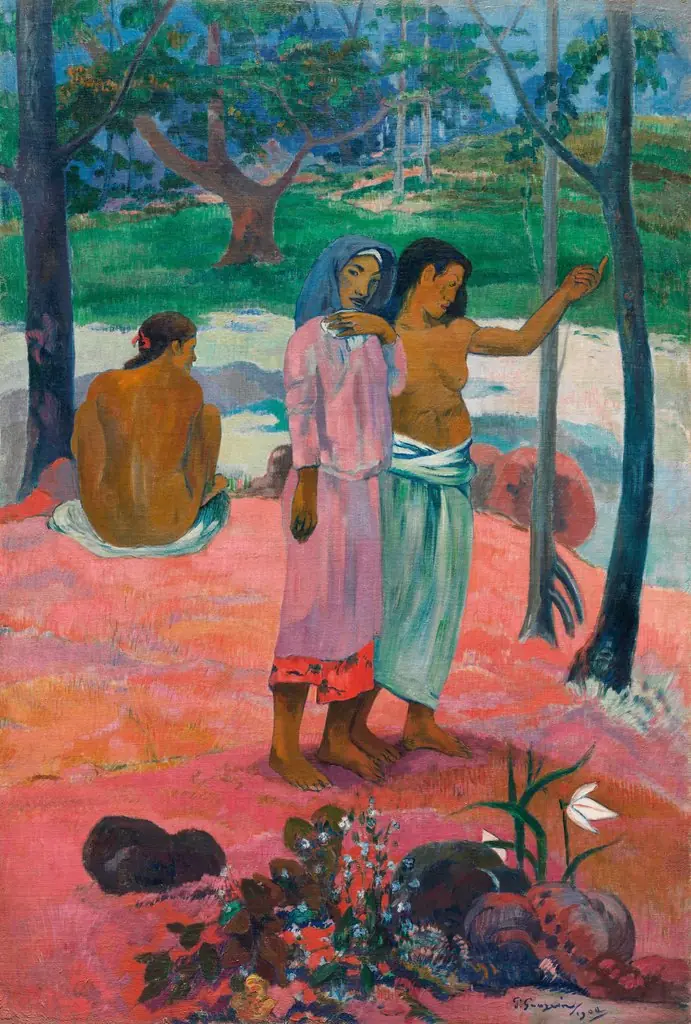
The Invocation is an oil painting by the Post-Impressionist artist Paul Gauguin. It dates from 1903 and is held in the collection of the National Gallery of Art.
About this work
Overview
Created in 1903, *The Invocation* is an oil painting on canvas by Paul Gauguin, produced during the final year of his life. It belongs to his later period, when he was exploring religious and symbolic subjects within a post‑impressionist framework.
Subject & Meaning
The composition depicts four figures in an outdoor setting: a nude woman at the centre with arms uplifted, accompanied by three clothed individuals who are seated or standing nearby. The arrangement suggests a ritual or prayerful act, aligning with Gauguin’s interest in spiritual and symbolic narratives.
Technique & Style
Gauguin employs a vivid palette dominated by purples and deep earth tones, applied with confident, thick brushstrokes. The landscape—trees, hills and a clouded sky—serves as a simplified backdrop, while the figures are rendered with flattened forms that emphasize color over naturalistic detail.
History & Provenance
Painted in the same year Gauguin died, the work reflects his mature artistic concerns. It remains part of the body of work that established his reputation as a French painter who also worked in sculpture and printmaking, though specific ownership details are not recorded in the source material.
Context
*The Invocation* follows Gauguin’s shift away from Impressionist techniques toward a more symbolic, post‑impressionist language. By the early 1900s he was integrating religious motifs, a departure from his earlier focus on exotic locales and primitive subjects.
Own this work as a print
Artist & collection
Artist
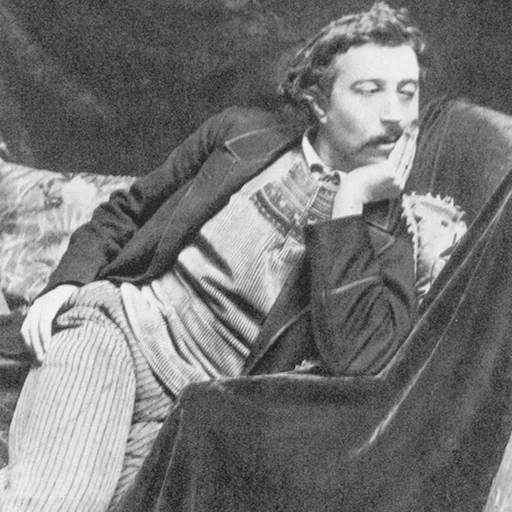
Eugène Henri Paul Gauguin (; French: ; 7 June 1848 – 8 May 1903) was a French painter, sculptor, printmaker, ceramist, and writer, whose work has been primarily associated with the Post-Impressionist and Symbolist movements.