Artwork
Three Studies of Men's Heads, One with Spectacles; Dogs, Children, and Two Bearded Men in Profile [verso]
![Three Studies of Men's Heads, One with Spectacles; Dogs, Children, and Two Bearded Men in Profile [verso], by Paul Gauguin, graphite, 1886](https://artifactworldgallery.com/img/paul-gauguin--three-studies-of-men-s-heads-one-with-spectacles-dogs-childr--5397d62ca5c9a48b-w1024.webp)
Three Studies of Men's Heads, One with Spectacles; Dogs, Children, and Two Bearded Men in Profile [verso] is a graphite drawing by the Impressionist artist Paul Gauguin. It dates from 1886 and is held in the collection of the National Gallery of Art. Created in 1886, this graphite drawing on wove paper comprises a series of quick studies rendered on the back side of a sketchbook page.
About this work
Overview
Created in 1886, this graphite drawing on wove paper comprises a series of quick studies rendered on the back side of a sketchbook page. The sheet contains a profile portrait of a bespectacled man, a hat and cane rendered in minimal outline, and a cluster of smaller figures—two children, a dog, and two additional bearded men—executed in loose, gestural lines.
Subject & Meaning
The composition functions as a visual notebook, recording a variety of human and animal types. The central figure, distinguished by spectacles, suggests a focus on individual character, while the surrounding children and dog introduce a domestic, everyday atmosphere. The additional bearded profiles echo the central portrait, reinforcing a study of facial features and age.
Technique & Style
Gauguin employed graphite to produce swift, expressive strokes, allowing hair, beards, and clothing to emerge from suggestive marks rather than detailed rendering. The line work is deliberately simplified, emphasizing contour and gesture over surface texture, a hallmark of his exploratory sketching practice.
History & Provenance
The drawing originates from a period when Gauguin was transitioning from Impressionist influences toward his own Symbolist language. Although the work remained in his personal sketchbooks during his lifetime, it entered public collections only posthumously, reflecting the later appreciation of his preparatory studies.
Context
In the mid-1880s, many artists used sketchbooks to capture fleeting observations, a practice inherited from Impressionist plein‑air methods. Gauguin’s studies align with this tradition but also hint at his emerging interest in distilling forms to their essential lines, a step toward the more structured compositions of his mature Symbolist phase.
Artist & collection
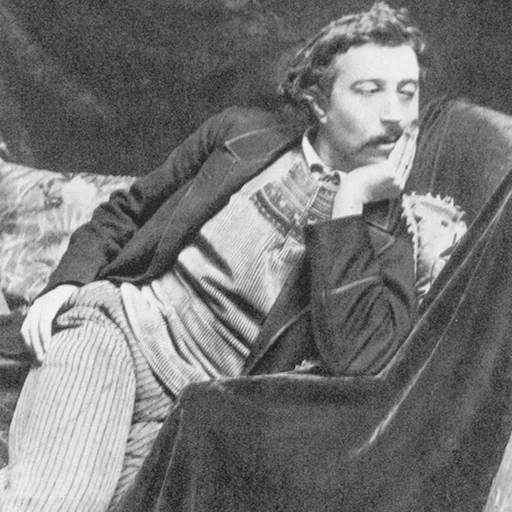
Artist
Eugène Henri Paul Gauguin (; French: ; 7 June 1848 – 8 May 1903) was a French painter, sculptor, printmaker, ceramist, and writer, whose work has been primarily associated with the Post-Impressionist and Symbolist movements.

![A Man Leaning on a Wall with Five Other Studies; Two Bearded Men Wearing Hats, and Five Other Studies [recto], by Paul Gauguin](https://artifactworldgallery.com/img/paul-gauguin--a-man-leaning-on-a-wall-with-five-other-studies-two-bearded--2df262058c2bfe48-w320.webp) A Man Leaning on a Wall with Five Other Studies; Two Bearded Men Wearing Hats, and Five Other Studies [recto]
A Man Leaning on a Wall with Five Other Studies; Two Bearded Men Wearing Hats, and Five Other Studies [recto]![Five Studies of Soldiers and a Woman's Face; Two Figures [recto], by Paul Gauguin](https://artifactworldgallery.com/img/paul-gauguin--five-studies-of-soldiers-and-a-woman-s-face-two-figures-rect--9d09632e7e517067-w320.webp) Five Studies of Soldiers and a Woman's Face; Two Figures [recto]
Five Studies of Soldiers and a Woman's Face; Two Figures [recto]![Figure Studies; Studies of Soldiers [verso], by Paul Gauguin](https://artifactworldgallery.com/img/paul-gauguin--figure-studies-studies-of-soldiers-verso--91eae8279e0a44e1-w320.webp) Figure Studies; Studies of Soldiers [verso]
Figure Studies; Studies of Soldiers [verso]![A Caricature and Five Forms; A Man in Profile, a Winged Creature and a Boy [verso], by Paul Gauguin](https://artifactworldgallery.com/img/paul-gauguin--a-caricature-and-five-forms-a-man-in-profile-a-winged-creatu--ba33d39de90d54d7-w320.webp) A Caricature and Five Forms; A Man in Profile, a Winged Creature and a Boy [verso]
A Caricature and Five Forms; A Man in Profile, a Winged Creature and a Boy [verso]![Soldiers; Four Soldiers and a Seated Figure [verso], by Paul Gauguin](https://artifactworldgallery.com/img/paul-gauguin--soldiers-four-soldiers-and-a-seated-figure-verso--03eb26713f1552e4-w320.webp) Soldiers; Four Soldiers and a Seated Figure [verso]
Soldiers; Four Soldiers and a Seated Figure [verso]![A Person Holding an Umbrella and a Seated Man with a Hat and a Glass [verso], by Paul Gauguin](https://artifactworldgallery.com/img/paul-gauguin--a-person-holding-an-umbrella-and-a-seated-man-with-a-hat-and--8307c4522b7d6e38-w320.webp) A Person Holding an Umbrella and a Seated Man with a Hat and a Glass [verso]
A Person Holding an Umbrella and a Seated Man with a Hat and a Glass [verso]![Little Breton Boy; A Pig and a Washerwoman [recto], by Paul Gauguin](https://artifactworldgallery.com/img/paul-gauguin--little-breton-boy-a-pig-and-a-washerwoman-recto--e104e07b475c372e-w320.webp) Little Breton Boy; A Pig and a Washerwoman [recto]
Little Breton Boy; A Pig and a Washerwoman [recto]![Studies of Jugs and Vases; A Man with Moustache and a Boy with a Hat [recto], by Paul Gauguin](https://artifactworldgallery.com/img/paul-gauguin--studies-of-jugs-and-vases-a-man-with-moustache-and-a-boy-wit--f45745e972a40252-w320.webp) Studies of Jugs and Vases; A Man with Moustache and a Boy with a Hat [recto]
Studies of Jugs and Vases; A Man with Moustache and a Boy with a Hat [recto]