Artwork
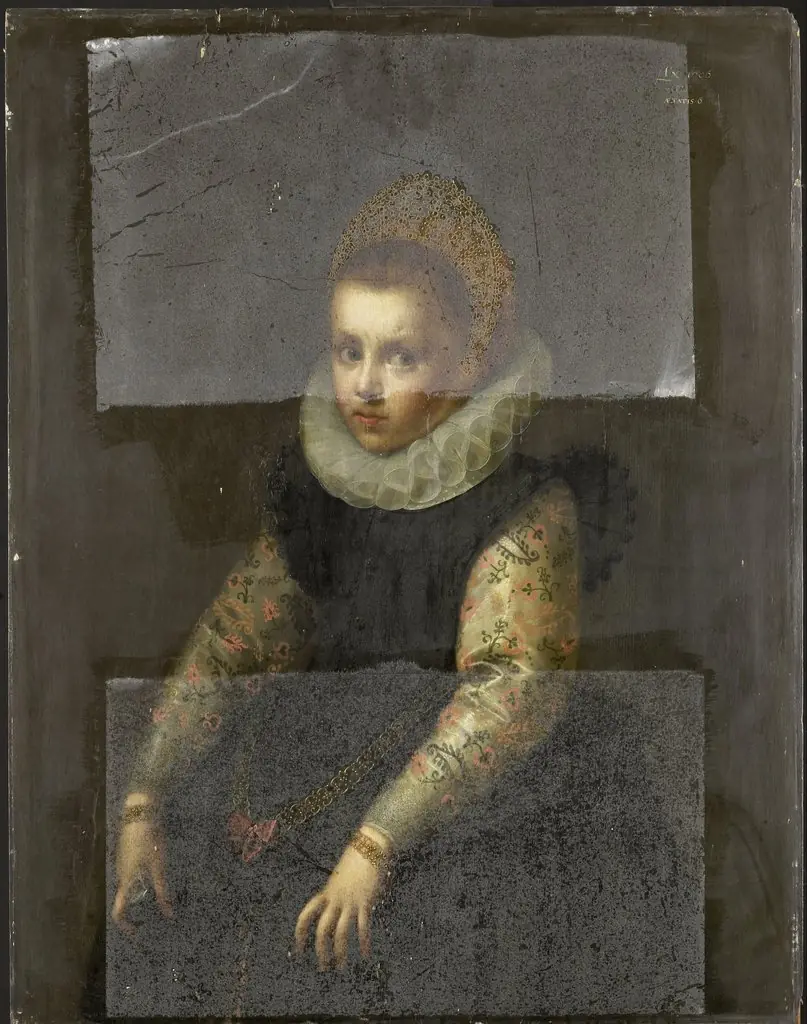
Portrait of Catharina Fourmenois as a Child, later Wife of Pieter Boudaen Courten
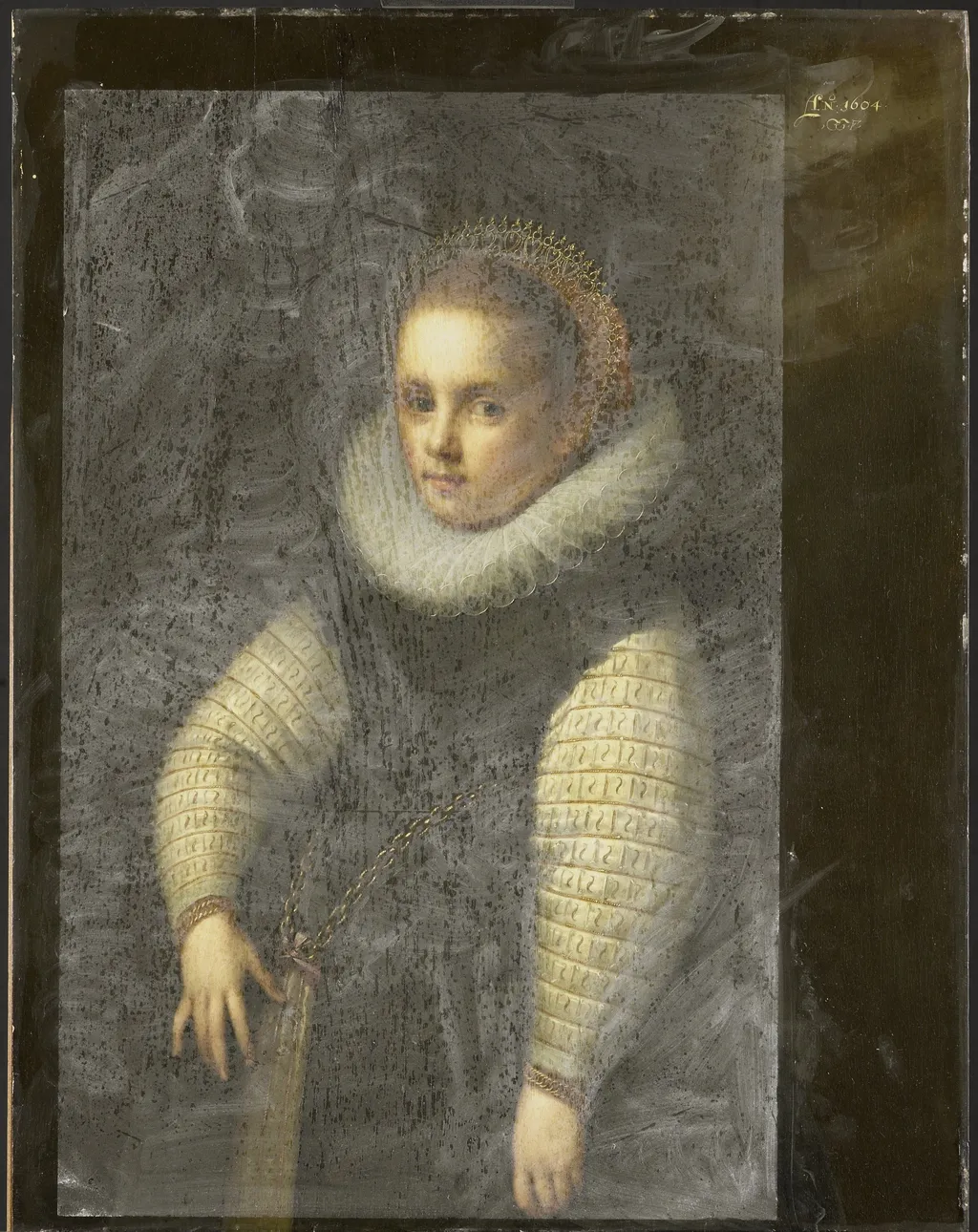
Portrait of Catharina Fourmenois as a Child, later Wife of Pieter Boudaen Courten is an oil painting by the Dutch Golden Age artist Geldorp Gortzius. It dates from 1604 and is held in the collection of the Rijksmuseum. Gortzius Geldorp, a Flemish painter who spent much of his career in Germany, created this portrait in 1604.
About this work
Overview
Gortzius Geldorp, a Flemish painter who spent much of his career in Germany, created this portrait in 1604. Executed in oil on wooden panel, the work belongs to the period commonly identified with the Dutch Golden Age. It presents a young girl rendered with careful attention to light and texture, and it is currently part of the Rijksmuseum’s collection.
Subject & Meaning
The sitter is a child named Catharina Fourmenois, who later married Pieter Boudaen Courten. She is shown with light brown hair and a serene expression, dressed in a dark gown with puffed sleeves and a white ruff collar. The small object she holds in her left hand remains unidentified, but its inclusion adds a personal, perhaps symbolic, element to the portrait.
Technique & Style
Geldorp employs a pronounced contrast between illuminated flesh tones and a deep, muted background, a chiaroscuro effect that heightens the three‑dimensionality of the figure. The delicate modeling of the face and the textured rendering of the dark fabric demonstrate the artist’s skill in handling oil pigments to achieve both softness and depth.
History & Provenance
Since its creation, the painting has remained in the Netherlands, eventually entering the Rijksmuseum’s holdings where it is displayed as part of the museum’s Dutch Golden Age collection. Its provenance reflects the typical trajectory of a work by a Flemish expatriate artist whose career bridged the artistic cultures of the Low Countries and Germany.
Artist & collection
Artist
Gortzius Geldorp (1553–1618) was a Flemish Renaissance artist who was active in Germany where he distinguished himself through his portrait paintings.