Artwork
Boomgaard
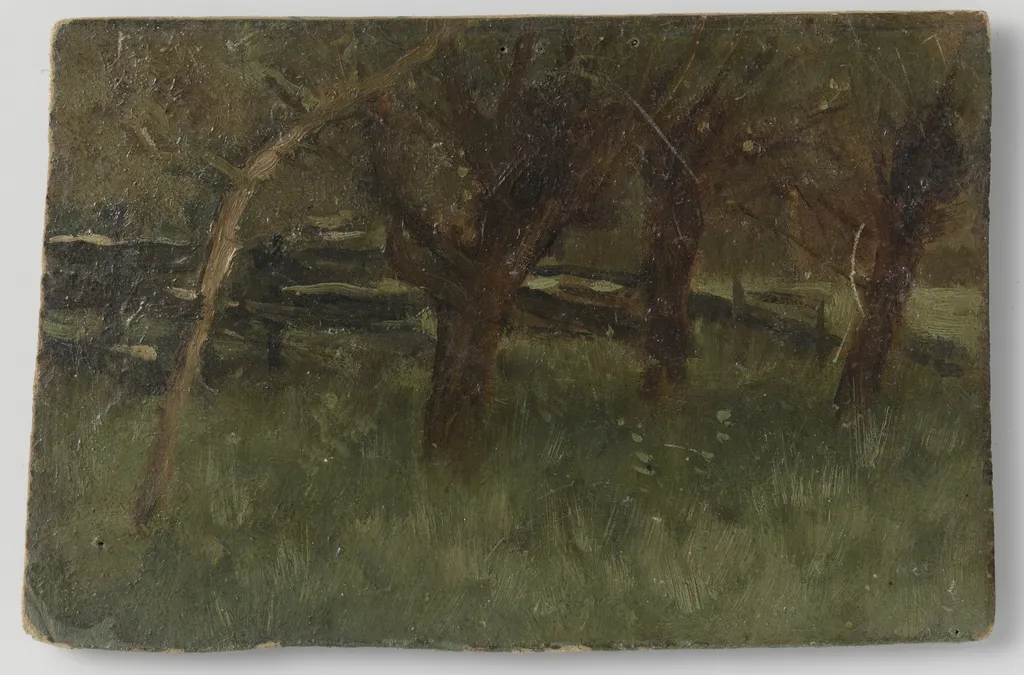
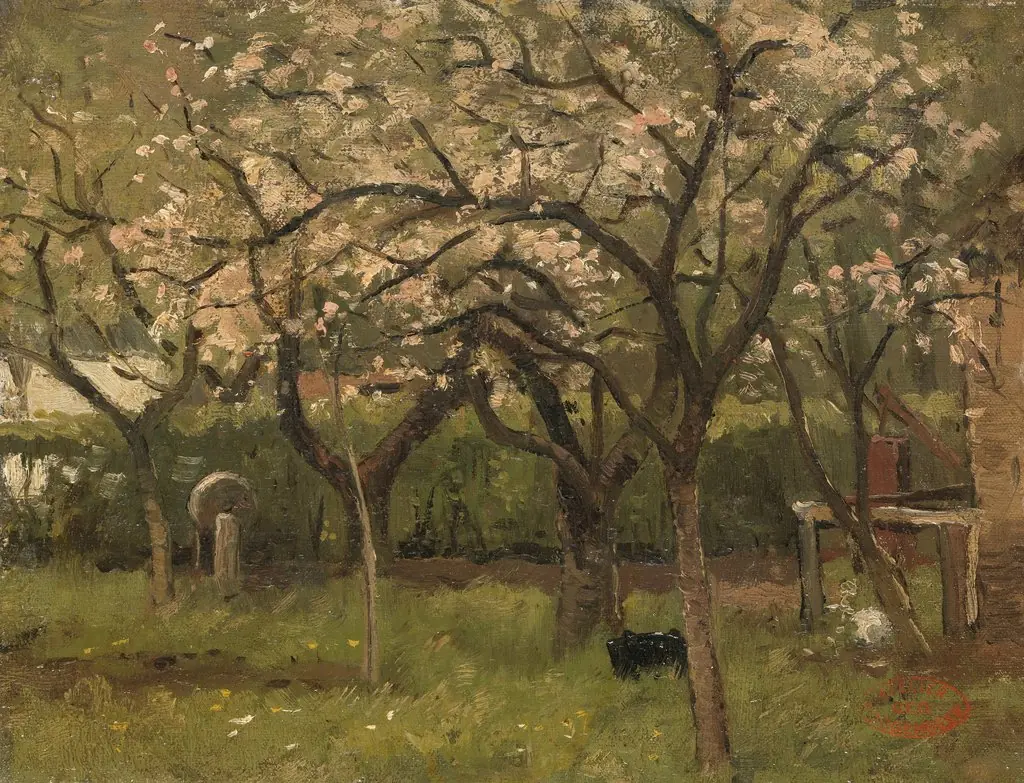
Boomgaard is an oil painting by the Impressionist artist Geo Poggenbeek. It dates from 1894 and is held in the collection of the Rijksmuseum.
About this work
Overview
Geo Poggenbeek, a 19th-century Amsterdam painter, completed *Boomgaard* (Orchard) in 1894. This oil painting captures a serene rural landscape, characteristic of the artist's work and his connection to the Hague School movement. It is currently part of the Rijksmuseum's collection, representing a typical example of Dutch landscape painting from the period.
Subject & Meaning
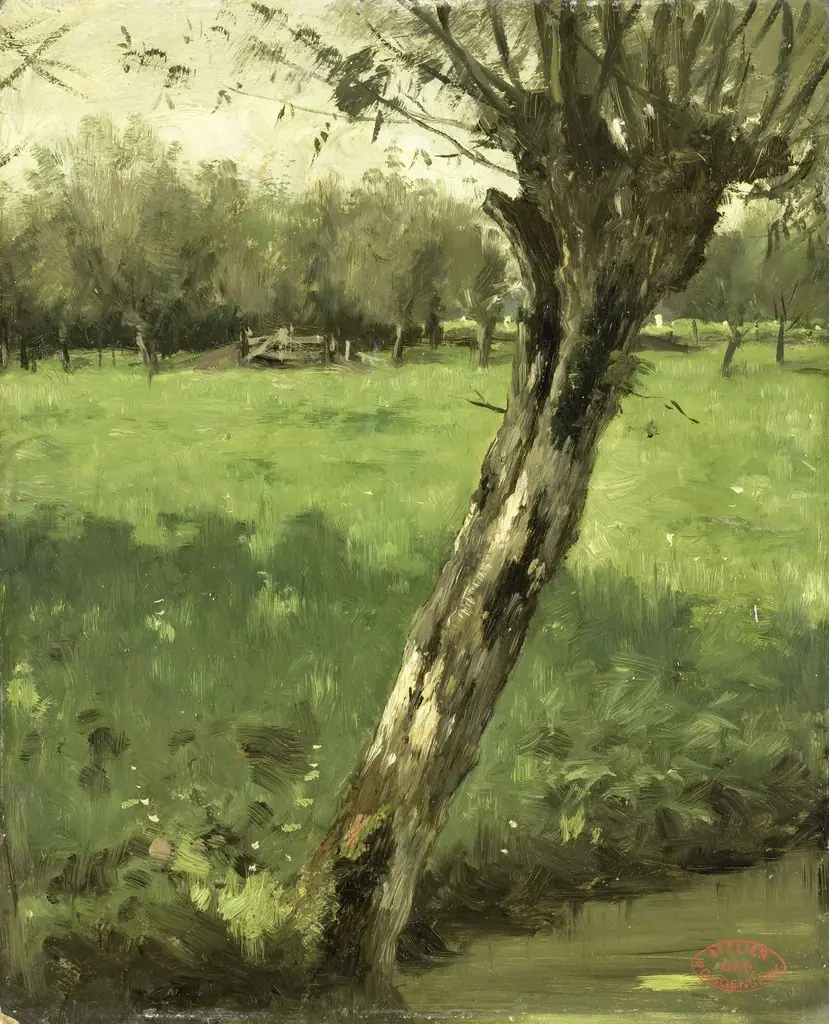
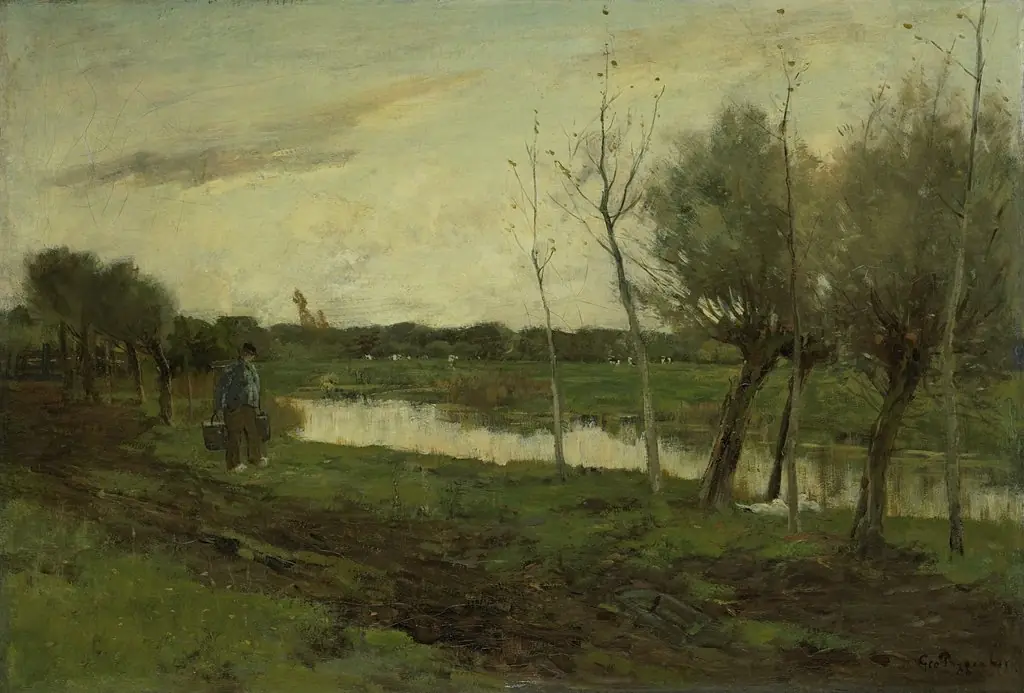
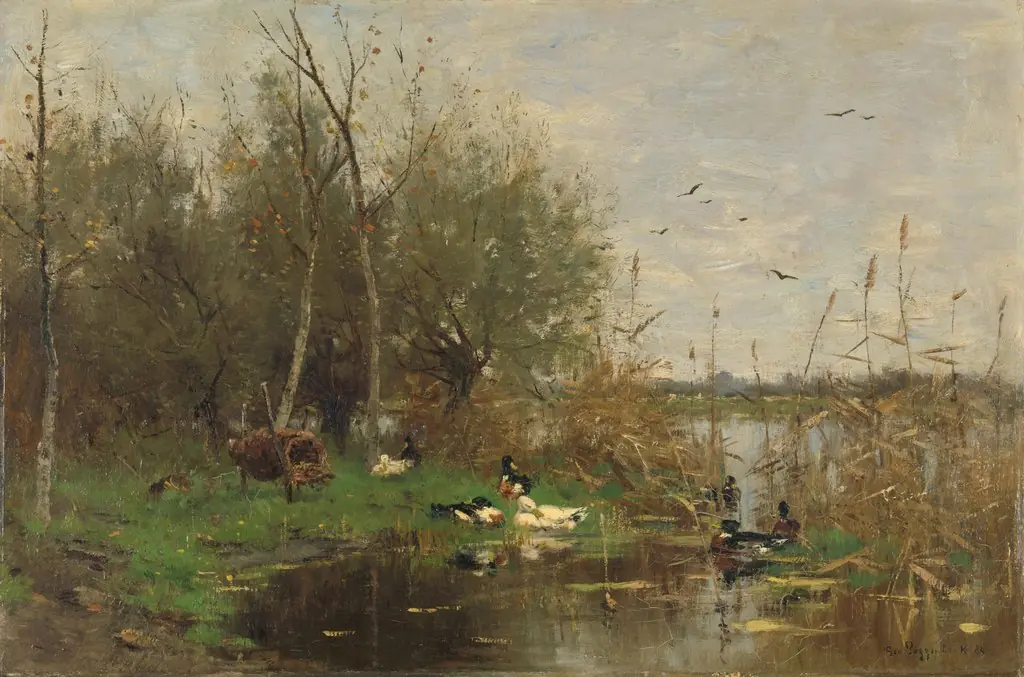
The painting portrays a tranquil orchard scene, featuring several trees with dark trunks and branches set against lighter green grass. This rural setting evokes a sense of peace and natural simplicity. Poggenbeek's choice of subject aligns with the Hague School's preference for depicting the Dutch countryside, often emphasizing its quiet beauty and atmospheric qualities.
Technique & Style
Executed in oil paint, *Boomgaard* demonstrates Poggenbeek's approach to capturing natural light and texture. The visible brushstrokes contribute to a dynamic surface, conveying a sense of movement and depth within the landscape. A muted palette, dominated by greens and browns, enhances the painting's serene atmosphere, reflecting the subtle color variations found in the Dutch countryside.
History & Provenance
Created by Geo Poggenbeek in 1894, *Boomgaard* is a product of a significant period in Dutch art history. The painting has since entered the collection of the Rijksmuseum, where it is preserved. Its inclusion in such a prominent national museum underscores its importance as an example of 19th-century Dutch landscape painting and Poggenbeek's contribution to the Hague School.
Artist & collection
Artist
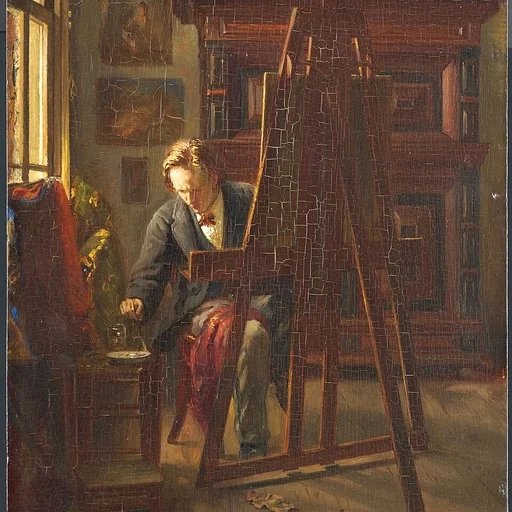
George Jan Hendrik (Geo) Poggenbeek (1853–1903) was a 19th-century painter from Amsterdam, the Netherlands who maintained close contact with the Hague School.