Artwork
Self-portrait of the Artist with his Daughter Antonia
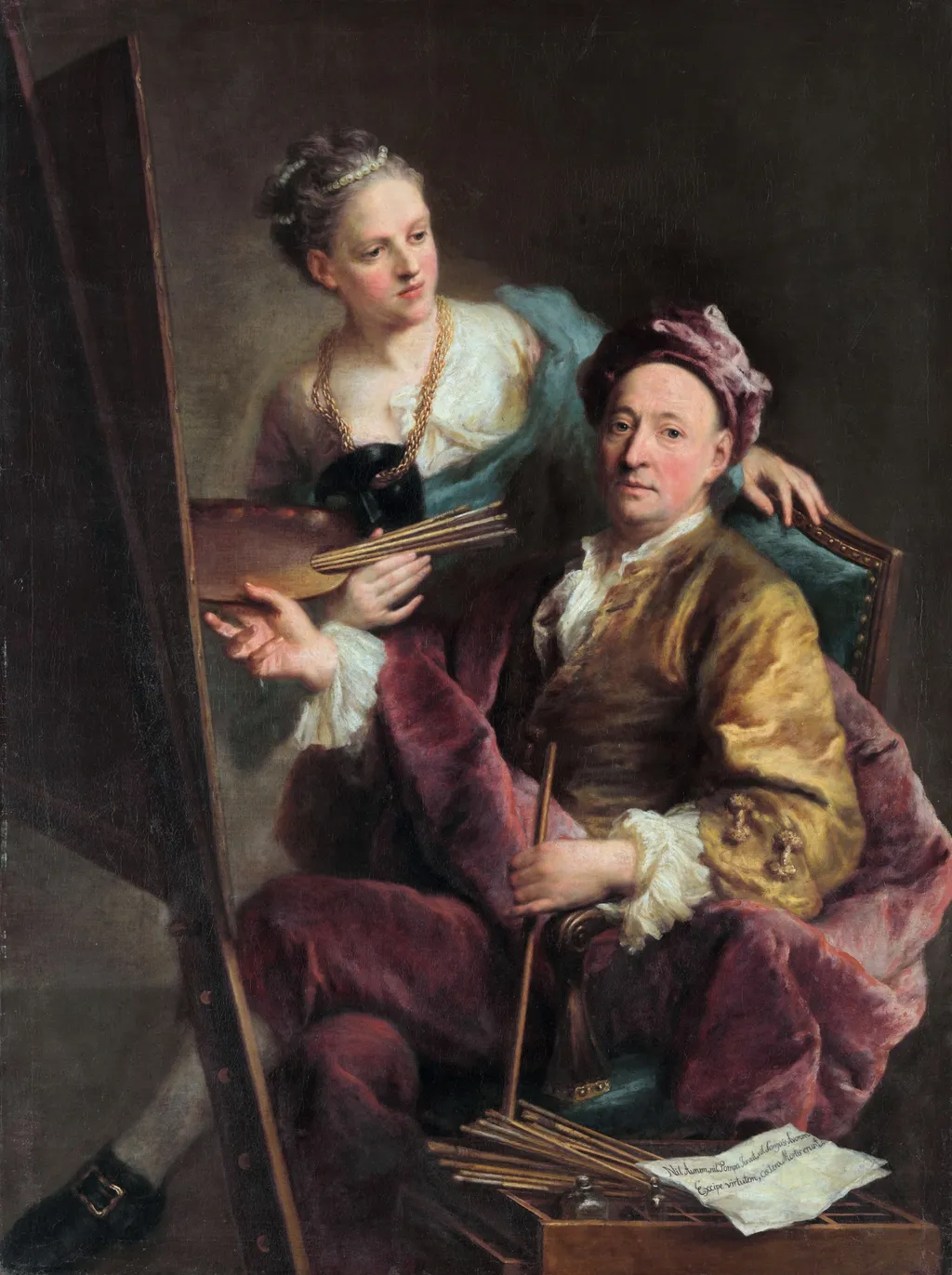
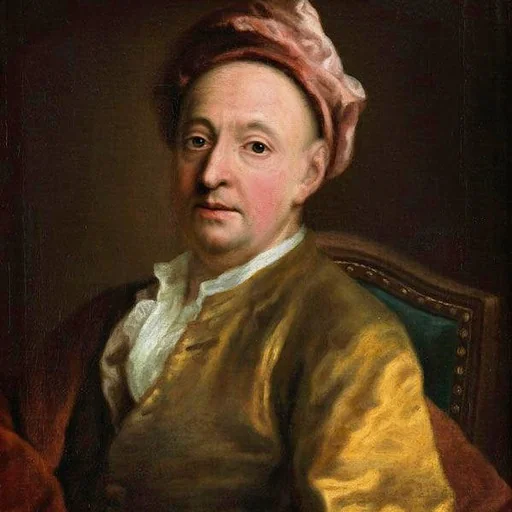
Self-portrait of the Artist with his Daughter Antonia is an oil painting by the Rococo painting artist Georg Desmarées. It dates from 1750 and is held in the collection of the Bavarian State Painting Collections.
About this work
Overview
A cane rests near the artist, and the scene is grounded by objects on the floor, reinforcing the domestic yet professional atmosphere.
Georg Desmarées' Self-portrait of the Artist with his Daughter Antonia, executed in 1750, is a significant late work by the German painter that documents his professional identity alongside his familial role. The composition features the artist seated in a dimly lit interior, dressed in a yellow coat and white wig, holding a piece of paper and a drawing tool, likely a stylus or pencil. Standing behind him is his daughter Antonia, who wears a light blue dress with lace cuffs and a pearl necklace; she gestures toward the paper the artist holds, suggesting a shared engagement with his craft or a specific study. A cane rests near the artist, and the scene is grounded by objects on the floor, reinforcing the domestic yet professional atmosphere. Painted during the height of Desmarées' career as a court painter in Munich, this work serves as a dual testament to his technical mastery of oil portraiture and his personal life. Unlike many formal court portraits of the era, this intimate grouping humanizes the artist, presenting him not merely as a servant of the court but as a father and mentor. The painting remains a key example of mid-18th-century German portraiture, illustrating the artist's ability to blend psychological depth with elegant Rococo styling.
Subject & Meaning
The central figure is Desmarées, identifiable by his white wig and yellow coat, holding a sheet of paper and a small instrument. Beside him stands a woman in a light‑blue dress with lace cuffs and a pearl necklace, presumed to be his daughter Antonia, who points toward the paper. The inclusion of the child suggests a familial bond and perhaps an instructional or collaborative aspect to the artistic process.
Technique & Style
Desmarées employs chiaroscuro to model the figures, using a single light source that illuminates the faces while casting the surrounding interior into shadow. This contrast creates a three‑dimensional effect and draws attention to the interaction between father and daughter. The brushwork is smooth, typical of academic portraiture, and the limited palette reinforces the intimate atmosphere.
History & Provenance
Since its creation, the painting has remained in German collections, eventually entering the holdings of the Alte Pinakothek. The museum acquired it as part of its 18th‑century European painting department, where it is displayed among works by contemporaneous portraitists, providing context for Desmarées’ place within the period’s artistic network.
Own this work as a print
Artist & collection