Artwork
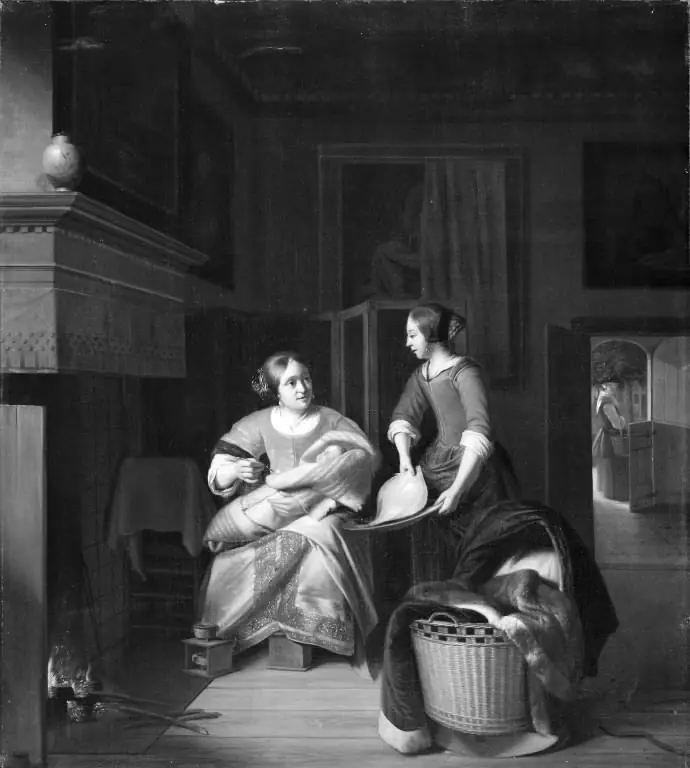
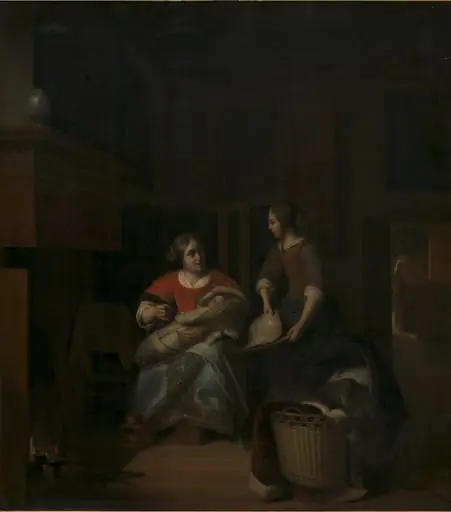
A Housewife Settling Up with her Maid
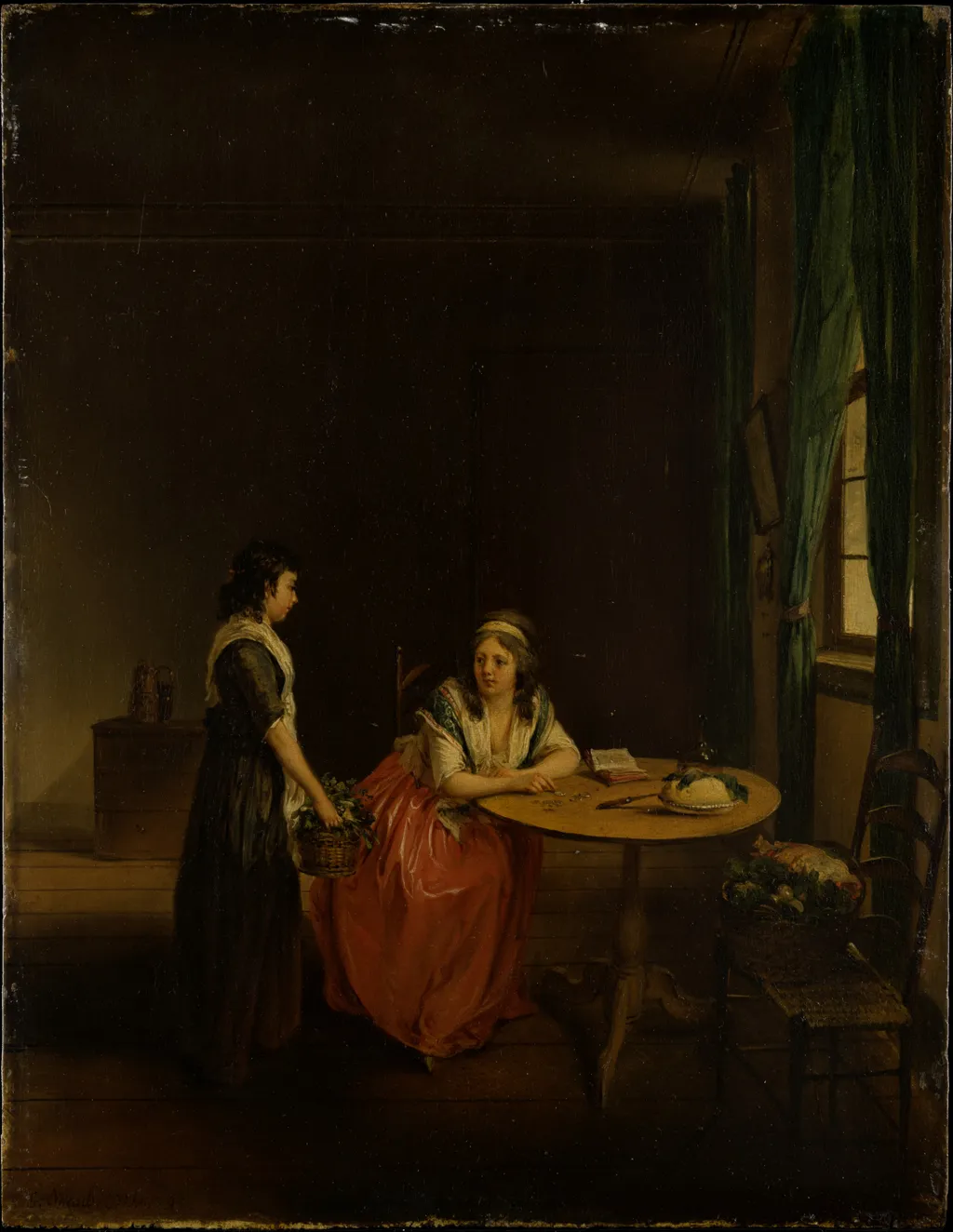
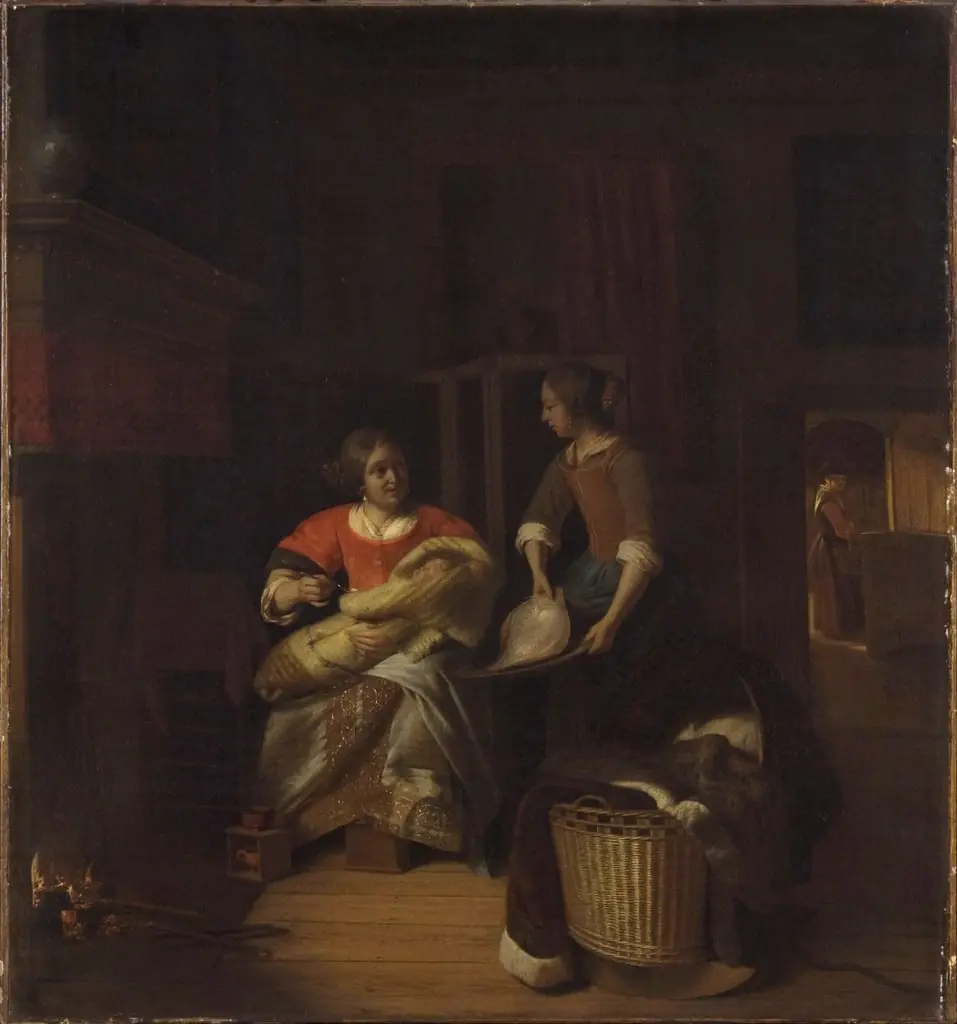
A Housewife Settling Up with her Maid is an unspecified painting by the Biedermeier artist Georg Karl Urlaub. It dates from 1800 and is held in the collection of the Städel Museum.
About this work
Overview
Georg Karl Urlaub’s 1800 oil painting, A Housewife Settling Up with her Maid, presents a quiet domestic interior. The work is part of the Städel Museum’s collection and exemplifies the genre‑scene tradition that focuses on everyday moments rather than grand historical narratives.
Subject & Meaning
The composition features two women inside a modest room. The seated figure, dressed in a red gown with a white shawl, engages the standing maid, who turns away while holding a basket of vegetables. A plate of food and an open book rest on the table, suggesting a moment of household accounting or conversation about daily provisions.
Technique & Style
Urlaub employs a subdued palette and strong contrasts of light and shadow, creating a chiaroscuro effect that emphasizes the figures against the dimly lit walls. The careful rendering of textures—fabric folds, the sheen of the basket, and the soft glow from the window—demonstrates his attention to realistic detail within a modest setting.
History & Provenance
Painted at the turn of the 19th century, the work entered the Städel Museum’s holdings sometime after its creation, though the exact acquisition path remains undocumented. Its presence in the museum’s collection highlights the institution’s interest in German genre painting of the early Romantic period.
Own this work as a print
Artist & collection
Artist
A German painter from the late 1700s, Georg Karl Urlaub captured quiet, everyday scenes with a warm, intimate touch.