Artwork
Standing Nude Bending Forward, third state
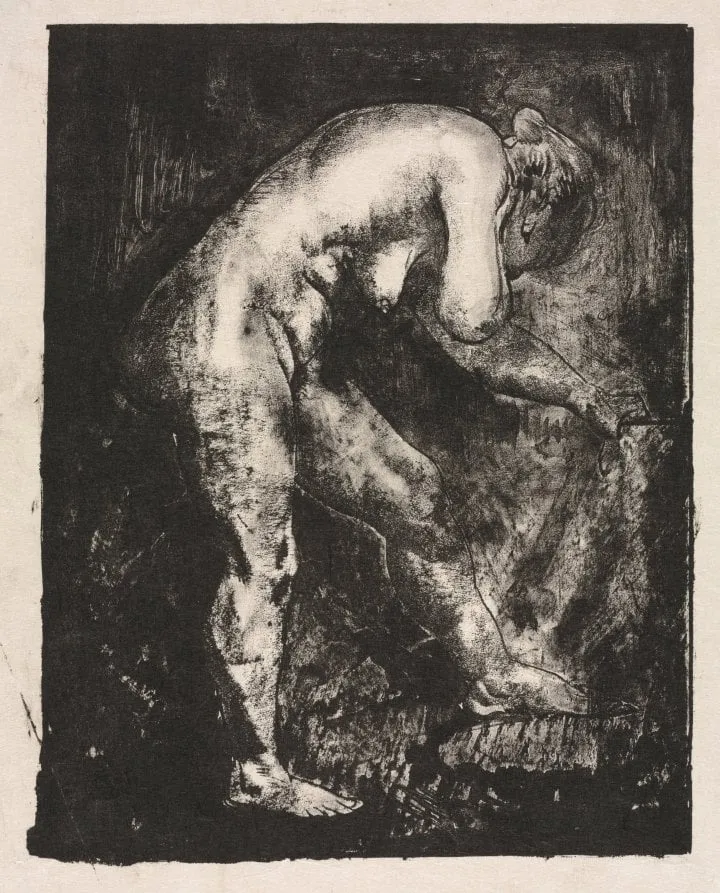
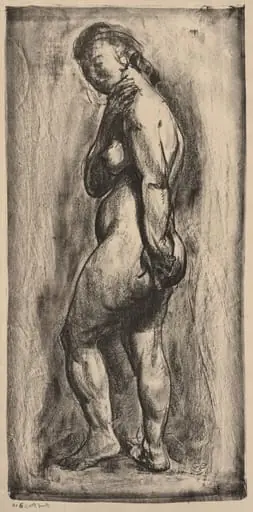
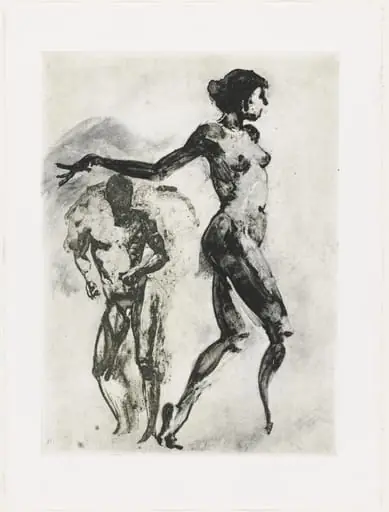
Standing Nude Bending Forward, third state is a print by George Bellows. It dates from 1916 and is held in the collection of the Cleveland Museum of Art.
About this work
Overview
Though best known for his dynamic urban scenes, Bellows devoted significant attention to the human figure in private studies.
Created in 1916, *Standing Nude Bending Forward, third state* is a lithograph by American artist George Bellows. Though best known for his dynamic urban scenes, Bellows devoted significant attention to the human figure in private studies. This print is one of several iterations exploring posture and volume, reflecting his interest in the body as a vehicle for expressive form rather than idealized beauty.
Subject & Meaning
The figure is a woman in a forward-bending stance, head lowered and arms extended ahead, suggesting motion or physical exertion. Her posture avoids classical grace, instead emphasizing weight, tension, and bodily presence. The absence of narrative context invites focus on the physicality of the pose—its strain, balance, and vulnerability—grounding the image in observation rather than myth or symbolism.
Technique & Style
Bellows employed lithography to achieve bold contrasts between light and dark, using dense ink and expressive linework to model the figure’s form. The dark background isolates the body, enhancing its three-dimensionality. His brush-like strokes and varied pressure create texture in the skin and suggest the subtle shifts of muscle and bone beneath, revealing a direct, unembellished approach to drawing.
History & Provenance
This print is the third of multiple states Bellows produced of the same composition, each refining the tonal structure and detail. It entered the collection of The Cleveland Museum of Art in the 20th century, where it remains part of a broader group of Bellows’s graphic works. Its preservation reflects institutional recognition of his contributions to American printmaking beyond his more famous paintings.
Context
In early 20th-century America, the academic tradition of the nude was being challenged by artists seeking authenticity over idealization. Bellows, aligned with the Ashcan School, turned to the unadorned body as a subject of psychological and physical realism. This print aligns with broader shifts in modern art toward raw, immediate representation, rejecting ornamental conventions in favor of lived experience.
Legacy
Bellows’s figure studies, including this lithograph, expanded the possibilities of American printmaking by treating the nude with unflinching honesty. They influenced later artists who prioritized expressive form over classical harmony. While less publicly celebrated than his cityscapes, these works remain vital for understanding his commitment to the human body as a subject of profound, unvarnished observation.
Artist & collection
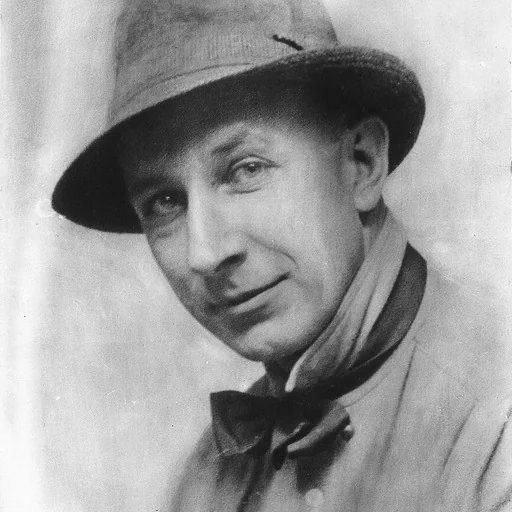
Artist
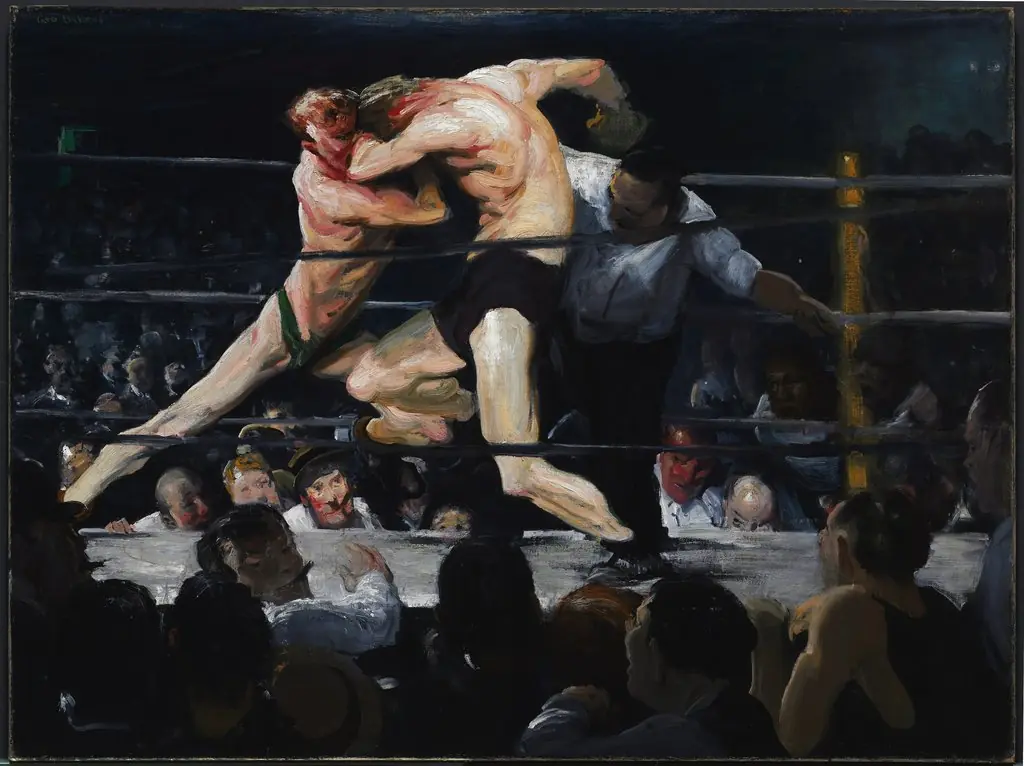
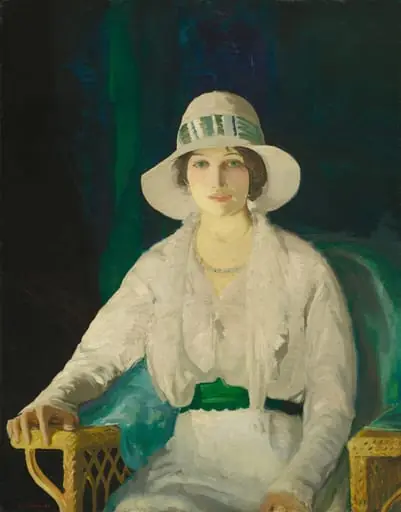
George Wesley Bellows (August 12 or August 19, 1882 – January 8, 1925) was an American realist painter, known for his bold depictions of urban life in New York City.

 Nude Woman Standing, Side View
 Nude Woman Standing, Drying Herself
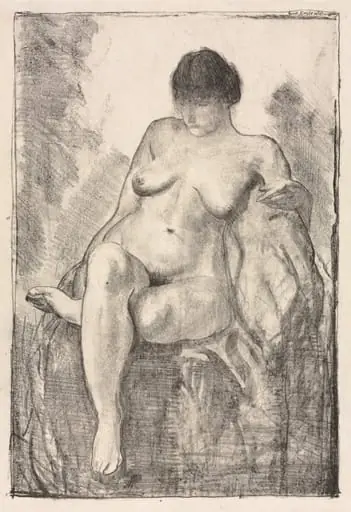 Nude Woman Seated
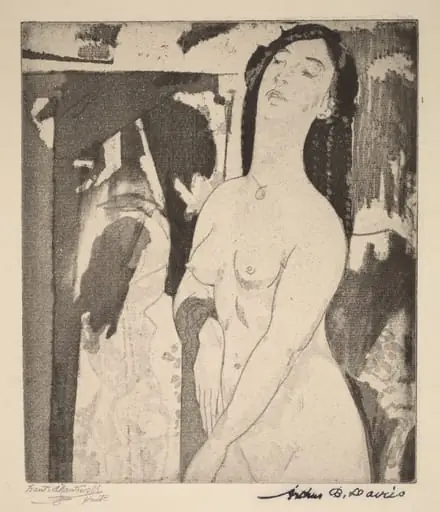 Doorway to Illusion
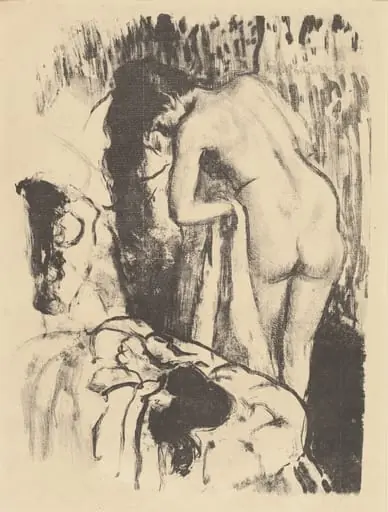 Nude Woman Standing, Drying Herself (Femme nue debout, a sa toilette)
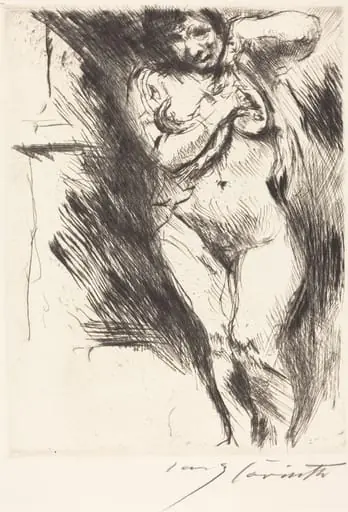 Akt mit hochgehobenem Hemd (Woman Undressing)
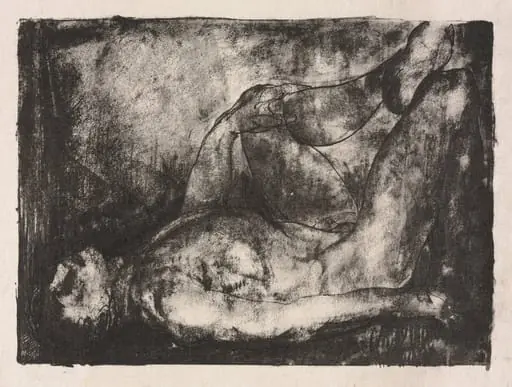 Man on his Back, Nude, Second State
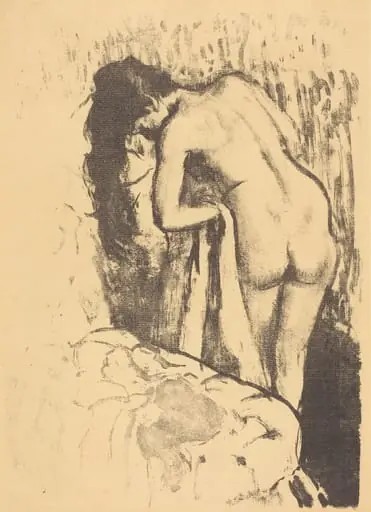 Nude Woman Standing, Drying Herself (Femme nue debout, a sa toilette)
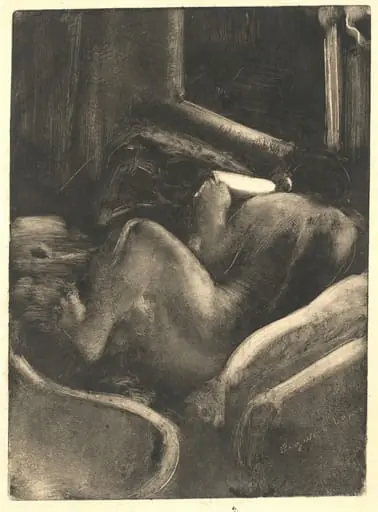 Woman Reading (Liseuse)
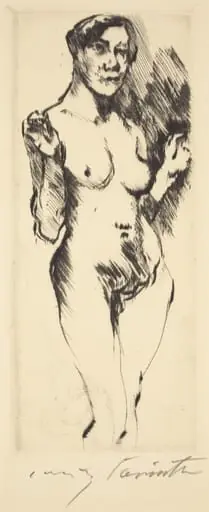 Stehende Weibliche akte (Standing Female Nude)
 Untitled
 Standing Female Nude