Artwork
A Chinese porter, a priest and a dog
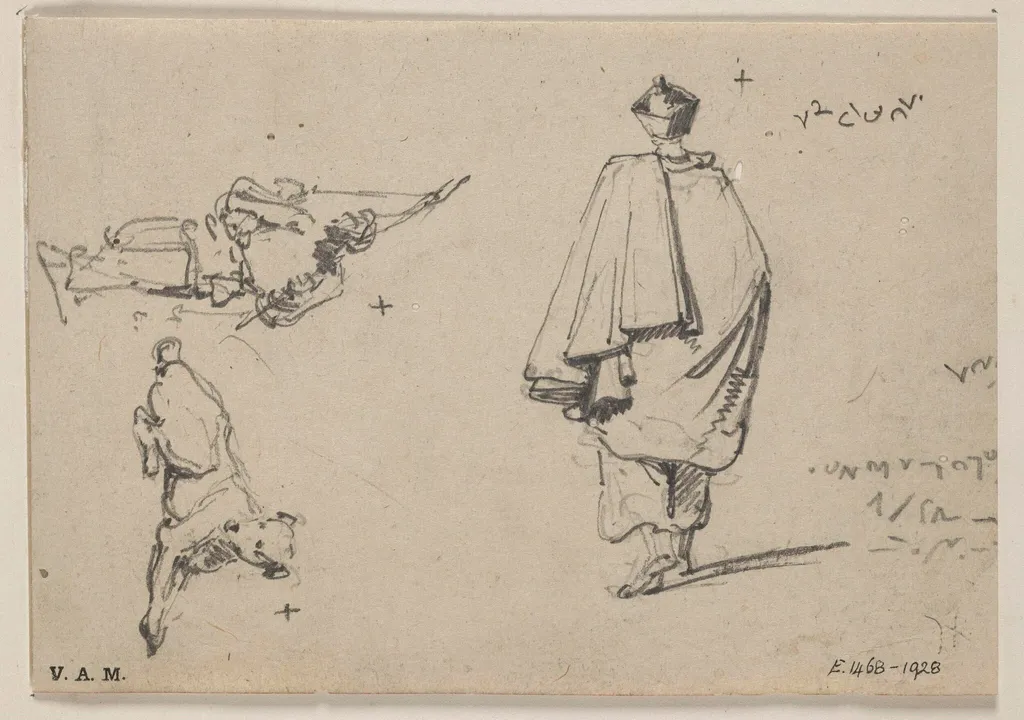
A Chinese porter, a priest and a dog is a drawing by the Romanticist artist George Chinnery. It dates from 19 and is held in the collection of the Victoria and Albert Museum.
About this work
Overview
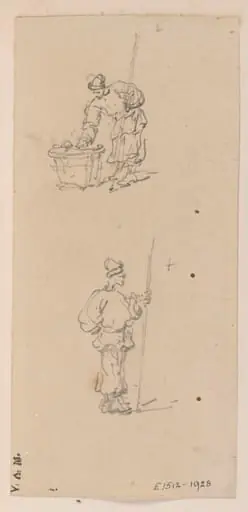
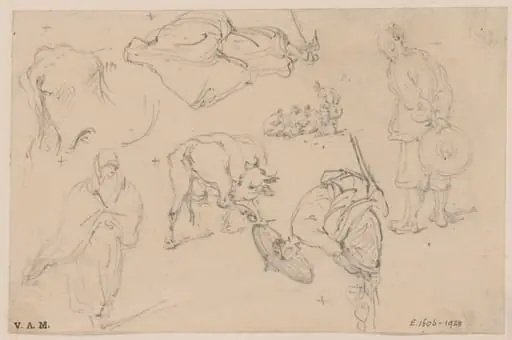
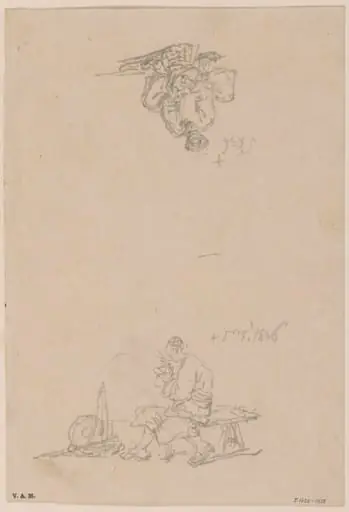
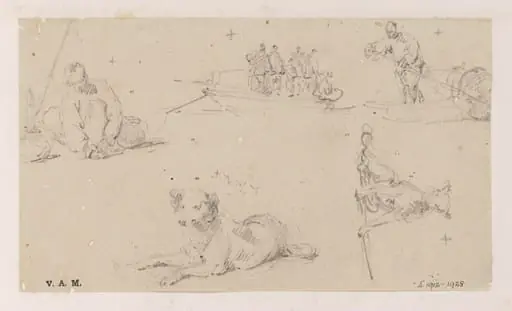
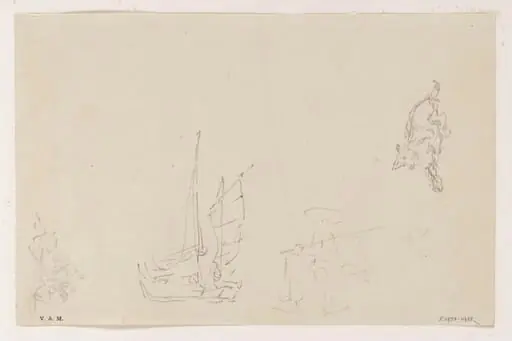
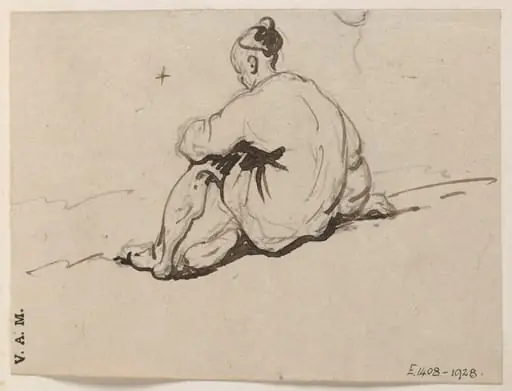
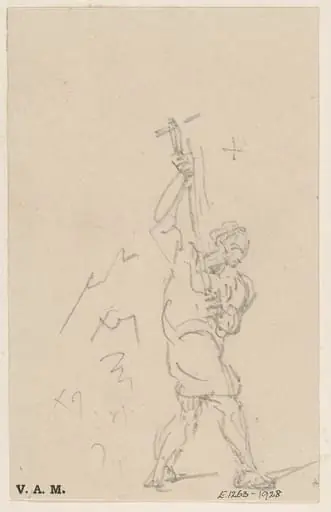
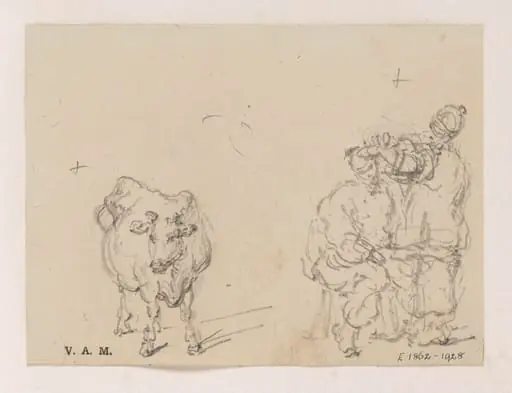
This drawing depicts three disparate figures in a casual, everyday scene: a priest viewed from behind, a Chinese porter burdened with a pole, and a reclining dog positioned at an angle to the others.
Subject & Meaning
The subject matter reflects the artist's experiences in colonized regions, capturing a transient, multicultural moment. The priest, porter, and dog represent different social and species realms, yet coexist in a shared, mundane space.
Technique & Style
Executed in a loose, sketchy manner characteristic of the artist's hand, the drawing conveys a sense of spontaneity, akin to a rapid, observational sketch of street life.
History & Provenance
Created during the British colonial era, the work is associated with the artist's time in China and India. For further context, see the Victoria and Albert Museum's holdings.
Context
The piece embodies the cultural intersections of colonial-era Asia, where figures from different walks of life intersected in public spaces, as observed by a traveling artist.
Legacy
As a snapshot of colonial-era street life, the drawing offers a unique, artistic glimpse into the daily intersections of diverse individuals in a bygone era.
Artist & collection
Artist
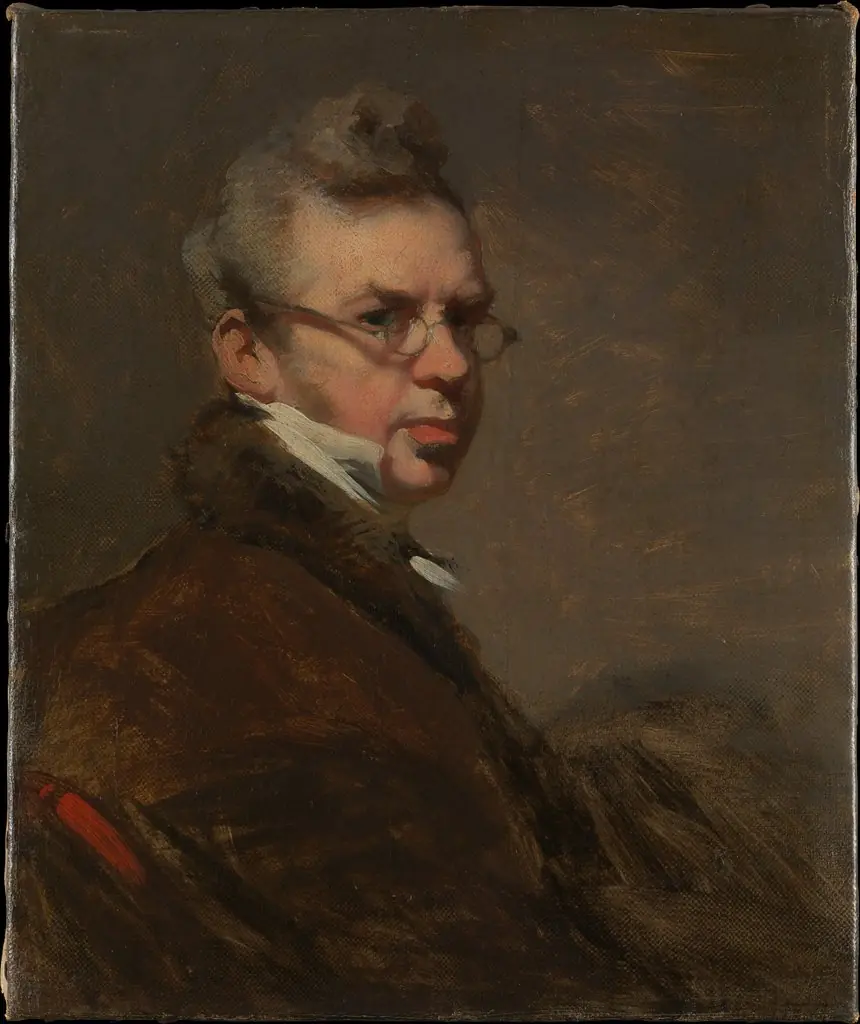
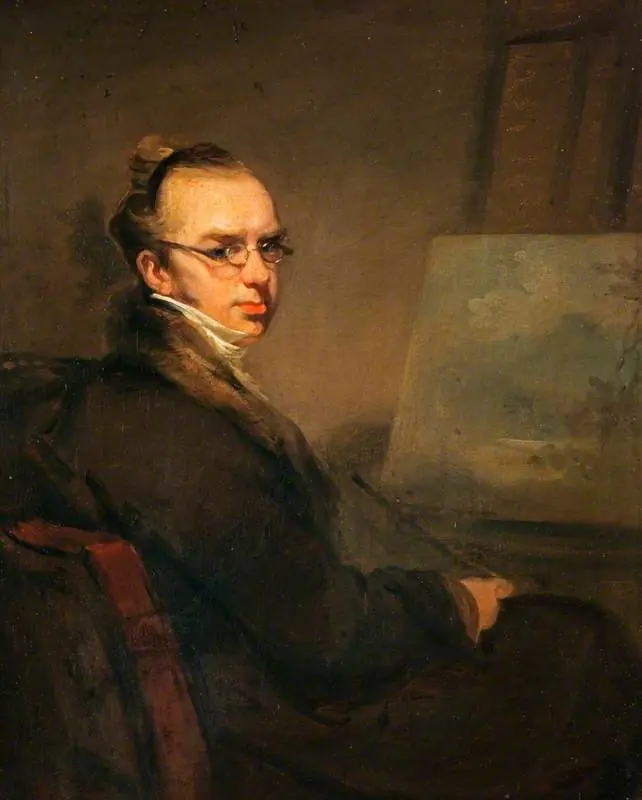
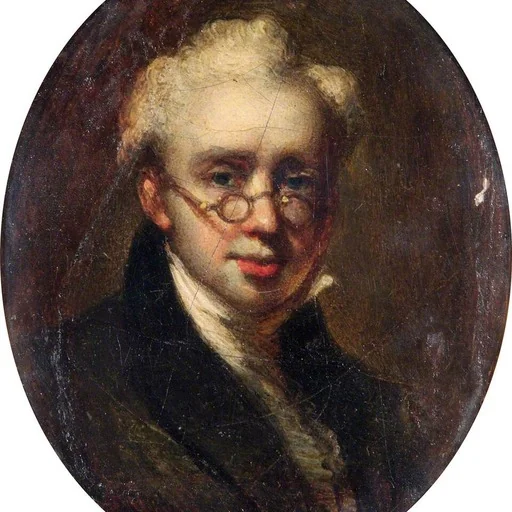
George Chinnery (Chinese: 錢納利; 5 January 1774 – 30 May 1852) was an English painter who spent most of his life in Asia, especially India and southern China.