Artwork
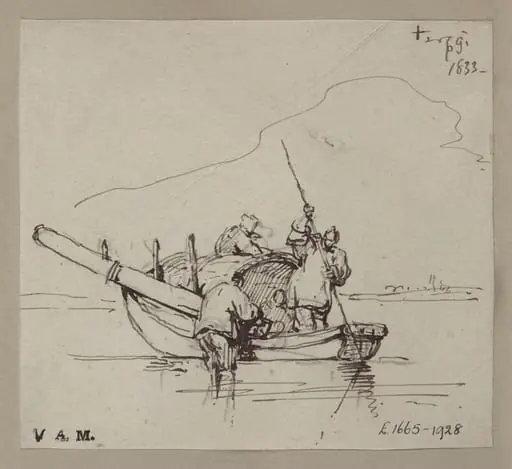
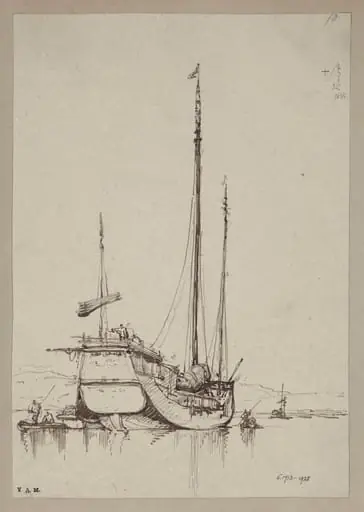
A junk with a Tanka boat alongside
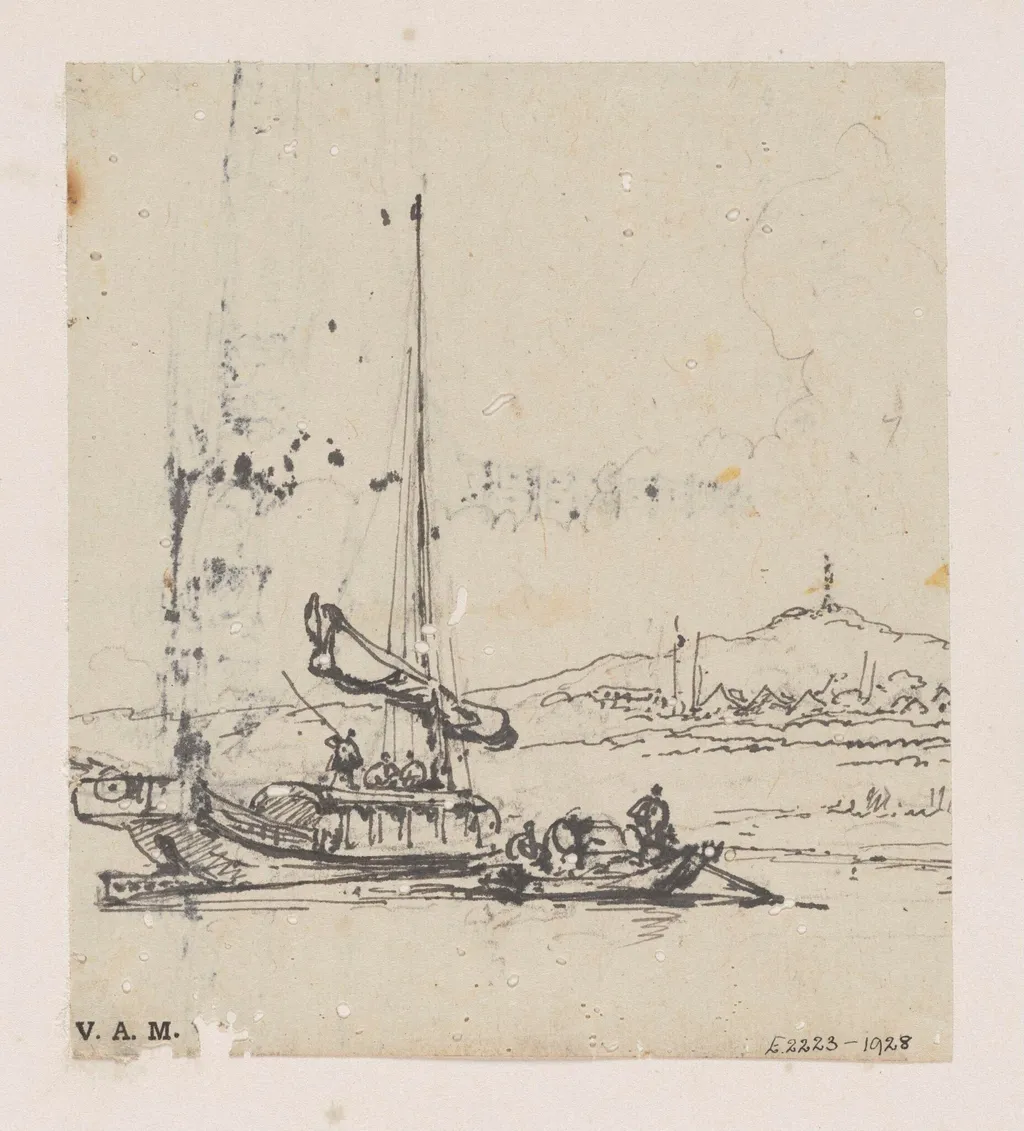
A junk with a Tanka boat alongside is a drawing by the Romanticist artist George Chinnery. It dates from 19 and is held in the collection of the Victoria and Albert Museum.
About this work
Overview
This double-sided drawing, executed by George Chinnery, presents a maritime scene on one face and a temple landscape on the reverse. Both images are rendered in a Romantic manner, emphasizing atmospheric effects and a sense of distance. The work is part of the Victoria and Albert Museum’s collection.
Subject & Meaning
The front panel depicts a Chinese junk sailing beside a smaller Tanka boat, set against a coastal village where a pagoda rises on a hill, likely the Whampoa (Huangpu) landmark. The reverse shows a seven‑storey pagoda perched on a modest rise, bathed in sunlight, with additional Tanka vessels positioned in the foreground, suggesting a contemplative view of trade and spirituality.
Technique & Style
Chinnery employs delicate pen and ink lines typical of early 19th‑century drawing, combined with washes that create soft tonal gradients. The Romantic influence appears in the treatment of light—particularly the sun’s rays behind the pagoda on the back—and in the evocative, almost lyrical composition of the harbor and temple scenes.
History & Provenance
Created during Chinnery’s long residence in Canton, the drawing reflects his extensive observation of local maritime life. It entered the Victoria and Albert Museum’s holdings through acquisition in the early 20th century, where it has been catalogued as an example of his Chinese period work.
Context
Chinnery, a British artist active in China from the 1790s to the 1820s, frequently recorded the region’s architecture and river traffic for both commercial patrons and personal study. This piece aligns with his broader output of topographical sketches that catered to European interest in the Far East’s visual culture.
Artist & collection

Artist
George Chinnery (Chinese: 錢納利; 5 January 1774 – 30 May 1852) was an English painter who spent most of his life in Asia, especially India and southern China.


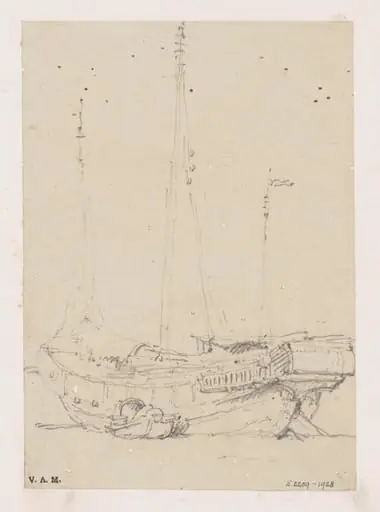 A junk with a small boat alongside
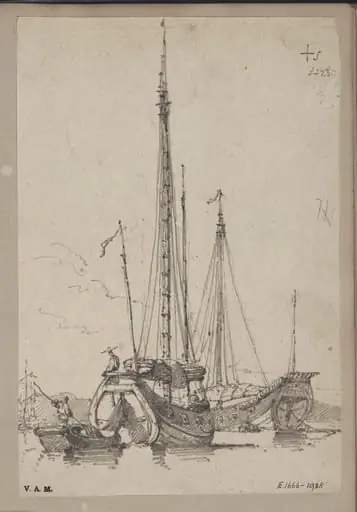 Two junks and a Tanka boat
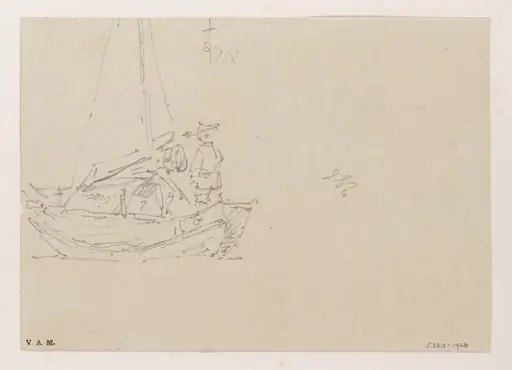 A sketch of a Chinese figure standing in a Tanka boat
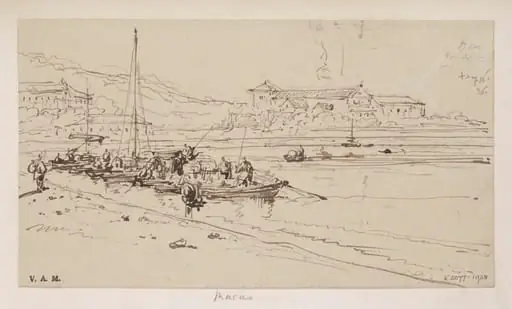 Tanka boats in the Praya Grande, Macau
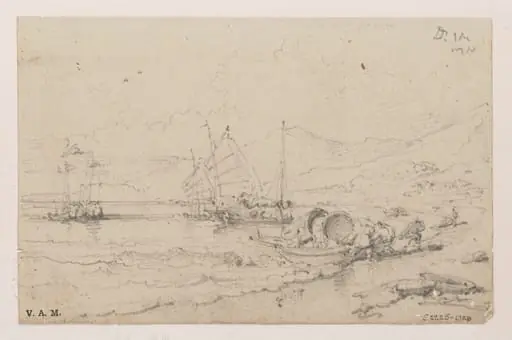 A drawing of the Praya Grande, Macau, with figures beaching a Tanka boat and other craft in the bay
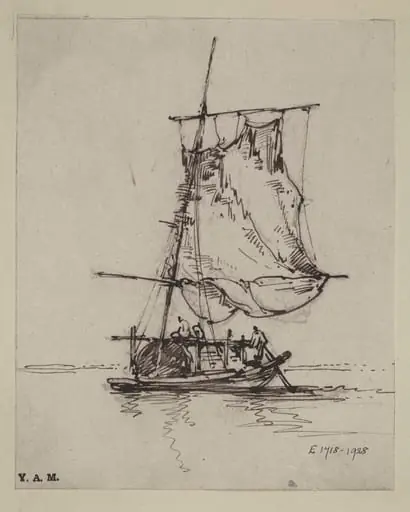 A drawing by George Chinnery of a Tanka boat with a large sail or net raised
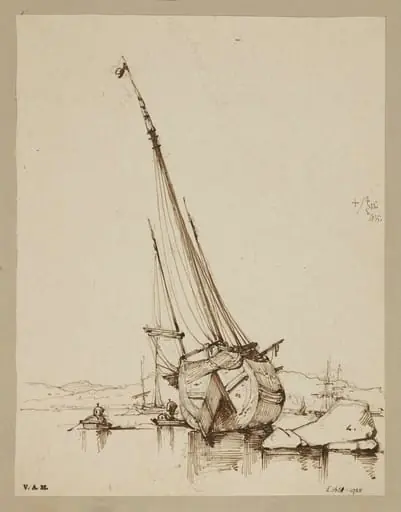 A junk grounded in shallow water, Macau
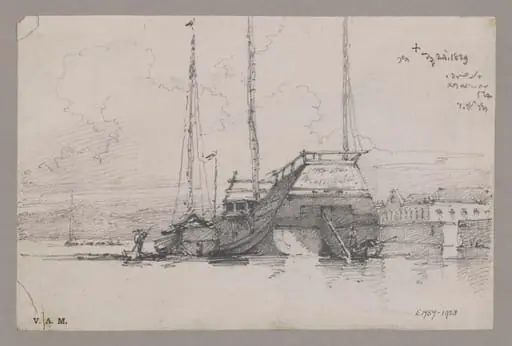 Chinese junk
 A Tanka boat in shallow water
 A junk with smaller craft alongside