Artwork
A ruined building, cattle, and a figure in a boat
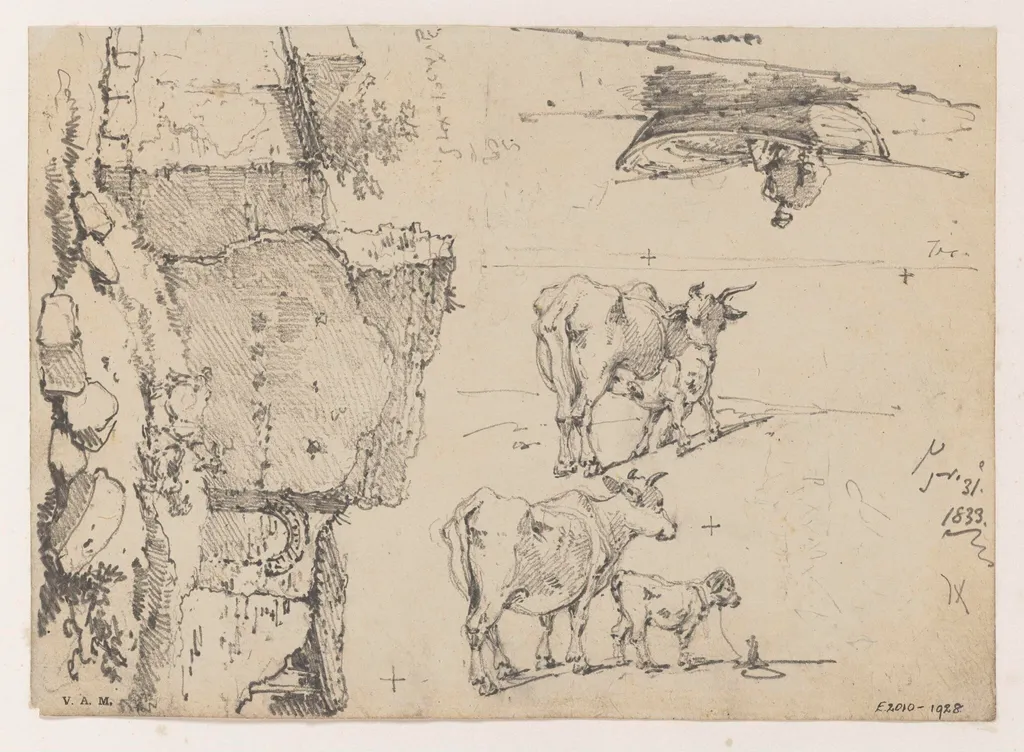
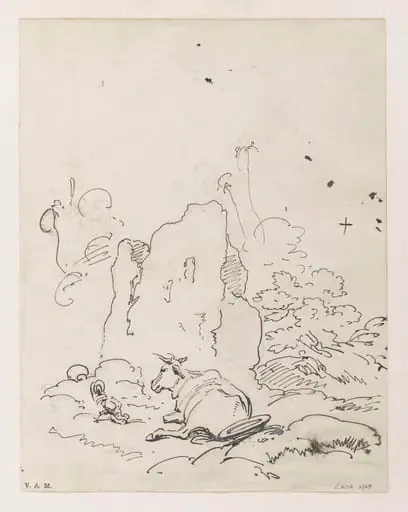
A ruined building, cattle, and a figure in a boat is a drawing by the Romanticist artist George Chinnery. It dates from 1833 and is held in the collection of the Victoria and Albert Museum.
About this work
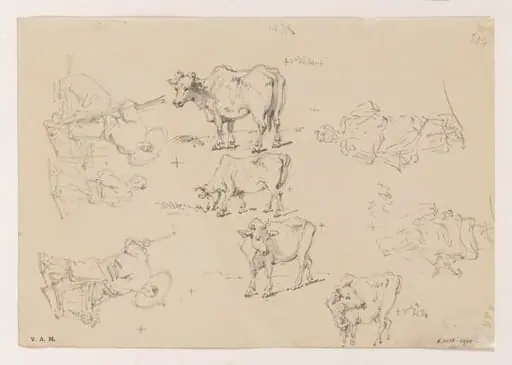
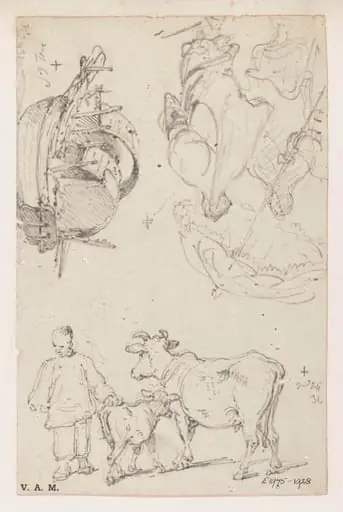
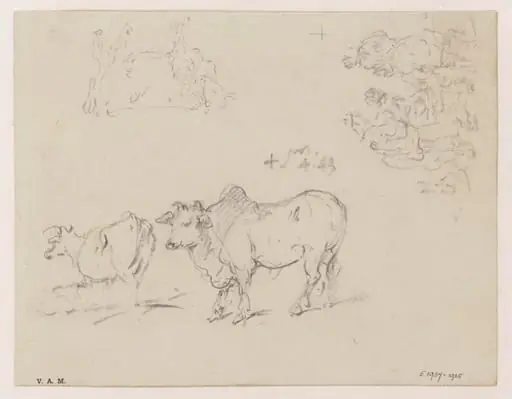
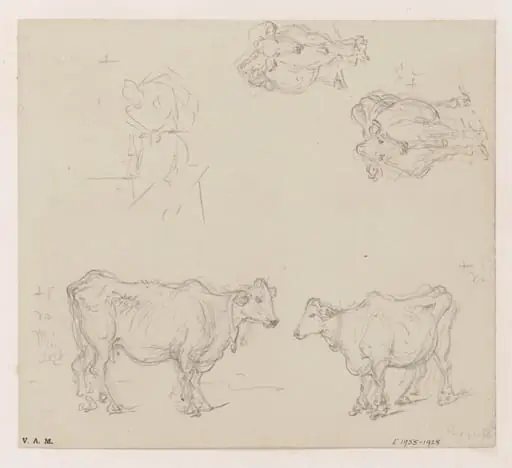
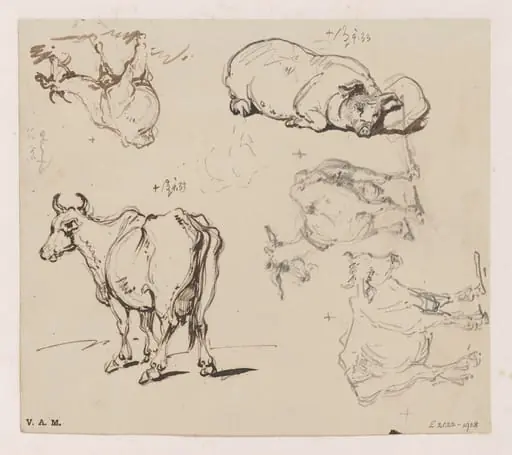
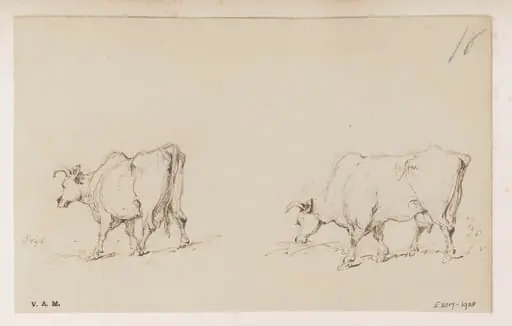
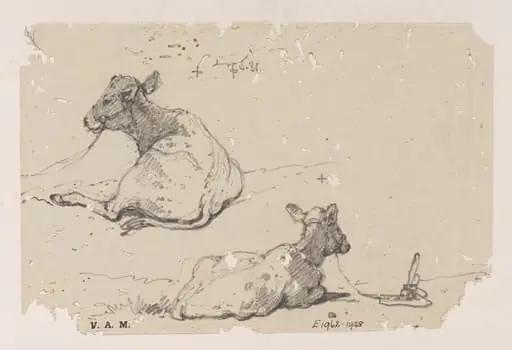
This drawing shows a crumbling ruin, a cow with her calf, and a lone figure rowing a boat. It was made in 1833 by George Chinnery. The work mixes quiet farm life with old stone remains.
Chinnery often drew ruins and animals in his scenes. The boat floats upside-down in the image, a small odd touch.
Next, look up Romanticism.
Overview
This 1833 drawing by George Chinnery depicts a quiet, desolate landscape featuring weathered stone ruins, a nursing cow and her calf, and a small rowboat inverted in the water. Executed in pencil or ink, the composition blends natural elements with architectural decay, reflecting Chinnery’s frequent interest in the interplay between human remnants and rural life in southern China.
Subject & Meaning
The scene juxtaposes the enduring presence of ancient masonry with the quiet rhythms of animal life and solitary human activity. The upside-down boat introduces a subtle dissonance, perhaps suggesting abandonment or the fragility of human endeavors. Together, these elements evoke a contemplative mood, emphasizing transience without overt sentimentality.
Technique & Style
Chinnery rendered the scene with loose, economical linework, capturing texture in the crumbling stone and the soft contours of the animals. The inverted boat is rendered with the same precision as the rest, suggesting intentional placement rather than error. The drawing’s simplicity and attention to atmospheric detail reflect a direct, observational approach common in his travel sketches.
History & Provenance
Created during Chinnery’s time in Macau and southern China, the drawing is part of a larger body of work documenting local landscapes and daily life. It likely originated as a private sketch, later preserved in collections that recognized its documentary and aesthetic value. No public record of early ownership exists, but it aligns with his known sketchbooks from the 1830s.
Context
Chinnery worked in a region where European and Chinese cultures intersected, and his drawings often recorded scenes overlooked by official records. While not overtly Romantic in style, his focus on decay, solitude, and nature’s reclamation of human structures resonates with broader 19th-century European sensibilities toward ruins and the sublime.
Legacy
Chinnery’s drawings, including this one, remain valuable for their unembellished record of 19th-century southern China. They offer insight into how foreign artists interpreted local environments without romanticizing them. The work is studied today for its quiet observation and its role in the visual documentation of colonial-era Asia.
Artist & collection
Artist
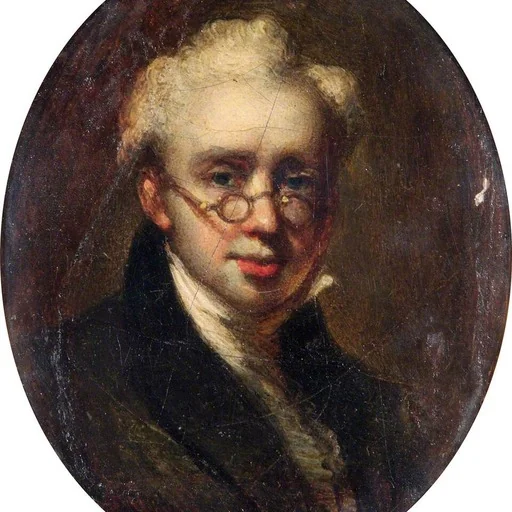
George Chinnery (Chinese: 錢納利; 5 January 1774 – 30 May 1852) was an English painter who spent most of his life in Asia, especially India and southern China.