Artwork
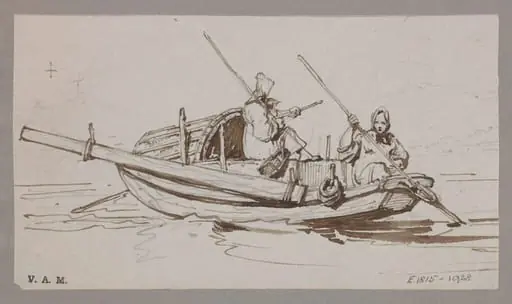
A Tanka boat with two boatwomen
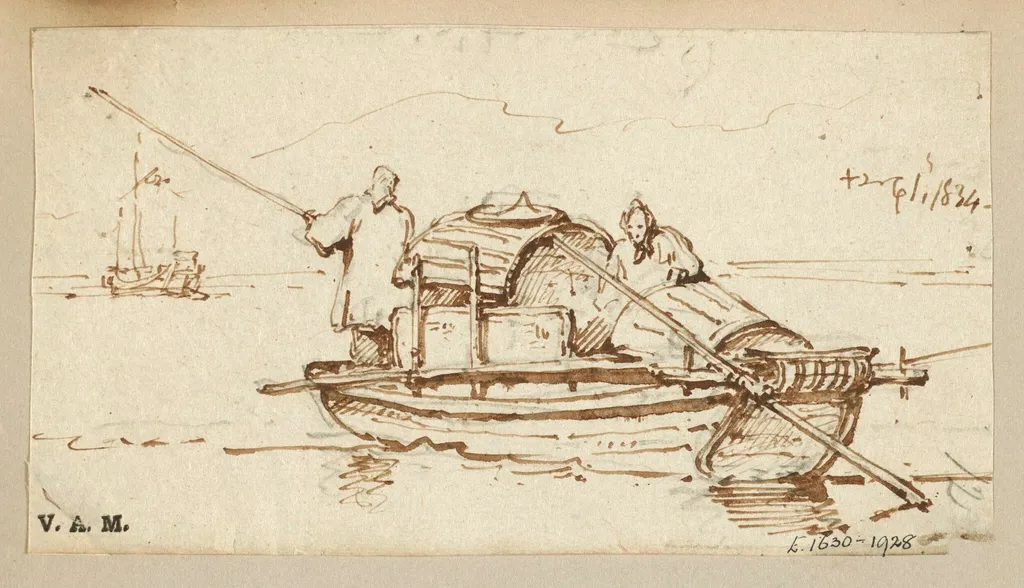
A Tanka boat with two boatwomen is a drawing by the Romanticist artist George Chinnery. It dates from 6 and is held in the collection of the Victoria and Albert Museum. This pencil drawing, dated October 1, 1834, depicts two women aboard a Tanka boat in the shallow waters near Macau.
About this work
It’s a simple scene, but the date—October 1, 1834—tells us he sketched it long ago.
George Chinnery drew two women in headscarves on a Tanka boat in Macau. It’s a simple scene, but the date—October 1, 1834—tells us he sketched it long ago. The women seem busy with their work in the shallow water.
The drawing fits the Romanticism movement. That style often shows everyday life with feeling, not just grand events.
Next time you visit the Victoria and Albert Museum, look for it there.
Overview
This pencil drawing, dated October 1, 1834, depicts two women aboard a Tanka boat in the shallow waters near Macau. Executed by George Chinnery, it captures a quiet moment of daily labor, rendered with delicate lines and minimal detail. The work belongs to a series of sketches Chinnery made during his time in southern China, reflecting his interest in local life rather than formal portraiture or grand landscapes.
Subject & Meaning
The two women, wearing headscarves, are engaged in routine tasks aboard their vessel, likely preparing for fishing or transport. Their posture and positioning suggest focus and familiarity with their environment. The scene holds no overt symbolism; its significance lies in its unembellished portrayal of Tanka people, a marginalized maritime community whose lives were rarely documented in Western art of the period.
Technique & Style
Chinnery employed a restrained pencil technique, using light, fluid strokes to suggest form and movement. Shadows and contours are implied rather than heavily shaded, emphasizing spontaneity. The composition is uncluttered, with the boat and figures centered against an empty expanse of water, aligning with Romantic-era tendencies to find emotional resonance in ordinary, unheroic moments.
History & Provenance
Created during Chinnery’s residency in Macau, the drawing was likely made as a personal record rather than for public display. It entered the Victoria and Albert Museum’s collection through later acquisitions of his sketchbooks and personal papers. Its survival reflects the growing 19th-century European interest in documenting Asian daily life, though it was not exhibited widely until the 20th century.
Context
In 1834, Macau was a Portuguese trading post with a distinct multicultural population, including the Tanka, who lived on boats and were often excluded from mainland Chinese society. Chinnery, a British artist living in the region, produced numerous sketches of local people and scenes. This drawing is one of few visual records of Tanka women from this era, offering insight into a community largely absent from official histories.
Legacy
The drawing remains a rare visual document of Tanka life in early 19th-century Macau. While not widely known outside academic circles, it contributes to broader efforts to recover marginalized histories through art. Its modest scale and unadorned style contrast with the grand narratives typical of colonial-era art, making it a quiet but valuable witness to everyday existence in a changing region.
Artist & collection
Artist
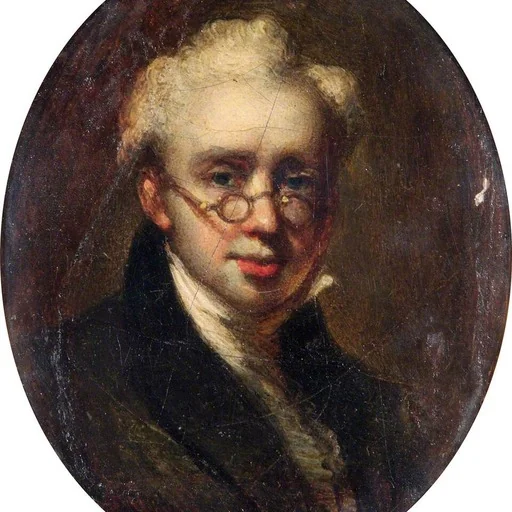
George Chinnery (Chinese: 錢納利; 5 January 1774 – 30 May 1852) was an English painter who spent most of his life in Asia, especially India and southern China.

 A Tanka boat operated by two boatwomen
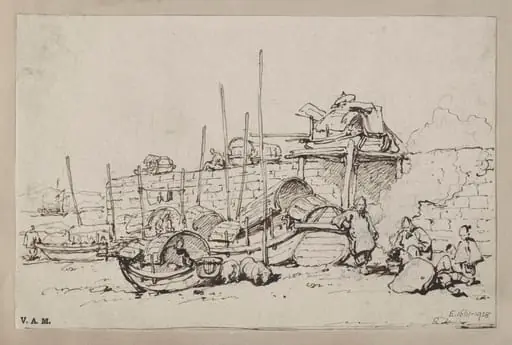 Tanka boats and boatpeople on the beach by the sea wall, Macau
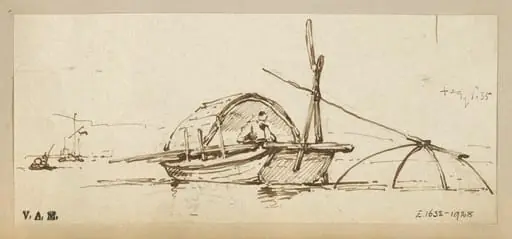 A Tanka boat, Macau, with a lift net lowered into the water
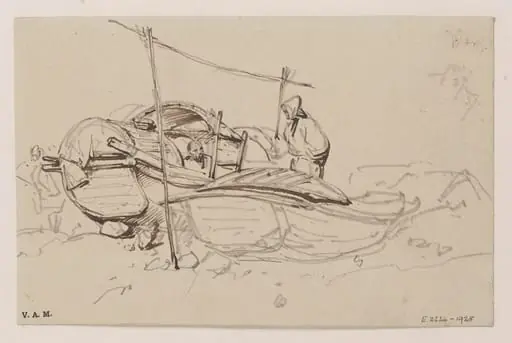 Untitled
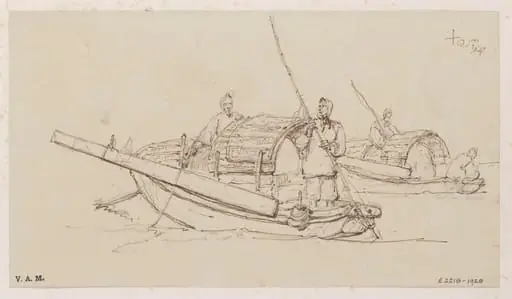 Two Tanka boats
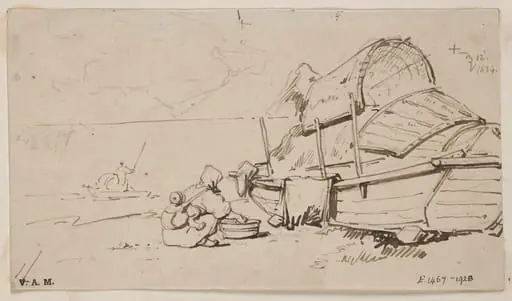 A boatwoman and child beside a beached Tanka boat
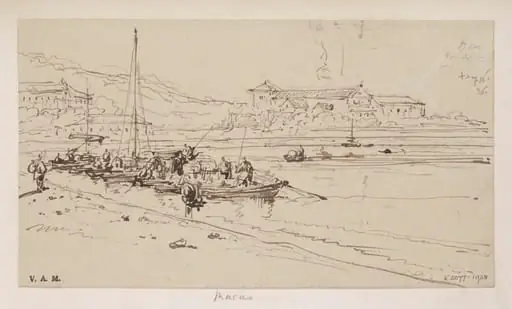 Tanka boats in the Praya Grande, Macau
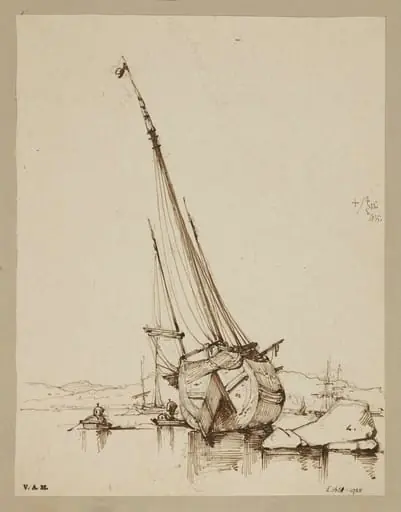 A junk grounded in shallow water, Macau
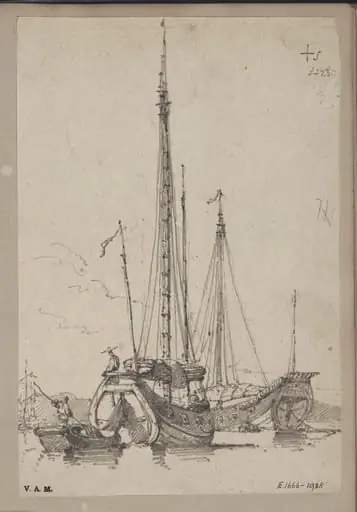 Two junks and a Tanka boat
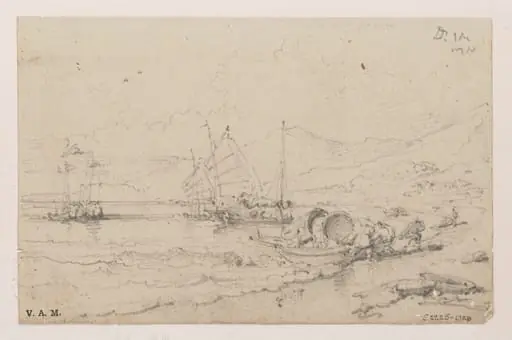 A drawing of the Praya Grande, Macau, with figures beaching a Tanka boat and other craft in the bay
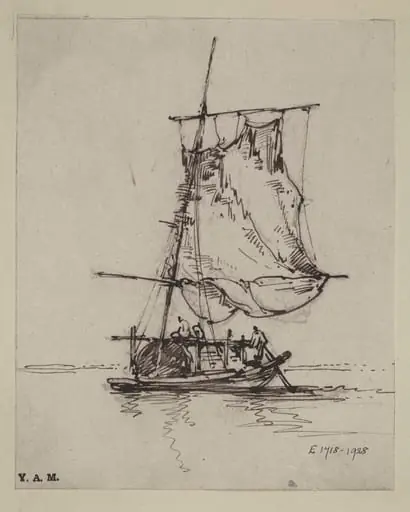 A drawing by George Chinnery of a Tanka boat with a large sail or net raised