Artwork
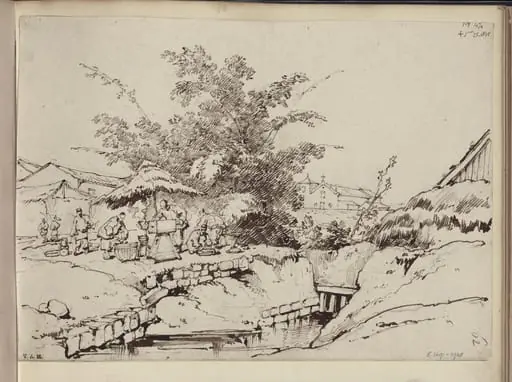
Blacksmiths beneath a thatched shelter, with the church of S. Antonio, Macau
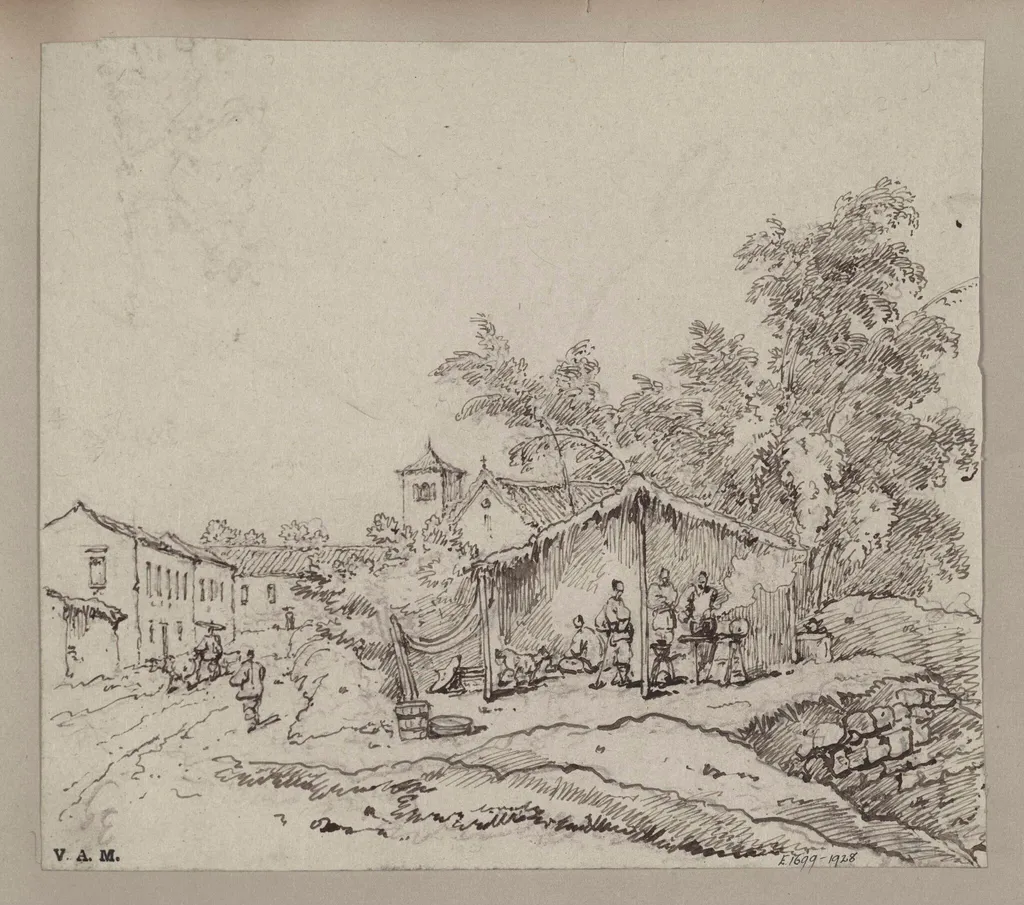
Blacksmiths beneath a thatched shelter, with the church of S. Antonio, Macau is a drawing by the Romanticist artist George Chinnery. It dates from 18 and is held in the collection of the Victoria and Albert Museum.
About this work
Overview
This pencil drawing by George Chinnery depicts a quiet moment of labor in 19th-century Macau. Blacksmiths are shown at work beneath a simple thatched canopy supported by wooden poles, their activity framed by the urban landscape. A narrow street recedes toward the distant silhouette of the Church of S. Antonio, anchoring the scene in a specific locale and time.
Subject & Meaning
The drawing captures everyday craftsmanship in a colonial port city, emphasizing the quiet dignity of manual labor. The presence of the church in the background suggests a coexistence of spiritual and secular life, while the shaded workspace implies the physical demands of the trade under Macau’s climate. No grand narrative is intended—only a candid observation of daily routine.
Technique & Style
Chinnery employs delicate pencil lines and controlled cross-hatching to suggest texture and shadow, particularly in the thatched roof and the figures’ clothing. The architecture is rendered with loose, confident strokes, balancing detail with atmospheric suggestion. The composition directs the eye along the street toward the church, using spatial depth without perspective exaggeration.
History & Provenance
Created during Chinnery’s decades-long residence in Macau and southern China, the drawing belongs to a body of work documenting local life in the early 1800s. It entered the British Museum’s collection in 1928 as part of a larger group of his sketches, preserved for their ethnographic and topographical value rather than as finished artworks.
Context
In early 19th-century Macau, foreign traders and artists like Chinnery observed and recorded the city’s hybrid culture. Blacksmiths were essential to maritime and domestic economies, and their workshops often clustered near docks or roads leading to religious sites. This drawing reflects the visual curiosity of Western observers toward local labor and urban structure.
Legacy
Chinnery’s sketches, including this one, remain among the most detailed visual records of Macau’s pre-modern streetscape. While not widely exhibited, they serve as primary sources for historians studying colonial-era daily life in southern China. Their unembellished style offers a quiet counterpoint to more romanticized depictions of the region.
Artist & collection
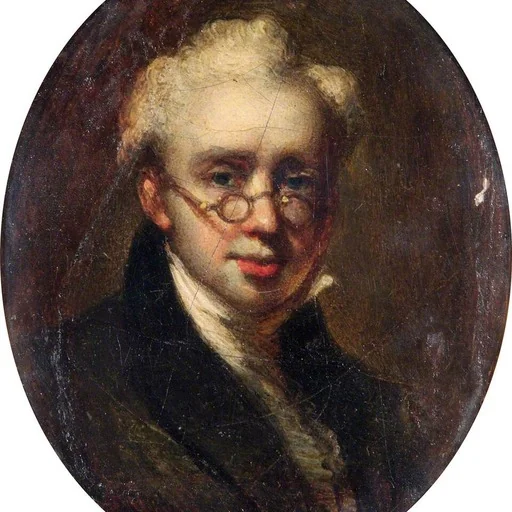
Artist
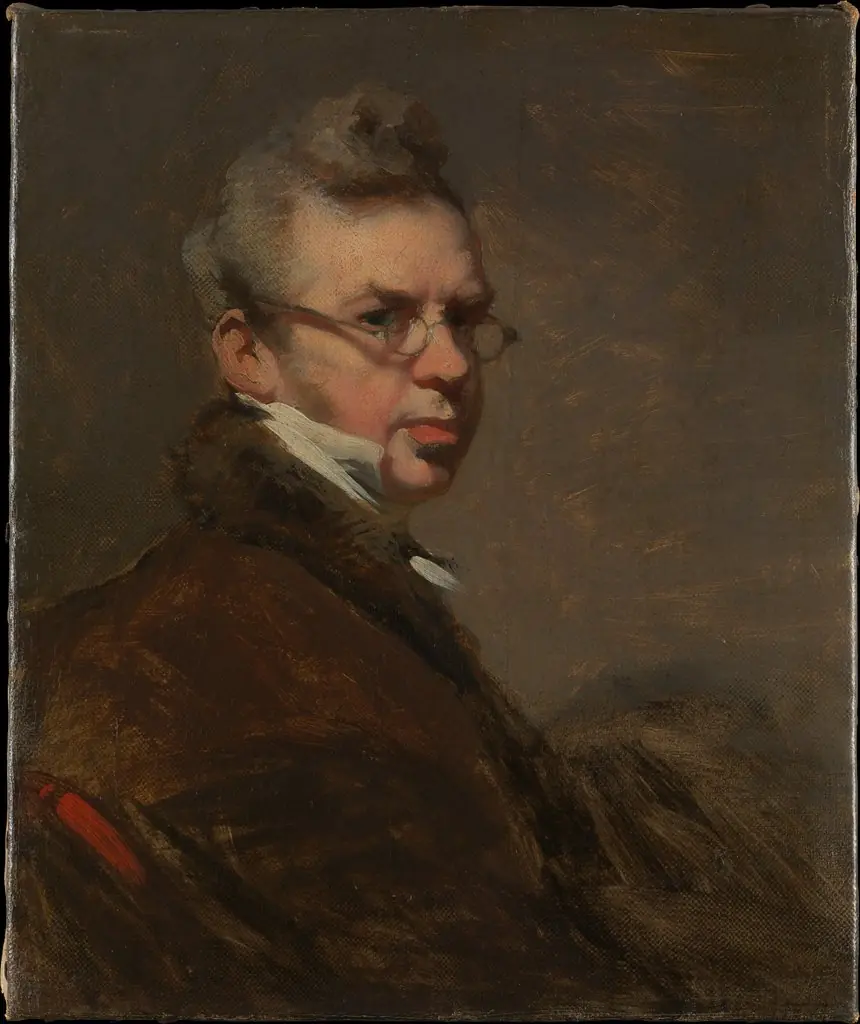
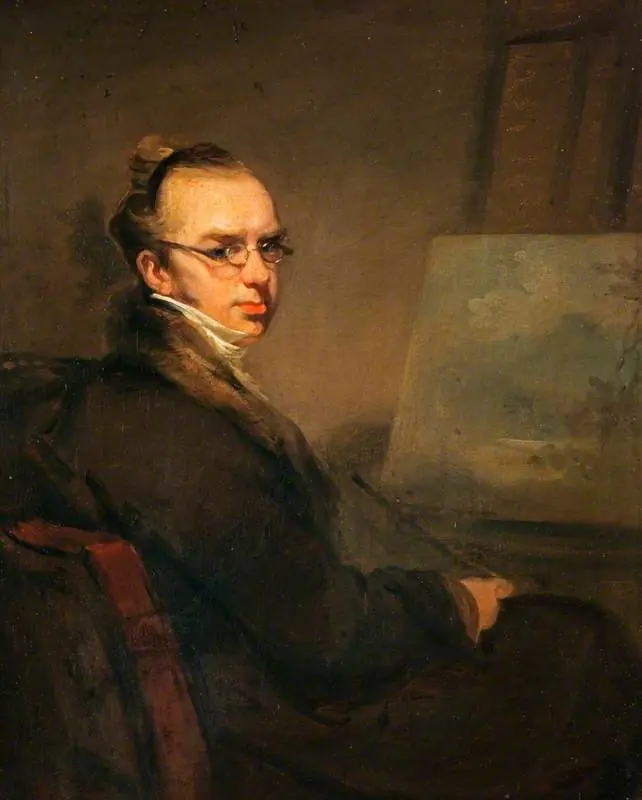
George Chinnery (Chinese: 錢納利; 5 January 1774 – 30 May 1852) was an English painter who spent most of his life in Asia, especially India and southern China.

 A stream with a blacksmith beyond, and a distant view of the church of S. Antonio, Macau
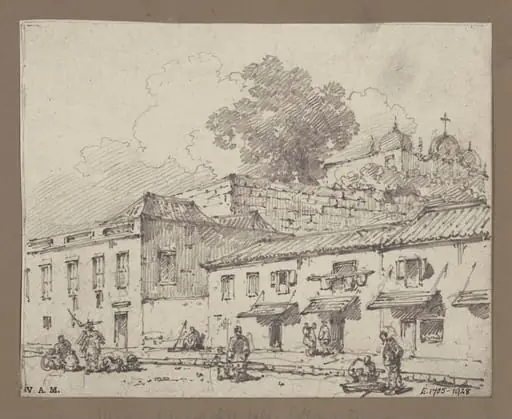 Houses below the church and college of S. José, Macau
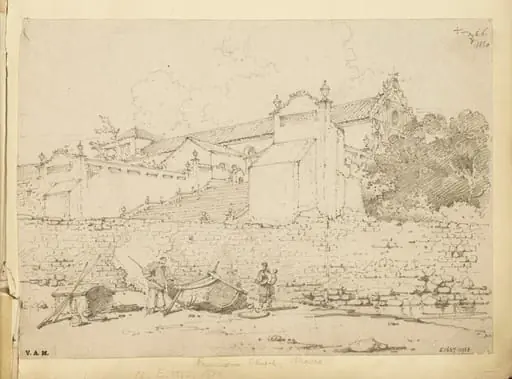 The church of S. Francisco, Macau
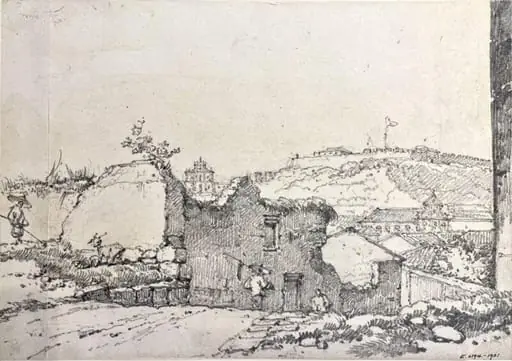 Ruinous buildings, Macau, with distant views of the façade of S. Paulo, Monte Fort and S. Domingos Church
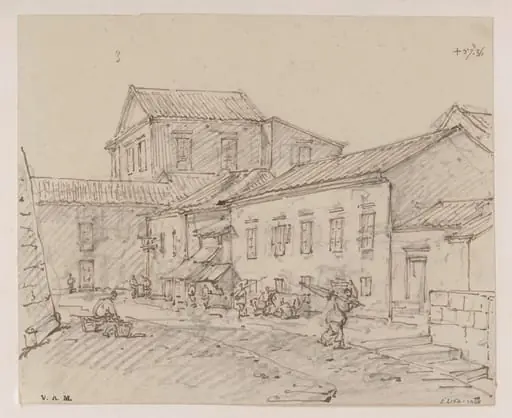 A street in Macau
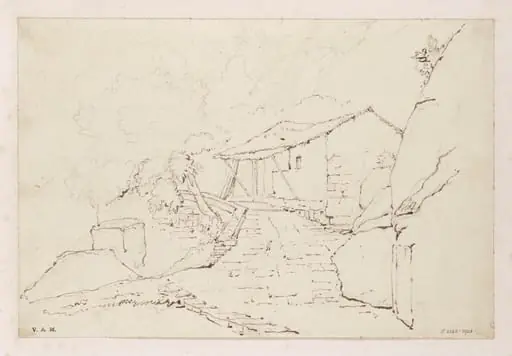 A small building on a rocky hillside, Macau
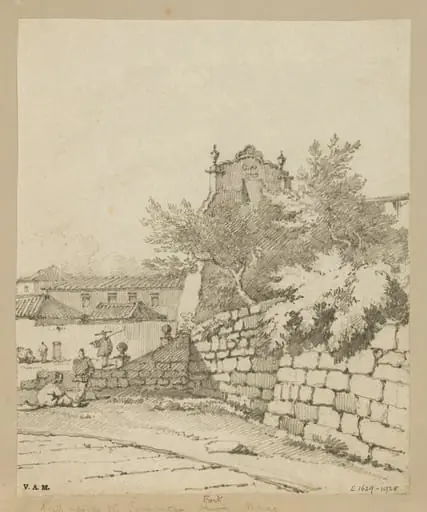 The wall below the church of S. Francisco, Macau
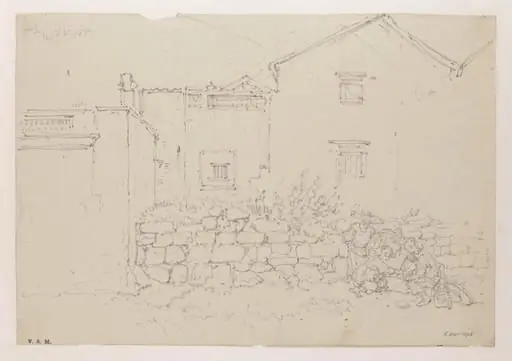 Figures by a stone wall with houses behind, Macau
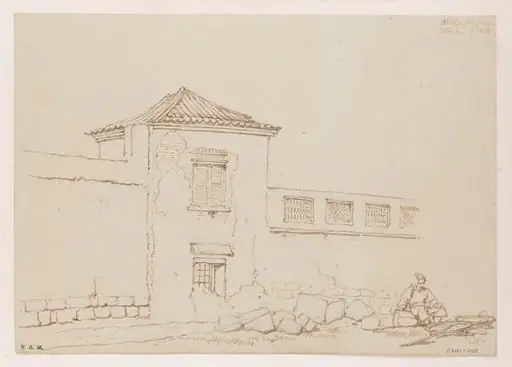 A building in Macau
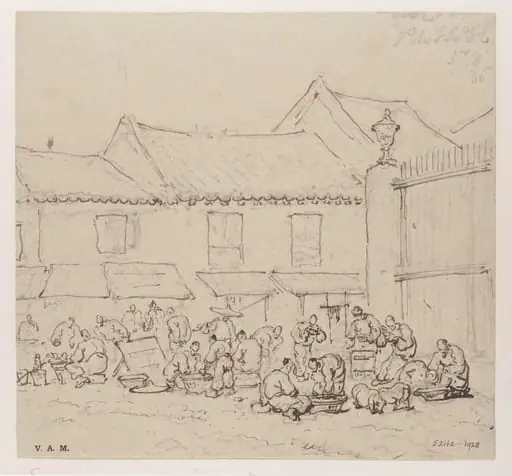 Vendors outside the Church of San Domingos, Macau