Artwork
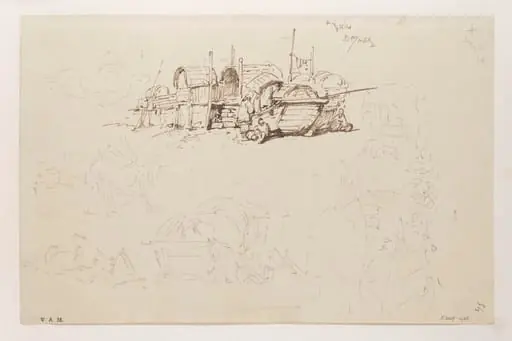
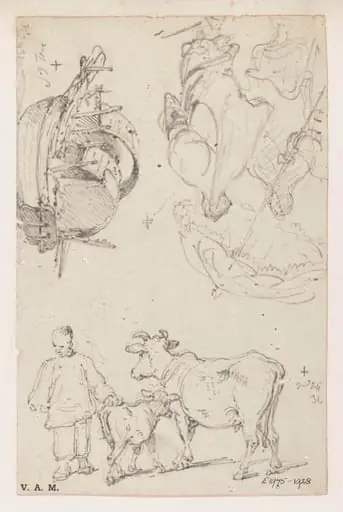
Chinese figures and a Tanka boat
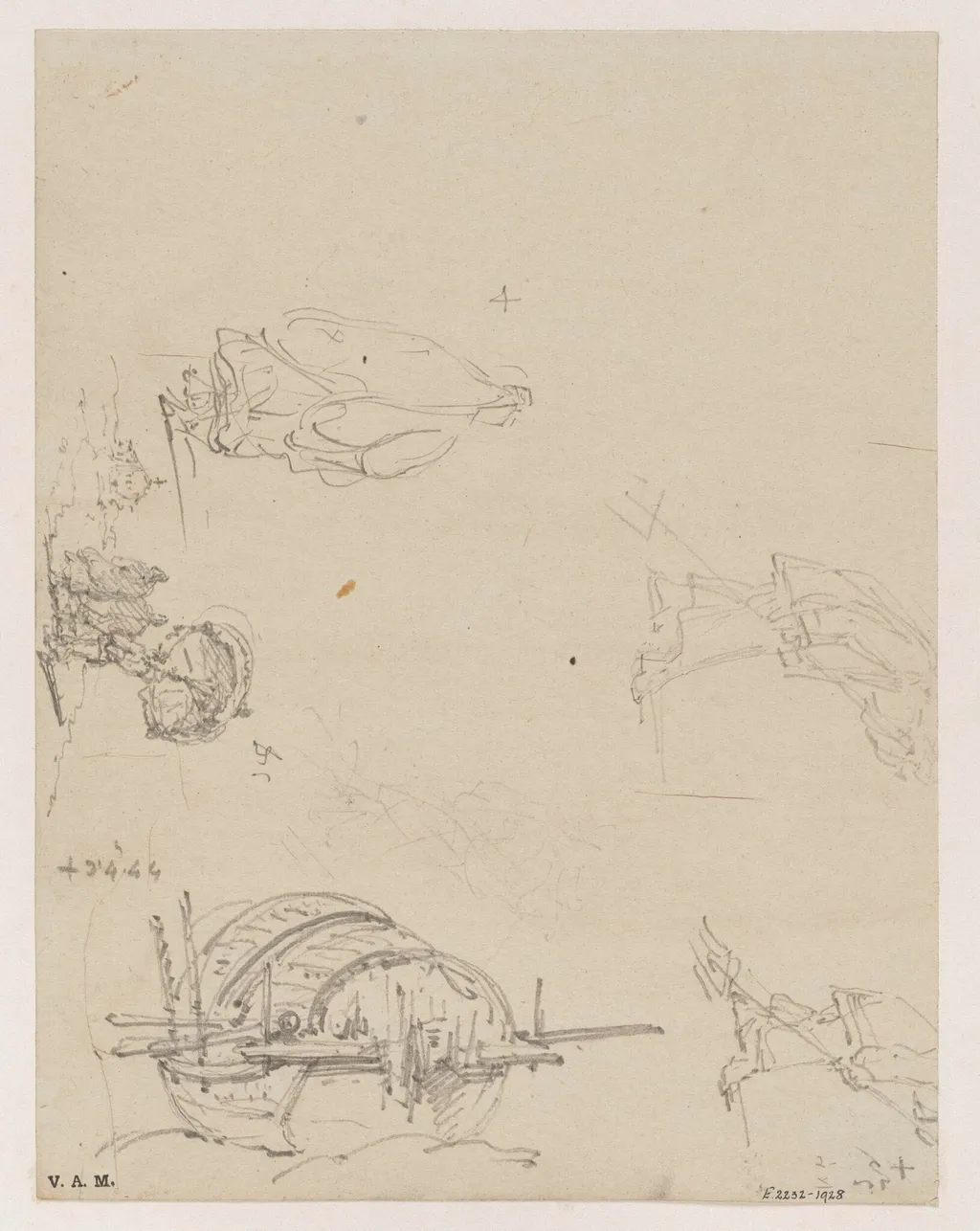
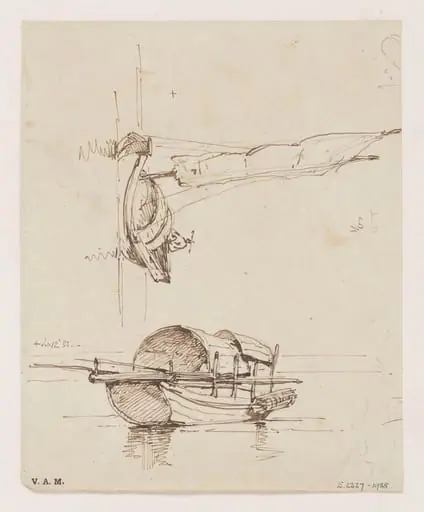
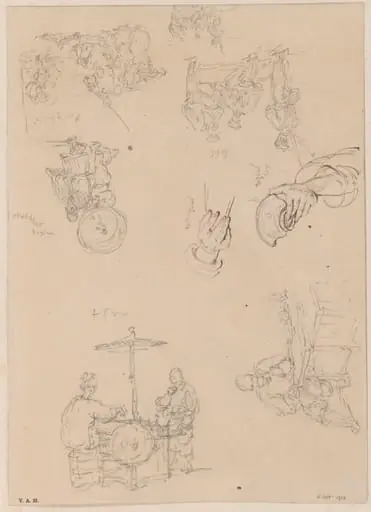
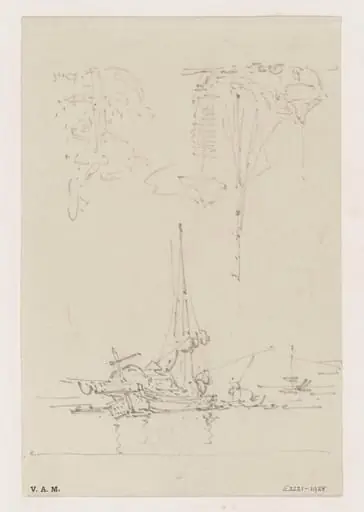
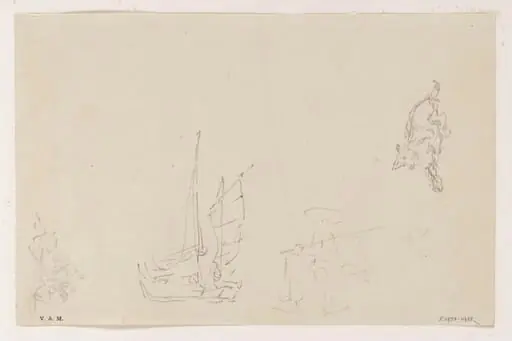
Chinese figures and a Tanka boat is a drawing by the Romanticist artist George Chinnery. It dates from 4 and is held in the collection of the Victoria and Albert Museum.
About this work
It mixes sketches of a grounded fishing boat, local women walking toward a church, and a lone figure facing away.
George Chinnery’s 1844 drawing shows everyday life by the water. It mixes sketches of a grounded fishing boat, local women walking toward a church, and a lone figure facing away. Small side studies show heads cut off and a broom-wielding arm—like quick notes he kept for later.
The scene is loose and lively, not a polished picture. It feels like he caught moments on the fly, maybe with ink or pencil close at hand.
Look up George Chinnery next.
Overview
George Chinnery’s 1844 drawing records a slice of daily life along a Macau waterfront. The composition combines a grounded Tanka fishing boat, a group of Macanese women and a servant with a parasol moving toward a church, and a solitary woman viewed from behind. Adjacent marginal sketches capture a broom‑hand and partially cut‑off heads, suggesting quick observational notes.
Subject & Meaning
The central elements portray ordinary activities: a beached boat indicating a pause in maritime work, women in traditional attire proceeding to worship, and an isolated figure that may hint at personal contemplation. The marginal studies, with their truncated heads, emphasize the artist’s focus on gesture and movement rather than individual identity.
Technique & Style
Executed in a spontaneous, sketch‑like manner, the work likely employs ink and pencil on paper. Loose lines and minimal shading convey immediacy, while the fragmented marginal figures reveal Chornery’s habit of recording fleeting gestures for later development.
History & Provenance
Created in 1844 during Chornery’s long residence in Macau, the drawing reflects his interest in documenting local customs. Its provenance traces back to private collections before entering the museum’s holdings, where it serves as a visual record of mid‑19th‑century Macau.
Context
At the time, Macau was a bustling port where Chinese and Portuguese cultures intersected. Chornery, a British expatriate artist, frequently depicted such hybrid scenes, offering a visual bridge between Eastern daily life and Western artistic conventions.
Legacy
The drawing exemplifies Chornery’s role as a visual chronicler of colonial Macau, providing scholars with valuable insight into the era’s social fabric and the everyday visual vocabulary of its inhabitants.
Artist & collection
Artist
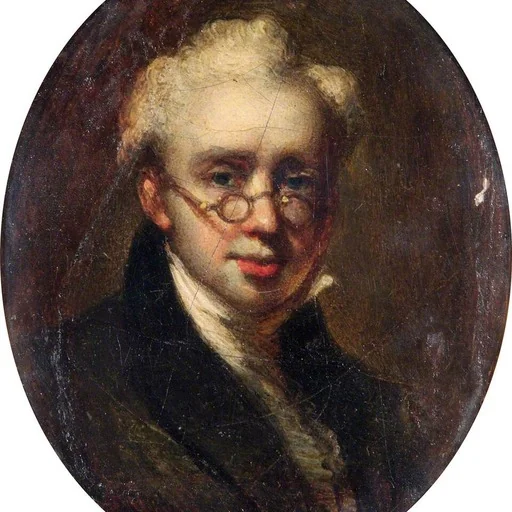
George Chinnery (Chinese: 錢納利; 5 January 1774 – 30 May 1852) was an English painter who spent most of his life in Asia, especially India and southern China.