Artwork
Part of boat village
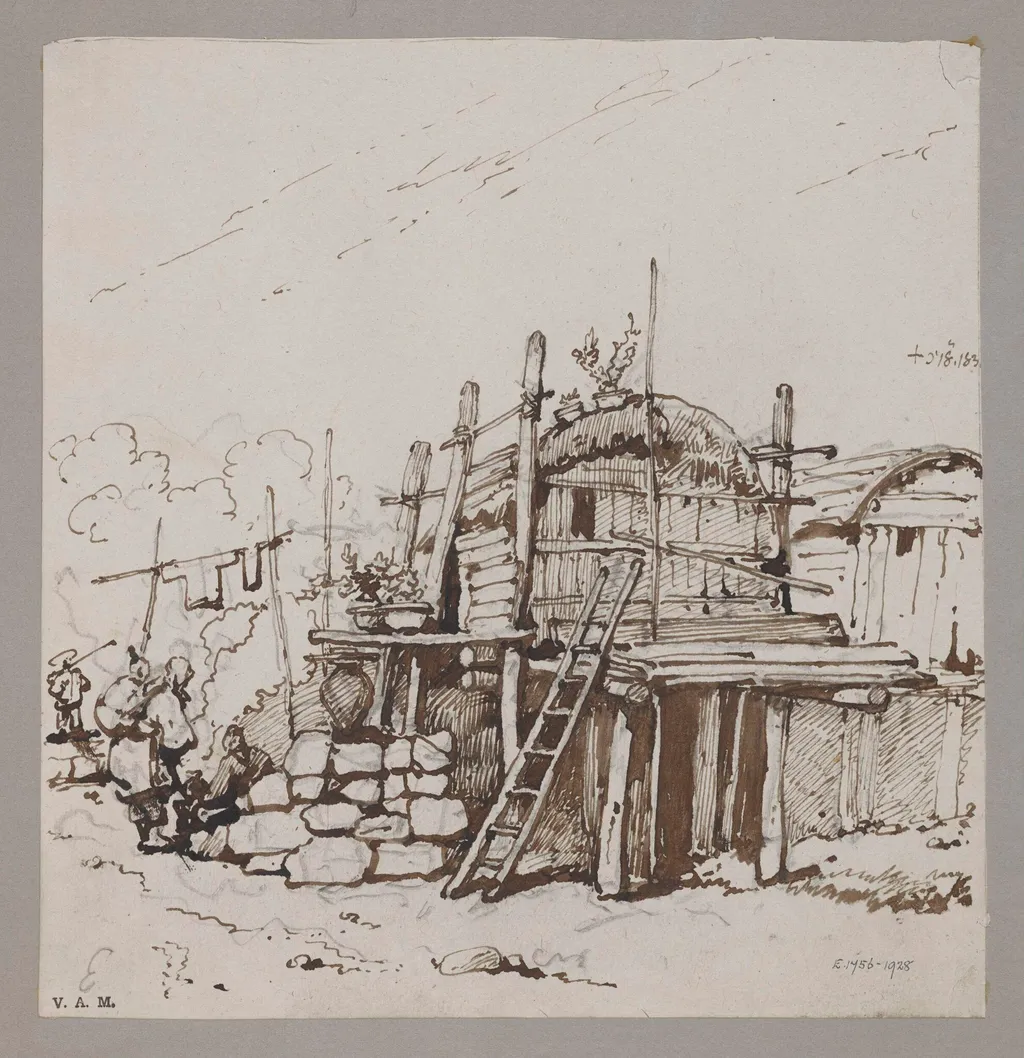
Part of boat village is a drawing by the Romanticist artist George Chinnery. It dates from 12 and is held in the collection of the Victoria and Albert Museum.
About this work
Overview
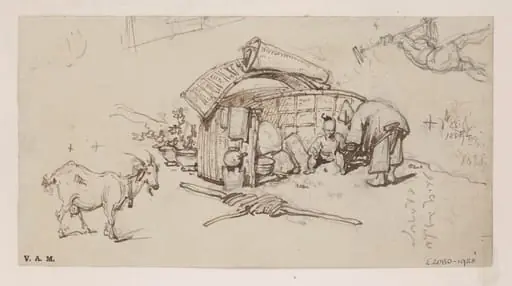
This pencil drawing by George Chinnery, created in the 1830s, depicts a makeshift dwelling constructed from salvaged parts of a Tanka boat.
This pencil drawing by George Chinnery, created in the 1830s, depicts a makeshift dwelling constructed from salvaged parts of a Tanka boat. The structure is elevated on rocks and wooden supports along a shoreline, with potted plants adding small touches of domesticity. Figures near a cooking fire suggest daily life in a mobile, water-based community. The work is a direct observational sketch, capturing the resourcefulness of those living on the margins of Hong Kong’s coastal settlements.
Subject & Meaning
The scene portrays the adaptive living conditions of the Tanka people, a boat-dwelling community in southern China. By repurposing decommissioned vessels into homes, they transformed maritime remnants into stable dwellings. The presence of cooking activity and potted plants implies a settled rhythm within a transient existence. The drawing does not idealize but records the quiet resilience of a culture shaped by the sea and economic necessity.
Technique & Style
Chinnery employed swift, economical pencil lines to convey form and texture without embellishment. The sketch’s immediacy comes from loose contours and minimal shading, emphasizing structure over detail. The composition is unposed, with figures and architecture arranged as observed, not staged. This direct approach reflects the artist’s practice of recording scenes during his travels, valuing authenticity over polish.
History & Provenance
Created during Chinnery’s time in southern China, the drawing is part of a larger body of work documenting coastal life in the early 19th century. It entered the Victoria and Albert Museum’s collection as part of his personal sketchbooks, preserved for their ethnographic value. The work has remained largely unchanged since its creation, offering a rare visual record of Tanka communities before widespread urbanization altered their way of life.
Context
In the 1830s, the Tanka people were marginalized by mainland Chinese society and lived primarily on boats or shore-based shelters made from boat parts. British traders and artists like Chinnery encountered them in Hong Kong’s harbors and fishing villages. While colonial observers often exoticized such communities, Chinnery’s sketch avoids sentimentality, presenting their dwellings as functional, if humble, adaptations to their environment.
Legacy
Chinnery’s drawing stands as a quiet historical document, preserving a way of life that has since largely disappeared. It contributes to the visual archive of coastal China during a period of rapid change, offering insight into vernacular architecture and subsistence practices. The work is valued not for its artistic flourish but for its unembellished testimony to the daily realities of a seafaring community.
Artist & collection

Artist
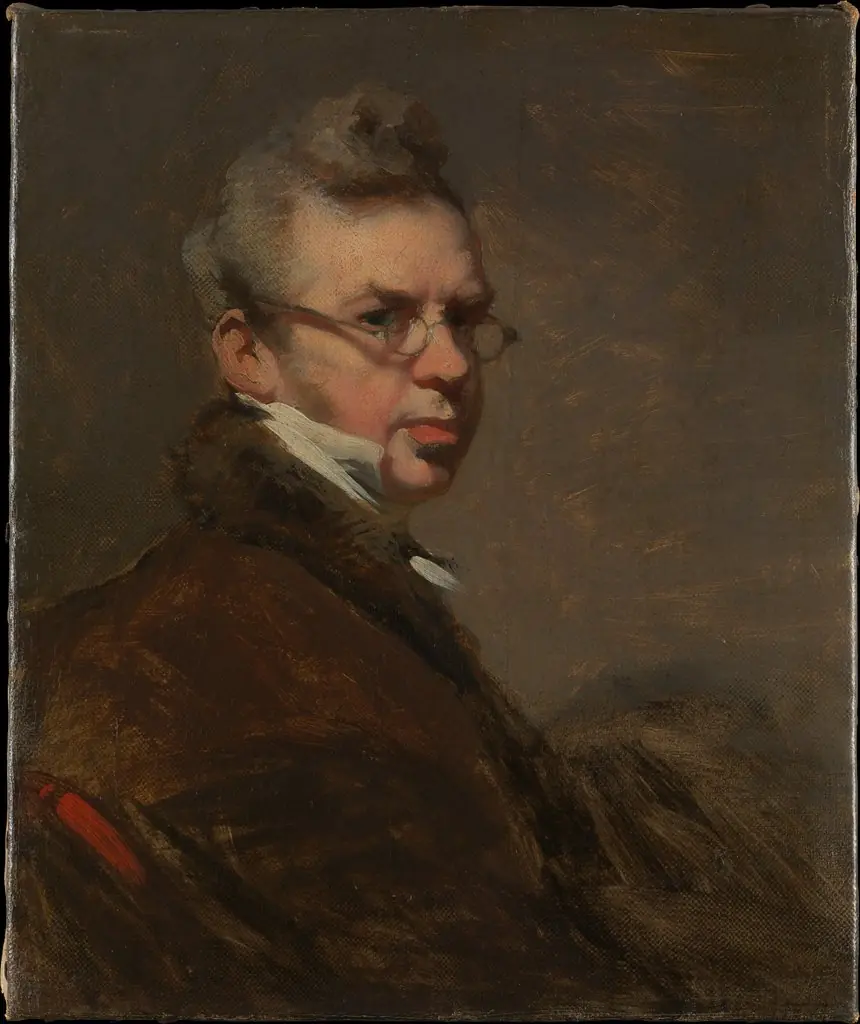
George Chinnery (Chinese: 錢納利; 5 January 1774 – 30 May 1852) was an English painter who spent most of his life in Asia, especially India and southern China.




 A beached Tanka boat adapted as a dwelling
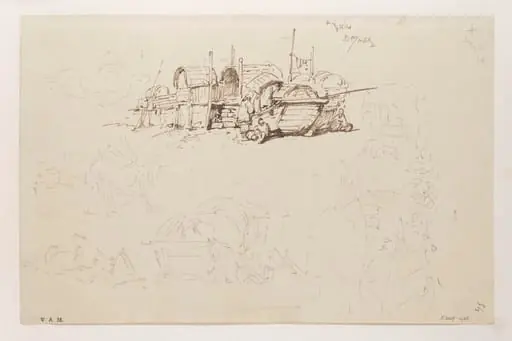 Tanka boats adapted as beach dwellings
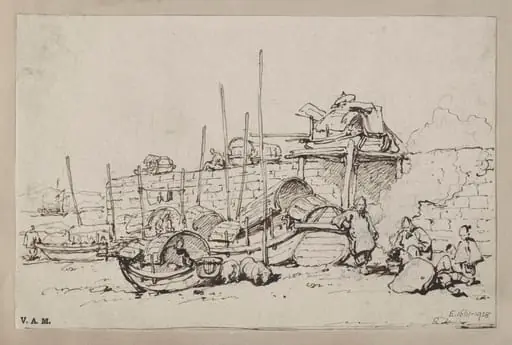 Tanka boats and boatpeople on the beach by the sea wall, Macau
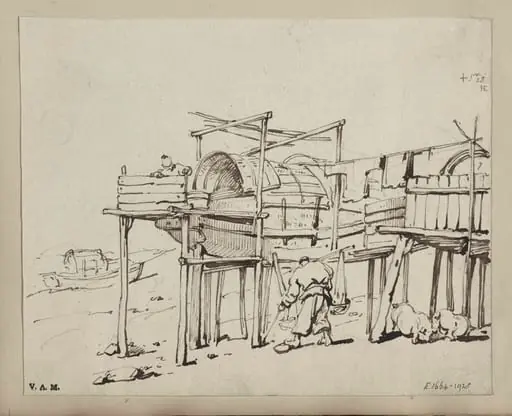 Tanka boats raised on stilts, Macau
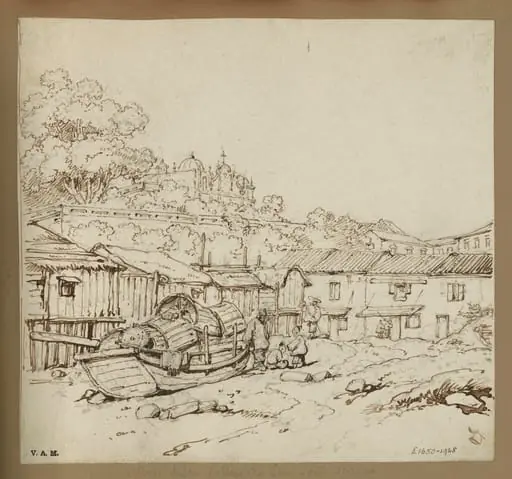 The village below the College of San José, Macau
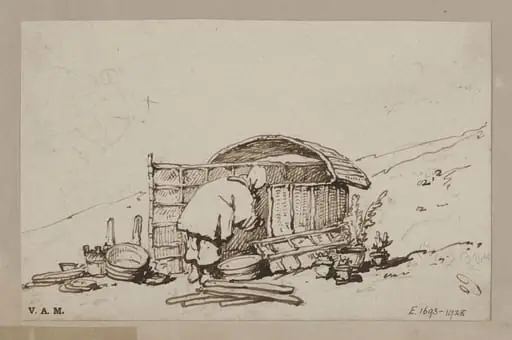 A boatwoman entering a beach dwelling
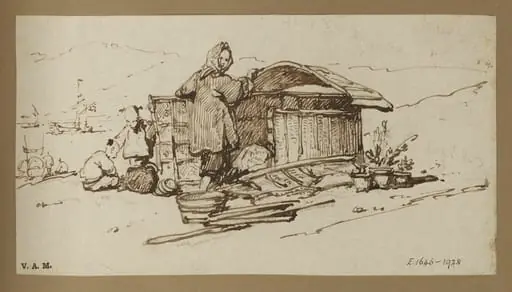 Chinese boatpeople by a makeshift dwelling on the shore
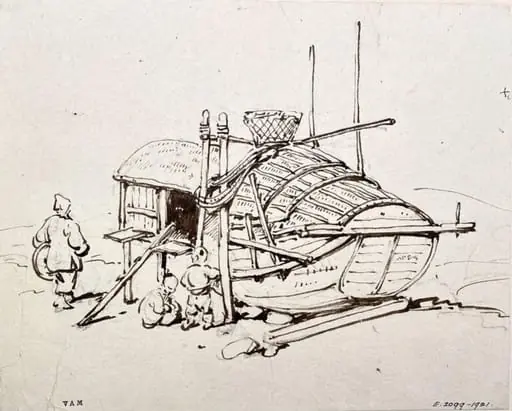 Drawing, a Tanka boat propped up ashore, Macau
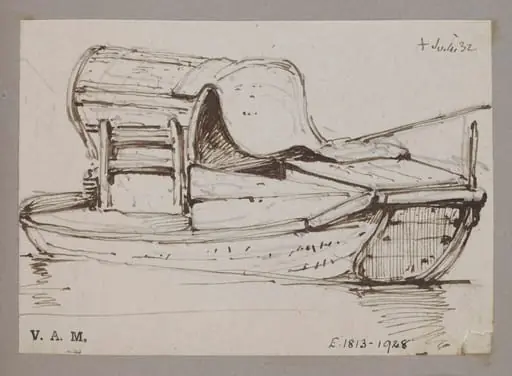 A Tanka boat