Artwork
Two Chinese figures
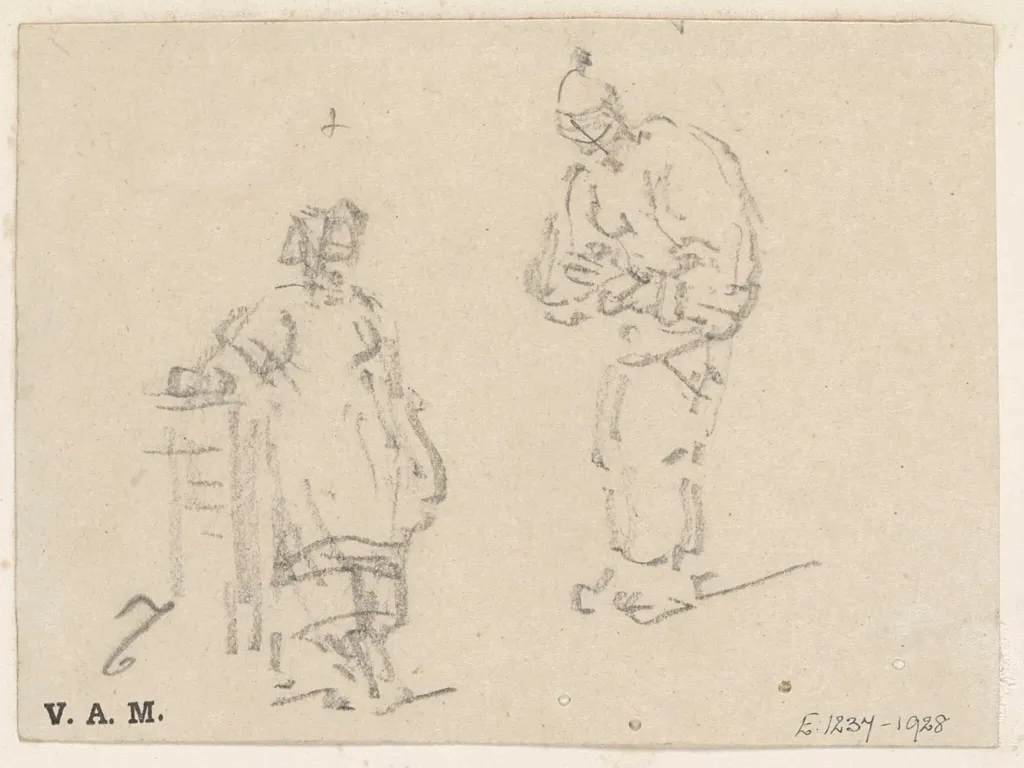
Two Chinese figures is a drawing by the Romanticist artist George Chinnery. It dates from 19 and is held in the collection of the Victoria and Albert Museum.
About this work
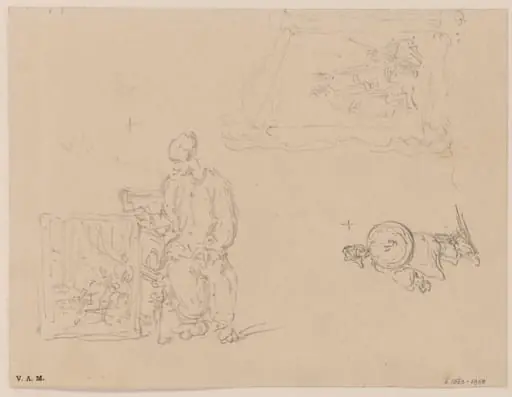
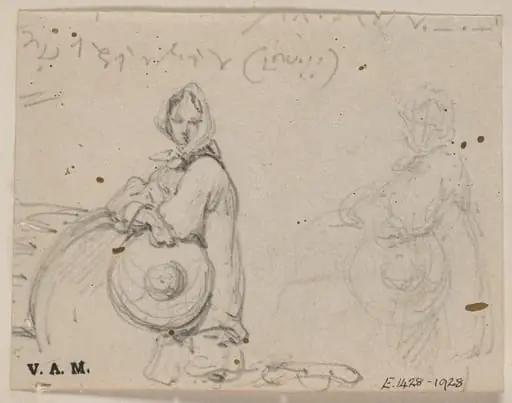
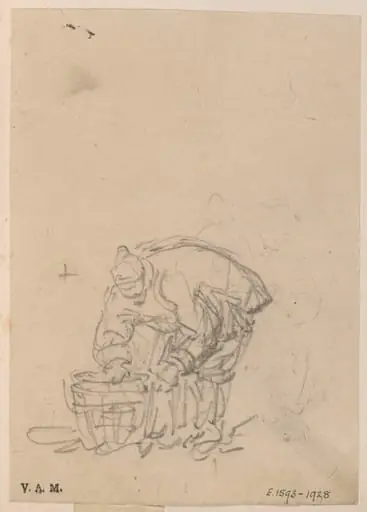
George Chinnery drew these two figures in pencil back in 1852. One is a boatwoman, the other a man bending down. Their exact poses aren’t clear from the source text.
The artist lived and worked in China for years. That explains why he drew daily life there. His time overseas shaped his style.
Look up the Victoria and Albert Museum next.
Overview
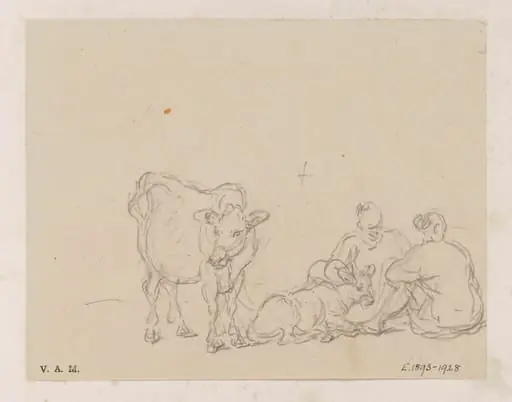
This pencil drawing, created by George Chinnery in 1852, depicts two figures engaged in everyday activities in southern China. The artist, who spent much of his life in Macau and Guangzhou, recorded scenes of local life with quiet observation. The work is part of a broader body of sketches made during his decades in China, reflecting his immersion in the region’s visual culture.
Subject & Meaning
The figures include a woman wearing a headscarf, seen from behind, and a man in a cap, bent in a posture of labor or rest. Neither is idealized; their postures suggest routine tasks—perhaps rowing, hauling, or pausing mid-task. Chinnery’s focus on unremarkable individuals underscores his interest in authentic, unvarnished moments of daily existence rather than ceremonial or exoticized subjects.
Technique & Style
Executed in pencil, the drawing relies on subtle tonal variations and loose, confident lines to suggest form and movement. Chinnery avoids heavy shading, instead using minimal strokes to imply texture and posture. His approach is observational rather than theatrical, aligning with his practice of sketching quickly from life, often outdoors, with an emphasis on immediacy over finish.
History & Provenance
The drawing was made during Chinnery’s extended residence in southern China, where he lived from the 1820s until his death in 1852. It likely originated as a personal study, later preserved in his estate. The work entered the Victoria and Albert Museum’s collection through documented acquisitions of his sketchbooks and drawings, now held as important records of 19th-century Chinese life.
Context
Chinnery worked in a period when few Western artists lived long-term in China. His sketches offer rare, non-missionary, non-military perspectives of local people. Unlike contemporaries who depicted China through a lens of exoticism, Chinnery’s drawings reflect sustained, intimate contact with the communities around him, particularly in Macau and Guangzhou, where he was a familiar presence.
Legacy
Chinnery’s drawings remain valuable for their unembellished documentation of 19th-century Chinese daily life.
Chinnery’s drawings remain valuable for their unembellished documentation of 19th-century Chinese daily life. They influenced later artists and scholars interested in cross-cultural visual records. Though not widely exhibited in his lifetime, his sketches are now recognized as significant historical documents, offering a grounded view of a society rarely portrayed with such quiet fidelity by Western observers.
Artist & collection
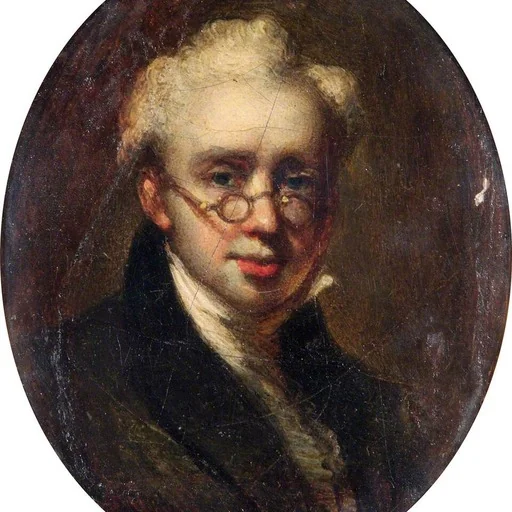
Artist
George Chinnery (Chinese: 錢納利; 5 January 1774 – 30 May 1852) was an English painter who spent most of his life in Asia, especially India and southern China.