Artwork
Two drawings of a Chinese barber and customer
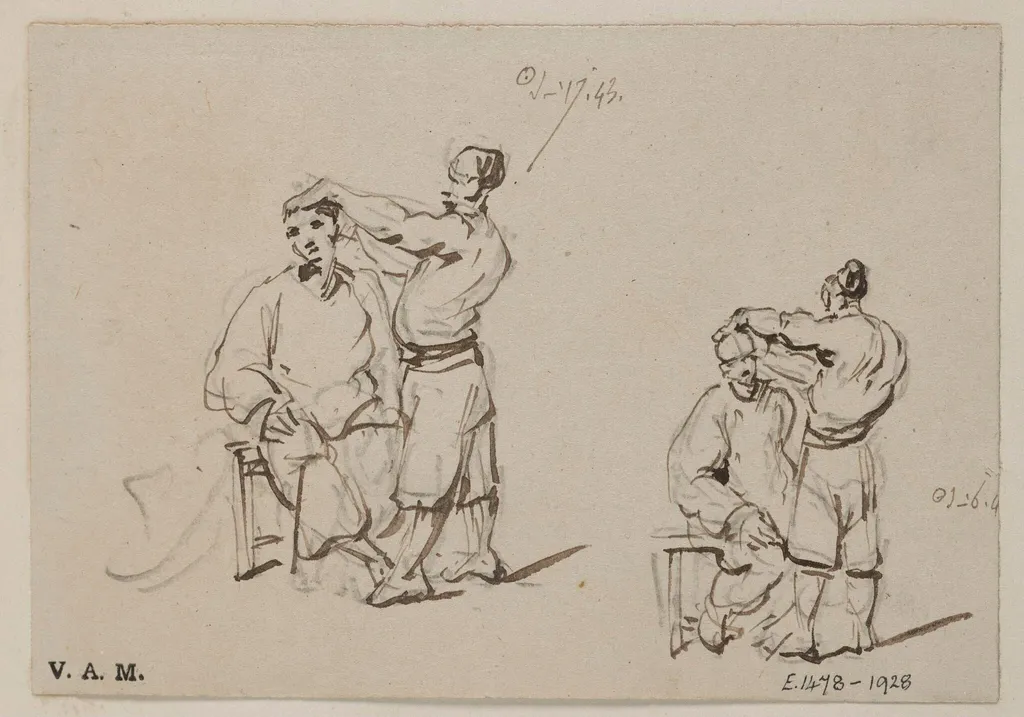
Two drawings of a Chinese barber and customer is a drawing by the Romanticist artist George Chinnery. It dates from 6 and is held in the collection of the Victoria and Albert Museum.
About this work
Overview
George Chinnery created two drawings in the 1840s depicting a repeated scene of a Chinese barber attending to a seated customer, with the barber's hand placed on the customer's head.
Subject & Meaning
The drawings capture a mundane, intimate moment in everyday Chinese life, reflecting the Romanticism movement's emphasis on ordinary scenes and emotional nuance.
Technique & Style
While specific artistic techniques are not detailed, the duplication of the scene in two frames suggests an exploration of narrative continuity or subtle variation, characteristic of Chinnery's observational approach.
History & Provenance
Created during Chinnery's time in Asia, the drawings offer a European artist's perspective on daily life in China, contrasting with European subjects dominant at the time.
Context
Part of the broader Romanticism movement, these works align with its focus on the ordinary and emotional. Chinnery's Asian residency lent a unique oriental perspective to this artistic trend.
Legacy
The drawings contribute to Chinnery's legacy as a recorder of Asian daily life during the 19th century, providing valuable cultural and historical insights rather than solely artistic innovation.
Artist & collection
Artist
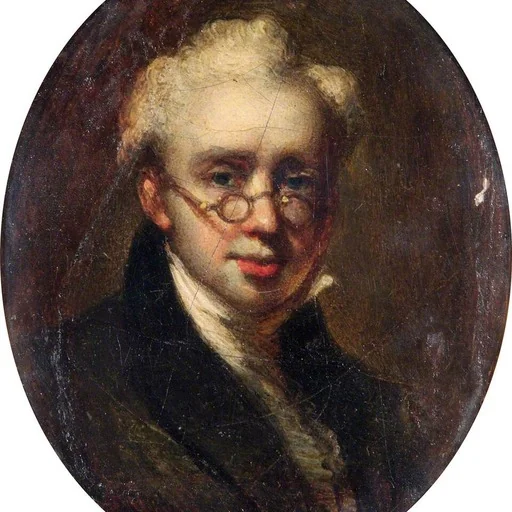
George Chinnery (Chinese: 錢納利; 5 January 1774 – 30 May 1852) was an English painter who spent most of his life in Asia, especially India and southern China.

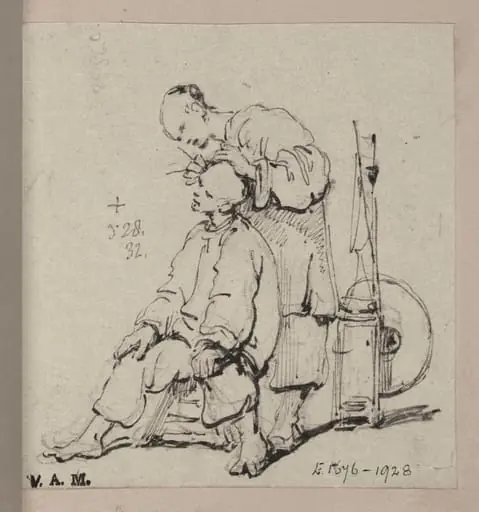 A Chinese barber attending to his customer
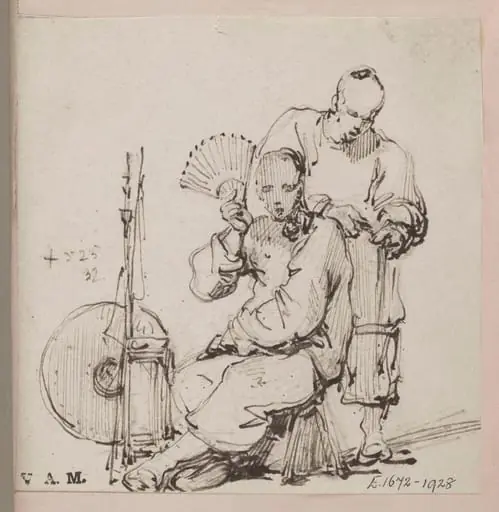 A Chinese barber with a seated customer
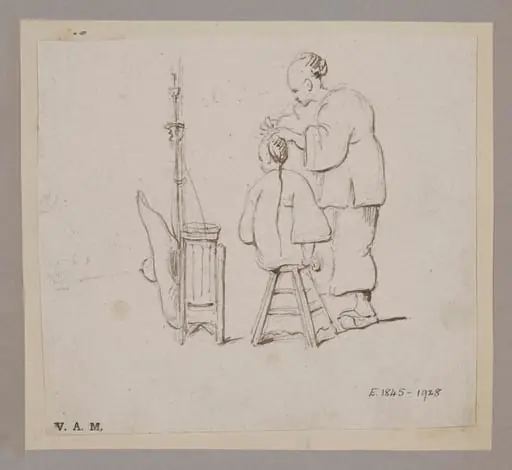 A Chinese barber and customer
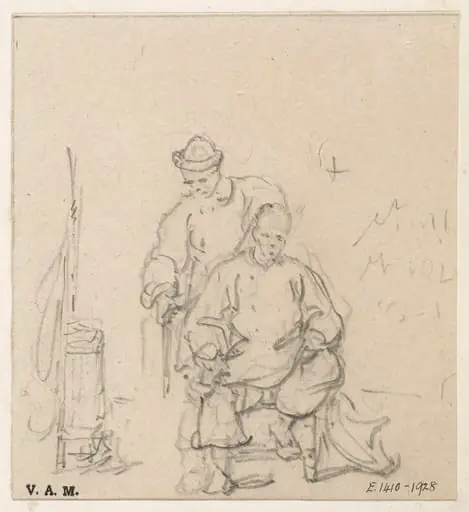 A barber standing behind his customer
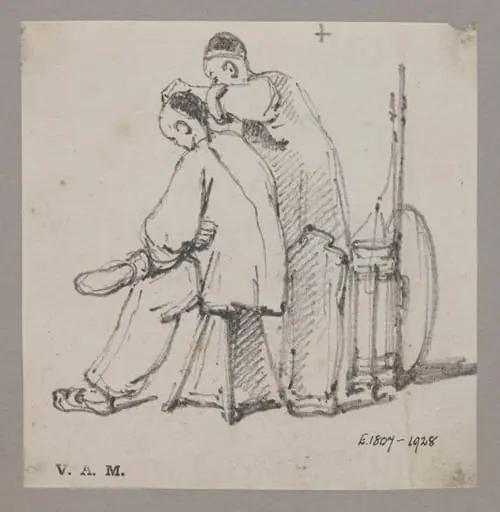 A barber with a seated customer
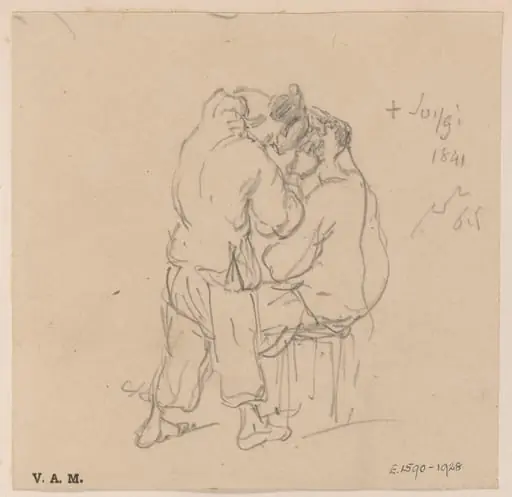 A drawing of a Chinese barber and customer
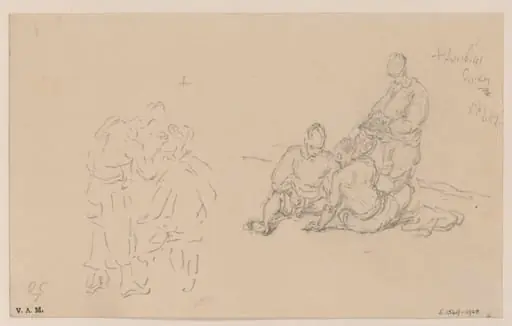 Two sketches of groups of Chinese figures
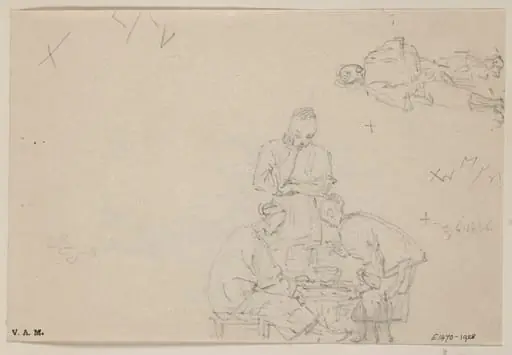 Chinese figures
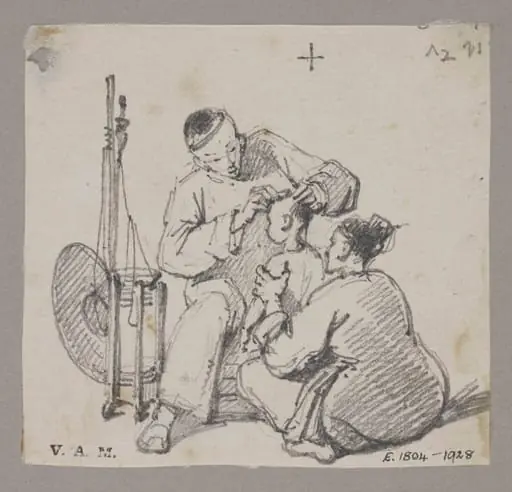 A barber shaving the head of a child