Artwork
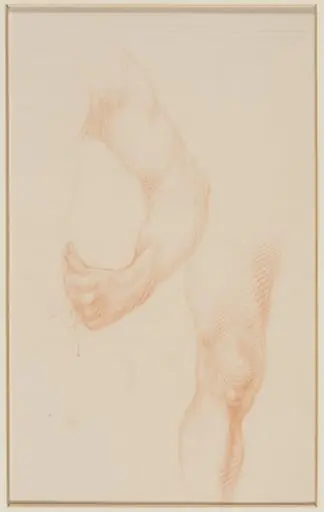
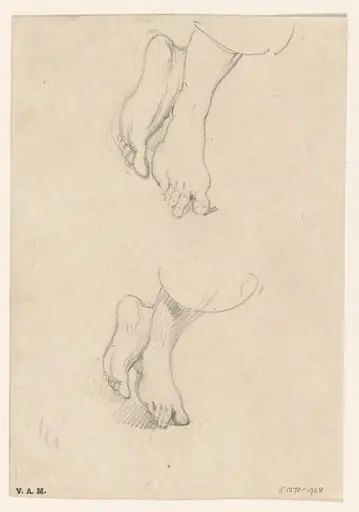
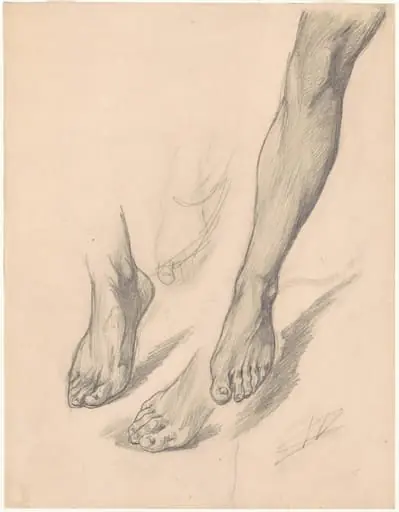
Two drawings of a pair of legs
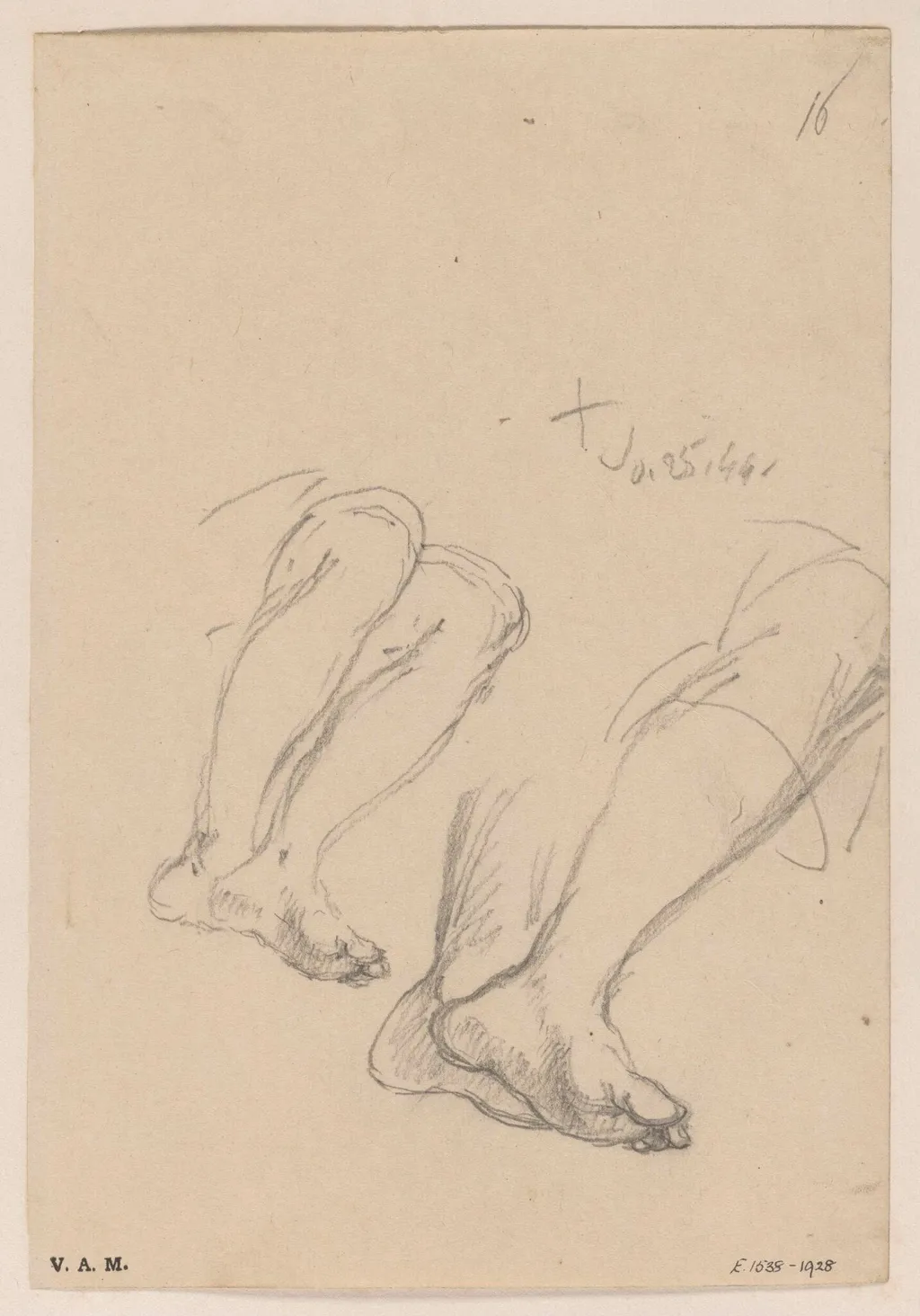
Two drawings of a pair of legs is a drawing by the Romanticist artist George Chinnery. It dates from 16 and is held in the collection of the Victoria and Albert Museum.
About this work
George Chinnery made two quick studies of a pair of crossed legs in 1844. They’re simple drawings, just lines on paper, but they feel alive and real. You can see the toes curl just a little.
The artist captured a quiet moment without extra fuss. Two small sheets, same subject, same day.
Try looking up the Victoria and Albert Museum next.
Overview
In 1844, George Chinnery created two small, rapid pencil drawings depicting a pair of crossed legs. Both works are executed on separate sheets of paper, each capturing the same pose with minimal detail. The drawings are unadorned, relying solely on line to suggest form and posture, yet they convey a sense of natural stillness and quiet presence.
Subject & Meaning
The subject is a pair of human legs, positioned with feet crossed and toes slightly curled, suggesting a moment of relaxed repose. There is no narrative context or clothing to anchor the figure; the focus is purely on the anatomy and the subtle tension of the pose. This intimacy invites contemplation of ordinary, unguarded human behavior.
Technique & Style
Chinnery employed swift, confident pencil strokes to define the contours and weight of the limbs. The lines are economical, avoiding shading or texture, yet they effectively suggest volume and the soft give of flesh. The absence of background or detail heightens the immediacy of the observation, reflecting a direct, unmediated approach to drawing.
History & Provenance
The two drawings were made during Chinnery’s time in Asia, where he lived for much of his later life. They remained in private hands until acquired by the Victoria and Albert Museum, which now holds them as part of its collection of 19th-century British drawings. Their survival as a matched pair is uncommon, offering insight into the artist’s working process.
Context
Chinnery’s drawings reflect the broader 19th-century interest in observational sketching as a means of studying form and movement. Unlike formal portraits or large-scale compositions, these studies prioritize immediacy over finish. They align with the practice of artists who valued the spontaneity of direct observation, especially in travel contexts.
Legacy
These drawings stand as quiet examples of Chinnery’s skill in capturing the human figure with economy and sensitivity. Though not widely exhibited, they are valued by scholars for their honesty and technical restraint. They exemplify how modest, everyday sketches can preserve the vitality of a fleeting, unposed moment.
Artist & collection
Artist
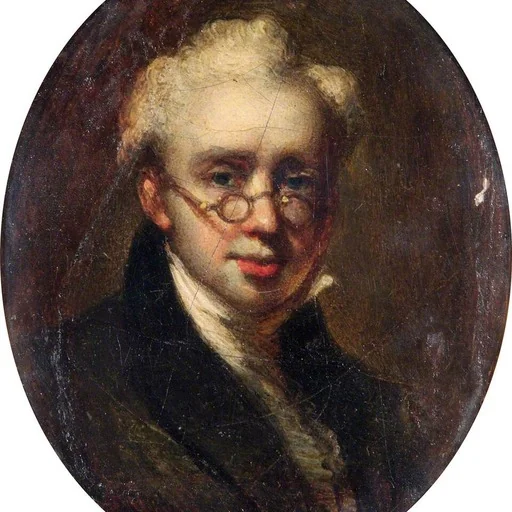
George Chinnery (Chinese: 錢納利; 5 January 1774 – 30 May 1852) was an English painter who spent most of his life in Asia, especially India and southern China.

![Studies of Feet [verso], by Edgar Degas](https://artifactworldgallery.com/img/edgar-degas--studies-of-feet-verso--68fc58487d2c01d0-w320.webp)
![Study of a Foot [verso], by Benjamin Haydon](https://artifactworldgallery.com/img/benjamin-haydon--study-of-a-foot-verso--1953df802be24b7d-w320.webp)