Artwork
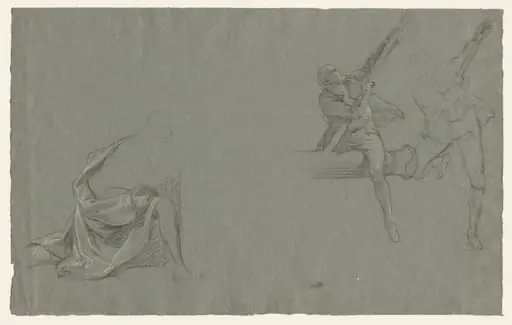
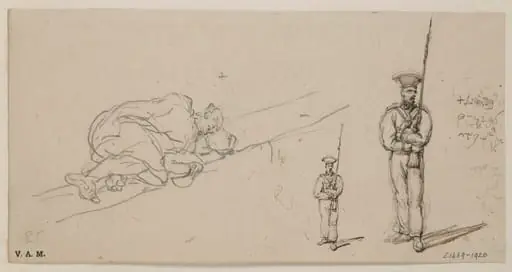
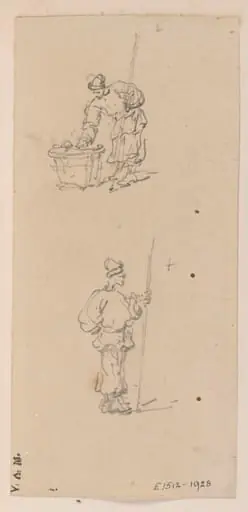
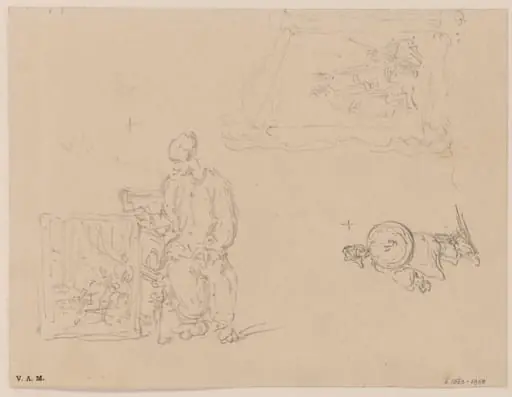
Two drawings of Indian figures
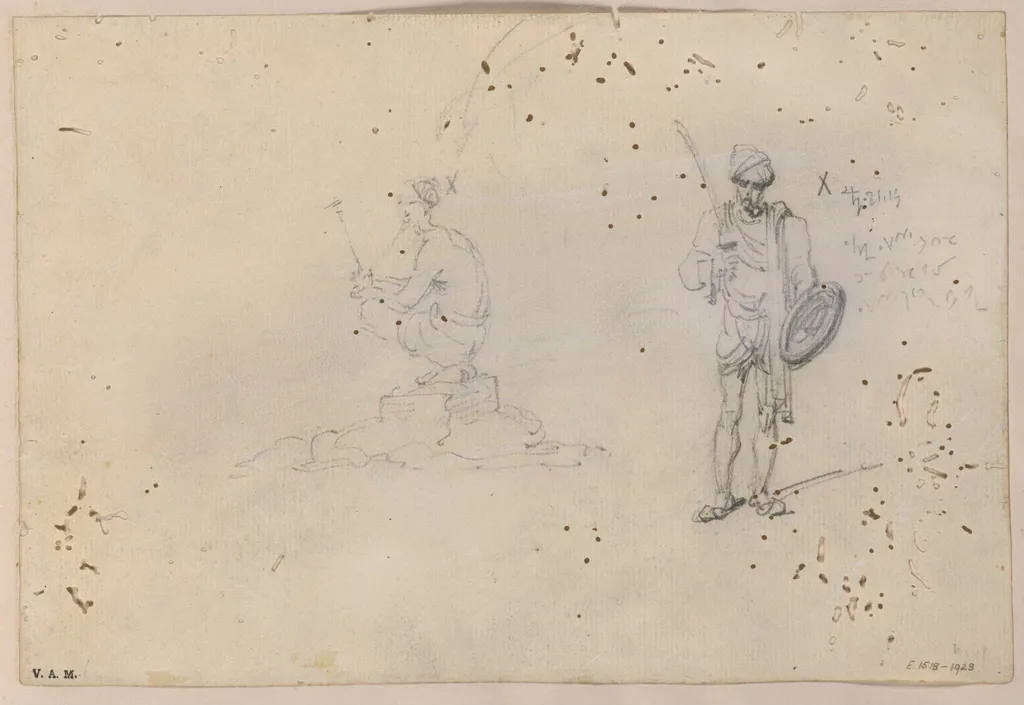
Two drawings of Indian figures is a drawing by the Romanticist artist George Chinnery. It dates from 16 and is held in the collection of the Victoria and Albert Museum.
About this work
Overview
These two drawings, created by George Chinnery in the early 19th century, depict everyday figures from Indian life during the British colonial period.
Subject & Meaning
One drawing portrays a squatting man engrossed in smoking a waterpipe, capturing a moment of leisure. The other shows a standing chowkidar (guard) armed with a sword and shield, highlighting duty and vigilance.
Technique & Style
Executed during the Romantic era, the drawings reflect Chinnery's observational approach, characteristic of his work in India, focusing on the mundane and the local.
History & Provenance
Produced while Chinnery was active in India, the drawings' specific provenance details are not provided here, though they align with his known practice of sketching local life.
Context
Created amidst the British colonial presence in India, these works offer glimpses into daily Indian life, distinct from formal colonial representations.
Legacy
As part of Chinnery's oeuvre, these drawings contribute to the historical record of Indian life during the early 19th century, reflecting the artist's interest in the ordinary and the local.
Artist & collection
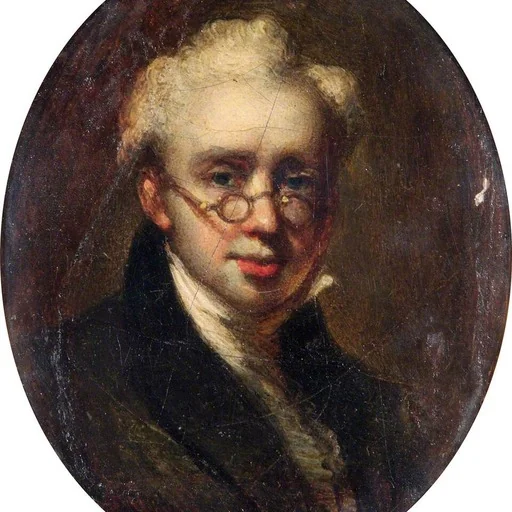
Artist
George Chinnery (Chinese: 錢納利; 5 January 1774 – 30 May 1852) was an English painter who spent most of his life in Asia, especially India and southern China.