Artwork
A Winter Sky
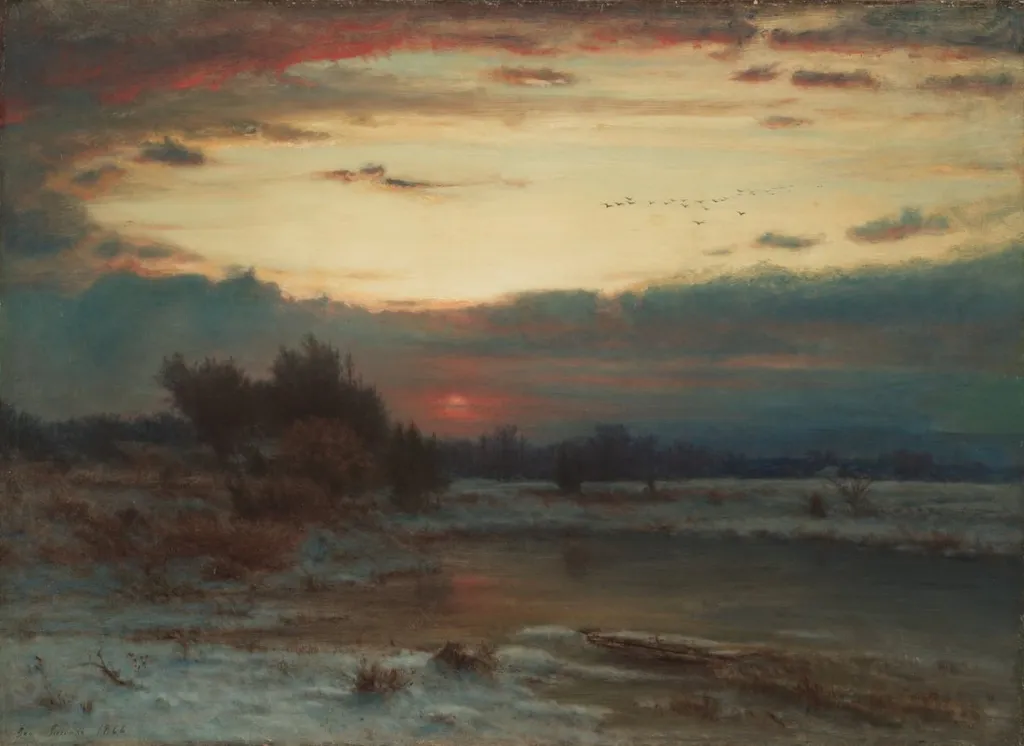
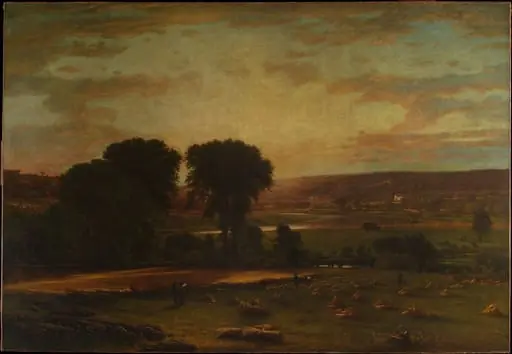
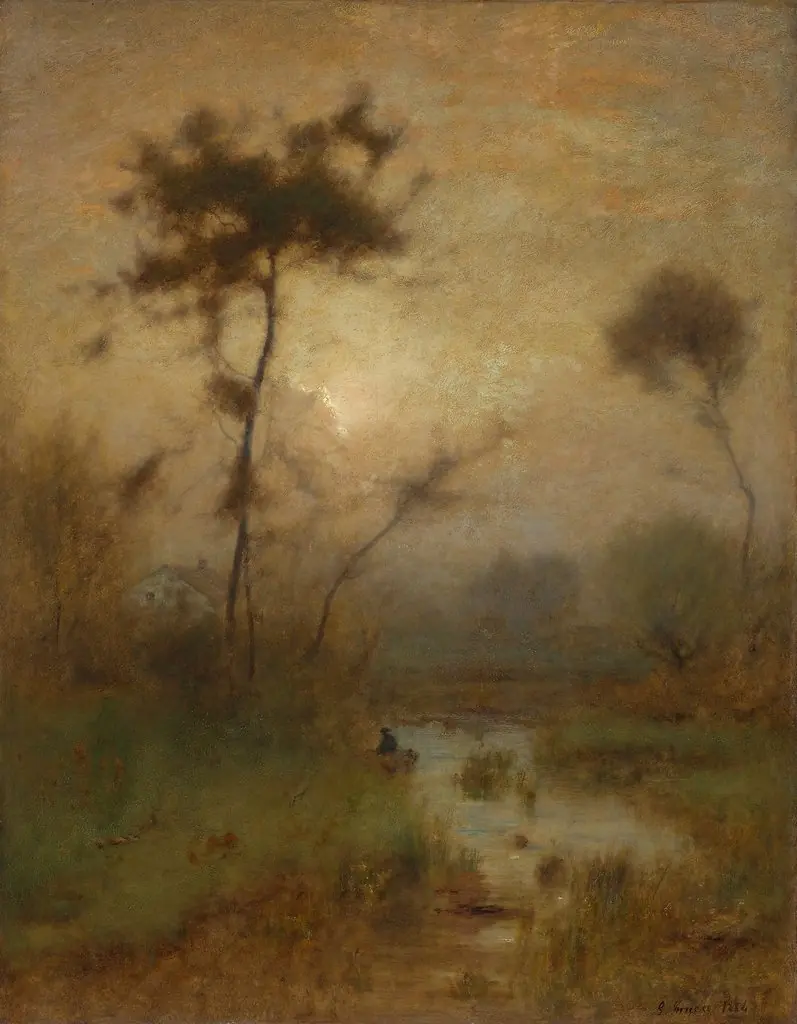
A Winter Sky is an unspecified painting by the Hudson River School artist George Inness. It dates from 1866 and is held in the collection of the Cleveland Museum of Art.
About this work
If you like this quiet mood, look up the technique called *sfumato*—it’s how artists soften outlines to make scenes feel dreamy.
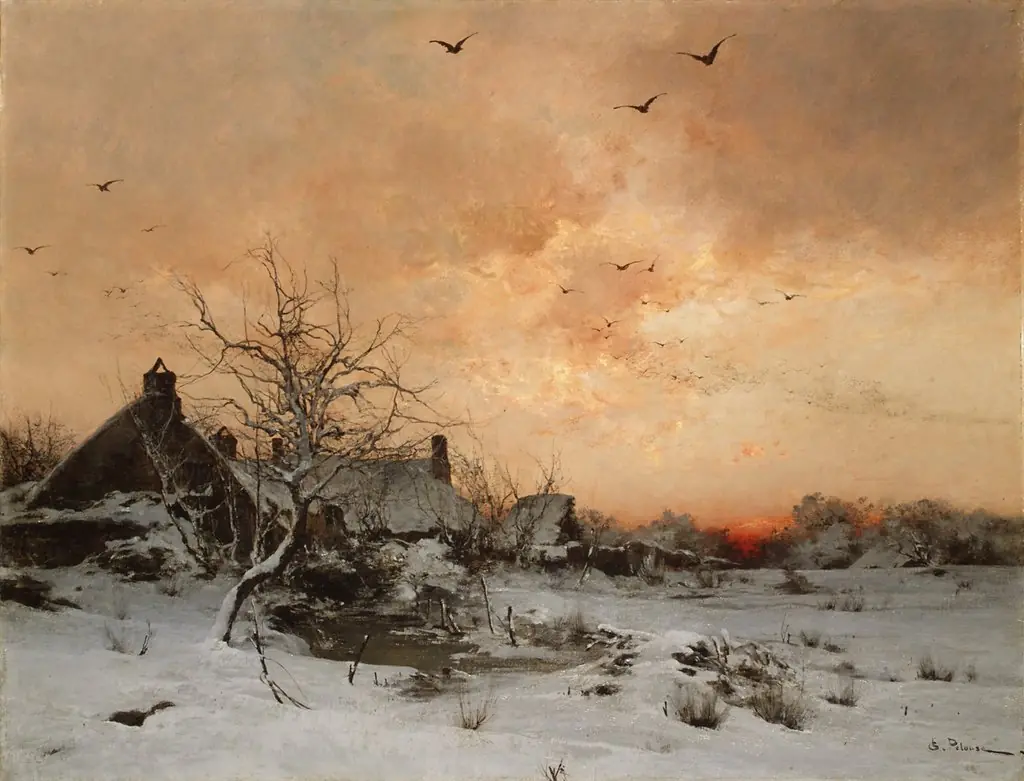
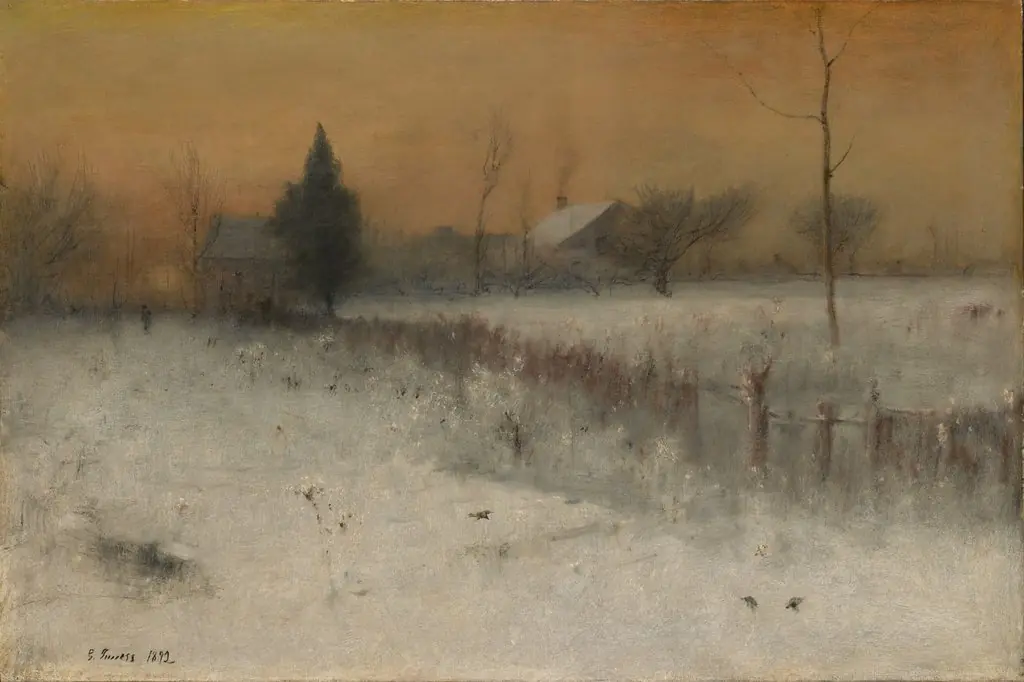
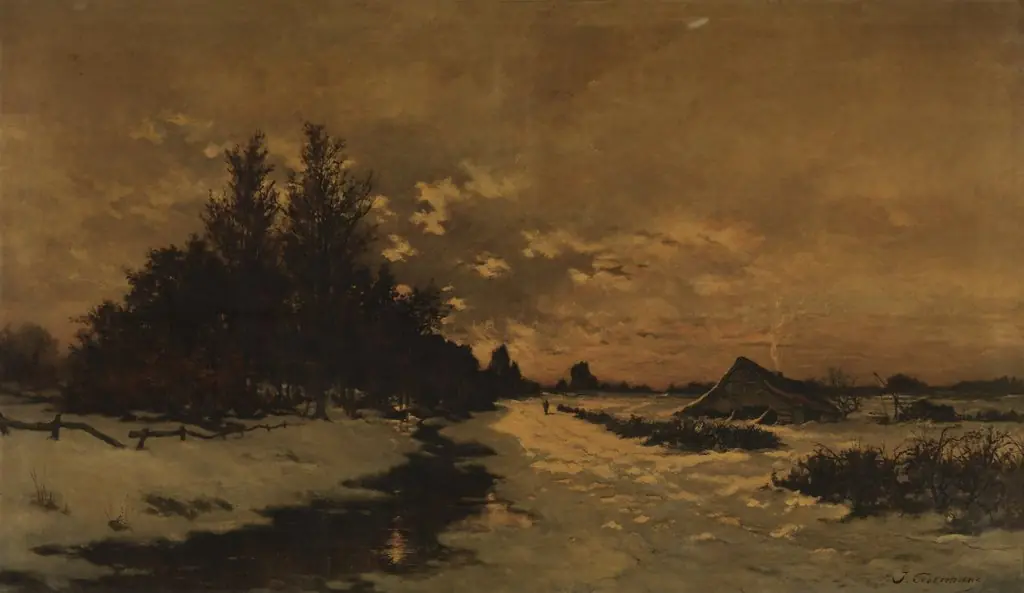
You see a snowy field under a fiery pink sunset. The sky glows while the ground stays cold and blue.
Inness painted this in 1866, when most artists still focused on sharp details. Here, he blurred edges to show how light feels, not just how it looks. The warm sky and icy earth clash on purpose.
If you like this quiet mood, look up the technique called *sfumato*—it’s how artists soften outlines to make scenes feel dreamy.
Overview
Painted in 1866, A Winter Sky by George Inness captures a quiet moment at dusk, where the fading daylight transforms a frozen landscape into a study of atmospheric tension. Rather than emphasizing precise forms, Inness prioritized the emotional resonance of light and color, aligning with a broader shift in 19th-century American painting toward mood over detail.
Subject & Meaning
The painting juxtaposes a radiant, pink-and-gold sunset with a cold, blue-tinged snowfield, creating a silent dialogue between warmth and desolation. This contrast suggests the fleeting nature of daylight and the enduring chill of winter, evoking solitude and introspection without narrative. The scene holds no human presence, inviting contemplation of nature’s quiet rhythms.
Technique & Style
Inness softened edges and blended tones to dissolve hard contours, allowing light to feel immersive rather than observed. His use of layered washes and muted transitions echoes the Italian sfumato tradition, though applied to American scenery. This approach prioritized sensory impression—how light lingers, how cold breathes—over topographical accuracy.
History & Provenance
Created during a period when American art still favored detailed realism, A Winter Sky marked Inness’s departure toward lyrical abstraction. It emerged from his evolving interest in spiritual and emotional expression through landscape, influenced by his engagement with European Romanticism and later, Eastern philosophy. The painting remained in private collections until entering a public museum in the 20th century.
Context
In 1866, the Hudson River School dominated American landscape painting with grand, meticulously rendered vistas. Inness, however, moved away from this tradition, aligning more with emerging European tendencies that valued atmosphere and inner feeling. His work anticipated the tonalist movement, offering a quieter, more introspective alternative to the era’s monumental scenery.
Legacy
A Winter Sky helped redefine American landscape painting by prioritizing emotional tone over descriptive precision. Inness’s atmospheric methods influenced later tonalists like James McNeill Whistler and George Bellows, who similarly sought to convey mood through subtle gradations of light and color. The painting stands as an early example of American art turning inward, toward personal and spiritual experience.
Artist & collection

Artist
George Inness (May 1, 1825 – August 3, 1894) was an American landscape painter. Now recognized as one of the most influential American artists of the nineteenth century, Inness was influenced by the Hudson River School…