Artwork
June
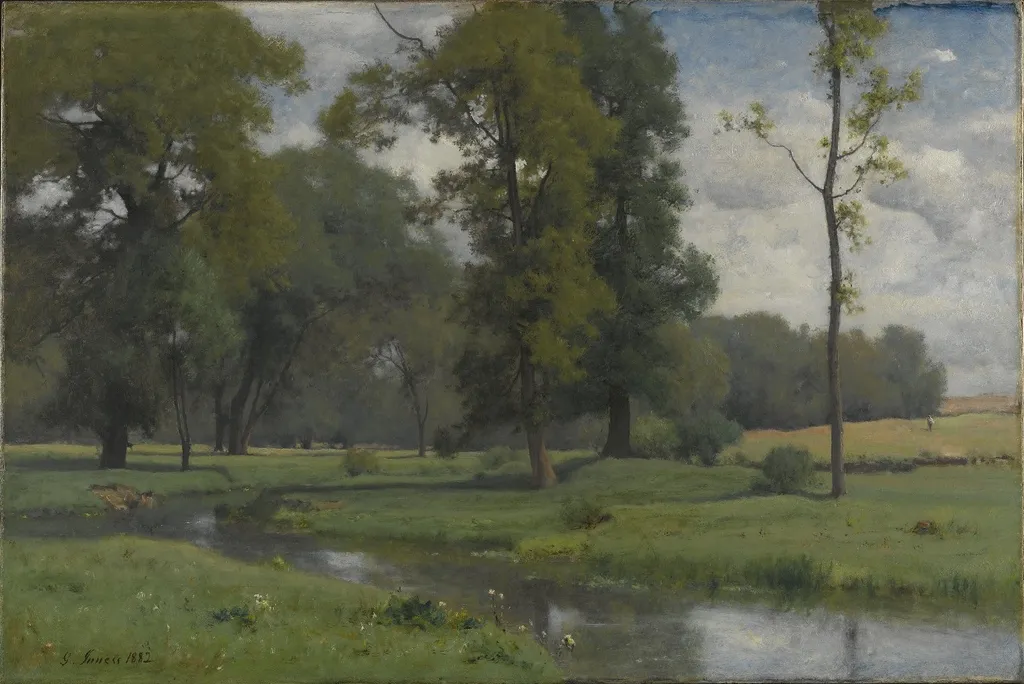
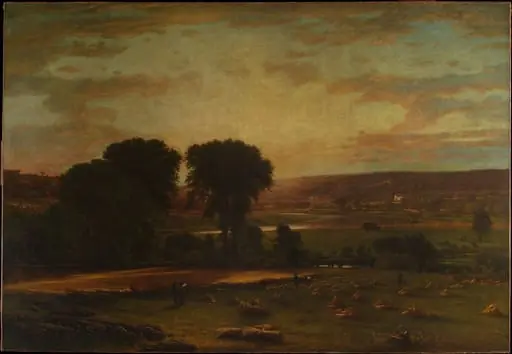
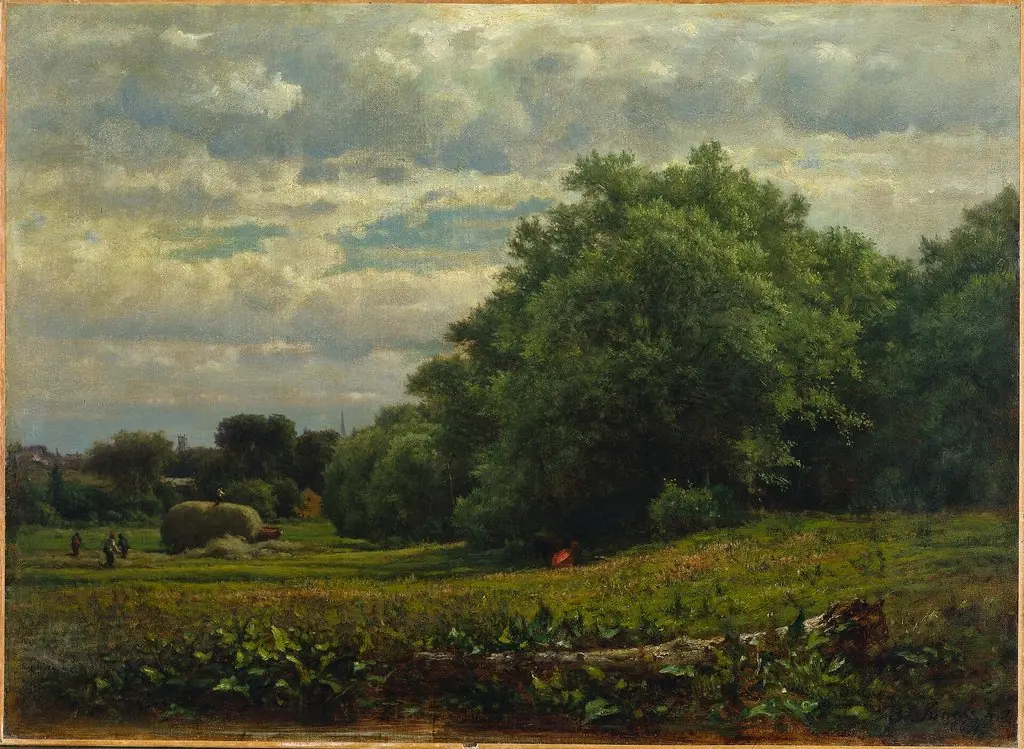
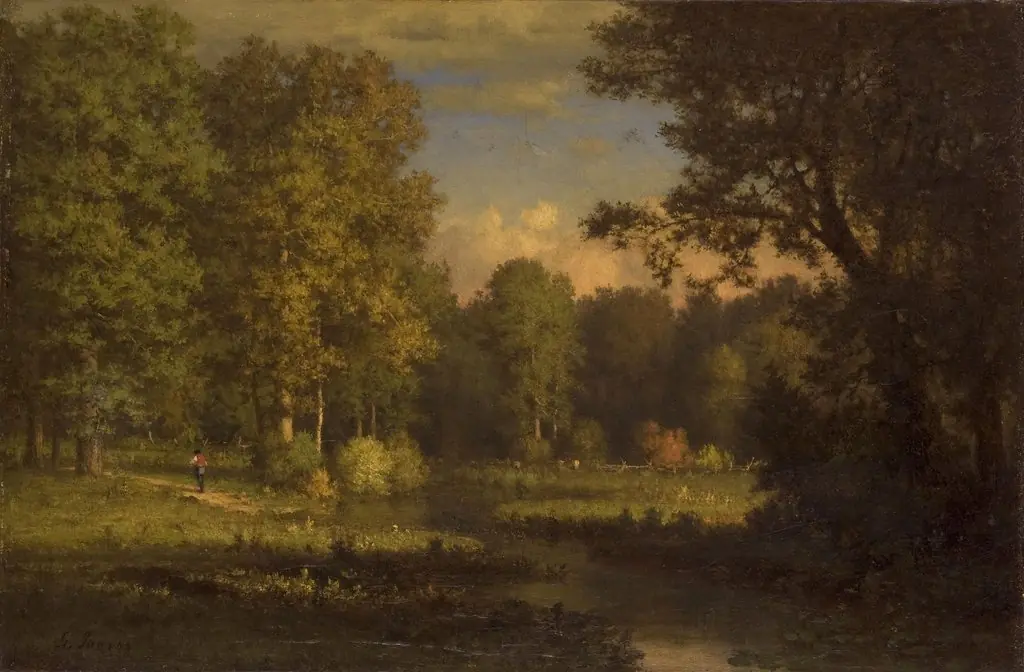
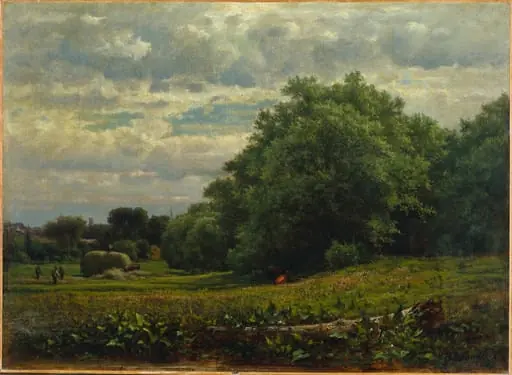
June is an oil painting by the American Impressionist artist George Inness. It dates from 1892 and is held in the collection of the Brooklyn Museum.
About this work
Overview
The work belongs to his later period, marked by a departure from the detailed realism of his early Hudson River School style.
George Inness completed *June* in 1892, near the end of his life, using oil on canvas to capture a quiet rural scene. The work belongs to his later period, marked by a departure from the detailed realism of his early Hudson River School style. Instead, it embraces a more atmospheric, tonal approach that prioritizes mood over topographical precision. The painting is part of the Brooklyn Museum’s permanent collection.
Subject & Meaning
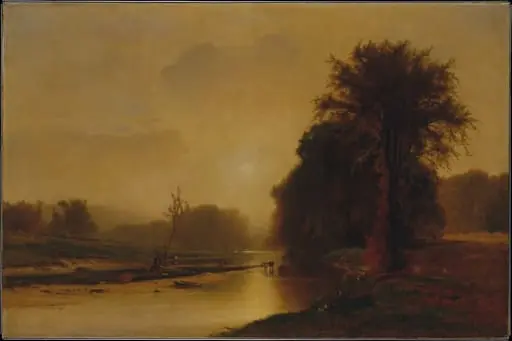
The painting presents a tranquil midsummer landscape: a winding stream cuts through a verdant field, flanked by scattered trees whose reflections ripple in the water. A solitary figure in the distance suggests human presence without disrupting the stillness. Inness, influenced by Swedenborgian spirituality, sought to convey inner harmony and divine presence in nature. The scene is not a literal record but an evocation of peace as a metaphysical state.
Technique & Style
Inness employed loose, blended brushwork and subtle gradations of color to dissolve hard edges between land, water, and sky. The palette is muted—soft greens, pale blues, and warm earth tones—creating a hazy, luminous effect. Unlike the sharp detail of his earlier works, *June* relies on atmospheric suggestion, with forms emerging from layered glazes rather than defined contours. This technique aligns with his mature interest in emotional resonance over literal representation.
History & Provenance
Painted in 1892, *June* was created during Inness’s final years, when he lived in New Jersey and increasingly turned to spiritual themes. It remained in private hands until acquired by the Brooklyn Museum, where it has been held since the early 20th century. The museum’s records confirm its consistent presence in exhibitions of American landscape art, reflecting its significance in tracing Inness’s artistic evolution.
Context
Inness’s late work emerged amid broader shifts in American art, as painters moved away from grand Romantic vistas toward intimate, introspective scenes. His engagement with European Barbizon painters and Swedenborg’s mystical writings led him to treat nature as a vessel for spiritual experience. *June* reflects this synthesis: it is neither purely naturalistic nor abstract, but a meditative bridge between the seen and the unseen.
Legacy
Though less widely known than contemporaries like Church or Bierstadt, Inness’s later paintings, including *June*, influenced early 20th-century American tonalists and even some modernists drawn to emotional atmosphere. His rejection of literalism in favor of inner feeling helped pave the way for more subjective approaches to landscape. The painting endures as a quiet testament to his lifelong search for harmony between perception and spirit.
Artist & collection

Artist
George Inness (May 1, 1825 – August 3, 1894) was an American landscape painter. Now recognized as one of the most influential American artists of the nineteenth century, Inness was influenced by the Hudson River School…