Artwork
On the Delaware River
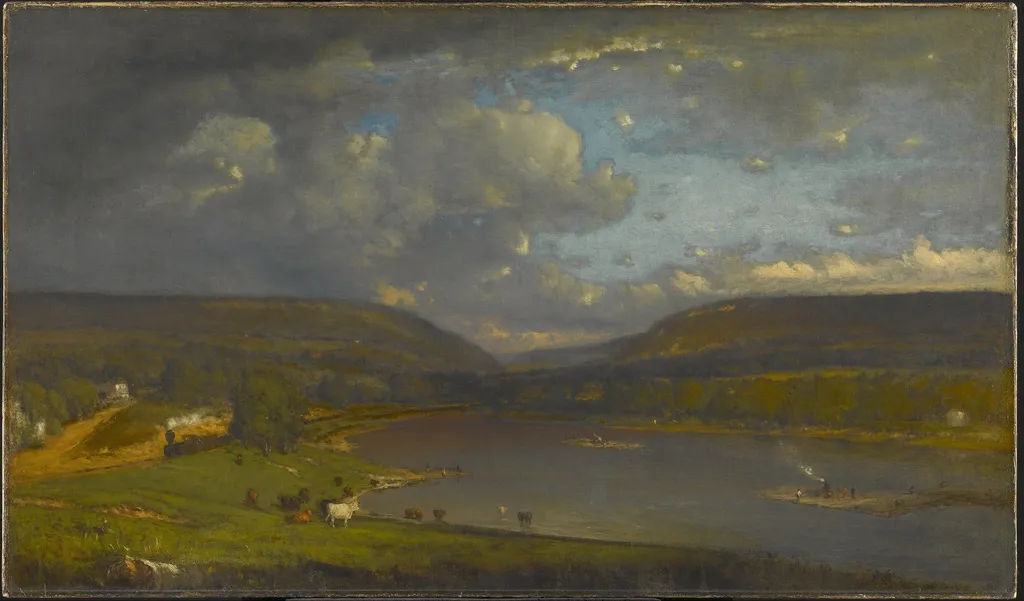
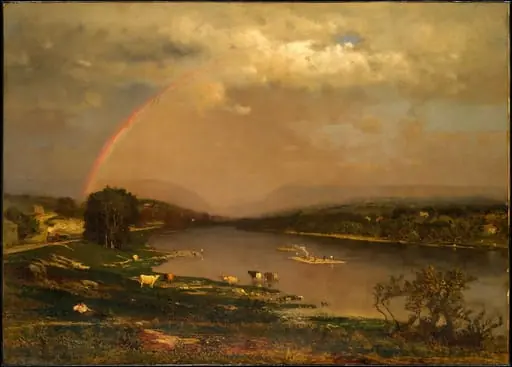
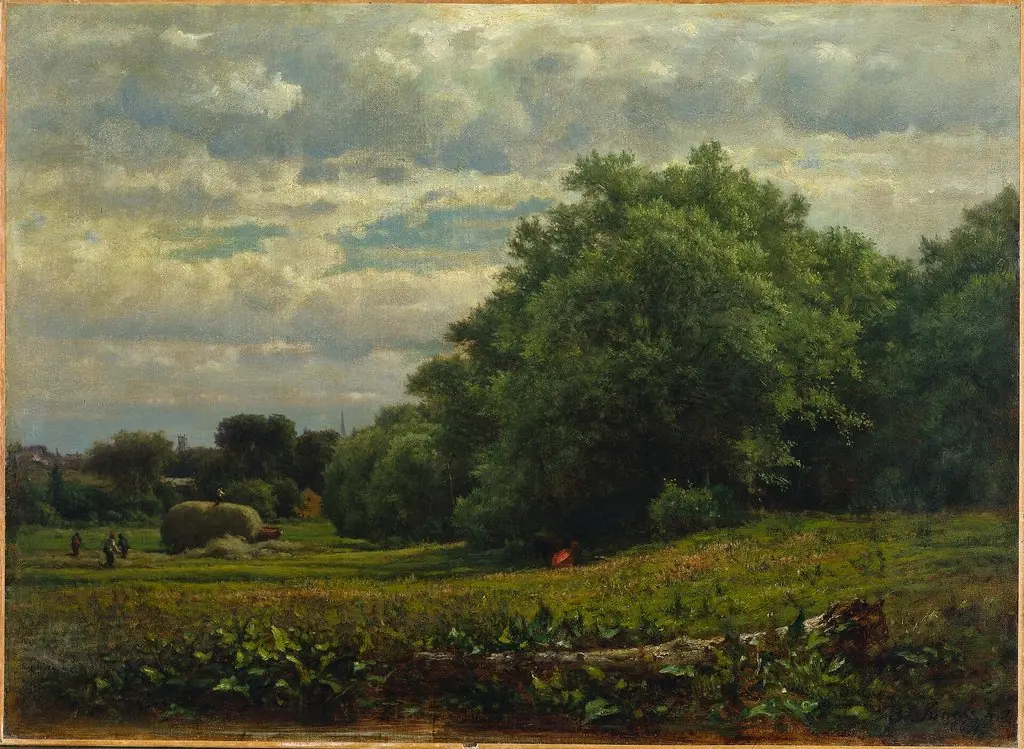
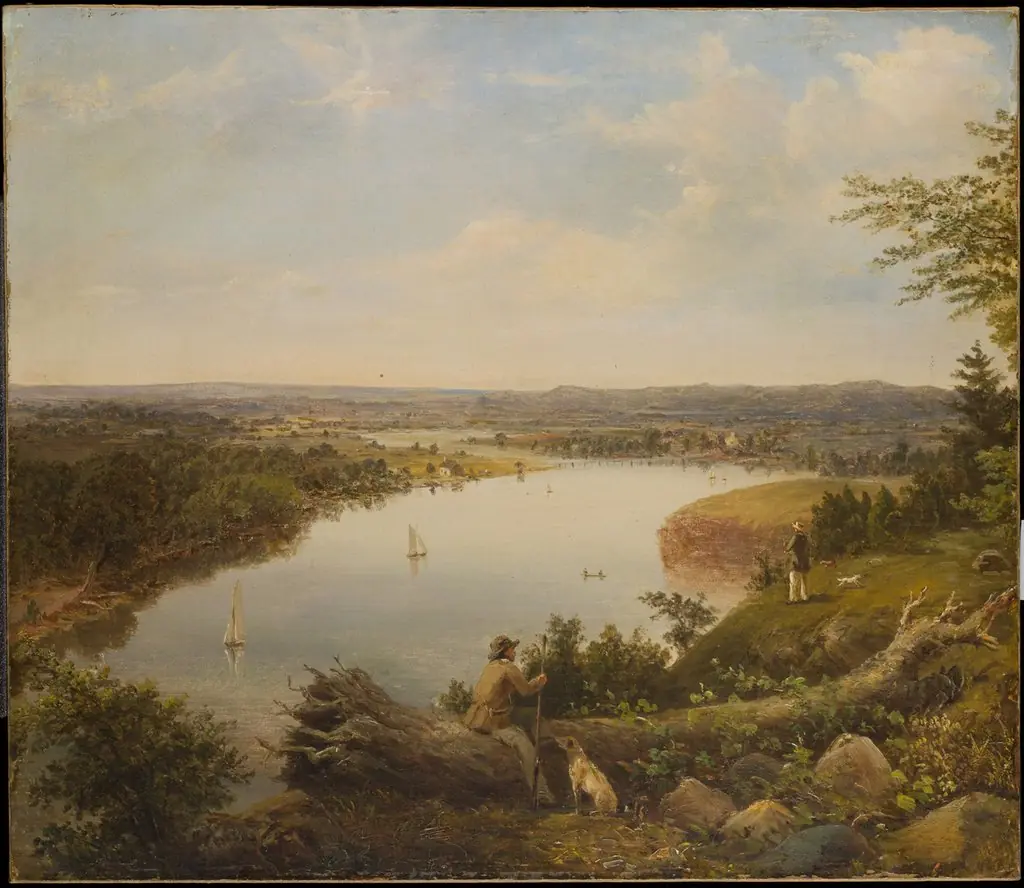
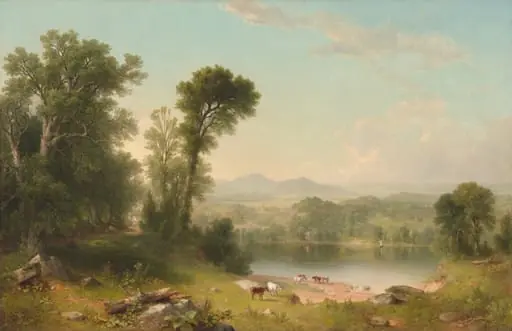
On the Delaware River is an oil painting by the Hudson River School artist George Inness. It dates from 1861 and is held in the collection of the Brooklyn Museum.
About this work
Overview
George Inness completed the oil painting *On the Delaware River* in 1861. Executed during the early stage of his artistic development, the work aligns with the landscape tradition championed by the Hudson River School, which emphasized the portrayal of unspoiled natural environments.
Subject & Meaning
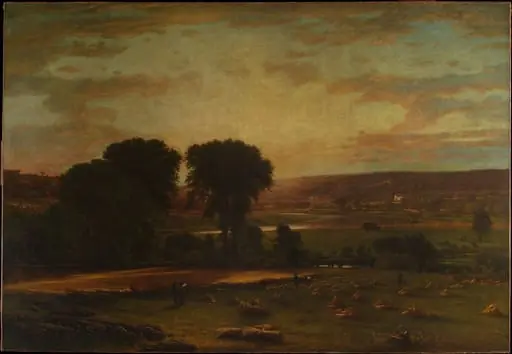
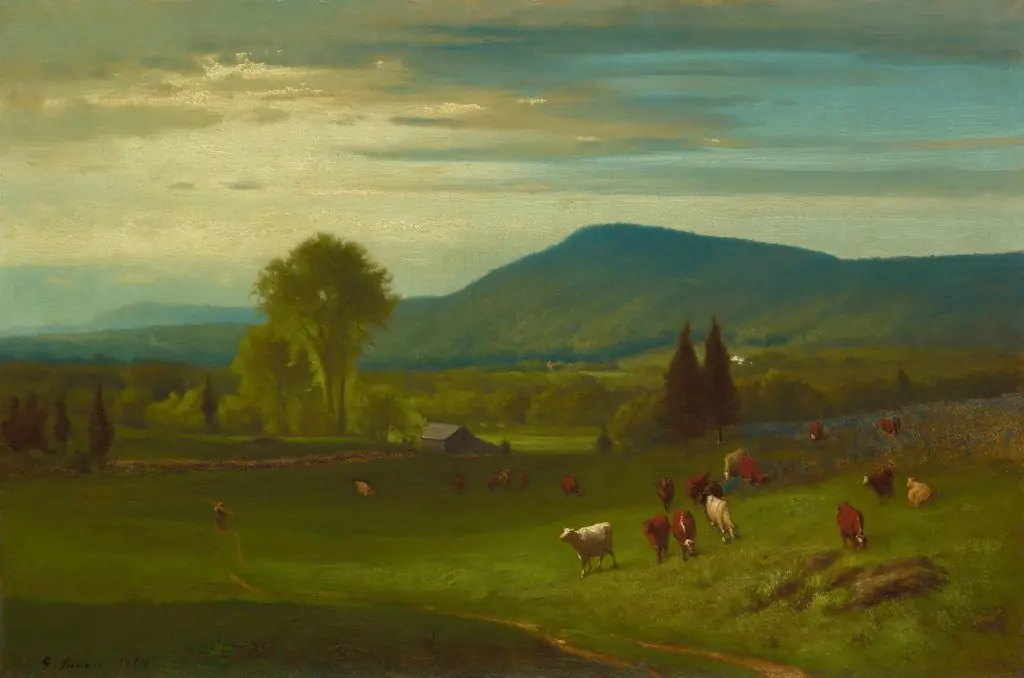
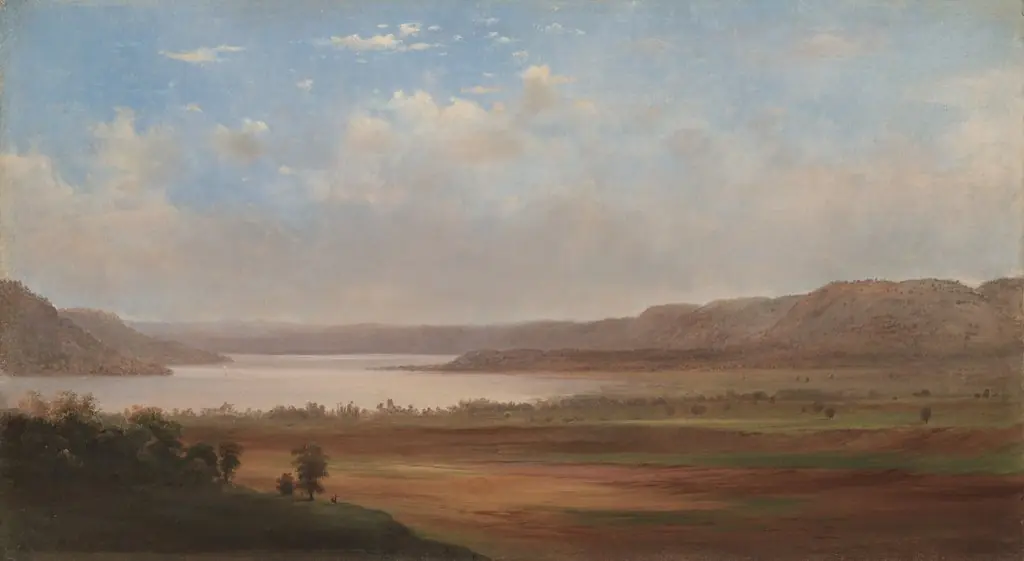
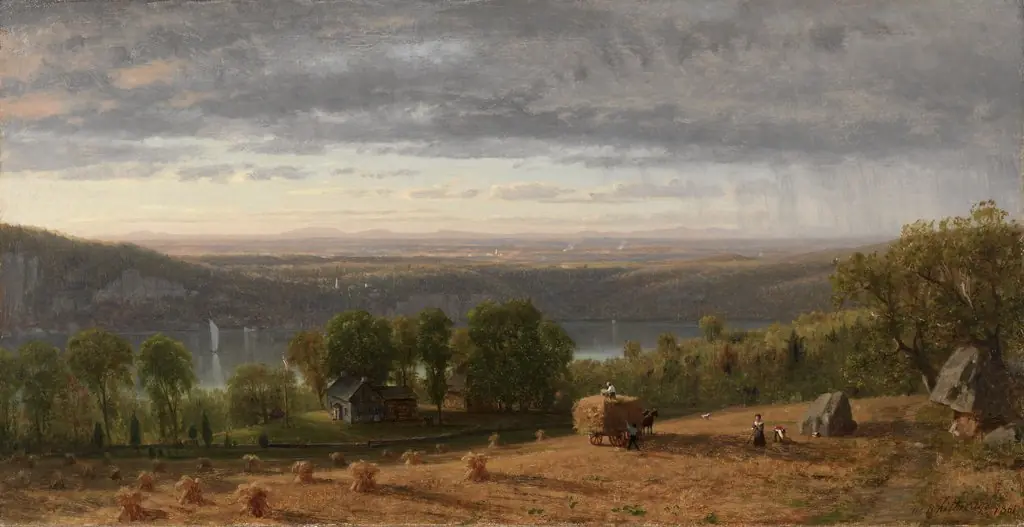
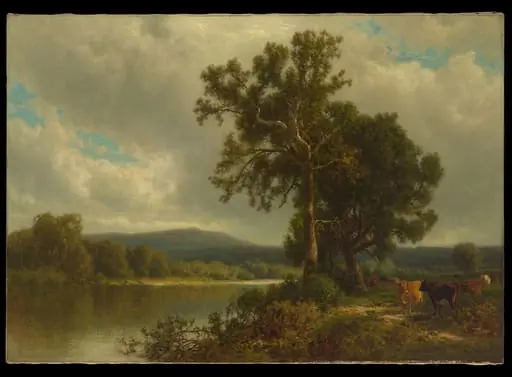
The canvas presents a calm river winding through gentle hills beneath a cloud‑filled sky. In the foreground, a modest herd of cattle grazes on verdant grass, while solitary trees line the water’s edge, suggesting a harmonious coexistence between human activity and the surrounding wilderness.
Technique & Style
Inness employs a palette of muted greens and blues, modulating light to convey atmospheric depth. Broad, confident brushwork creates textured surfaces, while layered glazing enhances the luminous quality of the sky and water, reflecting the artist’s experimentation with tonal variation prior to his later, more personal approach.
History & Provenance
Created while Inness was still closely tied to the Hudson River School, the painting marks a transitional moment before he pursued a distinct aesthetic. Its early date places it among his formative works, documenting his engagement with the American landscape genre during a period of expanding national identity.
Artist & collection

Artist
George Inness (May 1, 1825 – August 3, 1894) was an American landscape painter. Now recognized as one of the most influential American artists of the nineteenth century, Inness was influenced by the Hudson River School…