Artwork
An Old Woman
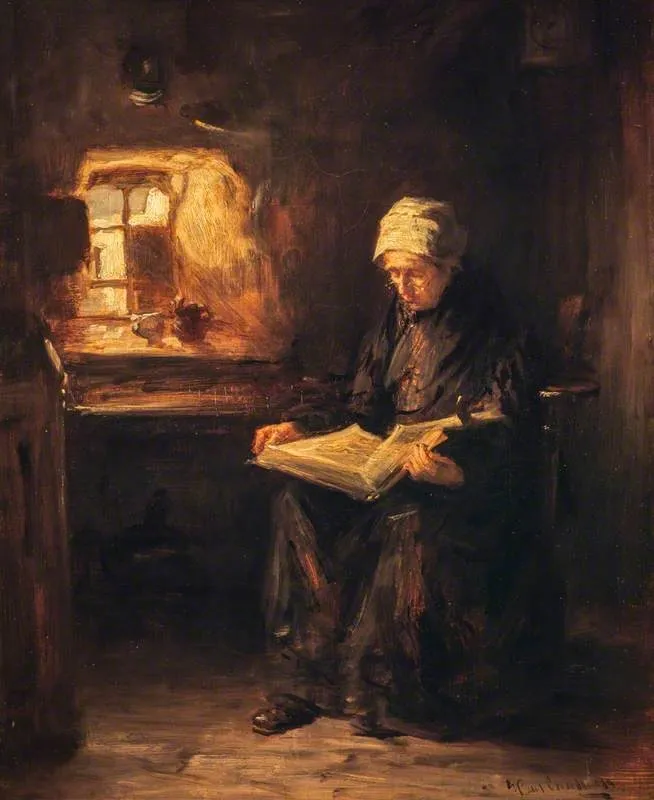
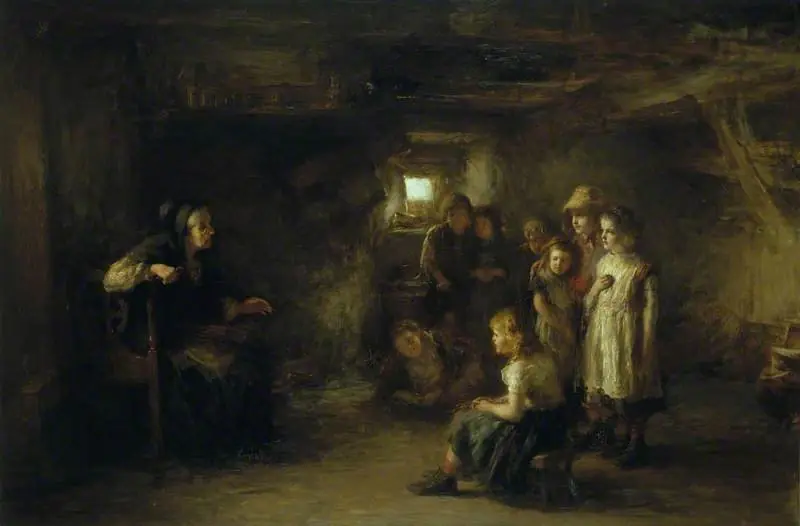
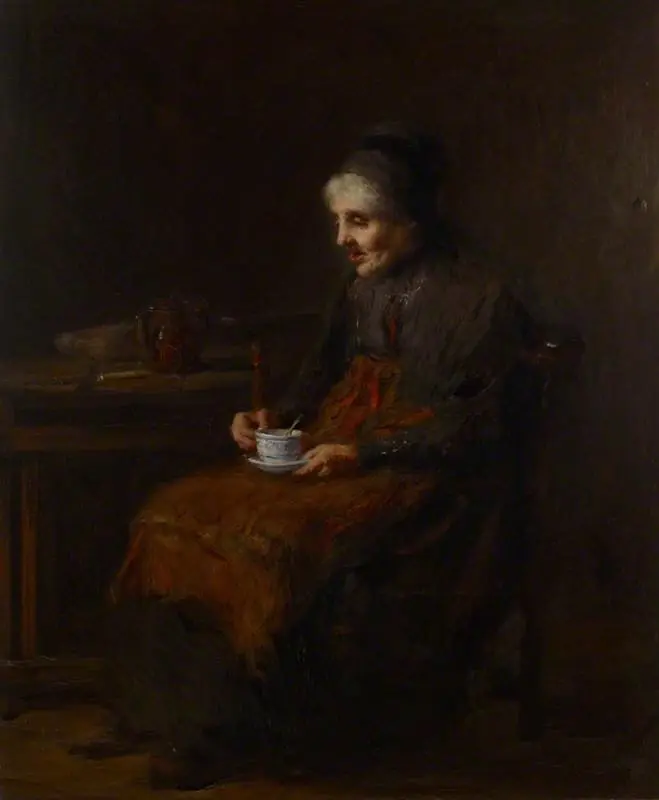
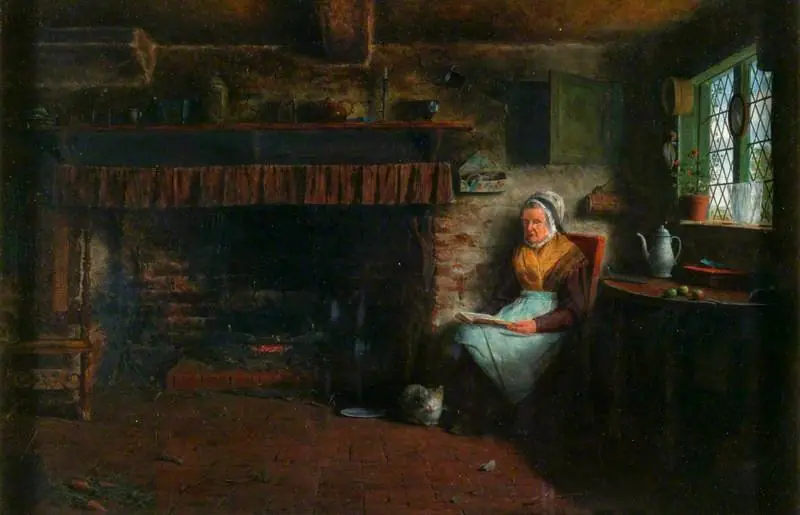
An Old Woman is an oil painting by George Paul Chalmers. It dates from 1865 and is held in the collection of the National Galleries Scotland.
About this work
Overview
Rendered with restrained detail, the composition focuses on the figure’s stillness and the subtle interplay of light and shadow within a sparse domestic space.
Painted around 1865 by George Paul Chalmers, this oil on canvas depicts an elderly woman in a modest interior. The work is part of the Scottish National Gallery’s collection and reflects the artist’s interest in quiet, introspective scenes. Rendered with restrained detail, the composition focuses on the figure’s stillness and the subtle interplay of light and shadow within a sparse domestic space.
Subject & Meaning
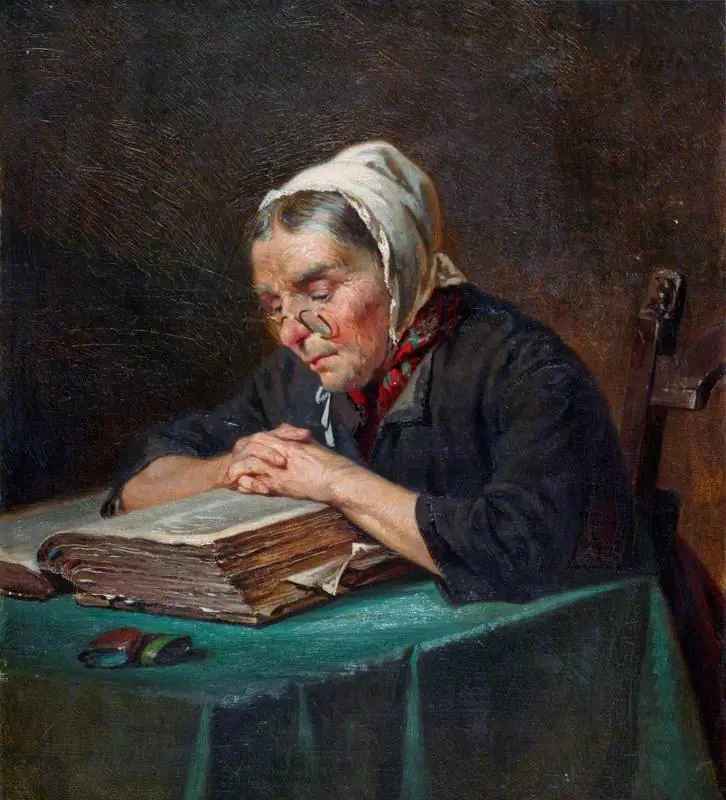
The woman, seated in a plain chair, holds a book with quiet concentration. Her expression is solemn, her posture closed, suggesting contemplation or fatigue. The absence of decorative elements and the dim lighting emphasize solitude. The book implies literacy or inner life, yet no narrative is given—her identity remains private, inviting reflection on aging, solitude, or the dignity of ordinary moments.
Technique & Style
Chalmers employs oil paint with a muted, warm palette dominated by ochres and browns. Chiaroscuro is used deliberately to model the figure’s form and define the shallow space, with light entering from the left window casting soft gradients across her hat and dress. Brushwork is subdued, avoiding flourish; texture is suggested rather than detailed, reinforcing the painting’s quiet realism.
History & Provenance
The painting entered the Scottish National Gallery’s collection in the late 19th century, likely acquired through the gallery’s early efforts to document Scottish artistic practice. Its attribution to Chalmers is consistent with his known output of domestic and genre scenes from the 1860s. No significant alterations or documented ownership changes are recorded prior to its institutional acquisition.
Context
Created during a period when Scottish artists increasingly turned to everyday life for subject matter, this work aligns with a broader trend of domestic realism. Unlike grand historical or romanticized scenes, Chalmers focuses on an unadorned moment, reflecting influences from Dutch genre painting and contemporary British social observation, though without overt moralizing or sentimentality.
Legacy
Though not widely reproduced or celebrated in major art historical narratives, the painting endures as a quiet example of mid-19th-century Scottish realism. It contributes to the understanding of how lesser-known artists captured the dignity of ordinary individuals, preserving a visual record of private life that contrasts with the more dramatic works of the era.
Artist & collection