Artwork
Semele and Juno
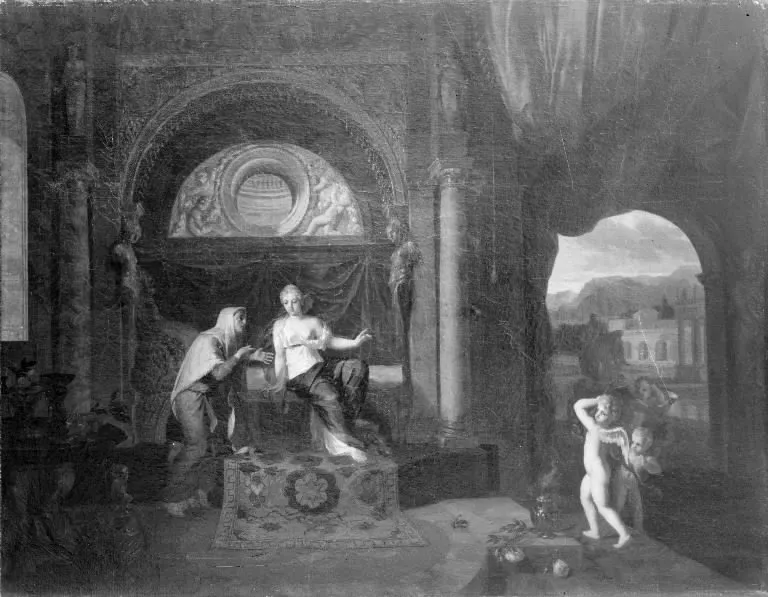
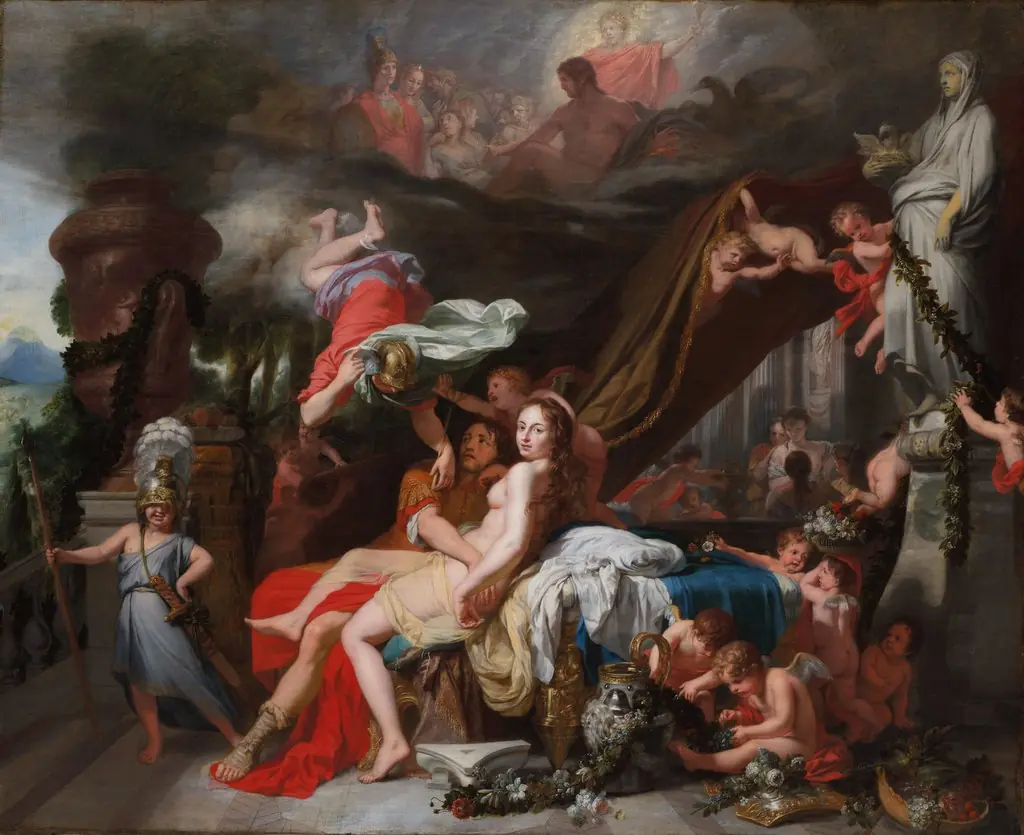
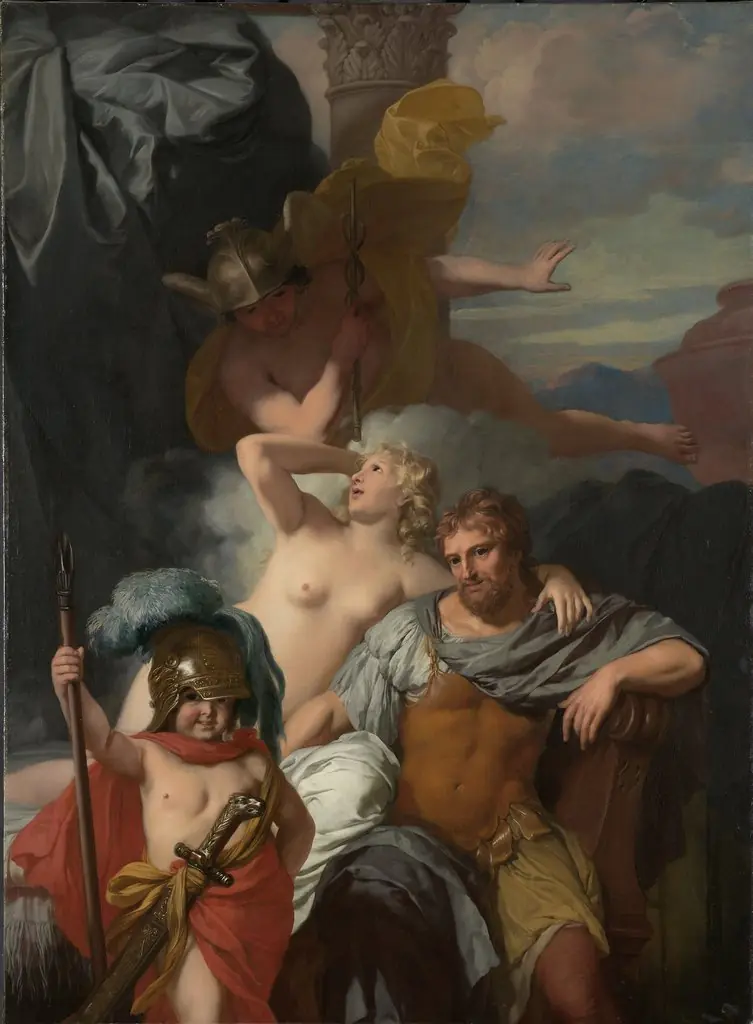
Semele and Juno is an oil painting by the Flemish Baroque painting artist Gerard de Lairesse. It dates from 1692 and is held in the collection of the Statens Museum for Kunst.
About this work
Overview
Executed in a dimly lit interior, the work presents three figures arranged around a raised platform, their gestures suggesting a moment of mythic narrative.
Gerard de Lairesse’s 1692 oil painting *Semele and Juno* belongs to the late Flemish Baroque tradition. Executed in a dimly lit interior, the work presents three figures arranged around a raised platform, their gestures suggesting a moment of mythic narrative. The canvas is part of the permanent collection of Denmark’s Statens Museum for Kunst, where it is displayed among other 17th‑century European works.
Subject & Meaning
The composition draws on the classical tale of Semele, the mortal mother of Dionysus, and Juno, the queen of the gods. In the scene, a pale, seated woman—identified as Semele—holds a child, while a kneeling figure, likely Juno, extends an offering. A small boy watches from the right, his glance adding a subtle tension that hints at the impending divine intervention central to the myth.
Technique & Style
De Lairesse employs a pronounced chiaroscuro, using strong contrasts of light and shadow to model the figures and emphasize their emotional states. The drapery is rendered with careful attention to texture, and the architectural backdrop—carved cornices, a heavy curtain, and a distant landscape visible through a window—creates depth while maintaining a controlled, classicizing composition.
Context
Created shortly after Rembrandt’s death, the painting reflects de Lairesse’s shift toward French classicism, influenced by the iconographic guide of Cesare Ripa and the courtly aesthetics of Charles le Brun. This period saw the Dutch artist embracing a more academic approach, aligning his practice with the broader European taste for orderly, narrative-driven history painting.
Legacy
Beyond its visual qualities, *Semele and Juno* illustrates de Lairesse’s dual role as painter and theorist. His later writings on artistic principles gained considerable traction in the 18th century, shaping academic curricula across the continent. The work thus serves both as a testament to his artistic output and as a visual reference for his theoretical ideas on composition and moralizing content.
Artist & collection
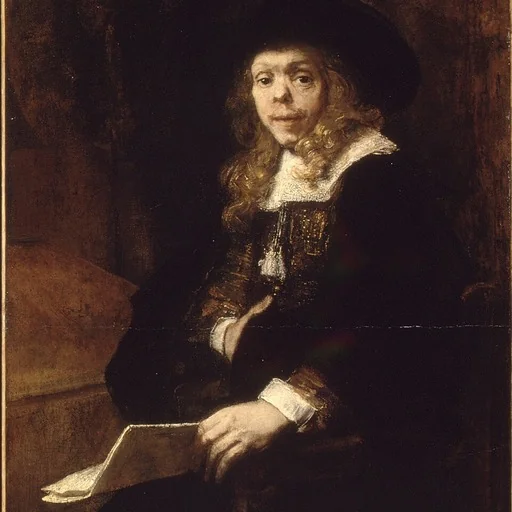
Artist
Gerard or Gérard (de) Lairesse (French pronunciation: ; 11 September 1641 – June 1711) was a Dutch Golden Age painter and art theorist.