Artwork
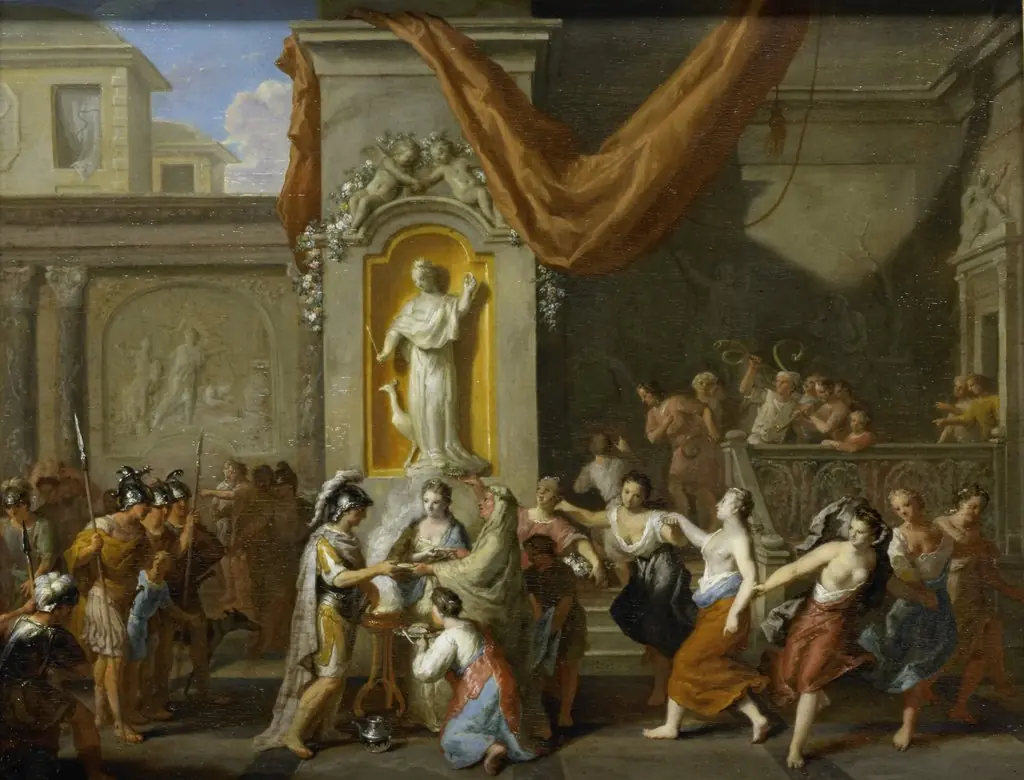
Queen Cleophis Offers Alexander the Great Wine after Conquering Massaga
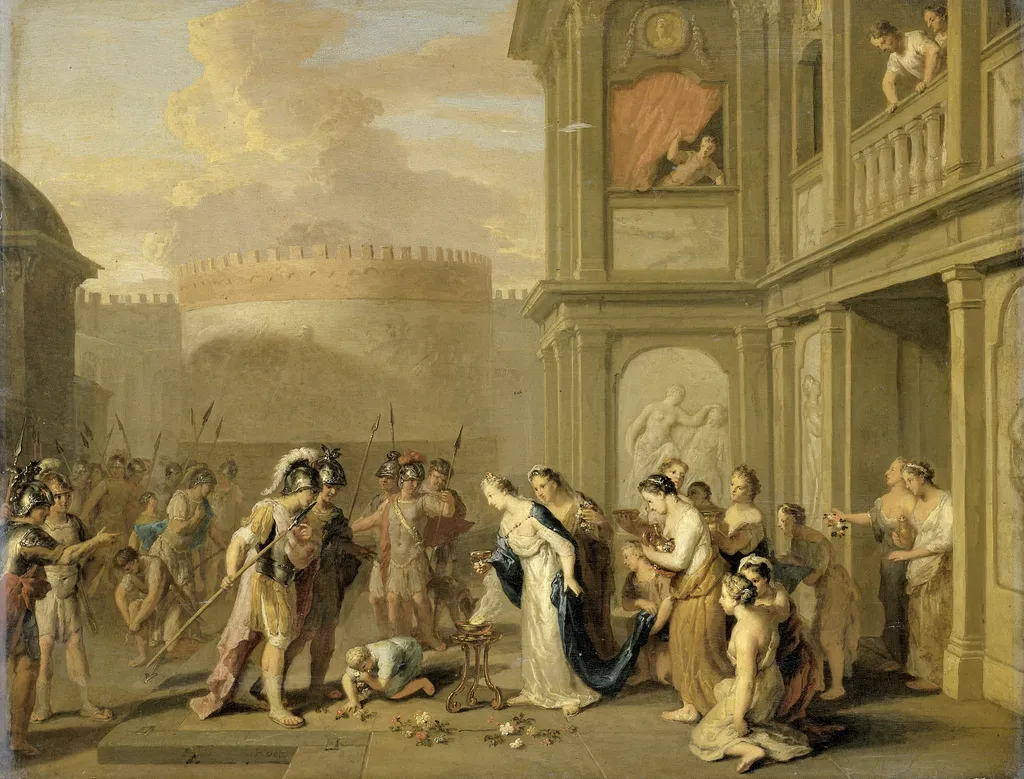
Queen Cleophis Offers Alexander the Great Wine after Conquering Massaga is an oil painting by the Rococo painting artist Gerard Hoet. It dates from 1701 and is held in the collection of the Rijksmuseum.
About this work
Overview
Gerard Hoek, a Dutch painter active in the early eighteenth century, completed an oil on canvas in 1701 that portrays a historic encounter between Alexander the Great and the Indian queen Cleophis. The work is part of the Rijksmuseum’s collection and illustrates a moment of diplomatic hospitality following the capture of the fortified city of Massaga.
Subject & Meaning
In the composition, the queen, dressed in a flowing white garment with a blue shawl, extends a cup toward Alexander, who is clad in classical armor and a helmet, his right hand gripping a spear. The gesture suggests a ritual of peace or celebration after conquest, emphasizing themes of negotiation and cultural exchange between conqueror and ruler.
Technique & Style
Hoek employs a balanced palette of warm earth tones and cooler blues, allowing the white dress to dominate the visual field. The background architecture is rendered in subdued hues, providing a muted stage for the central figures. Subtle chiaroscuro modelling gives the scene depth, while the careful handling of light accentuates the textures of fabric and metal.
History & Provenance
The painting was produced in the Netherlands shortly after the turn of the eighteenth century, a period when European artists often depicted classical and exotic subjects. It entered the Rijksmuseum’s holdings through acquisition in the nineteenth century, where it has remained on public display as part of the museum’s Dutch Baroque collection.
Context
The subject draws on accounts of Alexander’s Indian campaigns, particularly the episode in which the queen of the Massaga tribe, Cleophis, is said to have offered wine to the Macedonian king. Such narratives were popular in the Enlightenment era, reflecting contemporary fascination with antiquity and the exotic East, and they provided artists with dramatic, morally charged scenes.
Own this work as a print
Artist & collection