Artwork
The Apple Peeler
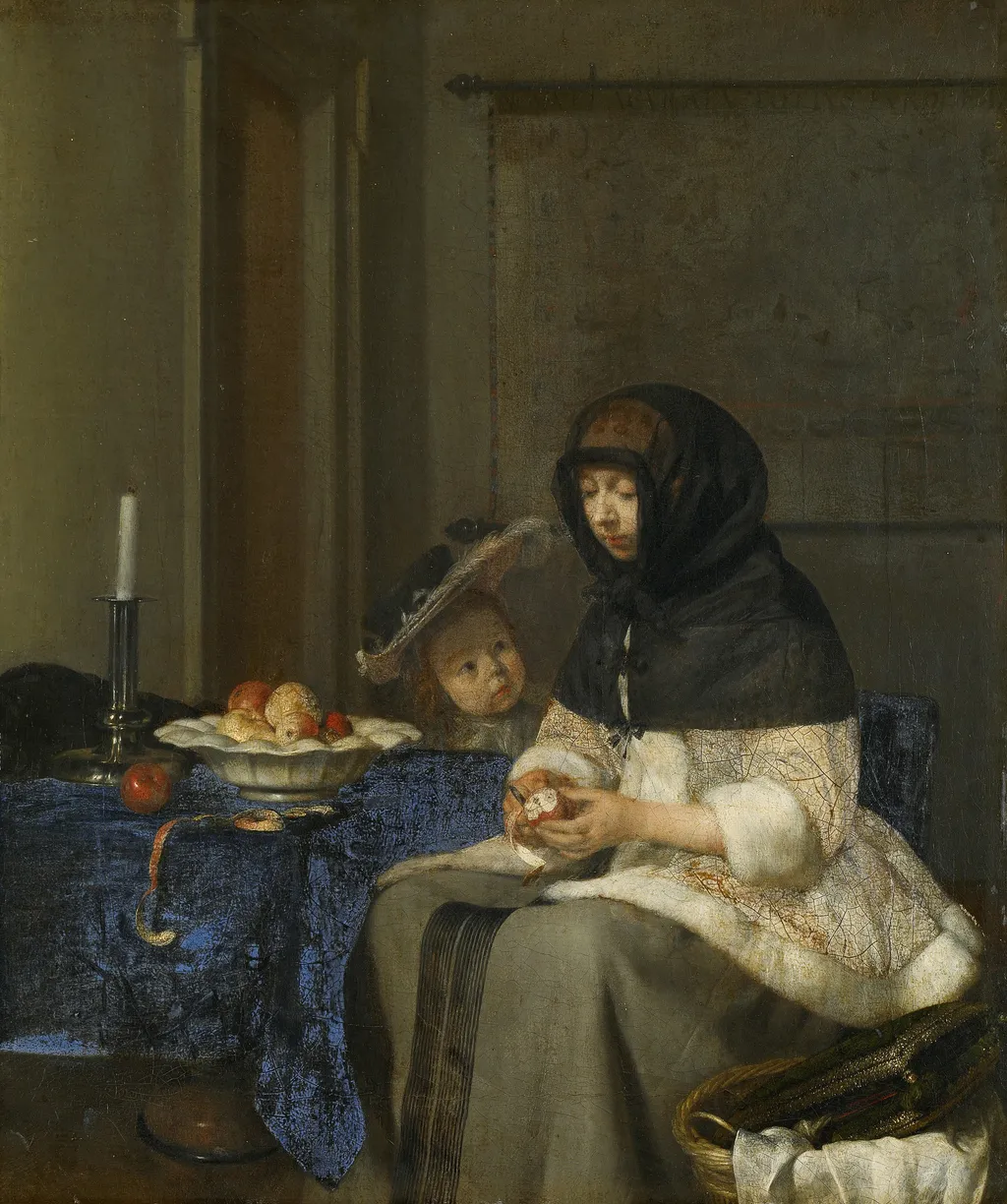
The Apple Peeler is an oil painting by the Dutch Golden Age artist Gerard ter Borch. It dates from 1660 and is held in the collection of the Kunsthistorisches Museum.
About this work
Overview
Created in 1660, *The Apple Peeler* is an oil painting by Dutch Golden Age artist Gerard ter Borch. The work is part of the permanent collection of the Kunsthistorisches Museum in Vienna. It exemplifies ter Borch’s interest in quiet, everyday scenes rendered with meticulous observation of light, texture, and domestic detail.
Subject & Meaning
The composition centers on a woman seated at a modest table, delicately removing the skin of an apple with one hand while holding a cloth in the other.
The composition centers on a woman seated at a modest table, delicately removing the skin of an apple with one hand while holding a cloth in the other. A pale‑faced wooden doll wearing a wide‑brimmed hat rests nearby, and a bowl of assorted fruit—including a pomegranate—adds a subtle hint of abundance. The painting elevates a routine chore into a study of concentration and the quiet intimacy of household life.
Technique & Style
Ter Borch employs a restrained palette and careful modeling of forms, allowing the candlelight to illuminate the figure and objects while casting soft shadows across the dark walls and wooden floor. This chiaroscuro effect creates a sense of depth and three‑dimensionality, emphasizing the tactile qualities of the apple skin, the cloth, and the polished fruit.
History & Provenance
The painting entered the Kunsthistorisches Museum’s collection in the early 20th century, where it has remained on display. Its provenance traces back to private Dutch collections before being acquired by the museum, reflecting the work’s consistent appreciation among collectors of genre paintings.
Context
Ter Borch was renowned for genre scenes that captured nuanced human interactions, a focus that influenced contemporaries such as Johannes Vermeer. *The Apple Peeler* fits within this tradition, portraying a moment of solitary activity that reveals broader social values of modesty, domestic order, and the moral significance often attached to everyday tasks in 17th‑century Dutch society.
Own this work as a print
Artist & collection
Artist
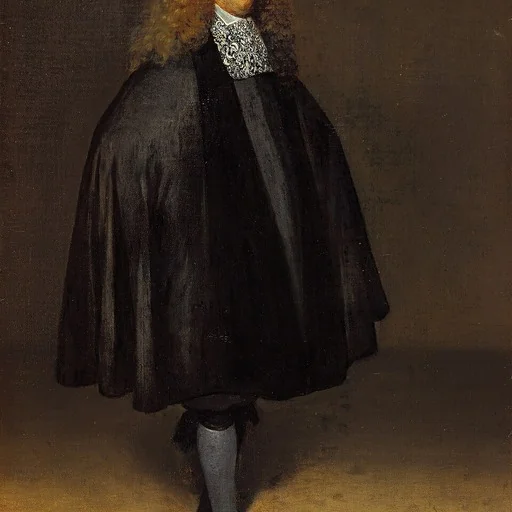
Gerard ter Borch (Dutch: ; December 1617 – 8 December 1681), also known as Gerard Terburg (Dutch: ), was a Dutch Golden Age painter mainly of genre subjects.