Artwork
A Musical Company
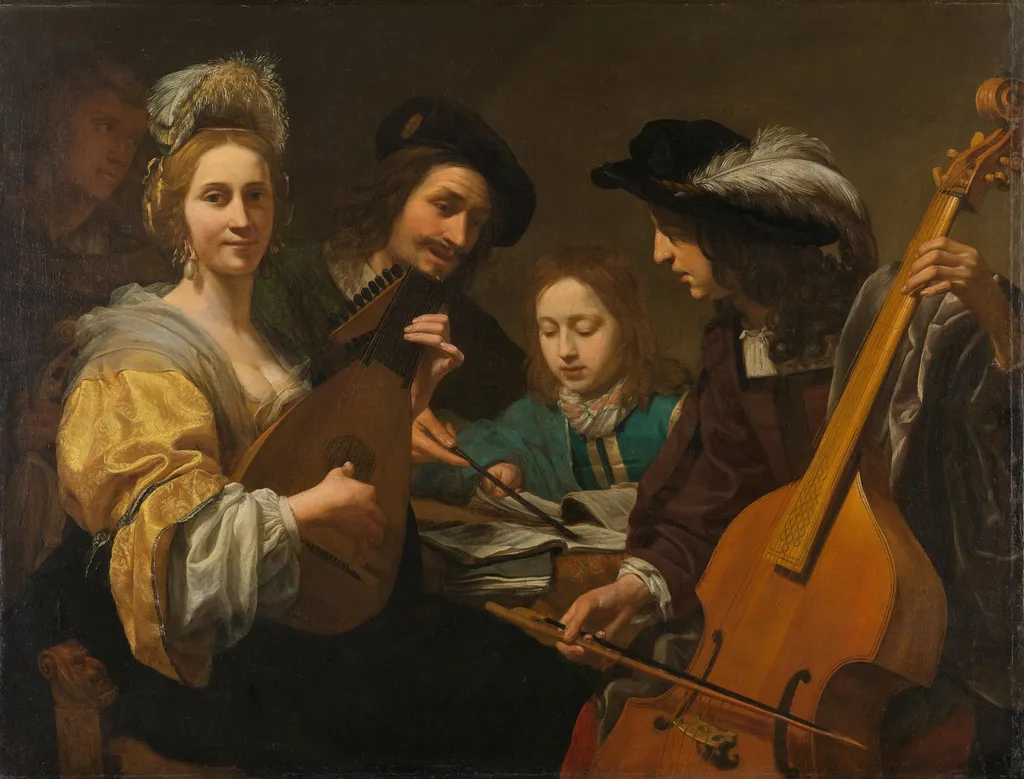
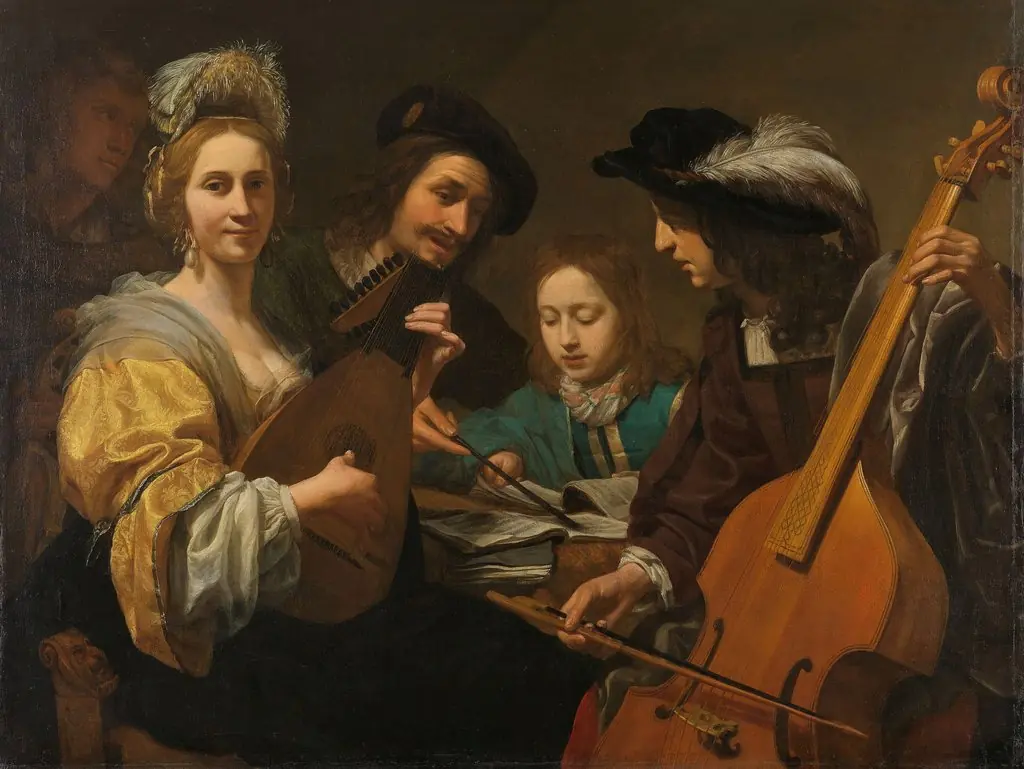
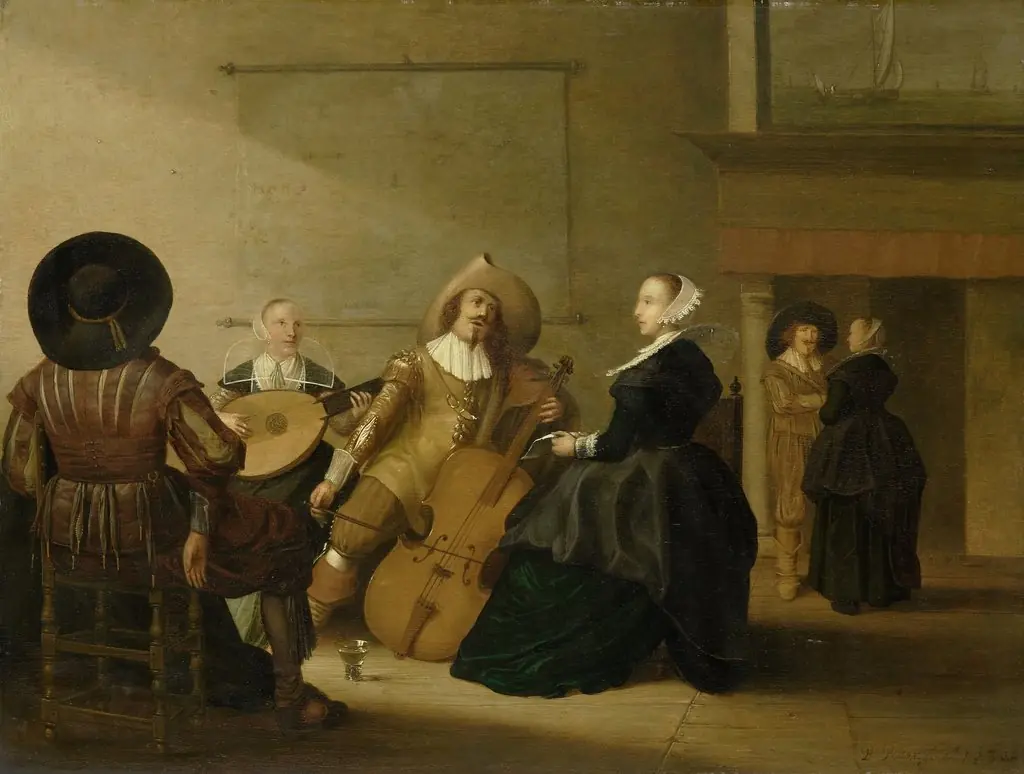
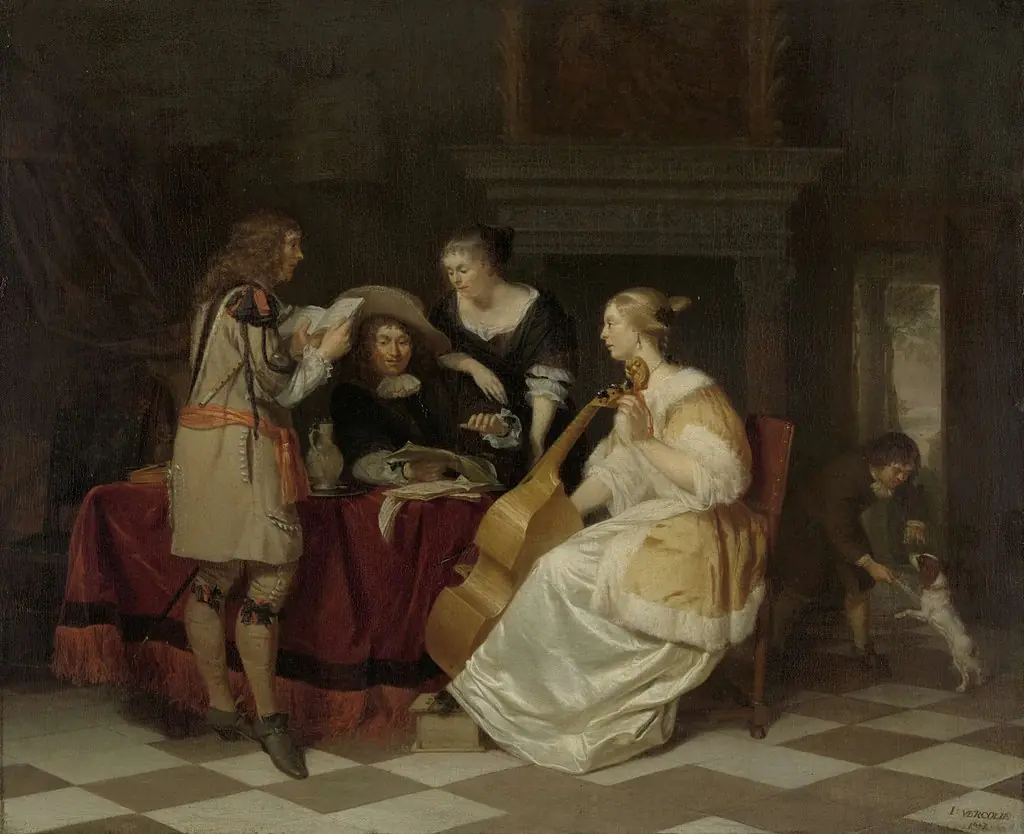
A Musical Company is an unspecified painting by the Dutch Golden Age artist Gerard van der Kuijl. It dates from 1651 and is held in the collection of the Rijksmuseum. This painting depicts a small group engaged in intimate musical activity within a modest interior.
About this work
Overview
The lighting is carefully modulated, drawing attention to the central interaction while leaving surrounding areas in soft shadow.
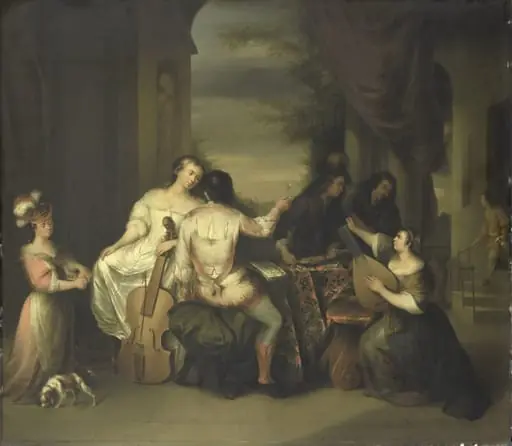
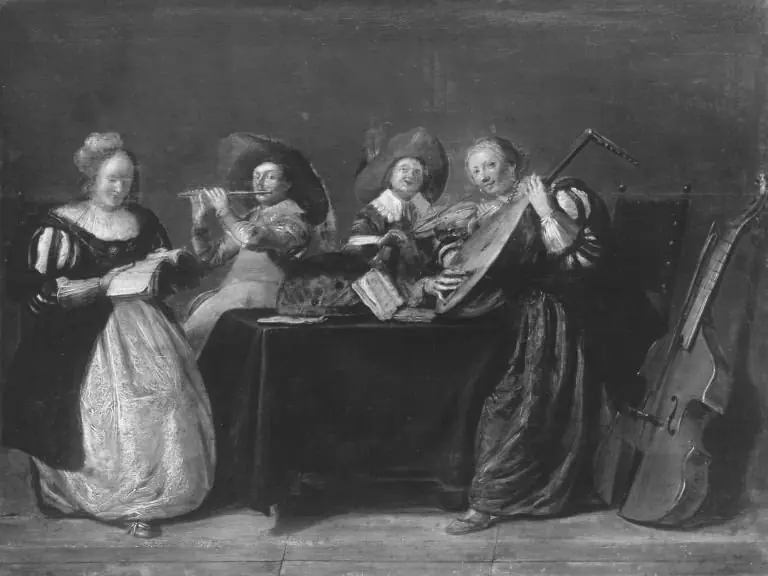
This painting depicts a small group engaged in intimate musical activity within a modest interior. Three figures are arranged around a table: a woman playing a lute, a man performing on a viola da gamba, and a third man instructing a boy, likely in vocal or musical notation. The scene lacks theatricality, focusing instead on quiet concentration and shared practice. The lighting is carefully modulated, drawing attention to the central interaction while leaving surrounding areas in soft shadow.
Subject & Meaning
The scene captures a moment of musical transmission within a domestic setting. The adult male guiding the boy suggests pedagogy, possibly vocal or instrumental training, while the other two musicians provide accompaniment or context. The absence of an audience implies this is not a performance but a private, instructional exchange. Music here functions as a social and educational ritual, reflecting the value placed on musical literacy in early modern households.
Technique & Style
The artist employs a restrained chiaroscuro to define form and direct focus. Light enters from a single source, illuminating faces and hands engaged in music-making while allowing the background to recede into muted tones. Brushwork is subtle, avoiding overt detail in favor of atmospheric cohesion. The composition is tightly framed, emphasizing proximity and quiet interaction over spatial depth or ornamentation.
History & Provenance
The painting’s origin and creator remain unidentified. It belongs to a broader tradition of Dutch and Flemish genre scenes from the early 17th century that depict music-making in domestic contexts. No documented ownership history or exhibition record is known prior to its modern cataloging. Its anonymity reflects the common practice of unsigned works produced for private collectors rather than public display.
Context
During the early 1600s, music was a standard component of middle- and upper-class domestic life in the Low Countries. Instruments like the lute and viola da gamba were common in homes, and musical instruction was often part of a child’s education. Such scenes were not merely decorative but signaled cultural refinement, aligning with humanist ideals of disciplined leisure and familial harmony.
Legacy
Though unsigned and unattributed, the painting contributes to the understanding of how music was practiced and taught in private spaces during the Dutch Golden Age. It stands as an example of genre painting that prioritizes quiet observation over narrative drama. Its compositional restraint and use of light influenced later artists exploring intimacy and illumination in everyday settings.
Own this work as a print
Artist & collection
Artist
Gerard van Kuijl or Kuijll (1604, Gorinchem – 1673, Gorinchem), was a Dutch Golden Age painter. He is known for religious and genre works in the style of Caravaggio.