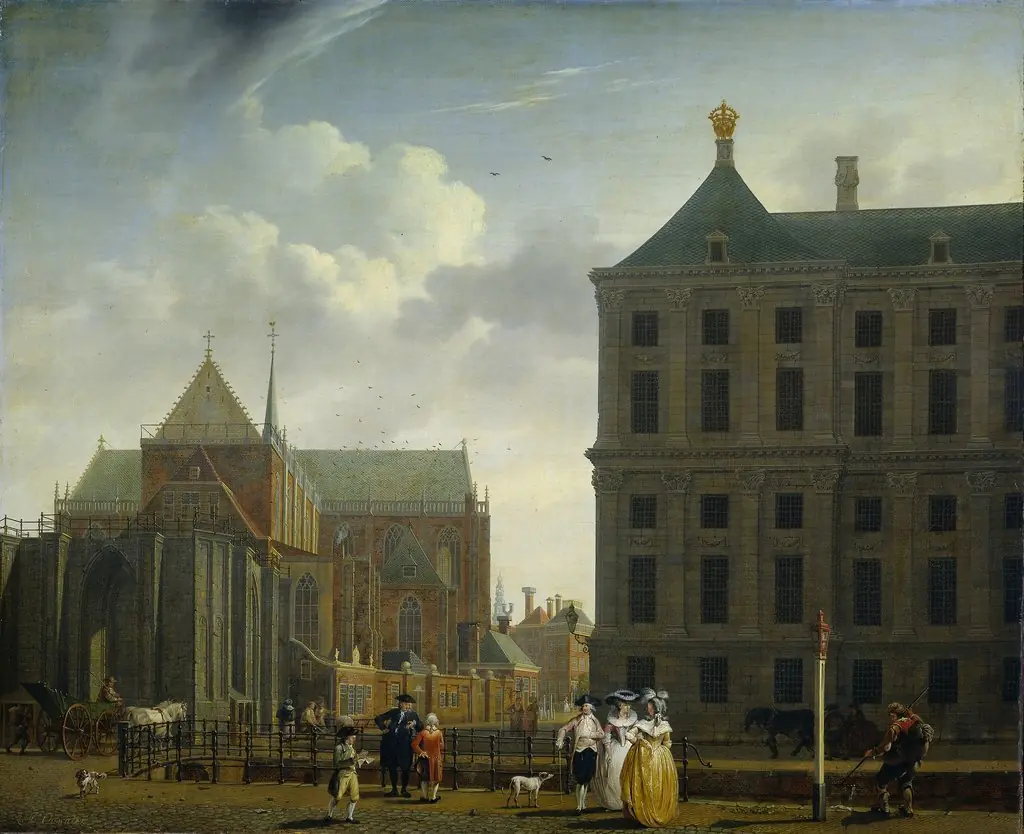
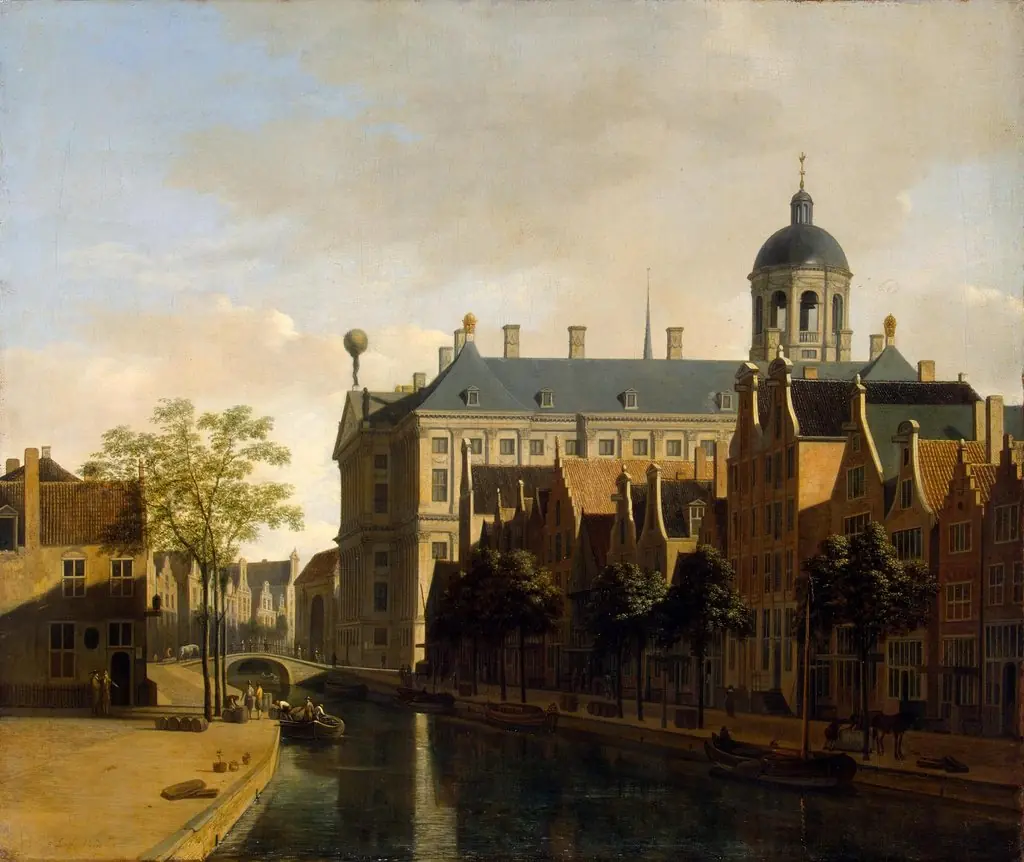
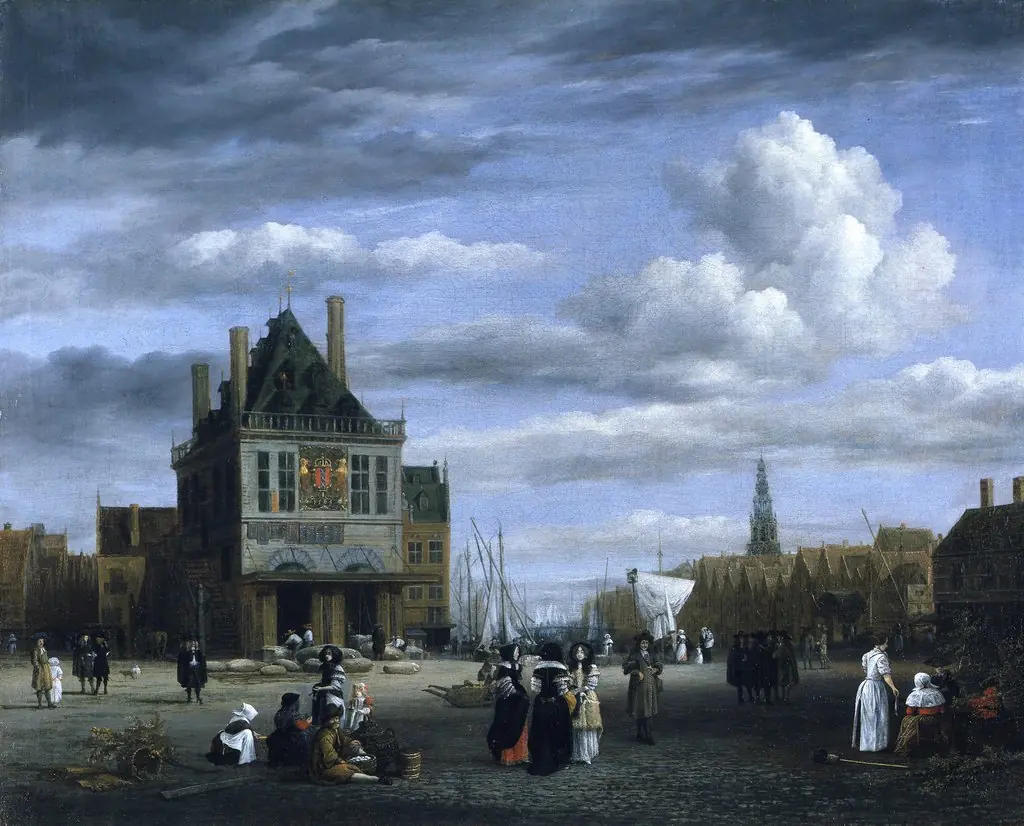
Artwork
The Dam in Amsterdam
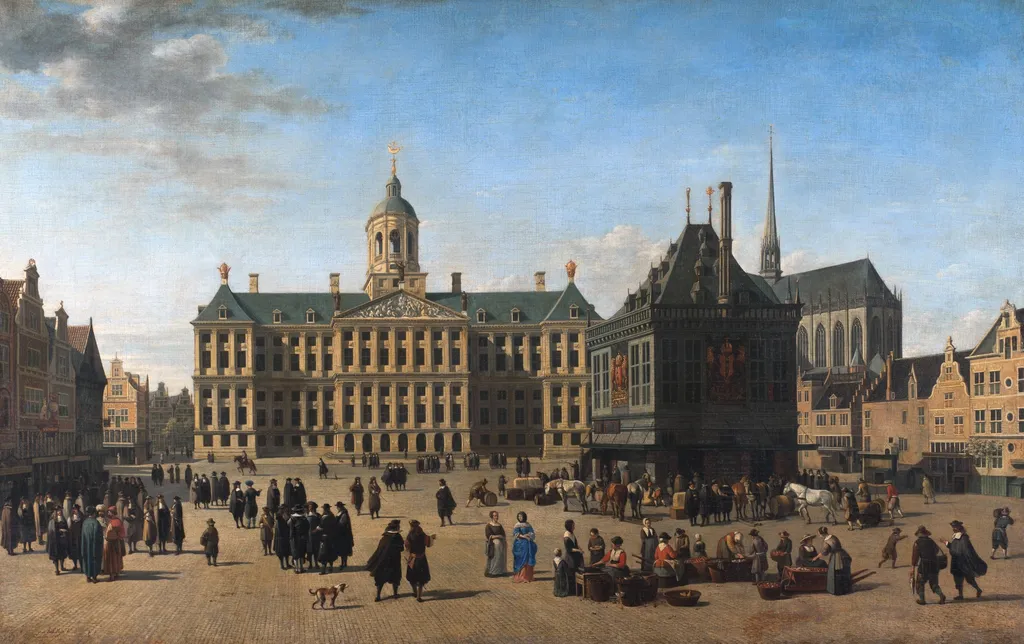
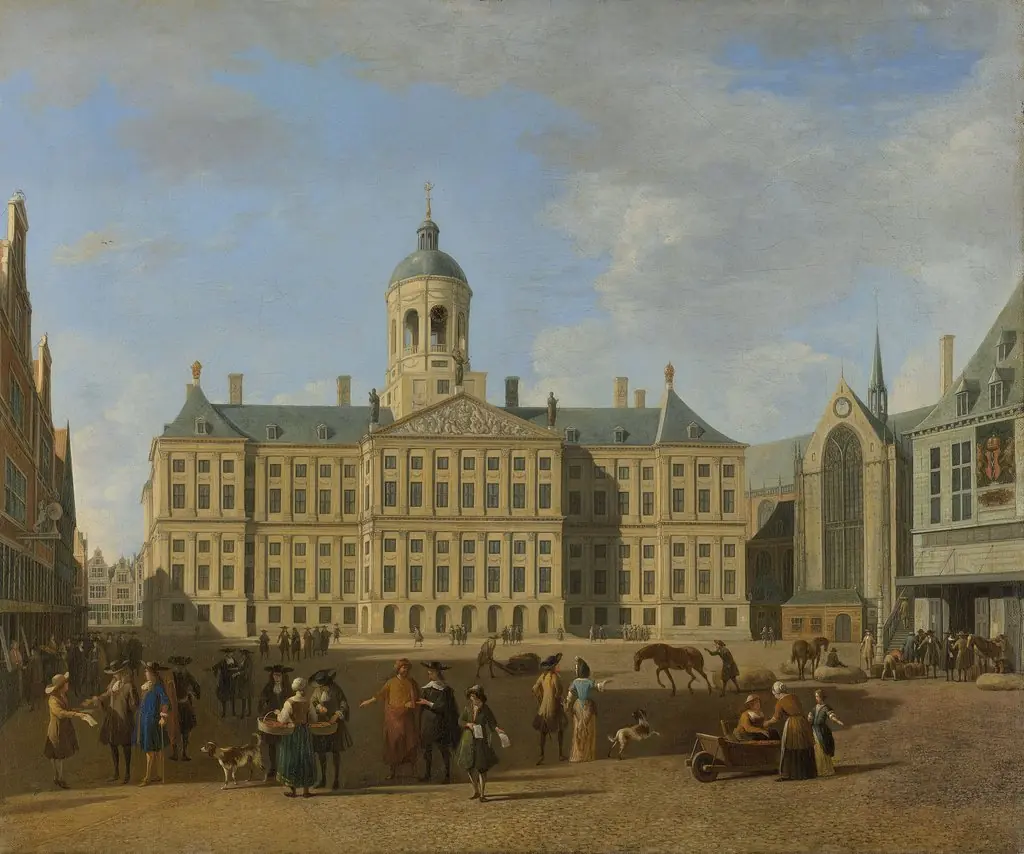
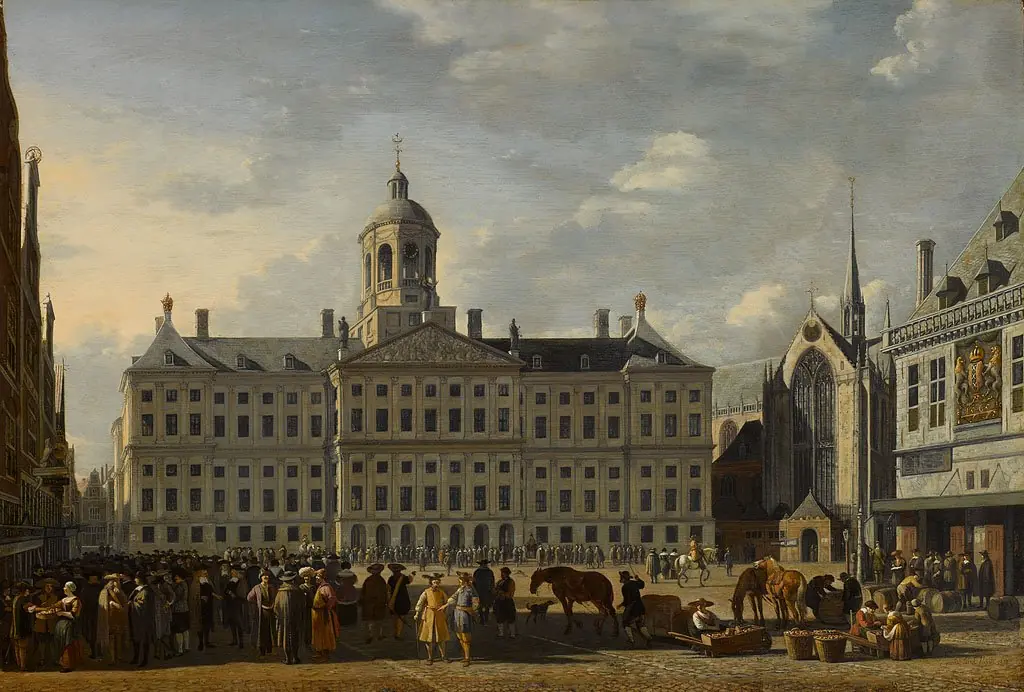
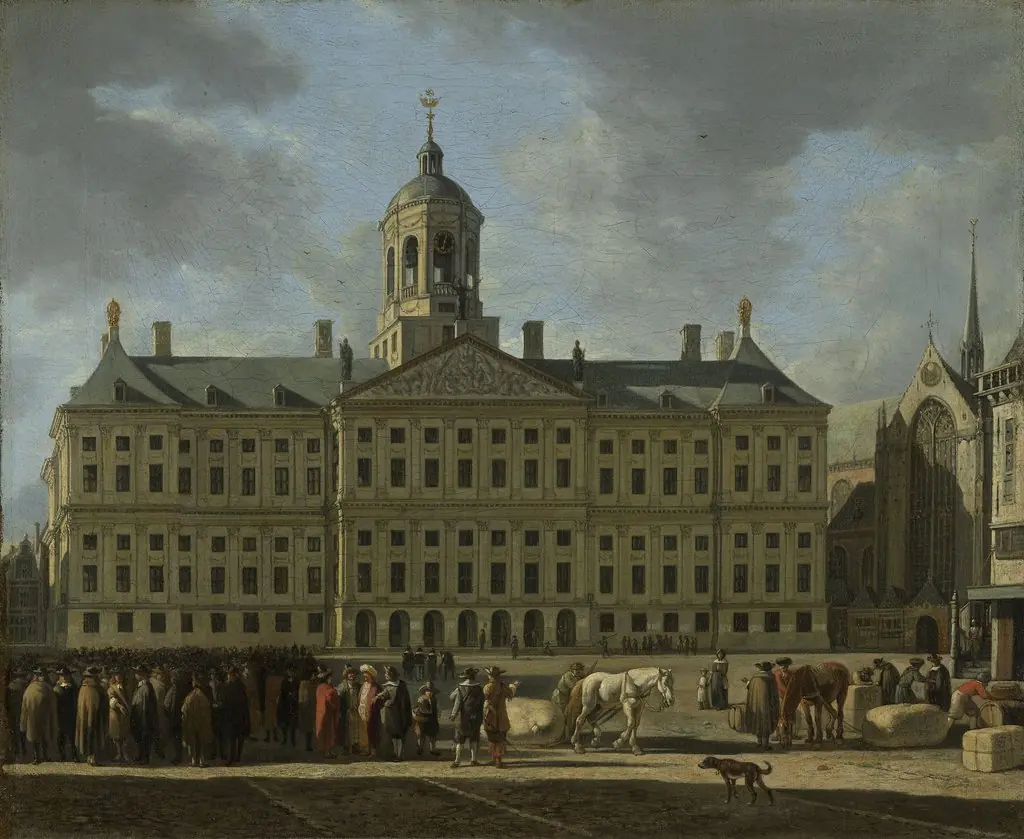
The Dam in Amsterdam is an oil painting by the Dutch Golden Age artist Gerrit Adriaenszoon Berckheyde. It dates from 1668 and is held in the collection of the Royal Museum of Fine Arts Antwerp.
About this work
To learn more about this style of painting, check out the work of artist Gerrit Adriaenszoon Berckheyde.
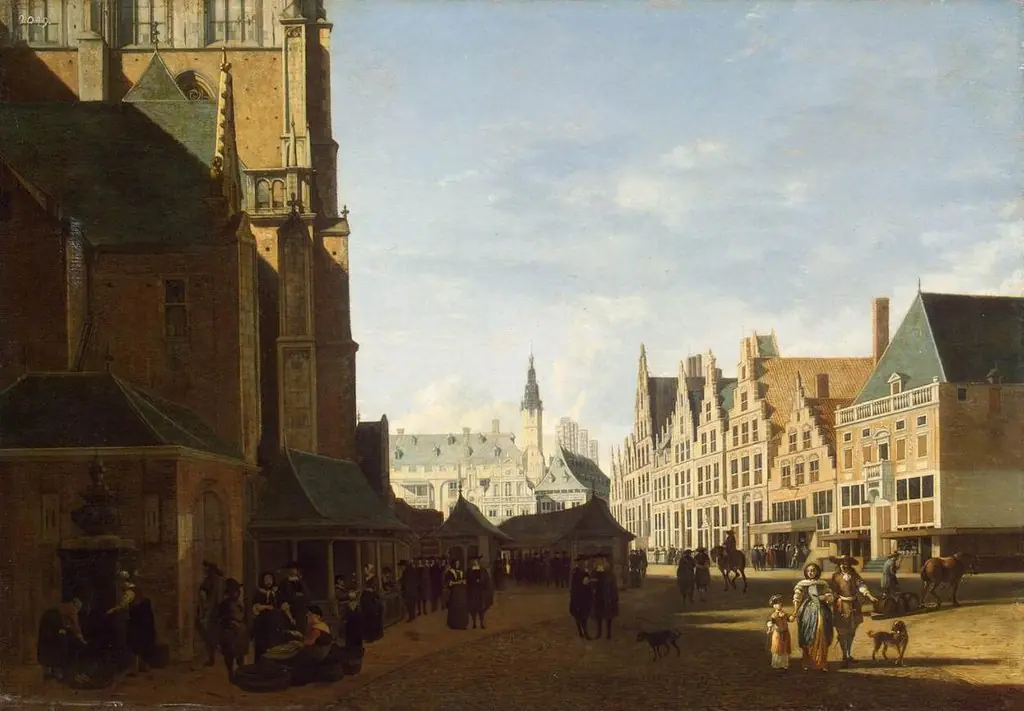
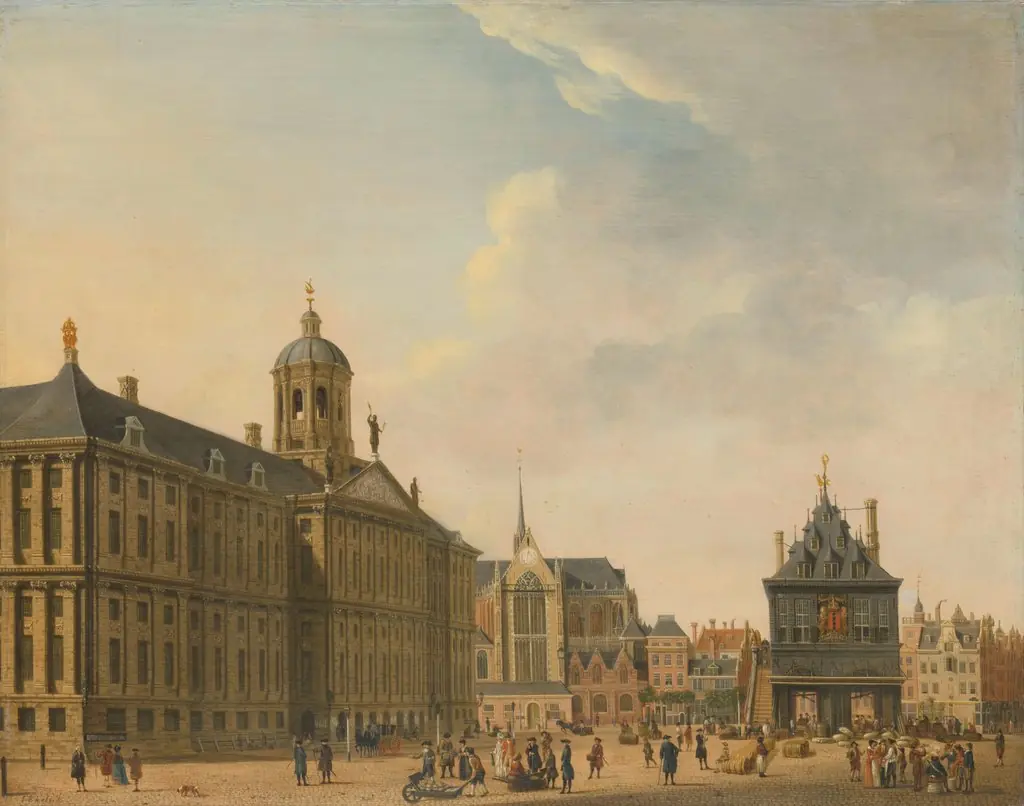
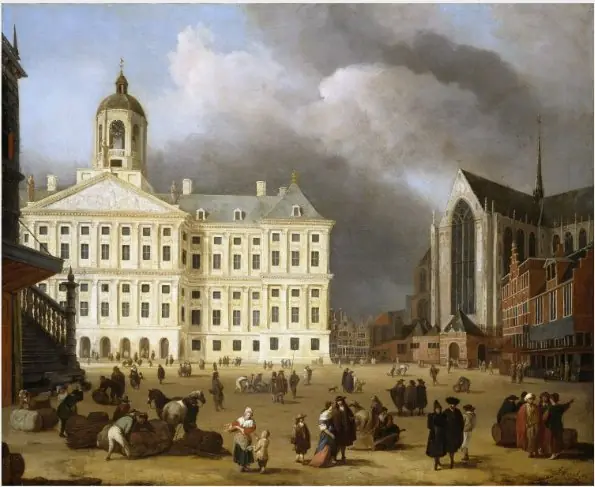
This painting shows a bustling city square, with a large building at its center. The building has a tall tower and a clock on its front. People are walking around the square, some carrying baskets or leading horses. The sky is blue with a few clouds.
The scene is lively, with many people going about their daily business. Some are dressed in formal clothing, while others wear more practical attire. The building in the center of the square appears to be an important landmark.
The painting is a great example of a city scene from the 17th century. To learn more about this style of painting, check out the work of artist Gerrit Adriaenszoon Berckheyde.
Overview
Gerrit Adriaenszoon Berckheyde’s 1668 oil painting portrays the central square of Amsterdam, dominated by the imposing Royal Palace with its clock‑topped tower. The composition is filled with figures—citizens, merchants, and horse‑drawn carts—moving through a bright sky dotted with a few clouds, conveying the everyday bustle of a 17th‑century Dutch city.
Subject & Meaning
The work captures a moment of civic life, emphasizing the palace as a focal point of municipal authority and public activity. By depicting a range of social classes—from formally dressed officials to laborers with baskets—the painting reflects the interconnectedness of commerce, governance, and daily routine in the Dutch Republic.
Technique & Style
Executed in oil on canvas, Berckheyde employs a clear, linear perspective that guides the eye toward the palace’s façade. Fine brushwork renders architectural details, while looser strokes suggest movement among the crowd. A restrained palette of muted earth tones contrasted with a crisp blue sky typifies the precise yet lively cityscapes of the Dutch Golden Age.
History & Provenance
Created in 1668, the painting remained in private Dutch collections before entering the Royal Museum of Fine Arts Antwerp, where it is currently held. Its provenance traces the artist’s activity across Haarlem, Amsterdam, and The Hague, illustrating his reputation as a specialist in urban scenes during the period.
Context
Berckheyde’s cityscapes belong to a broader tradition of Dutch urban painting that documented the prosperity and architectural achievements of the Republic. The Dam, as the focal point of Amsterdam’s civic life, appears frequently in contemporary works, serving both as a geographic marker and a symbol of the nation’s economic vitality.
Own this work as a print
Artist & collection
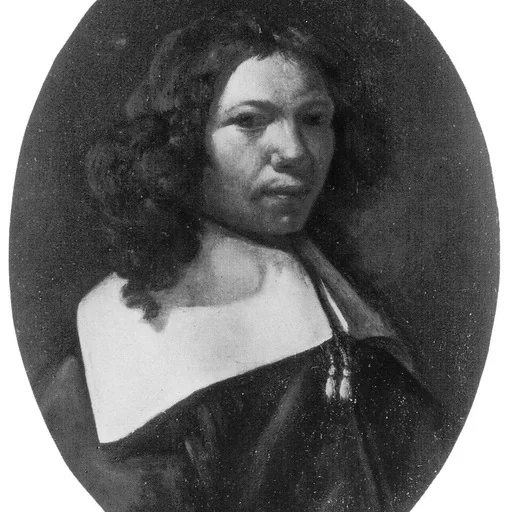
Artist
Gerrit Adriaenszoon Berckheyde
Gerrit Adriaenszoon Berckheyde (1638 – 10 June 1698) was a Dutch Golden Age painter, active in Haarlem, Amsterdam, and The Hague, who is best known today for his cityscapes.