Artwork
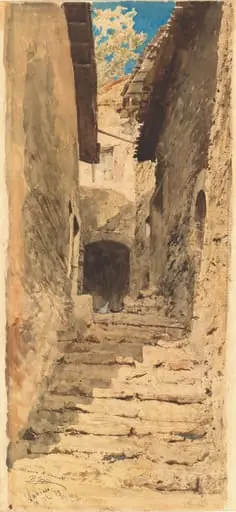
A Village Street in Northern Italy
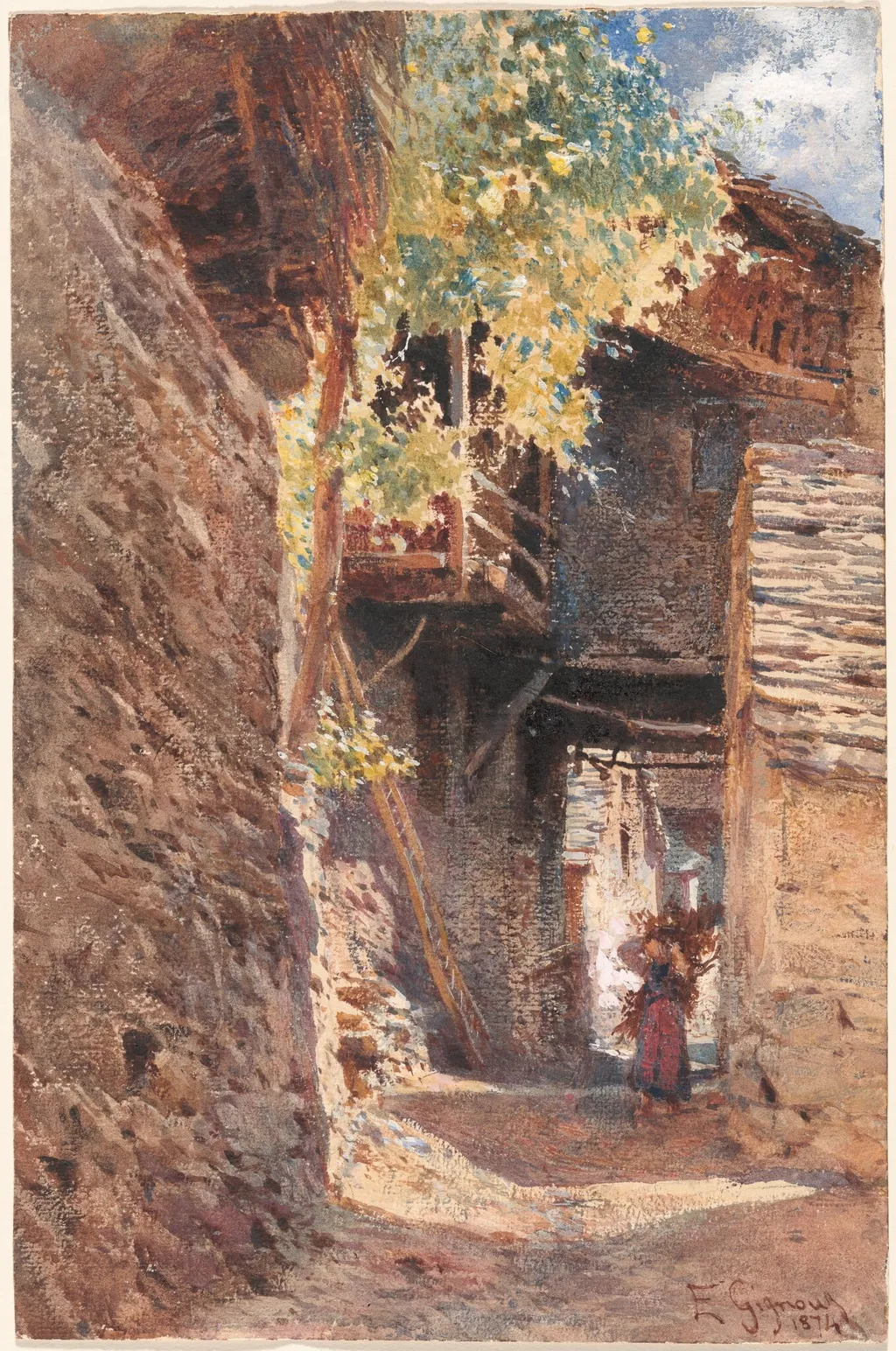
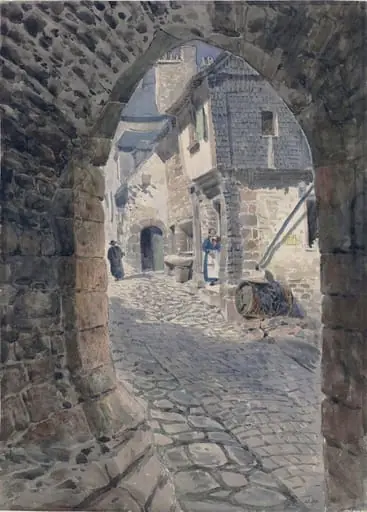
A Village Street in Northern Italy is a gouache drawing by the Impressionist artist Eugenio Gignous. It dates from 1874 and is held in the collection of the National Gallery of Art.
About this work
Overview
The work captures a moment of everyday life with restrained detail, reflecting Gignous’s interest in regional landscapes and vernacular architecture.
Created in 1874, this drawing by Eugenio Gignous depicts a quiet street in a Northern Italian village. Executed in watercolor and gouache over light graphite underdrawing on wove paper, it belongs to the genre of topographical sketches made during the artist’s travels. The work captures a moment of everyday life with restrained detail, reflecting Gignous’s interest in regional landscapes and vernacular architecture.
Subject & Meaning
The scene shows a narrow alley lined with modest stone buildings, their facades weathered and unadorned. A few figures move along the path, their forms simplified, suggesting routine activity rather than narrative drama. The composition conveys stillness and solitude, emphasizing the rhythm of rural life without idealization or sentimentality.
Technique & Style
Gignous applied watercolor in thin, layered washes to suggest light and texture, while gouache added localized opacity for shadows and architectural details. Traces of graphite guide the structure of buildings and pavement, visible in places where pigment has thinned. The brushwork is deliberate but unshowy, favoring clarity over flourish, aligning with the Lombard tradition of observational realism.
History & Provenance
The work was produced during Gignous’s frequent excursions through the Lombardy region in the 1870s. It remained in private collections in northern Italy until the mid-20th century, after which it entered a public collection. Its survival in good condition reflects its modest scale and the care taken by its early owners.
Context
In the 1870s, Italian artists increasingly turned from grand historical themes to scenes of daily life in rural and small-town settings. Gignous’s work aligns with this shift, influenced by both the Macchiaioli and French plein air practices. Unlike urban-focused contemporaries, he sought quiet authenticity in the countryside, documenting architecture and atmosphere with quiet precision.
Legacy
Though not widely exhibited during his lifetime, Gignous’s watercolors like this one contributed to a broader documentation of Italy’s regional character. They remain valuable as records of pre-industrial village life and as examples of how 19th-century artists balanced observation with lyrical restraint.
Own this work as a print
Artist & collection